
David Lavender (1910–2003)
Author of The American Heritage History of the Great West
About the Author
David Lavender's publications include One Man's West, Bent's Fort, The First in the Wilderness, and California: Land of New Beginnings
Series
Works by David Lavender
Fort Laramie and the Changing Frontier: Fort Laramie National Historic Site, Wyoming (1985) 31 copies
The Big Divide: The Lively Story of the People of the Southern Rocky Mountains from Yellowstone to Santa Fe (2001) 30 copies, 1 review
Nothing seemed impossible: William C. Ralston and early San Francisco (Western biography series) (1975) 18 copies
The American Heritage Book of Indians / The American Heritage History of The Great West (2 volume set). (1965) 6 copies
"The Hudson's Bay Company," 2 copies
The American West 1 copy
Mike Maroney, raider 1 copy
Associated Works
Tagged
Common Knowledge
- Canonical name
- Lavender, David
- Legal name
- Lavender, David Seivert
- Birthdate
- 1910-02-04
- Date of death
- 2003-04-26
- Gender
- male
- Education
- Princeton University (AB|1931)
- Occupations
- historian
teacher - Organizations
- Thacher School
- Awards and honors
- Owen Wister Award (1996)
Wallace Stegner Award (1996) - Nationality
- USA
- Birthplace
- Telluride, Colorado, USA
- Places of residence
- Telluride, Colorado, USA
Princeton, New Jersey, USA
Ojai, California, USA - Place of death
- Ojai, California, USA
- Associated Place (for map)
- USA
Members
Reviews
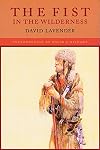
This is no less than a majestic, engrossing account of the life and times of Ramsey Crooks.
He was in the overland contingent of John Jacob Astor’s Astoria expedition, sold out his interest in the company on the shore of the Pacific, and, along with several other men, made a grueling journey back to civilization.
He would end up owning the company.
This may well be, as a cover blurb, says, the best single book volume on the American fur trade. Yes, it’s a tale of adventure, exploration, show more violence, and hardship. But it’s also about the international struggle between American and Great Britain for the future of North American. Above all, it’s about business.
This is a big book, 419 pages of text not counting its many, extensive endnotes. Lavender’s style, often full of well-done digressions away its subject of Crooks, is highly readable.
Like many fur traders at that time, Crooks came from Scotland. Born in 1787, he emigrated with his mother in 1803 to Canada and worked almost two years in a dry goods store in Montreal. Bored, he went to Mackinac Island – then known as Michilimackinac Island, a pivotal center of the Great Lakes fur trade.
The next couple years saw him traveling the Great Lakes and waterways of the Mississippi basin with trips to Chicago and what’s now Sioux City. This part of his life is poorly documented. We don’t even have a description of what Crooks looked like.
In 1805, he met another Scotsman turned fur trader, Robert Dickson. Dickson, a Canadian, would become a major player on the Northwest frontier of America. It was a bloody area after the new American nation and Great Britain had – officially, at least – settled its disputes.
"So far as the American frontier was concerned, the next decade was bloodier than the war years had been. In hit-and-run attacks that bred monstrous retaliations, fighters of both sides burned each other’s villages; scalped, skinned and roasted each other’s men; tomahawked each other’s women; made slaves of each other’s children. People died not by the dozens, as they did in the later, better-publicized wars west of the Mississippi, but by hundreds, even thousands."
The Indians somewhat resented that their favorite trading partners, the French, had been supplanted by the English in the French-and-Indian War. Now the Americans, who weren’t even supposed to be west of the Appalachians, were here. As the Red Prophet Tecumseh said in 1807, the Great Spirit proclaimed he was the father of the English, French, and Spaniards. But he didn’t make the Americans. “They grew from the scum of the great water, where it was troubled by the evil spirit”.
Shifting government regulations about import-export licenses, trading licenses, and restrictions on foreign citizens operating as traders are concerns through a great part of this story. Dickson would become an effective agent for the British in stirring up the Northwest frontier Indians against the Americans before and during the War of 1812. But, when convenient for business, he could pretend to further American goals.
Crooks, somewhere along the line, for whatever reason, became an American citizen and would end up throwing his lot in with the new nation.
By 1805, Crooks was working with a Pennsylvanian named Robert McClellan, another future member of the Astoria expedition. Crooks happened to be at La Charette and met the returning Lewis & Clark expedition. It would put the idea of going all the way to the Pacific in Crooks’ mind. In 1809, McClellan’s and Crook’s joint venture was dissolved, and Crooks was approached by Astor’s agent Wilson Price Hunt to go on the Astoria expedition.
Lavender’s whole account of the Astoria is a nice supplement and correction to Washington Irving’s account. First, he gives us a concise account of both its sea and land operations, and the book’s several well-done maps show the route Crooks took to and from Astoria. Second, he shows that Irving’s, and probably by extension, Astor’s, complaint that the venture was undone by the sabotage of the Canadian Northwest Company employees he hired against his American company, is probably not justified. Astor had a merger offer out to the Northwest Company when his expedition set out. It ended up not being completed, but Astor’s agents at Astoria probably thought the Northwest men who showed up at Astoria weren’t competitors but employees of the same company. He uses a close examination of Astor’s business records to argue this.
Crooks made his way back to St. Louis at the end of April 1813. It was a city anxious about its possible impending capture by British forces. Ultimately, that didn’t happen, but Crooks was in debt with no job. He managed to avoid jail unlike McClellan, and Astor offered him employment. Working as Astor’s agent, Crooks undertook various assignments during the war. The most significant was an attempt to co-ordinate a capture of Mackinac Island which the British had seized – before its American inhabitants even knew a war was going on – from the Americans. Astor wanted his stockpile of furs there. Ultimately, the island was not retaken in war but was regained by treaty.
While fear of British didn’t cease immediately after the war, there was a sense of optimism for the American fur trader. There would still be white-Indian conflict. Crooks would spend a lot of time in various political disputes involving corrupt government officials favoring competing companies. He also made the acquaintance of Lewis Cass, governor of Michigan, and an influential man and frontier booster. Crooks would be critical of the brief decade of the trading posts run by the American government, allegedly because traders were swindling Indians. And Astor’s company was dubbed, by hostile political forces, as the British Fur Company.
And then there was, of course, the matter of liquor.
There is a whole lot here about shifting American policy on selling liquor to Indians. Crooks was himself, a temperate man, but if competing companies were going to smuggle liquor into forbidden territories and the Hudson Bay Company was trading it in Canada, he didn’t favor a unilateral disarmament. He even countenanced illegal liquor trading and turned a blind eye to the illegal still at Fort Union. There was also the problem of whites in areas where liquor was forbidden. They wanted it for themselves. Voyageurs received alcohol rations in their contracts. Crooks wasn’t unaware of the problems of alcohol and Indians. After all, drunk Indians don’t do what’s important – go out and get some furs to trade.
In his introduction to the volume, David J. Wishart cautions the modern reader that Lavender throws around the words “savage” and “squaws”, and that’s true. But his opinion of Indians seems fairly balanced. He doesn’t think they were any more susceptible to alcohol’s dangers than whites. However, they lived on the edge of survival and had limited technology to provide a buffer against misfortune. To Lavender, Indians drank to dull the misery of their lives.
He also takes exception to the tacit view of some that the Indians should have remained unsullied noble savages and resisted the blandishments of trade. No other primitive group in world history, he argues, has denied themselves access to the benefits of advanced technology. Why do we expect the American Indian to have behaved differently?
Crooks never really gave up on his idea of exploiting the fur trade on the Missouri River, but his boss, Astor, was conservative having been burned in his Astoria venture. Astor was not, however, conservative about spending money to undercut the price paid for furs by his rivals or issuing cheaper credit. He had enough money to outspend competitors.
The year 1824 brought news of the riches to be had in the Rocky Mountains when William Ashley’s expedition, diverted from its intended route by Arickara hostility on the Missouri, returned to St. Louis. Astor joined with the firm Bernard Pratte & Company.
But Crooks’ and Astor’s attempts to “strangle the Missouri” were brought to an end by various factors – misfortune, changing fur prices, and more political scandals revolving around liquor. Astor sold out to Crooks in 1834.
The next few years would see profits from a high-volume trade in low-value muskrat furs and a ruinous competition over racoon pelts that were now a fad among Eastern European Jews and used for Russian Army gear. Crooks diversified into building schooners and setting up fisheries, but management problems led to little profits. The beaver pelt price fell. The company survived the depression of 1837-1838. It didn’t survive the competition over racoon skins and closed in 1842 owing $300,000 though Crooks managed to pay the debt off.
His later years had him running a commission sales house handling furs of all kinds.
It was a quite life, spent meeting old friends from the wilderness days. While Lavender uses various letters from Crooks, he laments his subject never wrote an account of his life.
Well, he did, briefly, in 1856. Disgusted by “Pathfinder” John Frémont, then running for president, claiming he had discovered the South Pass, crucial to traversing the Rockies, in 1842, Crooks reminded the readers who had really discovered it in 1812. He listed the names and homes of the seven men who travelled back from Astoria. They ended with “RAMSEY CROOKS, who is the sole survivor of this small band of adventurers.”
Crooks died in 1859.
Of course, I’ve just scratched the surface of a book that covers the cultural, geographical, military, political, and commercial details behind Crooks’ life.
As I mentioned, Lavender is fond of diversions.
One concerns Russell Farnham, a clerk on the Astoria expedition. He was one of three men dropped off in Alaska with orders to travel east to take news to Astor about the state of affairs. He took passage on a ship that dropped him off on the Kamchatka Peninsula. He took the long way home, walking across all of Russia and, eventually, after two years, to Copenhagen and a ship home.
Another is the matter of Dr. Beaumont and Alexis St. Martin. Beaumont had treated Crooks for an illness on Mackinac Island in 1822. Eleven weeks before that, St. Martin had been accidentally shot in the stomach, Beaumont would undertake groundbreaking research on human digestion by tying bits of food to a string and dropping it in St. Martin’s stomach. Beaumont paid St. Martin to live in his house as a human lab animal. However, St. Martin got tired of this and ran away in 1825. Beaumont asked Crooks to find him. After he did, St. Martin was given a job, and Beaumont’s research continued until 1834. show less
He was in the overland contingent of John Jacob Astor’s Astoria expedition, sold out his interest in the company on the shore of the Pacific, and, along with several other men, made a grueling journey back to civilization.
He would end up owning the company.
This may well be, as a cover blurb, says, the best single book volume on the American fur trade. Yes, it’s a tale of adventure, exploration, show more violence, and hardship. But it’s also about the international struggle between American and Great Britain for the future of North American. Above all, it’s about business.
This is a big book, 419 pages of text not counting its many, extensive endnotes. Lavender’s style, often full of well-done digressions away its subject of Crooks, is highly readable.
Like many fur traders at that time, Crooks came from Scotland. Born in 1787, he emigrated with his mother in 1803 to Canada and worked almost two years in a dry goods store in Montreal. Bored, he went to Mackinac Island – then known as Michilimackinac Island, a pivotal center of the Great Lakes fur trade.
The next couple years saw him traveling the Great Lakes and waterways of the Mississippi basin with trips to Chicago and what’s now Sioux City. This part of his life is poorly documented. We don’t even have a description of what Crooks looked like.
In 1805, he met another Scotsman turned fur trader, Robert Dickson. Dickson, a Canadian, would become a major player on the Northwest frontier of America. It was a bloody area after the new American nation and Great Britain had – officially, at least – settled its disputes.
"So far as the American frontier was concerned, the next decade was bloodier than the war years had been. In hit-and-run attacks that bred monstrous retaliations, fighters of both sides burned each other’s villages; scalped, skinned and roasted each other’s men; tomahawked each other’s women; made slaves of each other’s children. People died not by the dozens, as they did in the later, better-publicized wars west of the Mississippi, but by hundreds, even thousands."
The Indians somewhat resented that their favorite trading partners, the French, had been supplanted by the English in the French-and-Indian War. Now the Americans, who weren’t even supposed to be west of the Appalachians, were here. As the Red Prophet Tecumseh said in 1807, the Great Spirit proclaimed he was the father of the English, French, and Spaniards. But he didn’t make the Americans. “They grew from the scum of the great water, where it was troubled by the evil spirit”.
Shifting government regulations about import-export licenses, trading licenses, and restrictions on foreign citizens operating as traders are concerns through a great part of this story. Dickson would become an effective agent for the British in stirring up the Northwest frontier Indians against the Americans before and during the War of 1812. But, when convenient for business, he could pretend to further American goals.
Crooks, somewhere along the line, for whatever reason, became an American citizen and would end up throwing his lot in with the new nation.
By 1805, Crooks was working with a Pennsylvanian named Robert McClellan, another future member of the Astoria expedition. Crooks happened to be at La Charette and met the returning Lewis & Clark expedition. It would put the idea of going all the way to the Pacific in Crooks’ mind. In 1809, McClellan’s and Crook’s joint venture was dissolved, and Crooks was approached by Astor’s agent Wilson Price Hunt to go on the Astoria expedition.
Lavender’s whole account of the Astoria is a nice supplement and correction to Washington Irving’s account. First, he gives us a concise account of both its sea and land operations, and the book’s several well-done maps show the route Crooks took to and from Astoria. Second, he shows that Irving’s, and probably by extension, Astor’s, complaint that the venture was undone by the sabotage of the Canadian Northwest Company employees he hired against his American company, is probably not justified. Astor had a merger offer out to the Northwest Company when his expedition set out. It ended up not being completed, but Astor’s agents at Astoria probably thought the Northwest men who showed up at Astoria weren’t competitors but employees of the same company. He uses a close examination of Astor’s business records to argue this.
Crooks made his way back to St. Louis at the end of April 1813. It was a city anxious about its possible impending capture by British forces. Ultimately, that didn’t happen, but Crooks was in debt with no job. He managed to avoid jail unlike McClellan, and Astor offered him employment. Working as Astor’s agent, Crooks undertook various assignments during the war. The most significant was an attempt to co-ordinate a capture of Mackinac Island which the British had seized – before its American inhabitants even knew a war was going on – from the Americans. Astor wanted his stockpile of furs there. Ultimately, the island was not retaken in war but was regained by treaty.
While fear of British didn’t cease immediately after the war, there was a sense of optimism for the American fur trader. There would still be white-Indian conflict. Crooks would spend a lot of time in various political disputes involving corrupt government officials favoring competing companies. He also made the acquaintance of Lewis Cass, governor of Michigan, and an influential man and frontier booster. Crooks would be critical of the brief decade of the trading posts run by the American government, allegedly because traders were swindling Indians. And Astor’s company was dubbed, by hostile political forces, as the British Fur Company.
And then there was, of course, the matter of liquor.
There is a whole lot here about shifting American policy on selling liquor to Indians. Crooks was himself, a temperate man, but if competing companies were going to smuggle liquor into forbidden territories and the Hudson Bay Company was trading it in Canada, he didn’t favor a unilateral disarmament. He even countenanced illegal liquor trading and turned a blind eye to the illegal still at Fort Union. There was also the problem of whites in areas where liquor was forbidden. They wanted it for themselves. Voyageurs received alcohol rations in their contracts. Crooks wasn’t unaware of the problems of alcohol and Indians. After all, drunk Indians don’t do what’s important – go out and get some furs to trade.
In his introduction to the volume, David J. Wishart cautions the modern reader that Lavender throws around the words “savage” and “squaws”, and that’s true. But his opinion of Indians seems fairly balanced. He doesn’t think they were any more susceptible to alcohol’s dangers than whites. However, they lived on the edge of survival and had limited technology to provide a buffer against misfortune. To Lavender, Indians drank to dull the misery of their lives.
He also takes exception to the tacit view of some that the Indians should have remained unsullied noble savages and resisted the blandishments of trade. No other primitive group in world history, he argues, has denied themselves access to the benefits of advanced technology. Why do we expect the American Indian to have behaved differently?
Crooks never really gave up on his idea of exploiting the fur trade on the Missouri River, but his boss, Astor, was conservative having been burned in his Astoria venture. Astor was not, however, conservative about spending money to undercut the price paid for furs by his rivals or issuing cheaper credit. He had enough money to outspend competitors.
The year 1824 brought news of the riches to be had in the Rocky Mountains when William Ashley’s expedition, diverted from its intended route by Arickara hostility on the Missouri, returned to St. Louis. Astor joined with the firm Bernard Pratte & Company.
But Crooks’ and Astor’s attempts to “strangle the Missouri” were brought to an end by various factors – misfortune, changing fur prices, and more political scandals revolving around liquor. Astor sold out to Crooks in 1834.
The next few years would see profits from a high-volume trade in low-value muskrat furs and a ruinous competition over racoon pelts that were now a fad among Eastern European Jews and used for Russian Army gear. Crooks diversified into building schooners and setting up fisheries, but management problems led to little profits. The beaver pelt price fell. The company survived the depression of 1837-1838. It didn’t survive the competition over racoon skins and closed in 1842 owing $300,000 though Crooks managed to pay the debt off.
His later years had him running a commission sales house handling furs of all kinds.
It was a quite life, spent meeting old friends from the wilderness days. While Lavender uses various letters from Crooks, he laments his subject never wrote an account of his life.
Well, he did, briefly, in 1856. Disgusted by “Pathfinder” John Frémont, then running for president, claiming he had discovered the South Pass, crucial to traversing the Rockies, in 1842, Crooks reminded the readers who had really discovered it in 1812. He listed the names and homes of the seven men who travelled back from Astoria. They ended with “RAMSEY CROOKS, who is the sole survivor of this small band of adventurers.”
Crooks died in 1859.
Of course, I’ve just scratched the surface of a book that covers the cultural, geographical, military, political, and commercial details behind Crooks’ life.
As I mentioned, Lavender is fond of diversions.
One concerns Russell Farnham, a clerk on the Astoria expedition. He was one of three men dropped off in Alaska with orders to travel east to take news to Astor about the state of affairs. He took passage on a ship that dropped him off on the Kamchatka Peninsula. He took the long way home, walking across all of Russia and, eventually, after two years, to Copenhagen and a ship home.
Another is the matter of Dr. Beaumont and Alexis St. Martin. Beaumont had treated Crooks for an illness on Mackinac Island in 1822. Eleven weeks before that, St. Martin had been accidentally shot in the stomach, Beaumont would undertake groundbreaking research on human digestion by tying bits of food to a string and dropping it in St. Martin’s stomach. Beaumont paid St. Martin to live in his house as a human lab animal. However, St. Martin got tired of this and ran away in 1825. Beaumont asked Crooks to find him. After he did, St. Martin was given a job, and Beaumont’s research continued until 1834. show less

Just about every famous name from the early West showed up at Bent’s Fort at sometime or another – James Beckwourth, Kit Carson, Stephen Kearny, Lucien Maxwell, Jedediah Smith, Ceran St. Vrain, Uncle Dick Wooton. And of course, the Bents – Charles and William and their brothers and children. The Bent’s private fort on the American side of the Arkansas River was central to the Santa Fe trade. (There’s not that much about the titular fort; the book was written before the show more archaeological digs and reconstruction of the 1970s). David Lavender’s book is simultaneously a history of the fur, buffalo robe, and Santa Fe trades, and a biography of the Bent family.
For a book written in 1954, Bent’s Fort is surprisingly just in its treatment of Native Americans – this was, after all, at time when John Chivington was still a heroic Indian fighter rather the perpetrator of a massacre. Although Lavender sometimes calls the Plains tribes “savages”, he also notes they were treated extremely poorly by the US government and by most traders. The Bents were also uncharacteristically fair in their treatment of natives – for the time. The Bent brothers built their fort in Cheyenne territory, and William married the Cheyenne chief White Thunder’s daughter Owl Woman, and after her death, her sister Yellow Woman; the Bents always tried to look after the interests of the Cheyenne.
Charles Bent, alas, was apparently overconfident of his reputation among the natives of New Mexico. He was appointed Governor after the military conquest, as being the American with the greatest knowledge of the region. In December 1846 he went from Santa Fe to his residence Taos for the holidays, where he was killed and scalped in front of his wife and children during the Taos revolt.
His brother William carried on the family business but seems to have lost heart with the deaths of Charles and Owl Woman (1847); he blew up Bent’s Fort in 1849, for no reason anyone has ever explained. His sons by Owl Woman (Robert and George) and Yellow Woman (Charles) all adopted Cheyenne ways; George and Charles were in Black Kettles camp at Sand Creek when Colonel John Chivington attacked it in 1863 – Robert had been captured and was forced to guide Chivington to the camp, and George, Charles, and their sister Julie were inside it. All survived, but Charles Bent – now the Cheyenne Pekiree – fought the whites as a Dog Soldier until he died of malaria in 1868 (there are Web sites claiming that Charles Bent/Pekiree instead died at the Battle of Summit Springs in 1869).
An engaging read. Maps in the front. Lavender’s research is meticulous; he notes the difficulty of separating “tall tales” from facts but his copious endnotes justify his interpretations. As noted above, at the time Lavender was writing there were only faint traces of Bent’s Fort; it’s now been reconstructed and is a National Historical Site under the Park Service. show less
For a book written in 1954, Bent’s Fort is surprisingly just in its treatment of Native Americans – this was, after all, at time when John Chivington was still a heroic Indian fighter rather the perpetrator of a massacre. Although Lavender sometimes calls the Plains tribes “savages”, he also notes they were treated extremely poorly by the US government and by most traders. The Bents were also uncharacteristically fair in their treatment of natives – for the time. The Bent brothers built their fort in Cheyenne territory, and William married the Cheyenne chief White Thunder’s daughter Owl Woman, and after her death, her sister Yellow Woman; the Bents always tried to look after the interests of the Cheyenne.
Charles Bent, alas, was apparently overconfident of his reputation among the natives of New Mexico. He was appointed Governor after the military conquest, as being the American with the greatest knowledge of the region. In December 1846 he went from Santa Fe to his residence Taos for the holidays, where he was killed and scalped in front of his wife and children during the Taos revolt.
His brother William carried on the family business but seems to have lost heart with the deaths of Charles and Owl Woman (1847); he blew up Bent’s Fort in 1849, for no reason anyone has ever explained. His sons by Owl Woman (Robert and George) and Yellow Woman (Charles) all adopted Cheyenne ways; George and Charles were in Black Kettles camp at Sand Creek when Colonel John Chivington attacked it in 1863 – Robert had been captured and was forced to guide Chivington to the camp, and George, Charles, and their sister Julie were inside it. All survived, but Charles Bent – now the Cheyenne Pekiree – fought the whites as a Dog Soldier until he died of malaria in 1868 (there are Web sites claiming that Charles Bent/Pekiree instead died at the Battle of Summit Springs in 1869).
An engaging read. Maps in the front. Lavender’s research is meticulous; he notes the difficulty of separating “tall tales” from facts but his copious endnotes justify his interpretations. As noted above, at the time Lavender was writing there were only faint traces of Bent’s Fort; it’s now been reconstructed and is a National Historical Site under the Park Service. show less
Thank you to NetGalley and the publisher, Zeitgeist (Penguin Random House) for this DRC in exchange for a fair and honest review. The thoughts and opinions expressed below are my own.
A well-organized and thoughtful Bible word search book. This would be relaxing to do on a long commute, or even as a fun exercise with kids who are interested in word puzzles. The large text for the Scripture sources as well as the actual word searches makes them easy to follow; I did a few of the searches in show more my head as practice and I was able to find even some of the more complicated word combinations. The book includes passages from both the Old and New Testaments, Scripture references and encouraging meditations of the nature of God and how to live the Christian life. I liked the way that the searches are organized by selected themes instead of going in chronological order. There are some interesting combinations here that make for some fun searches, which also show the authors' intentionality in searching for verses that correlate. Some of my favorite include the searches for strange and unusual occurrences, people who never died, joyous noises and instruments and significant hills and mountains in the Bible. There are no solutions listed in the back; even though none of the puzzles are super complicated, this still would have been a good addition. show less
A well-organized and thoughtful Bible word search book. This would be relaxing to do on a long commute, or even as a fun exercise with kids who are interested in word puzzles. The large text for the Scripture sources as well as the actual word searches makes them easy to follow; I did a few of the searches in show more my head as practice and I was able to find even some of the more complicated word combinations. The book includes passages from both the Old and New Testaments, Scripture references and encouraging meditations of the nature of God and how to live the Christian life. I liked the way that the searches are organized by selected themes instead of going in chronological order. There are some interesting combinations here that make for some fun searches, which also show the authors' intentionality in searching for verses that correlate. Some of my favorite include the searches for strange and unusual occurrences, people who never died, joyous noises and instruments and significant hills and mountains in the Bible. There are no solutions listed in the back; even though none of the puzzles are super complicated, this still would have been a good addition. show less
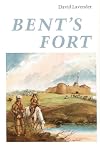
Charles and William Bent were early fur traders. They were involved in the beaver fur trade, the Santa Fe trail and the buffalo robe trade. The Bent's were honest friends of the native people, especially the Cheyenne. The silk hat saved the beavers from extermination but the Bent's best efforts couldn't save the Plains Indians. Charles Bent was the first territorial governor of New Mexico. The Bent's trading post, Bent's Fort, was visited by everybody. Kit Carson, Fremont, Jim Bridger and show more everybody else who was in the west between 1820 and 1850. A sad but honest report of things that really happened. Some school boards might not like this book, it tells an unpleasant truth. While Charles and William tired to do what was best for the Indians of the Plains too many others just wanted to cheat them and steal their lands. In the end the others prevailed. show less
Lists
Awards


You May Also Like


Associated Authors
Statistics
- Works
- 48
- Also by
- 2
- Members
- 2,126
- Popularity
- #12,106
- Rating
- 4.0
- Reviews
- 21
- ISBNs
- 93
- Favorited
- 2