
James Welch (1) (1940–2003)
Author of Fools Crow
For other authors named James Welch, see the disambiguation page.
About the Author
Image credit: James Welch, in Marseille, France on May 30, 2001
Works by James Welch
Killing Custer: The Battle of the Little Bighorn and the Fate of the Plains Indians (1994) 450 copies, 5 reviews
Going to Remake This World 1 copy
Associated Works
When the Light of the World Was Subdued, Our Songs Came Through: A Norton Anthology of Native Nations Poetry (2020) — Contributor — 380 copies, 4 reviews
Talking Leaves: Contemporary Native American Short Stories (1991) — Contributor — 219 copies, 2 reviews
Songs from This Earth on Turtle's Back: Contemporary American Indian Poetry (1983) — Contributor — 73 copies
Song of the Turtle: American Indian Literature 1974-1994 (1996) — Contributor — 69 copies, 2 reviews
Nothing But the Truth: An Anthology of Native American Literature (2000) — Contributor — 55 copies, 2 reviews
The Lightning Within: An Anthology of Contemporary American Indian Fiction (1991) — Contributor — 34 copies
Dancing on the Rim of the World: An Anthology of Contemporary Northwest Native American Writing (Sun Tracks) (1990) — Contributor — 31 copies
Tagged
Common Knowledge
- Birthdate
- 1940-11-18
- Date of death
- 2003-08-04
- Gender
- male
- Education
- University of Montana
Montana State University (Northern) - Occupations
- Enseignant (Ecriture créative, Littérature amérindienne)
Romancier
Poète - Organizations
- Université Cornell,New York (Chargé de cours, Ecriture créative, Littérature amérindienne contemporaine)
Université de Washington, Seattle (Chargé de cours, Ecriture créative) - Awards and honors
- John Dos Passos Prize (1994)
Western Literature Association's Distinguished Achievement Award (1994)
Lifetime Achievement Award, Native Writers Circle of The Americas (1997)
Ordre des Arts et des Lettres (Chevalier|2000) - Cause of death
- Cancer du poumon
- Nationality
- Blackfeet
USA - Birthplace
- Browning, Montana, USA
- Place of death
- Missoula, Montana, USA
- Map Location
- USA
Members
Reviews
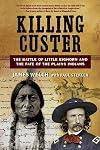
The classic account of Custer's Last Stand that shattered the myth of the Little Bighorn and rewrote history books. Custer's ill-fated attack on June 25, 1876, has gone down as the American military's most catastrophic defeat. This historic and personal work tells the Native American side, poignant revealing how disastrous the encounter was for the "victors," the last great gathering of Plains Indians under the leadership of Sitting Bull. Telling of the pride and desperation of a people show more systematically stripped of their treaty rights, hounded from their ancestral hunting grounds, and herded into wretched reservations, Killing Custer reveals how this defining moment in American history was no more a "Last Stand" than a final celebration of waning power and freedom. show less
The narrator of this beautiful, often disquieting novel is a young Native American man living on the Fort Belknap Reservation in Montana. Sensitive and self-destructive, he searches for something that will bind him to the lands of his ancestors but is haunted by personal tragedy, the dissolution of his once proud heritage, and Montana's vast emptiness. Winter in the Blood is an evocative and unforgettable work of literature that will continue to move and inspire anyone who encounters it.
This show more is a short but a well-written story. There isn't much of a plot driving the novel forward...it's the journey of a 20-year-old American Indian man ostensibly searching for the woman who left him. I didn't understand his obsession to search for her since he didn't really care that much for her to start with. I felt that he was actually looking for some connection to his own world. It appeared that he was stuck in his past as well as the past of his people, and all that he could see lying ahead of him was a very uncertain future.
He lived on the reservation with his mother and his grandmother in an isolated house. His father had tragically died years before and there is a fleeting reference to a brother who had also died as the result of a tragic situation of some type. The main character is constantly pulled out of the present by flashbacks of these events as he travels around to various towns looking for his lost woman and meeting a variety of really "oddball" characters.
It's an interesting story, especially if you share any Native American ancestry, which I do not, but I still found the story to be interesting. The main problem I had with it was that there's just not a solid conclusion. We learned the stories of what happened in the past to his various family members, but the reader feels a bit "let down" at the end. Still interesting enough to be worthy of a 4-star rating. show less
This show more is a short but a well-written story. There isn't much of a plot driving the novel forward...it's the journey of a 20-year-old American Indian man ostensibly searching for the woman who left him. I didn't understand his obsession to search for her since he didn't really care that much for her to start with. I felt that he was actually looking for some connection to his own world. It appeared that he was stuck in his past as well as the past of his people, and all that he could see lying ahead of him was a very uncertain future.
He lived on the reservation with his mother and his grandmother in an isolated house. His father had tragically died years before and there is a fleeting reference to a brother who had also died as the result of a tragic situation of some type. The main character is constantly pulled out of the present by flashbacks of these events as he travels around to various towns looking for his lost woman and meeting a variety of really "oddball" characters.
It's an interesting story, especially if you share any Native American ancestry, which I do not, but I still found the story to be interesting. The main problem I had with it was that there's just not a solid conclusion. We learned the stories of what happened in the past to his various family members, but the reader feels a bit "let down" at the end. Still interesting enough to be worthy of a 4-star rating. show less
Sometimes the best books are old ones you missed their first time around. James Welch's debut novel, WINTER IN THE BLOOD (1974) is, for me, definitely one of them. Still in print after fifty years, it's taken its rightful place as a classic portrait of Native American life in the mid-20th century. Set on and around a Montana reservation, its narrator is an unnamed, disaffected young (32) man who never quite got over a tragic accident that killed his older brother, Mose, twenty years ago. show more And, just eight years after that, his father, First Raise, returning home drunk, froze to death in a snowbank. Since then he has lived aimlessly on the family's small cattle ranch with his widowed mother, Teresa, and his silent grandmother, who sits in a rocker and rocks. Things change some, but maybe not much, when Teresa remarries, to Lame Bull, who is pleased to become master of the ranch. Our narrator is okay with this, and works well with Lame Bull, but continues to drink and womanize in bars in towns surrounding the reservation. He meets some quirky and unsavory types, has blackouts and is beaten up a few times while looking for a woman who lived with him for a time. His grandmother dies and he visits Yellow Calf, a very old blind man, who lives alone near the ranch, and learns some family secrets about his Blackfoot/Gros Ventres heritage.
While not a whole lot happens here, the narrator's thoughts and daily activities - haying with Lame Bull and a shifty hired hand, drinking, carousing, one-night stands and more - are presented in great detail, making for a most absorbing read. I read it in just a few sittings and enjoyed the hell out of it. I see it got a rave review from Reynolds Price in the NYTimes Book Review, and Jim Harris called it "A wonderful novel." I'm fifty years late to the party, but I concur. My very highest recommendation.
-Tim Bazzett, author of the memoir, BOOKLOVER show less
While not a whole lot happens here, the narrator's thoughts and daily activities - haying with Lame Bull and a shifty hired hand, drinking, carousing, one-night stands and more - are presented in great detail, making for a most absorbing read. I read it in just a few sittings and enjoyed the hell out of it. I see it got a rave review from Reynolds Price in the NYTimes Book Review, and Jim Harris called it "A wonderful novel." I'm fifty years late to the party, but I concur. My very highest recommendation.
-Tim Bazzett, author of the memoir, BOOKLOVER show less
General George Custer’s 1876 attack on a huge camp of Plains Indians has gone down as the most disastrous defeat in American history and yet for many years Custer was portrayed as heroic and the Indians as merciless savages. The placing of Custer on a pedestal has definitely faded in recent years as much like “The Emperor’s New Clothes” historians and history buffs alike have spoken out about what lead up to the Battle of the Little Bighorn and it’s after effects.
Killing Custer by show more James Welch is an insightful book that deals with the above issues, as well as the personalities of those involved. Custer, Reno, Benteen, Sitting Bull, Crazy Horse, Gall, and many others played a part that is detailed in this book. The indigenous author presents a fair account of what happened and why and explains how the politics of the day ensured that Custer became the doomed hero of the event.
I have long been interested in the Battle of Little Bighorn and have visited the site three or four times over the years. While Killing Custer doesn’t add anything new to the mix, I did appreciate that Welch represented both sides in a realistic and thoughtful manner. show less
Killing Custer by show more James Welch is an insightful book that deals with the above issues, as well as the personalities of those involved. Custer, Reno, Benteen, Sitting Bull, Crazy Horse, Gall, and many others played a part that is detailed in this book. The indigenous author presents a fair account of what happened and why and explains how the politics of the day ensured that Custer became the doomed hero of the event.
I have long been interested in the Battle of Little Bighorn and have visited the site three or four times over the years. While Killing Custer doesn’t add anything new to the mix, I did appreciate that Welch represented both sides in a realistic and thoughtful manner. show less
Lists
Awards


You May Also Like


Associated Authors
Statistics
- Works
- 11
- Also by
- 15
- Members
- 3,285
- Popularity
- #7,790
- Rating
- 3.9
- Reviews
- 43
- ISBNs
- 85
- Languages
- 7
- Favorited
- 2

