
N. Scott Momaday (1934–2024)
Author of House Made of Dawn
About the Author
Navarre Scott Momaday was born on February 27, 1934 in Lawton, Okla. to Kiowa parents who successfully bridged the gap between Native American and white ways, but remained true to their heritage. Momaday attended the University of New Mexico and earned an M.A and a Ph.D. from Stanford University in show more 1963. A member of the Gourd Dance Society of the Kiowa Tribe, Momaday has received a plethora of writing accolades, including the Academy of American Poets prize for The Bear and the 1969 Pulitzer Prize for fiction for House Made of Dawn. He also shared the Western Heritage Award with David Muench in 1974 for the nonfiction book Colorado: Summer/Fall/Winter/Spring, and he is the author of the film adaptation of Frank Water's novel, The Man Who Killed the Deer. His work, The Names is composed of tribal tales, boyhood memories, and family histories. Another book, The Way to Rainy Mountain, melds myth, history, and personal recollection into a Kiowa tribe narrative. Throughout his writings, Momaday celebrate his Kiowa Native American heritage in structure, theme, and subject matter, often dealing with the man-nature relationship as a central theme and sustaining the Indian oral tradition. (Bowker Author Biography) show less
Image credit: Library of Congress
Works by N. Scott Momaday
Three Plays: The Indolent Boys, Children of the Sun, and The Moon in Two Windows (Stories & Storytellers) (2007) 22 copies
Names 1 copy
Grand Canyon 1 copy
The Transformation 1 copy
keepers of the earth 1 copy
The Names 1 copy
Associated Works
Literature: An Introduction to Fiction, Poetry, and Drama (1995) — Contributor, some editions — 1,025 copies, 7 reviews
Keepers of the Earth: Native American Stories and Environmental Activities for Children (1988) — Foreword, some editions — 622 copies, 6 reviews
When the Light of the World Was Subdued, Our Songs Came Through: A Norton Anthology of Native Nations Poetry (2020) — Contributor — 380 copies, 4 reviews
The Best of the West: An Anthology of Classic Writing from the American West (1991) — Contributor — 289 copies, 1 review
Talking Leaves: Contemporary Native American Short Stories (1991) — Contributor — 218 copies, 2 reviews
Ants, Indians, and Little Dinosaurs: A Celebration of Man & Nature for the 75th Anniversary of Natural History Magazine (1975) — Contributor — 203 copies, 1 review
Voice of the Turtle: American Indian Literature, 1900-1970 (1994) — Contributor — 139 copies, 1 review
The Glorious American Essay: One Hundred Essays from Colonial Times to the Present (2020) — Contributor — 119 copies
The Remembered Earth: An Anthology of Contemporary Native American Literature (1979) — Contributor — 77 copies
The Heath Anthology of American Literature, Concise Edition (2003) — Contributor — 73 copies, 1 review
Songs from This Earth on Turtle's Back: Contemporary American Indian Poetry (1983) — Contributor — 73 copies
Song of the Turtle: American Indian Literature 1974-1994 (1996) — Contributor — 71 copies, 2 reviews
Native Heritage: Personal Accounts by American Indians, 1790 to the Present (1995) — Contributor — 66 copies
Nothing But the Truth: An Anthology of Native American Literature (2000) — Contributor — 55 copies, 2 reviews
The Lightning Within: An Anthology of Contemporary American Indian Fiction (1991) — Contributor — 34 copies
Tagged
Common Knowledge
- Legal name
- Momaday, Navarre Scott
- Other names
- Momaday, N. Scott
- Birthdate
- 1934-02-27
- Date of death
- 2024-01-24
- Gender
- male
- Education
- University of New Mexico
Stanford University - Occupations
- short story writer
novelist
professor - Organizations
- University of Arizona
University of Regensburg
Stanford University
University of California, Berkeley
University of California, Santa Barbara - Awards and honors
- National Medal of Arts (2007)
American Academy of Arts and Letters Academy Award (Literature ∙ 1970)
Western Literature Association's Distinguished Achievement Award (1983)
Oklahoma Poet Laureate
Guggenheim Fellowship
Anisfield-Wolf Lifetime Achievement Award (2018) - Relationships
- Momaday, Natachee Scott (mother)
Momaday, Alfred (father) - Nationality
- Kiowa
- Birthplace
- Lawton, Oklahoma, USA
- Places of residence
- Lawton, Oklahoma, USA (birth)
Jemez Springs, New Mexico, USA - Place of death
- Santa Fe, New Mexico, USA
- Map Location
- USA
Members
Reviews
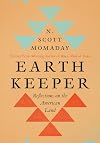
In one of his last books published before he died a year ago this month, N. Scott Momaday issues a plea to remember the earth and all that it has given us before we began systematically destroying it, one blade of grass at a time. This is a small book by the Pulitzer-Prize-winning author; with its one-page chapters, you can easily read it in an hour. I took a week to travel through the pages. It's good to take this book slowly, like a short daily prayer, so that you may linger upon good show more sentences like this: "Those who deny the spirit of the earth, who do not see that the earth is alive and sacred, who poison the earth and inflict wounds upon it have no shame and are without the basic virtues of humanity." Read this and weep. show less
House Made of Dawn is not an easy read, but the reader is rewarded with resplendent descriptions of America’s back country, as well as one of the best written sex scenes I’ve ever read — the perfect balance of detail and insinuation.
In rich, brilliant prose Momaday describes 1940s Native American life on and off the country’s reservations, as tribes mingle into a patchwork of Native American cultures. Momaday’s Abel is a World War II vet returning to his grandfather’s house on show more the reservation, caught between the trauma of a war where he had no sense of belonging and the trauma of a home, where he no longer feels a connection. He finds what work he can on the reservation, is invited into the bed of a wealthy woman who is renting a nearby vacation home, wrestles with issues of manhood, and retreats to the city where he finds steady work with good pay. Failing to escape his sense of having lost himself, his broken life becomes a broken body, and he returns home to find himself.
Abel’s race of the dead to mark the passing of his grandfather, triggered a visceral response in me, seeing Abel’s running more than a traditional rite, but also a metaphor for his life as he runs through the pain.
It triggered a knowing in me as I identified with that long-distance runner moving through life’s landscape, enduring the inevitable pain. As a recent breast-cancer survivor and a great grandmother surrounded by a new generation of family upheaval (suitable for a nighttime soap, perhaps, but too much for a novel), the story was, for me, a metaphor for certain stages in life when we accept the pain and endure as we move through it.
I’m reminded of Doris Lessing’s The Golden Notebook, considered a classic of feminist literature. Lessing never considered herself a feminist, and never intended for Notebook to be read as a contribution to the Women’s Movement. But after years of trying to correct the perception, in her the 20th anniversary edition of Notebook, Lessing wrote:
“. . . it is not only childish of a writer to want readers to see what he sees, to understand the shape and aim of a novel as he sees it — his wanting this means that he has not understood a most fundamental point. Which is that the book is alive and potent and fructifying and able to promote thought and discussion only when its plan and shape and intention are not understood, because that moment of seeing the shape and plan and intention is also the moment when there isn’t anything more to be got out of it.”
Like Lessing, I’ve no doubt that Momaday would not identify with my reading of the running metaphor. But also, as Lessing, he likely has long since reconciled to the truth that, as soon as an artist releases his work into the world, its meaning is forever in the eye of the beholder. Thus, running through the pain is what stuck with me as I read the last page and closed the book — still enduring through the recovery from chemo and radiation treatments and seeing a grandson walk backwards into disabling addiction and on and on. It’s one of those years where COVID-19 was just one more thing. And now I’m free to read the plethora of reviews that have surely been written about Momaday’s 1969 Pulitzer Prize-winning novel now that it has achieved the status of a classic, is taught in college classrooms, and has become the subject of innumerable essays in literary criticism. show less
In rich, brilliant prose Momaday describes 1940s Native American life on and off the country’s reservations, as tribes mingle into a patchwork of Native American cultures. Momaday’s Abel is a World War II vet returning to his grandfather’s house on show more the reservation, caught between the trauma of a war where he had no sense of belonging and the trauma of a home, where he no longer feels a connection. He finds what work he can on the reservation, is invited into the bed of a wealthy woman who is renting a nearby vacation home, wrestles with issues of manhood, and retreats to the city where he finds steady work with good pay. Failing to escape his sense of having lost himself, his broken life becomes a broken body, and he returns home to find himself.
Abel’s race of the dead to mark the passing of his grandfather, triggered a visceral response in me, seeing Abel’s running more than a traditional rite, but also a metaphor for his life as he runs through the pain.
It triggered a knowing in me as I identified with that long-distance runner moving through life’s landscape, enduring the inevitable pain. As a recent breast-cancer survivor and a great grandmother surrounded by a new generation of family upheaval (suitable for a nighttime soap, perhaps, but too much for a novel), the story was, for me, a metaphor for certain stages in life when we accept the pain and endure as we move through it.
I’m reminded of Doris Lessing’s The Golden Notebook, considered a classic of feminist literature. Lessing never considered herself a feminist, and never intended for Notebook to be read as a contribution to the Women’s Movement. But after years of trying to correct the perception, in her the 20th anniversary edition of Notebook, Lessing wrote:
“. . . it is not only childish of a writer to want readers to see what he sees, to understand the shape and aim of a novel as he sees it — his wanting this means that he has not understood a most fundamental point. Which is that the book is alive and potent and fructifying and able to promote thought and discussion only when its plan and shape and intention are not understood, because that moment of seeing the shape and plan and intention is also the moment when there isn’t anything more to be got out of it.”
Like Lessing, I’ve no doubt that Momaday would not identify with my reading of the running metaphor. But also, as Lessing, he likely has long since reconciled to the truth that, as soon as an artist releases his work into the world, its meaning is forever in the eye of the beholder. Thus, running through the pain is what stuck with me as I read the last page and closed the book — still enduring through the recovery from chemo and radiation treatments and seeing a grandson walk backwards into disabling addiction and on and on. It’s one of those years where COVID-19 was just one more thing. And now I’m free to read the plethora of reviews that have surely been written about Momaday’s 1969 Pulitzer Prize-winning novel now that it has achieved the status of a classic, is taught in college classrooms, and has become the subject of innumerable essays in literary criticism. show less
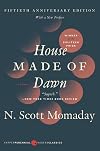
This 1969 Pulitzer winning novel reads like an epic poem and its descriptions of the New Mexican landscape are so vivid you can almost feel like you're there. But, for me, whatever other merits it might have are overshadowed by the lifeless portrayal of its female characters.

This is a book that must be read deliberately, and seems as if over half the pages were ripped from a larger tome and only about a quarter of what was removed was returned in a collage of patches through the remainder. There is poetry and pain and dislocation. The war traumatized young man is by no means the only sandblasted soul to inhabit these patched pages.
Lists
Awards


You May Also Like


Associated Authors
Statistics
- Works
- 36
- Also by
- 39
- Members
- 4,649
- Popularity
- #5,427
- Rating
- 3.7
- Reviews
- 73
- ISBNs
- 137
- Languages
- 6
- Favorited
- 11
