
Lisa Charleyboy
Author of #NotYourPrincess: Voices of Native American Women
Works by Lisa Charleyboy
Tagged
Common Knowledge
There is no Common Knowledge data for this author yet. You can help.
Members
Reviews
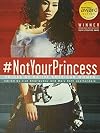
Lots of people received this as an ARC and the formatting was absolutely bizarre. To those people I say: find a copy of this, because the finished product is gorgeous.
This is a very feminist anthology of poems, art, photography, interviews and everything else by Native women, for young native women (or femmes, or boys, or however anyone identifies). It's split up into four sections: The Ties That Bind Us, It Could Have Been Me, I am Not Your Princess and Pathfinders.
I liked lots of show more different parts from lots of different sections but I loved Chief Lady Bird’s art, right beside Gwen Benaway’s poetry. Benaway is a trans Anishnaabe poet who writes about bodies and bodies of water and her poetry is easy to read despite how heavy the content can sometimes be. Chief Lady Bird is also Anishnaabe and I just love her use of bold, vivid colours. She works so much and produces so many beautiful pieces, check her art out on Twitter if you like. c:
This just felt like a really authentic, genuine collection and I'm so glad it exists. show less
This is a very feminist anthology of poems, art, photography, interviews and everything else by Native women, for young native women (or femmes, or boys, or however anyone identifies). It's split up into four sections: The Ties That Bind Us, It Could Have Been Me, I am Not Your Princess and Pathfinders.
I liked lots of show more different parts from lots of different sections but I loved Chief Lady Bird’s art, right beside Gwen Benaway’s poetry. Benaway is a trans Anishnaabe poet who writes about bodies and bodies of water and her poetry is easy to read despite how heavy the content can sometimes be. Chief Lady Bird is also Anishnaabe and I just love her use of bold, vivid colours. She works so much and produces so many beautiful pieces, check her art out on Twitter if you like. c:
This just felt like a really authentic, genuine collection and I'm so glad it exists. show less
"We aren't historic figures; we are modern women."
(Full disclosure: I received a free electronic ARC for review through NetGalley. Trigger warning for allusions to violence against women, suicidal ideation, genocide, and racism and sexism.)
I feel like I should begin this review with a word of caution: If you see any complaints about formatting problems ahead of the pub date, disregard them. The Kindle version of this ARC is indeed a hot mess, but this is par for the course when it comes to books with a heavy graphic element. The acsm file, read on Adobe Digital Editions (which I loathe, but happily suffered for this book!), gives a much clearer picture of what the finished, physical copy is meant to look like. And, if Amazon's listing is any indication, #Notyourprincess: Voices of Native American Women will only be released in print.
That said, #Notyourprincess is fierce, vibrant, and nicely organized. It feels a lot like an experimental art project, and I mean that in the best way possible. Within these here pages you'll find an eclectic mix of personal essays, poems, quotes, photographs, line art, watercolors, comics, portraits of activists and athletes, and interviews with Native women. #LittleSalmonWoman (Lianne Charlie) even adopts the format of an Instagram page, while "More Than Meets the Eye" (Kelly Edzerza-Babty and Claire Anderson) profiles ReMatriate, which shares images of modern Native women on social media in order to reclaim their identities and broaden our ideas of what a "real" Native American woman looks like. (The quote in my review's title comes from Claire Anderson, a founding member of ReMatriate.)
The topics touched upon run the gamut: genocide, colonization, forced assimilation, cultural appropriation, kidnapping, rape, domestic violence, mass incarceration, mental illness, sexuality, addiction, street harassment, homelessness, and intergenerational trauma.
As with most anthologies, #Notyourprincess is a bit of a mixed bag; although, as a white woman, I'm 110% positive that Indigenous readers will get more out of it than I did. Much to my surprise - since I don't always "get" poetry - some of the poems are among my favorites. Helen Knott's "The Things We Taught Our Daughters" is a searing and heartbreaking indictment of interpersonal violence, rape culture, and the patriarchy, while Melanie Fey tackles intergenerational trauma and contemporary bigotry with equal passion and anguish in "Stereotype This." (Both of these are examples of the book's eye-catching design, fwiw.)
I also enjoyed the pieces that mixed visual and written media; e.g, "My Grandmother Sophia" by Saige Mukash and "It Could Have Been Me" by Patty Stonefish. Shelby Lisk's "The Invisible Indians," quoted at the top of this review, is a powerful rebuttal to Western notions of what a "real" Indian looks like (and brings to mind the 2016 book, ‘All the Real Indians Died Off’: And 20 Other Myths About Native Americans, by Roxanne Dunbar-Ortiz & Dina Gilio-Whitaker).
My absolute favorite piece is the lone comic in the collection, "A Tale of Two Winonas" by Winona Linn. An f-you to the doomed lovers trope, Linn addresses such heady topics as suicide, rape, forced marriage, colonialism, and racism and misogyny with humor and wit - and all in a mere two pages. I was thrilled to see in the "Contributors" section that Linn is currently in Paris, working on a graphic novel.
Finally, I'd be remiss if I did not mention "Real NDNZ," Pamela J. Peters's profile of the Real NDNZ Re-Take Hollywood project. This photo series takes scenes from classic American films and replaces them with images of Native actors - thus highlighting and reimagining the racist stereotyping of classic cinema, while also combating the invisibility of Native actors in modern film. #Notyourprincess includes some rather stunning portraits of Shayna Jackson as Audrey Hepburn and Deja Jones as Ava Gardner.
(Click on the image to embiggen.)
http://www.easyvegan.info/2017/09/12/notyourprincess-edited-by-lisa-charleyboy-a... show less
(Full disclosure: I received a free electronic ARC for review through NetGalley. Trigger warning for allusions to violence against women, suicidal ideation, genocide, and racism and sexism.)
It’s strange to me how people always want me to be an “authentic Indian.” When I say I’m Haudenosaunee, they want me to look a certain way. Act a certain way. They’re disappointed when what they get is . . . just me. White-faced, red-haired. Theyshow more
spent hundreds of years trying to assimilate my ancestors, trying to create Indians who could blend in like me. But now they don’t want me either. I’m not Indian enough. They can’t make up their minds. They want buckskin and war paint, drumming, songs in languages they can’t understand recorded for them, but with English subtitles of course. They want educated, well-spoken, but not too smart. Christian, well-behaved, never questioning. They want to learn the history of the people, but not the ones who are here now, waving signs in their faces, asking them for clean drinking water, asking them why their women are going missing, asking them why their land is being ruined. They want fantastical stories of the Indians that used to roam this land. They want my culture behind glass in a museum. But they don’t want me. I’m not Indian enough.
("The Invisible Indians," Shelby Lisk)
Because history moves like a fevered heat down through the arteries of generations
Because PTSD to the family tree is like an ax Because colonization is the ghosts of buffalos with broken backs
Because today only burning flags could be found at the ghost dance of my people
("Stereotype This," Melanie Fey)
I feel like I should begin this review with a word of caution: If you see any complaints about formatting problems ahead of the pub date, disregard them. The Kindle version of this ARC is indeed a hot mess, but this is par for the course when it comes to books with a heavy graphic element. The acsm file, read on Adobe Digital Editions (which I loathe, but happily suffered for this book!), gives a much clearer picture of what the finished, physical copy is meant to look like. And, if Amazon's listing is any indication, #Notyourprincess: Voices of Native American Women will only be released in print.
That said, #Notyourprincess is fierce, vibrant, and nicely organized. It feels a lot like an experimental art project, and I mean that in the best way possible. Within these here pages you'll find an eclectic mix of personal essays, poems, quotes, photographs, line art, watercolors, comics, portraits of activists and athletes, and interviews with Native women. #LittleSalmonWoman (Lianne Charlie) even adopts the format of an Instagram page, while "More Than Meets the Eye" (Kelly Edzerza-Babty and Claire Anderson) profiles ReMatriate, which shares images of modern Native women on social media in order to reclaim their identities and broaden our ideas of what a "real" Native American woman looks like. (The quote in my review's title comes from Claire Anderson, a founding member of ReMatriate.)
The topics touched upon run the gamut: genocide, colonization, forced assimilation, cultural appropriation, kidnapping, rape, domestic violence, mass incarceration, mental illness, sexuality, addiction, street harassment, homelessness, and intergenerational trauma.
As with most anthologies, #Notyourprincess is a bit of a mixed bag; although, as a white woman, I'm 110% positive that Indigenous readers will get more out of it than I did. Much to my surprise - since I don't always "get" poetry - some of the poems are among my favorites. Helen Knott's "The Things We Taught Our Daughters" is a searing and heartbreaking indictment of interpersonal violence, rape culture, and the patriarchy, while Melanie Fey tackles intergenerational trauma and contemporary bigotry with equal passion and anguish in "Stereotype This." (Both of these are examples of the book's eye-catching design, fwiw.)
I also enjoyed the pieces that mixed visual and written media; e.g, "My Grandmother Sophia" by Saige Mukash and "It Could Have Been Me" by Patty Stonefish. Shelby Lisk's "The Invisible Indians," quoted at the top of this review, is a powerful rebuttal to Western notions of what a "real" Indian looks like (and brings to mind the 2016 book, ‘All the Real Indians Died Off’: And 20 Other Myths About Native Americans, by Roxanne Dunbar-Ortiz & Dina Gilio-Whitaker).
My absolute favorite piece is the lone comic in the collection, "A Tale of Two Winonas" by Winona Linn. An f-you to the doomed lovers trope, Linn addresses such heady topics as suicide, rape, forced marriage, colonialism, and racism and misogyny with humor and wit - and all in a mere two pages. I was thrilled to see in the "Contributors" section that Linn is currently in Paris, working on a graphic novel.
Finally, I'd be remiss if I did not mention "Real NDNZ," Pamela J. Peters's profile of the Real NDNZ Re-Take Hollywood project. This photo series takes scenes from classic American films and replaces them with images of Native actors - thus highlighting and reimagining the racist stereotyping of classic cinema, while also combating the invisibility of Native actors in modern film. #Notyourprincess includes some rather stunning portraits of Shayna Jackson as Audrey Hepburn and Deja Jones as Ava Gardner.
(Click on the image to embiggen.)
http://www.easyvegan.info/2017/09/12/notyourprincess-edited-by-lisa-charleyboy-a... show less
Considering I am supposed to help create a book with many chapters connecting different topics with a single, overarching theme, I think I now have a possible format in my mind that can be used. This book is phenomenal. It is rare that a book feels like it is criticizing you for your ignorance and I do not necessarily think that that is a bad thing.
The book is a specialized survey of stories and artwork from Native American women. As such, it could technically also count as dozens of show more informational picture books with a clear thematic through line. The only consistencies in this book are that all of the contributors are Native American women, all of the contributions feature a combination of art and writing (whether it be prose, poetry, etc.), and all of the entries are organized thematically.
Each chapter of the book is thematically structured, with each chapter focusing on some element of the Native American experience. One chapter focuses on physical and sexual violence. Another focuses on stereotyping. One also focuses on historical narratives of disruption, separation, and oppression of Native American cultures by white settlers. There is no consistency in how each page is presented, and that is wonderful. Each set of pages is an unique artistic decision on the part of the contributors, and the book's two editors, Lisa Charleyboy and Mary Beth Leatherdale, were simply in charge of structuring their contributions in the most thematically appropriate way possible. I think they succeeded.
Looking for a consistent tone in an anthology work can be tricky, particularly since the various women are not talking about the same topics or viewpoints. However, in spite of how easy it would be to come off as such, the book is never condescending. Are some of the women offended? Yes. Are they biased and thus is the book biased? Yes, but given their perspectives and history and some of the stories that were told, it would be hard not to be. The story that stuck with me the most is when a white masseuse told his Native American female client that she, "isn't a real one," after he lists off all of the Native American stereotypes he knows. That viscerally disgusted me in ways that I didn't think I was still capable of.
It is the existence of books like this that I am happy I took a Nonfiction course. These are the kinds of books I would use to teach history to middle school and maybe even high school students. The book is brutally honest, beautiful, and thematically rich both because of its subject matter and also because it showcases dozens of unique artistic expressions of Native American women's life experiences. An absolute gem. show less
The book is a specialized survey of stories and artwork from Native American women. As such, it could technically also count as dozens of show more informational picture books with a clear thematic through line. The only consistencies in this book are that all of the contributors are Native American women, all of the contributions feature a combination of art and writing (whether it be prose, poetry, etc.), and all of the entries are organized thematically.
Each chapter of the book is thematically structured, with each chapter focusing on some element of the Native American experience. One chapter focuses on physical and sexual violence. Another focuses on stereotyping. One also focuses on historical narratives of disruption, separation, and oppression of Native American cultures by white settlers. There is no consistency in how each page is presented, and that is wonderful. Each set of pages is an unique artistic decision on the part of the contributors, and the book's two editors, Lisa Charleyboy and Mary Beth Leatherdale, were simply in charge of structuring their contributions in the most thematically appropriate way possible. I think they succeeded.
Looking for a consistent tone in an anthology work can be tricky, particularly since the various women are not talking about the same topics or viewpoints. However, in spite of how easy it would be to come off as such, the book is never condescending. Are some of the women offended? Yes. Are they biased and thus is the book biased? Yes, but given their perspectives and history and some of the stories that were told, it would be hard not to be. The story that stuck with me the most is when a white masseuse told his Native American female client that she, "isn't a real one," after he lists off all of the Native American stereotypes he knows. That viscerally disgusted me in ways that I didn't think I was still capable of.
It is the existence of books like this that I am happy I took a Nonfiction course. These are the kinds of books I would use to teach history to middle school and maybe even high school students. The book is brutally honest, beautiful, and thematically rich both because of its subject matter and also because it showcases dozens of unique artistic expressions of Native American women's life experiences. An absolute gem. show less
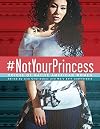
The intergenerational trauma experienced by Canadian Indigenous women and girls, stemming from Canada’s colonial legacy, is exposed through compelling poems, stories and illustrations. Not your Princess is filled with the powerful voices of contemporary Indigenous women and girls courageously sharing their stories of growing up amid violence and abuse in a country that attempted to eradicate their culture. While the lack of a cultural identity is a reoccurring theme, for many of the show more contributors, the power and catharsis of sharing the truth of their experiences is a step towards “rematriating” – taking back the female Indigenous identity. show less
Lists
Awards


You May Also Like


Associated Authors
Statistics
- Works
- 3
- Members
- 670
- Popularity
- #37,679
- Rating
- 4.3
- Reviews
- 42
- ISBNs
- 19