On This Page
Description
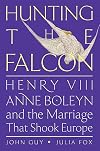
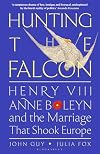
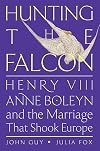
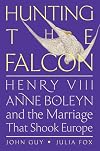
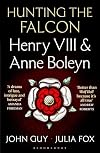
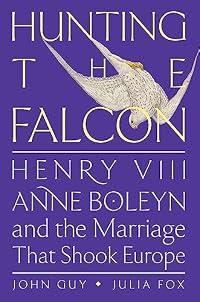
A groundbreaking examination of how the marriage of Henry VIII and Anne Boleyn sent shockwaves across a continent and changed England forever. 'A sumptuous drama of lust, intrigue and betrayal, underpinned by the harsh reality of politics' Amanda Foreman 'Better than Wolf Hall because it's all true' Andrew Roberts The story of Henry VIII and Anne Boleyn is one of the most remarkable in history- a long courtship followed by a shotgun wedding and then a coronation, ending just short of three show more years later when a husband's passion turned to such hatred that he simply wanted his wife gone. In Hunting the Falcon, John Guy and Julia Fox examine the most recent archival discoveries and peel back layers of historical myth to present Anne and Henry in startlingly new ways. They show how Anne and Henry's relationship was tied almost completely to the major events of international politics at one of the great turning points of European history, and dispel any assumptions that a sixteenth-century woman, even a queen, could exert little influence on the politics and beliefs of a patriarchal society. Anne was in fact a shrewd and ruthless politician in her own right, a woman who steered Henry and his policies - and whom Henry seriously contemplated making joint sovereign. Hunting the Falcon sets the facts and some completely new finds into a wide frame, unearthing the truth about these two extraordinary lives and their tumultuous times. It pays particular attention to the seven 'missing' years that Anne spent in France, and explores how she organised her side of the royal court in novel ways that ultimately sowed the seeds of her own downfall. In this feat of historical research and analysis, Guy and Fox offer a sumptuous retelling of one of the most consequential marriages in history and an exhilarating portrait of love, lust, politics and power. show lessTags
Recommendations







Member Reviews
I've read a fair bit of Tudor history, and Hunting the Falcon is among the more interesting bits of Tudor history I've read in the last few years. A key part of this accomplishment was that the authors spent as much time on Anne as they did on Henry.
A few of the topics covered and claims developed included
Re: Anne
• looking at Anne's experiences in French courts thoughtfully, when in a fair bit of such writing one usually finds a bit of "you know what went on over there, nudge-nudge, wink-wink"
• introducing the handful of formidable women in France at that time: mothers, sisters, and wives who spent time as a regent, sat in on council meetings, or engaged in serious, detailed political conversation with a husband
• taking seriously show more that spending time in these women's courts would almost certainly have shaped what Anne thought it meant to be a queen
• looking at Anne's actions as queen to see which might have been inspired by her French peers
• seeing more than a desire to land Henry in her embrace of religious reformation
Re: Henry
• doing a bit of "armchair psychoanalizing" that seemed logical and fact-based, rather than pretentious or overblown
• discussing the ways he explained and affirmed his thinking to himself, essentially doubling down on what might have begun as musings until they became certainties
• considering the ways his perception of Anne's intellect and self assertion might change when she became wife and not a lover pursued
One observation I want to make, having read the book in late 2025, is that the authors' considerations of Henry were useful in thinking about my current head of state. Understanding a person doesn't necessarily make resistance against them easy, but it certainly can help.
I received a free electronic review copy of this title from the publisher via Edelweiss; the opinions are my own. show less
A few of the topics covered and claims developed included
Re: Anne
• looking at Anne's experiences in French courts thoughtfully, when in a fair bit of such writing one usually finds a bit of "you know what went on over there, nudge-nudge, wink-wink"
• introducing the handful of formidable women in France at that time: mothers, sisters, and wives who spent time as a regent, sat in on council meetings, or engaged in serious, detailed political conversation with a husband
• taking seriously show more that spending time in these women's courts would almost certainly have shaped what Anne thought it meant to be a queen
• looking at Anne's actions as queen to see which might have been inspired by her French peers
• seeing more than a desire to land Henry in her embrace of religious reformation
Re: Henry
• doing a bit of "armchair psychoanalizing" that seemed logical and fact-based, rather than pretentious or overblown
• discussing the ways he explained and affirmed his thinking to himself, essentially doubling down on what might have begun as musings until they became certainties
• considering the ways his perception of Anne's intellect and self assertion might change when she became wife and not a lover pursued
One observation I want to make, having read the book in late 2025, is that the authors' considerations of Henry were useful in thinking about my current head of state. Understanding a person doesn't necessarily make resistance against them easy, but it certainly can help.
I received a free electronic review copy of this title from the publisher via Edelweiss; the opinions are my own. show less
The life of Anne Boleyn life was utterly remarkable, but it was not destined to be so. Initially the future queen seemed set for a conventional life as an upper class lady-about-court who might expect to marry into the nobility. What made the difference in Anne’s case was the time she spent in France at the court of Queen Claude. Arriving in 1515, Anne stayed at the French court for seven years. Whether or not Anne’s experiences in France made her particularly attractive to the men at the Henrician court on her return, we can only speculate. We have no evidence of what she did in France. Acknowledging that French court culture was richer than its English equivalent is about as far as we can go. What we do know is that Anne returned show more to England in 1521 and that sometime around 1525-26 – scholars have offered ingenious, but uncompelling, arguments for the precise dates – Henry fell passionately in love with her, as his letters show. Not only did she become his only mistress, Henry was prepared to break with Rome to secure her as his legitimate wife and queen.
That all makes for a substantial – and very well known – tale, but there was of course more. Three years after the break with Rome, Anne Boleyn and her alleged lovers (one of whom was her own brother, George, Lord Rochford) were accused and convicted of treason, adulteries and incest. It was a truly astonishing turn of events. One might say you could not make it up, but for the fact that many have suggested that either Henry, or his chief minister, Thomas Cromwell, did just that.
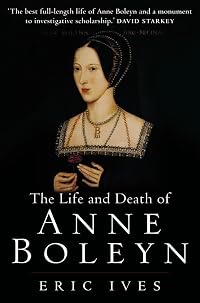
With a story this well known, and argued about for centuries, how should the modern historian approach Anne’s extraordinary life? In his 1986 biography, Eric Ives presented Anne as a leading player among factional rivalries. In my own Anne Boleyn: Fatal Attractions (2012), I adopted a forensic approach, comparable to that of a judge probing and then giving his verdict. The method chosen by John Guy and Julia Fox in this fine new study is to focus on narrative, adopting a biographical approach in which Anne’s story hurtles relentlessly forward towards her tragic end. The book is executed with consummate skill. As an exercise in storytelling, it is a formidable achievement.
Read the rest of the review at HistoryToday.com.
George W. Bernard is Emeritus Professor of Early Modern History at the University of Southampton. His latest book is Who Ruled Tudor England: Paradoxes of Power (Bloomsbury, 2021). show less
That all makes for a substantial – and very well known – tale, but there was of course more. Three years after the break with Rome, Anne Boleyn and her alleged lovers (one of whom was her own brother, George, Lord Rochford) were accused and convicted of treason, adulteries and incest. It was a truly astonishing turn of events. One might say you could not make it up, but for the fact that many have suggested that either Henry, or his chief minister, Thomas Cromwell, did just that.
With a story this well known, and argued about for centuries, how should the modern historian approach Anne’s extraordinary life? In his 1986 biography, Eric Ives presented Anne as a leading player among factional rivalries. In my own Anne Boleyn: Fatal Attractions (2012), I adopted a forensic approach, comparable to that of a judge probing and then giving his verdict. The method chosen by John Guy and Julia Fox in this fine new study is to focus on narrative, adopting a biographical approach in which Anne’s story hurtles relentlessly forward towards her tragic end. The book is executed with consummate skill. As an exercise in storytelling, it is a formidable achievement.
Read the rest of the review at HistoryToday.com.
George W. Bernard is Emeritus Professor of Early Modern History at the University of Southampton. His latest book is Who Ruled Tudor England: Paradoxes of Power (Bloomsbury, 2021). show less
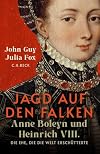
Großartige Doppelbiographie über König Heinrich VIII. von England und seiner zweiten Ehefrau Anne Boleyn. Man erfährt hier einiges über die junge Anne und ihre Zeit am französischen Königshof und ihrer Zeit am Hof von Erzherzogin Margarete, der Statthalterin der österreichischen Niederlande. Auch auf Annes Geburtsjahr wird eingegangen, es ist ja bis heute umstritten wann sie geboren wurde. Auch über Heinrich VIII. lernt man einiges hinzu. Das Buch kann ich jeden Tudor-Interessierten wärmstens Empfehlen.
Jun 26, 2025German
Ratings
Members
- Recently Added By
Author Information


Some Editions
Common Knowledge
- Canonical title*
- Jagd auf den Falken: Anne Boleyn und Heinrich VIII.
- Original publication date
- 2024-08-21
- People/Characters
- Anne Boleyn; Henry VIII, King of England; Elizabeth I, Queen of England; George Boleyn; Mary Boleyn; Elizabeth of York (show all 14); Henry VII, King of England; Margaret Beaufort; Thomas Boleyn; Elizabeth Boleyn; Catherine of Aragon; Arthur, Prince of Wales; Charles Brandon, Duke of Suffolk; Margaret of Austria
- Important places
- Tower of London, London, England, UK; Mechelen, Antwerp, Belgium; Paris, France; London, England, UK
*Some information comes from Common Knowledge in other languages. Click "Edit" for more information.
Classifications
- Genres
- History, General Nonfiction, Nonfiction, Biography & Memoir, Religion & Spirituality
- DDC/MDS
- 942.05 — History & geography History of Europe England and Wales England 1485-1603, Tudors
- LCC
- DA333 .B6 .G89 — History of Europe, Asia, Africa and Oceania Great Britain History of Great Britain England History By period Modern, 1485- Tudors, 1485-1603
- BISAC
Statistics
- Members
- 221
- Popularity
- 147,026
- Reviews
- 5
- Rating
- (4.10)
- Languages
- English, German
- Media
- Paper, Audiobook, Ebook
- ISBNs
- 13
- ASINs
- 5