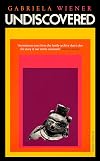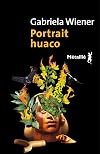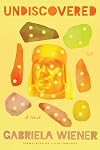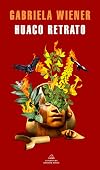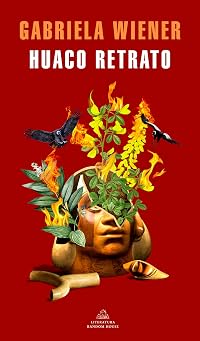
Undiscovered: A Novel
by Gabriela Wiener
On This Page
Description
"An award-winning Peruvian journalist and writer delivers her stunning English breakthrough in an autobiographical novel that explores colonialism through one woman's family ties to both the colonized and colonizer. Alone in a museum in Paris, Gabriela Wiener confronts her complicated family heritage. She is visiting an exhibition of pre-Columbian artifacts, spoils of European colonialism, many stolen from her homeland of Peru. As she peers at countless sculptures of Indigenous faces, each show more resembling her own, she sees herself in them - but the man responsible for pillaging them was her own great-great-grandfather, Austrian colonial explorer Charles Wiener. In the wake of her father's death, Gabriela returns to Peru. In alternating strands, she begins to probe her father's infidelity, her own polyamorous relationship, and the history of her colonial ancestor, unpacking the legacy that is her birthright. From the eye-patched persona her father adopted to carry out his double life to the brutal racism she encounters in her ancestor Charles's book, she traces a cycle of abandonment, jealousy, and fraud, in turn reframing her own personal struggles with desire, love, and race. Probing wounds both personal and historical, Wiener's provocative novel embarks the reader on a quest to pick up the pieces of something shattered long ago in the hope of making it whole once again"-- show lessTags
Recommendations



























Member Reviews
28. Undiscovered by Gabriela Wiener
translation: from Spanish by Julia Sanches, 2023
OPD: 2021
format: 183-page hardcover
acquired: April read: May 5-8 time reading: 4:29, 1.5 mpp
rating: 4
genre/style: contemporary autofiction theme: Booker 2024
locations: Spain and Lima, Peru
about the author: Peruvian writer, chronicler, poet and journalist, born in Lima, Peru in 1975. She has lived in Spain since 2003.
My 7th from the International Booker longlist and another that I liked a lot but didn't love. (The award was given to [Kairos] on Tuesday.) What I especially liked, personally, was the touch of Jewish history, the autofiction (a theme in the longlist) and the nature of the overall structure - namely that it's a little random. What I didn't show more like was the shocking lines she puts in there, although I seem to see some of its purpose.
Weiner is not a typical Peruvian name, especially for an ethnically Peruvian family. They trace their name to an Austrian-born Jewish explorer trying to become French. He explored Peru for France in the 19th-century, and returned with thousands of pillaged artefacts, many apparently currently displayed in a neglected Paris museum. But what he is most famous for is failing to discover Manchu Picchu. He searched but went off course in the mountains. So, as reflected in the title, it went undiscovered. He also left behind a pregnant Peruvian woman.
Gabriella Weiner is the also the daughter of prominent Peruvian activists. Weiner explores her ancestor, her father and his long-time extra-marital affair and her own polygamous marriage - to a Peruvian man and also a Spanish woman. And she uses herself, her personal failures to shock. If you like, a section is a very traditional and interesting exploration, then it's wrapped with some shocking thing she does or thinks. End of section. So, you're reading relaxed, and then momentarily uncomfortable you have to decide to continue, or set the book down. Readers are generally not going to like this narrator when we're done. We aren't going to like what she does.
Let's be clear. What she does is no worse than what her colonial ancestor did, or what her father did, but we, the reader, are really only deeply bothered when she does it. And this I think this part of her point - not that the past justifies her present issues, even if she does argue that on the surface, but how different we react to and how different we judge, intuitively, these two things. We tolerate the men, and the ancestral men, overlooking the women, but we condemn the wayward women deeply.
The novel is a reflection on family and cultural history, on historical uncertainties and crimes and the colonization of Peru, on racism, legacies, and on variations of unfaithfulness. Much remains undiscovered. An interesting work and, really, a nice addition to the International Booker longlist.
2024
https://www.librarything.com/topic/360386#8544366 show less
translation: from Spanish by Julia Sanches, 2023
OPD: 2021
format: 183-page hardcover
acquired: April read: May 5-8 time reading: 4:29, 1.5 mpp
rating: 4
genre/style: contemporary autofiction theme: Booker 2024
locations: Spain and Lima, Peru
about the author: Peruvian writer, chronicler, poet and journalist, born in Lima, Peru in 1975. She has lived in Spain since 2003.
My 7th from the International Booker longlist and another that I liked a lot but didn't love. (The award was given to [Kairos] on Tuesday.) What I especially liked, personally, was the touch of Jewish history, the autofiction (a theme in the longlist) and the nature of the overall structure - namely that it's a little random. What I didn't show more like was the shocking lines she puts in there, although I seem to see some of its purpose.
Weiner is not a typical Peruvian name, especially for an ethnically Peruvian family. They trace their name to an Austrian-born Jewish explorer trying to become French. He explored Peru for France in the 19th-century, and returned with thousands of pillaged artefacts, many apparently currently displayed in a neglected Paris museum. But what he is most famous for is failing to discover Manchu Picchu. He searched but went off course in the mountains. So, as reflected in the title, it went undiscovered. He also left behind a pregnant Peruvian woman.
Gabriella Weiner is the also the daughter of prominent Peruvian activists. Weiner explores her ancestor, her father and his long-time extra-marital affair and her own polygamous marriage - to a Peruvian man and also a Spanish woman. And she uses herself, her personal failures to shock. If you like, a section is a very traditional and interesting exploration, then it's wrapped with some shocking thing she does or thinks. End of section. So, you're reading relaxed, and then momentarily uncomfortable you have to decide to continue, or set the book down. Readers are generally not going to like this narrator when we're done. We aren't going to like what she does.
Let's be clear. What she does is no worse than what her colonial ancestor did, or what her father did, but we, the reader, are really only deeply bothered when she does it. And this I think this part of her point - not that the past justifies her present issues, even if she does argue that on the surface, but how different we react to and how different we judge, intuitively, these two things. We tolerate the men, and the ancestral men, overlooking the women, but we condemn the wayward women deeply.
The novel is a reflection on family and cultural history, on historical uncertainties and crimes and the colonization of Peru, on racism, legacies, and on variations of unfaithfulness. Much remains undiscovered. An interesting work and, really, a nice addition to the International Booker longlist.
2024
https://www.librarything.com/topic/360386#8544366 show less
This was an incredibly original and thought-provoking read. It's presented as a novel, but it’s deeply reflective and introspective, blurring the lines between reality and fiction in a searing and poetic way. It’s a powerful reflection on colonial imperialism, capturing stunning poetry in prose – and even a bit of verse at the end. The translation is beautiful, and I wish I could have read it in the original Spanish to fully appreciate it. The writing feels real and raw, unburdened by shame or deception, making it a unique reading experience. Gabriela is so likable and relatable, despite the experiences and choices that are far from my own. Her exploration of her family is loving and honest, acknowledging the rough patches without show more glossing them over. This book came to my attention as a 2024 International Booker Prize Nominee for the Longlist, and I'm glad I impulsively decided to pick it up. It's a short, cutting read filled with gorgeous flourishes and all my respect to the translator for capturing the essence and tone so beautifully. It’s an expressive reflection on the past and a moving exploration of personal and familial identity. show less
Antes de empezar a leer 'Huaco retrato', la nueva novela de Gabriela Wiener, como una semana antes, ya estaba completamente obsesionado por el título del libro, que repetía en voz alta por casa, mientras hacía las cosas que uno suele hacer en casa: colocar los vasos después de lavarlos, cocinar, darse una ducha, mirar al techo al despertar...
Era como si la peculiar sonoridad de las dos palabras que formaban ese título, que se acrecentaba al juntarlas, se hubiera hecho fuerte en una parte de mi mente y obligara a mi voz a repetirlas una y otra vez para que consiguiera de una vez un ejemplar y leyera. Un poco como esa violentísima estrategia infantil de preguntar "¿Puedo mamá? ¿Puedo mamá? ¿Puedo mamá?", hasta que la madre show more accede a lo que sea para acabar con la tortura. En mi caso, sin embargo, había una diferencia fundamental.
"Huaco retrato, huaco retrato, huaco retrato", repetía yo, lentamente. Pronunciando cada una de las sílabas con creciente placer, quizá todavía mayor por no tener ni idea de qué era un huaco retrato.
Es como si la obsesión hubiera precedido a la lectura del libro pero, tras su lectura, en una vorágine que apenas duró unas horas, allí seguía, intacta, transformada en algo más profundo y lleno de recovecos que se correspondían con los del propio libro que maneja temas tan profundos como la muerte, el colonialismo y el expolio de los “exploradores” occidentales, el peso del pasado, el poliamor y sus complejidades, el racismo, el sexo de los padres o la maternidad. Gabriela se desliza y se sumerge en todos esos temas con la destreza de quien domina su oficio.
A veces, los libros son demasiado grandes para los temas que tratan, otras veces, demasiado pequeños. Gabriela condensa un mundo en 176 páginas y construidas con frases como "Cuánto desamor podemos dar mientras creemos estar amando", a partir de las cuales podría construirse toda una carrera literaria. show less
Era como si la peculiar sonoridad de las dos palabras que formaban ese título, que se acrecentaba al juntarlas, se hubiera hecho fuerte en una parte de mi mente y obligara a mi voz a repetirlas una y otra vez para que consiguiera de una vez un ejemplar y leyera. Un poco como esa violentísima estrategia infantil de preguntar "¿Puedo mamá? ¿Puedo mamá? ¿Puedo mamá?", hasta que la madre show more accede a lo que sea para acabar con la tortura. En mi caso, sin embargo, había una diferencia fundamental.
"Huaco retrato, huaco retrato, huaco retrato", repetía yo, lentamente. Pronunciando cada una de las sílabas con creciente placer, quizá todavía mayor por no tener ni idea de qué era un huaco retrato.
Es como si la obsesión hubiera precedido a la lectura del libro pero, tras su lectura, en una vorágine que apenas duró unas horas, allí seguía, intacta, transformada en algo más profundo y lleno de recovecos que se correspondían con los del propio libro que maneja temas tan profundos como la muerte, el colonialismo y el expolio de los “exploradores” occidentales, el peso del pasado, el poliamor y sus complejidades, el racismo, el sexo de los padres o la maternidad. Gabriela se desliza y se sumerge en todos esos temas con la destreza de quien domina su oficio.
A veces, los libros son demasiado grandes para los temas que tratan, otras veces, demasiado pequeños. Gabriela condensa un mundo en 176 páginas y construidas con frases como "Cuánto desamor podemos dar mientras creemos estar amando", a partir de las cuales podría construirse toda una carrera literaria. show less
Gabriela Wiener's Undiscovered reflects on issues of indigenous identity, colonialism, colorism, and gender norms. This might make Undiscovered sound polemical—and in a way it is—but these are polemics of identity, of nailing down a specific set of intersectionalities and exploring the ways they interrelate. Among other genres, Wiener writes autobiographical, reflective essays. The subtitle of this book, "a Novel," implies that we're reading fiction, but the personal, emphatic voice leaves readers wondering.
Undiscovered opens with reflections on her great-great grandfather, Charles Wiener, a 19th Century explorer of Peru, who was responsible for taking thousands of pre-Columbian artifacts from Peru to France. By today's standards, show more these acquisitions are proof of imperialist egoism and a lack of scientific rigor. Many of these objects remain unlabeled; details about their origin and context are missing. Charles Wiener describes them and the culture from which they come in paternalistic fashion.
Beginning with her great-great grandfather, Weiner explores her family and personal identity. She was born in Peru to what could be called a distaff line of the family. She's named Wiener, but she's more certain of her relationship to the Peruvian woman from whom her father and great grandfather descend, rather than the man whose last name she bears. This is where the issues is indigenous identity, colonialism, and colorism come in. As an adult, Wiener is a dark-skinned Peruvian-born woman living in Spain—where dark skin and Latin American origins lead others to assume certain things. That's she's a housekeeper, for example.
In Spain, Wiener is part of a "thruple," a marriage of three people, in this case Wiener, her Spanish husband and her wife, who is white. This is where the issue of gender norms come in, since they presume two-unit, male/female pairings. But the ways in which her marriage breaks with some norms leave other norms intact, so when she engages in an affair while settling the estate of her father in Peru, she finds herself consumed by her knowledge that she has betrayed the triad and that she doesn't know what the repercussions of that choice will be.
Undiscovered covers a broad range of topics. The movement among these feels abrupt sometimes. What connects them is Wiener's existence, but that "I Am" isn't sufficient as a narrative arc for a novel. Even for an autobiography, one could hope of a bit more. Still, the topics Wiener raises are interesting and her explorations have an integrity that straddles the fiction-autobiography boundary. Come to this book with a willingness to think about identity in historical, global, and gender terms. If you do that, you'll enjoy the sometimes bumpy ride Undiscovered offers.
I received a free electronic review copy of this title from the publisher via NetGalley; the opinions are my own. show less
Undiscovered opens with reflections on her great-great grandfather, Charles Wiener, a 19th Century explorer of Peru, who was responsible for taking thousands of pre-Columbian artifacts from Peru to France. By today's standards, show more these acquisitions are proof of imperialist egoism and a lack of scientific rigor. Many of these objects remain unlabeled; details about their origin and context are missing. Charles Wiener describes them and the culture from which they come in paternalistic fashion.
Beginning with her great-great grandfather, Weiner explores her family and personal identity. She was born in Peru to what could be called a distaff line of the family. She's named Wiener, but she's more certain of her relationship to the Peruvian woman from whom her father and great grandfather descend, rather than the man whose last name she bears. This is where the issues is indigenous identity, colonialism, and colorism come in. As an adult, Wiener is a dark-skinned Peruvian-born woman living in Spain—where dark skin and Latin American origins lead others to assume certain things. That's she's a housekeeper, for example.
In Spain, Wiener is part of a "thruple," a marriage of three people, in this case Wiener, her Spanish husband and her wife, who is white. This is where the issue of gender norms come in, since they presume two-unit, male/female pairings. But the ways in which her marriage breaks with some norms leave other norms intact, so when she engages in an affair while settling the estate of her father in Peru, she finds herself consumed by her knowledge that she has betrayed the triad and that she doesn't know what the repercussions of that choice will be.
Undiscovered covers a broad range of topics. The movement among these feels abrupt sometimes. What connects them is Wiener's existence, but that "I Am" isn't sufficient as a narrative arc for a novel. Even for an autobiography, one could hope of a bit more. Still, the topics Wiener raises are interesting and her explorations have an integrity that straddles the fiction-autobiography boundary. Come to this book with a willingness to think about identity in historical, global, and gender terms. If you do that, you'll enjoy the sometimes bumpy ride Undiscovered offers.
I received a free electronic review copy of this title from the publisher via NetGalley; the opinions are my own. show less
fiction - autobiographical novel from Peruvian journalist/writer, taking place in Peru with bits in Spain and Paris (translated from Spanish).
At the death of her father, Gabi flies back to her homeland of Peru where she fixates on her European great-great-grandfather (unproven, but according to family lore) whose self-promoting explorations lead to the appropriation and removal of her Peruvian ancestors' artifacts from Macchu Pichu; she also alternately reflects on her father's extramarital affair (and daughter) and her own polyamorous relationships (as a dark-skinned woman in Spain).
Very different from what I was expecting--the threads get easier to follow after a while when you realize the next chapter is going to be about something show more completely different; some sex scenes are more explicit than some readers may be comfortable with, but it is a different perspective that is nonetheless welcome. show less
At the death of her father, Gabi flies back to her homeland of Peru where she fixates on her European great-great-grandfather (unproven, but according to family lore) whose self-promoting explorations lead to the appropriation and removal of her Peruvian ancestors' artifacts from Macchu Pichu; she also alternately reflects on her father's extramarital affair (and daughter) and her own polyamorous relationships (as a dark-skinned woman in Spain).
Very different from what I was expecting--the threads get easier to follow after a while when you realize the next chapter is going to be about something show more completely different; some sex scenes are more explicit than some readers may be comfortable with, but it is a different perspective that is nonetheless welcome. show less
I am generally not a fan of autofiction, I usually find it insufferable. If anything works as autofiction, though, it is Wiener's look at the man who her family has long claimed to be her great-great-grandfather, Jewish Austrian-French colonial explorer/collector Carl/Charles Wiener. Is he though? Does it really matter if he is, since she has been raised on this dichotomy of being a brown Peruvian woman descended from a man who would have thought her "other"? She also recognizes and acknowledges (p104-106) the similarities of him making up stories or stealing the work/ideas/heritage of others to gain his own acceptance in France. As his possibly gggrandaughter writes autofiction and tells all about her romantic relationships and even show more her children. What's true? What's false? What has she made up vs what she might think true but is false?
And what do her husband, wife, and kids think of being shared with the world in this way? The youngest is probably too young to understand--I was hoping that maybe the children were true fiction, but there are pictures online. This just makes me feel so uncomfortable for these kids. show less
And what do her husband, wife, and kids think of being shared with the world in this way? The youngest is probably too young to understand--I was hoping that maybe the children were true fiction, but there are pictures online. This just makes me feel so uncomfortable for these kids. show less
"The strangest thing about being alone here in Paris, in an anthropology museum gallery more or less beneath the Eiffel Tower, is the thought that all these statuettes that look like me were wrenched from my country by a man whose last name I inherited."
[b:Undiscovered|70240502|Undiscovered|Gabriela Wiener|https://i.gr-assets.com/images/S/compressed.photo.goodreads.com/books/1679456884l/70240502._SX50_.jpg|92726711] by Journalist [a:Gabriela Wiener|4601950|Gabriela Wiener|https://images.gr-assets.com/authors/1306876363p2/4601950.jpg] is a dive into Peruvian history as she traces the lineage of her Jewish Austrian/French great great grandfather, an explorer in Peru, grieves the death of her father and tries to understand his dual life show more with two families, and documents the racism and colonial-tinged political slurs she's encountered as a Spanish resident. She also discusses her polyamory relationship with her husband, Jaime, and her girlfriend, Roci, plus other affairs she experiences. She's a busy narrator. Although the book is catalogued as fiction, I am thinking it is more like autofiction from the online interviews. She's a good writer but I bogged down a bit in the ancestral family tree hunts and wanted to whip back to the contemporary which yielded plenty of drama. Her exchanges with her mother toward the end were satisfying in conversation and letters, although my overall assessment is that I would rather see any one of the story lines developed, particularly the effects of her move to Spain and life there as a journalist. show less
[b:Undiscovered|70240502|Undiscovered|Gabriela Wiener|https://i.gr-assets.com/images/S/compressed.photo.goodreads.com/books/1679456884l/70240502._SX50_.jpg|92726711] by Journalist [a:Gabriela Wiener|4601950|Gabriela Wiener|https://images.gr-assets.com/authors/1306876363p2/4601950.jpg] is a dive into Peruvian history as she traces the lineage of her Jewish Austrian/French great great grandfather, an explorer in Peru, grieves the death of her father and tries to understand his dual life show more with two families, and documents the racism and colonial-tinged political slurs she's encountered as a Spanish resident. She also discusses her polyamory relationship with her husband, Jaime, and her girlfriend, Roci, plus other affairs she experiences. She's a busy narrator. Although the book is catalogued as fiction, I am thinking it is more like autofiction from the online interviews. She's a good writer but I bogged down a bit in the ancestral family tree hunts and wanted to whip back to the contemporary which yielded plenty of drama. Her exchanges with her mother toward the end were satisfying in conversation and letters, although my overall assessment is that I would rather see any one of the story lines developed, particularly the effects of her move to Spain and life there as a journalist. show less
Members
- Recently Added By
Lists

Books Read in 2024
4,623 works; 126 members
Author Information

15+ Works 268 Members
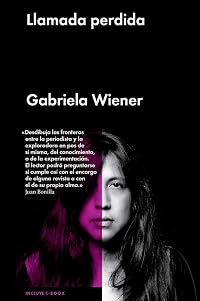
Gabriela Wiener (Lima, 1975) is the author of the collections Sexografias, Nueve lunas, Mozart, la iguana con Priapismo y otras bistorias, Llamada perdida, Ejercicios para el endurecimiento del espritu, and Dicen de m. She lives in Madrid and writes regularly for the newspapers El Pas (Spain) and La Repblica (Peru).
Some Editions
Awards and Honors
Awards
Notable Lists
Common Knowledge
- Original publication date
- 2023
- Epigraph
- In Peruvians, the false imbecility of the body is one with the factual imbecility of the soul.
—Charles Wiener
Embarrassment seems to be the sole means of communication between parents and children.
—Heinrich Boll (trans. Leila Vennewitz)
Death itself can enliven.
—Ludovico Ariosto (as cited by Charles Wiener) - First words
- The strangest thing about being alone here in Paris, in an anthropology museum gallery more or less beneath the Eiffel Tower, is the thought that all these statuettes that look like me were wrenched from my country by a man w... (show all)hose last name I inherited
- Last words
- (Click to show. Warning: May contain spoilers.)He runs after his friends, footprints washed away by the artificial stream.
- Blurbers
- Luiselli, Valeria; Enriquez, Mariana; Alarcón, Daniel; Schweblin, Samanta
- Original language
- Spanish
Classifications
- Genres
- Fiction and Literature, General Fiction, Historical Fiction
- DDC/MDS
- 863.7 — Literature & rhetoric Spanish Literature Spanish fiction 21st Century
- LCC
- PQ8498.433 .I36 .H8313 — Language and Literature French, Italian, Spanish and Portuguese literatures Spanish literature Provincial, local, colonial, etc. Spanish America
- BISAC
Statistics
- Members
- 119
- Popularity
- 274,089
- Reviews
- 10
- Rating
- (3.62)
- Languages
- English, Spanish
- Media
- Paper, Audiobook, Ebook
- ISBNs
- 12
- ASINs
- 6