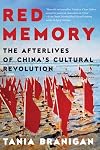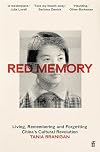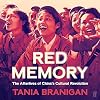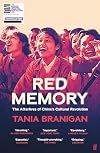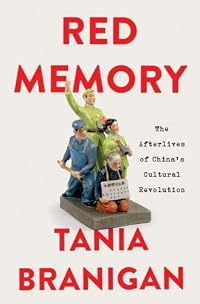
Red Memory: The Afterlives of China's Cultural Revolution
by Tania Branigan
On This Page
Description
"'It is impossible to understand China today without understanding the Cultural Revolution,' Tania Branigan writes. During this decade of Maoist fanaticism between 1966 and 1976, children turned on parents, students condemned teachers, and as many as two million people died for their supposed political sins, while tens of millions were hounded, ostracized, and imprisoned. Yet in China this brutal and turbulent period exists, for the most part, as an absence; official suppression and personal show more trauma have conspired in national amnesia. Red Memory uncovers forty years of silence through the stories of individuals who lived through the madness"-- show lessTags
Recommendations







Member Reviews
This is an engrossing, accessible book analyzing the Cultural Revolution through the lens of actual participants. Chilling. Beyond that, it looks at how the CR has become enmeshed in the memory of post-Mao China. The author even goes as far as saying that she couldn't even have done this book if it were started today because the present Xi Jinping-era would make it impossible.
I'm already coming to this material with a strong interest, but I think it would appeal to the general reader as well. The Cultural Revolution is so bizarre to me that it seems almost like fiction, but the weirdest part is the seeming amnesia about it (or willingness to forget) in China.
I'm already coming to this material with a strong interest, but I think it would appeal to the general reader as well. The Cultural Revolution is so bizarre to me that it seems almost like fiction, but the weirdest part is the seeming amnesia about it (or willingness to forget) in China.
I had heard the term Cultural Revolution before, but I had no idea what it meant. Wowza! Kids roaming the whole country killing others--for no apparent reason than they could make something up and do it. It shows the dangers of political rhetoric. And it only seems to die of its own volition, not because someone was able to stop it. This one will stick with me for awhile.
I have read many histories and memoirs of the Cultural Revolution. Because it is in recent memory, I have long been curious about how Chinese people think of the Cultural Revolution. With the exception of the victims, English-reading historians and readers no nothing about the thoughts of the participants.
Tania Branigan tries to correct that in Red Memory: Living, Remembering and Forgetting China's Cultural Revolution. She accepts the restrictions placed on reporting and memorializing the Cultural Revolution, and tries to find perpetrators, thinkers, and Red Guards. Unfortunately, despite genuinely trying, she doesn't get very far. This book ends up with lots of speculation about motives and not much on-the-ground reporting.
Branigan show more finds a few former Red Guards but none of them were directly involved in any atrocities. All of them report that they heard about bad things, but had no direct knowledge. Even in her interviews with Song Binbin's classmates - Binbin was a high school student who practically inaugurated the Cultural Revolution when she allegedly encouraged the beating death of her principal Bian Zhongyun - Branigan comes away with very little information, although these interviews are important for the historical record.
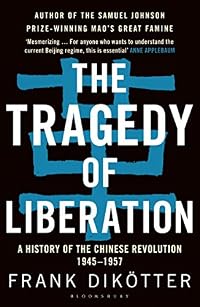
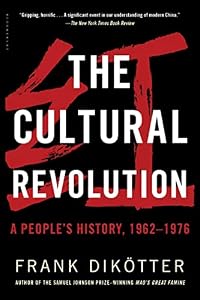
The book provides some of the timeline of the Cultural Revolution and does an excellent job dividing it between the urban and rural phases, but it is not meant as an exhaustive history. For that, Frank Dikötter's "The Cultural Revolution" suffices.
In the end, there is far too much editorializing and speculation in Red Memory. I hope Branigan will return to the subject and document more interviews with people who participated in the Cultural Revolution. show less
Tania Branigan tries to correct that in Red Memory: Living, Remembering and Forgetting China's Cultural Revolution. She accepts the restrictions placed on reporting and memorializing the Cultural Revolution, and tries to find perpetrators, thinkers, and Red Guards. Unfortunately, despite genuinely trying, she doesn't get very far. This book ends up with lots of speculation about motives and not much on-the-ground reporting.
Branigan show more finds a few former Red Guards but none of them were directly involved in any atrocities. All of them report that they heard about bad things, but had no direct knowledge. Even in her interviews with Song Binbin's classmates - Binbin was a high school student who practically inaugurated the Cultural Revolution when she allegedly encouraged the beating death of her principal Bian Zhongyun - Branigan comes away with very little information, although these interviews are important for the historical record.
The book provides some of the timeline of the Cultural Revolution and does an excellent job dividing it between the urban and rural phases, but it is not meant as an exhaustive history. For that, Frank Dikötter's "The Cultural Revolution" suffices.
In the end, there is far too much editorializing and speculation in Red Memory. I hope Branigan will return to the subject and document more interviews with people who participated in the Cultural Revolution. show less
Ratings
Members
- Recently Added By
Lists

China / Hong Kong / Taiwan
25 works; 1 member
Author Information

1 Work 194 Members
Some Editions
Awards and Honors
Awards
Distinctions
The Guardian Book of the Day (2023-01-30)
Common Knowledge
- Canonical title
- Red Memory: The Afterlives of China's Cultural Revolution
- Alternate titles
- Red Memory: Living, Remembering and Forgetting China's Cultural Revolution
- Important events
- Cultural Revolution
Classifications
- Genres
- History, General Nonfiction, Nonfiction, Biography & Memoir
- DDC/MDS
- 951.056 — History & geography History of Asia East Asia: China, Taiwan, Hong Kong, Korea History 1949- (People's Republic, 20th century) 1960-1969, Cultural revolution
- LCC
- DS778.7 .B72 — History of Europe, Asia, Africa and Oceania Asia History of Asia China History
- BISAC
Statistics
- Members
- 194
- Popularity
- 168,207
- Reviews
- 3
- Rating
- (3.71)
- Languages
- 5 — Dutch, English, French, Italian, Swedish
- Media
- Paper, Audiobook, Ebook
- ISBNs
- 13
- ASINs
- 5