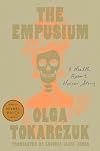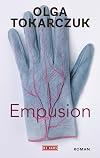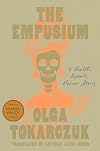
The Empusium: A Health Resort Horror Story
by Olga Tokarczuk
On This Page
Description
The Nobel Prize winner’s latest masterwork, set in a sanitarium on the eve of World War I, probes the horrors that lie beneath our most hallowed ideas September 1913. A young Pole suffering from tuberculosis arrives at Wilhelm Opitz’s Guesthouse for Gentlemen in the village of Görbersdorf, a health resort in the Silesian mountains. Every evening the residents gather to imbibe the hallucinogenic local liqueur and debate the great issues of the day: Monarchy or democracy? Do devils show more exist? Are women born inferior? War or peace? Meanwhile, disturbing things are happening in the guesthouse and the surrounding hills. Someone—or something—seems to be watching, attempting to infiltrate this cloistered world. Little does the newcomer realize, as he tries to unravel both the truths within himself and the mystery of the sinister forces beyond, that they have already chosen their next target. A century after the publication of The Magic Mountain , Olga Tokarczuk revisits Thomas Mann territory and lays claim to it, with signature boldness, inventiveness, humor, and bravura. show lessTags
Recommendations




































Member Reviews
On the opening page of this novel, an engineering student arrives by train on his way to a tuberculosis sanatorium in the mountains not long before the outbreak of the First World War, so it's pretty obvious what book we are supposed to supposed to have in mind as we read this. But Mieczysław is a Pole, a citizen of a country that doesn’t exist at that moment. He’s from Lwów (now Lviv) in Galicia, then part of the Austrian Empire, the sanatorium is at Görbersdorf (now Sokołowsko) in Silesia, then part of Germany, and the book is a mere 320 pages long.
I've a feeling we're not in Davos any more...
There is lots of elegant riffing off Thomas Mann along the way, but Tokarczuk angles the set-up in a different direction, as we would show more expect. She uses the all-male environment of the guest-house where Mieczysław is staying next to the sanatorium as a laboratory to explore how educated men talk about women. The misogynistic ideas they express are all paraphrased from actual Great (male) Thinkers, from St Augustine to Jack Kerouac (as Tokarczuk explains in a barbed acknowledgment at the end of the book). Our viewpoint character Mieczysław is a bit of an outsider in these discussions, mainly because his protective, military-minded father has kept him away from female company of all kinds for most of his life (his mother died when he was a young child).
At the same time, there is something nasty lurking in the woods, a moist, organic threat overshadowing the neat, highly organised life of the medical community. Mieczysław gradually becomes aware of the horror that has punctuated life in the area since medieval times, but is seldom spoken of.
As always with Tokarczuk, the result is a witty, dark, and distinctly unexpected kind of novel, rooted in the history and landscape of Silesia where she lives, and full of home truths for the reader to think about. With its crime/horror theme, it’s perhaps most similar in atmosphere to Drive your plow, but of course with Mann instead of Blake. And with a lot of mushrooms of various kinds along the way too. show less
I've a feeling we're not in Davos any more...
There is lots of elegant riffing off Thomas Mann along the way, but Tokarczuk angles the set-up in a different direction, as we would show more expect. She uses the all-male environment of the guest-house where Mieczysław is staying next to the sanatorium as a laboratory to explore how educated men talk about women. The misogynistic ideas they express are all paraphrased from actual Great (male) Thinkers, from St Augustine to Jack Kerouac (as Tokarczuk explains in a barbed acknowledgment at the end of the book). Our viewpoint character Mieczysław is a bit of an outsider in these discussions, mainly because his protective, military-minded father has kept him away from female company of all kinds for most of his life (his mother died when he was a young child).
At the same time, there is something nasty lurking in the woods, a moist, organic threat overshadowing the neat, highly organised life of the medical community. Mieczysław gradually becomes aware of the horror that has punctuated life in the area since medieval times, but is seldom spoken of.
As always with Tokarczuk, the result is a witty, dark, and distinctly unexpected kind of novel, rooted in the history and landscape of Silesia where she lives, and full of home truths for the reader to think about. With its crime/horror theme, it’s perhaps most similar in atmosphere to Drive your plow, but of course with Mann instead of Blake. And with a lot of mushrooms of various kinds along the way too. show less
Olga Tokarczuk won de Nobelprijs voor Literatuur 2018 en schreef o.a. ‘Jaag je ploeg over de botten van de doden’, ‘De jacobsboeken’ en ‘De rustelozen’. Karol Lesman vertaalde ‘Empusion’ naar het Nederlands en won samen met de Poolse auteur de Europese Literatuurprijs 2024. Tokarczuk zou volgens de cover een feministisch antwoord op de Toverberg hebben geformuleerd.
Mieczysław Wojnicz, ingenieur in opleiding, reist per trein naar het beroemde kuuroord Görbersdorf, verblijft niet in het sanatorium zelf, maar in een pension voor heren. Naphta en Settembrini duiken op in de gedaante van August en Lukas. Helaas worden hun discussies gevoed door flessen Schwärmerei, een plaatselijke paddenstoelenlikeur, zodat de show more filosofische overpeinzingen uit de Toverberg gereduceerd worden tot enkele korte discussies over de staatsvorm, het geloof of een derde dimensie die keer op keer uitmonden in het spuien van vrouwenhaat. Alhoewel Olga Tokarczuk een diepe bewondering voor de Toverberg koestert, lijkt deze roman een parodie op Thoman Manns meesterwerk.
Gelukkig is de coming of age van Mieczysław Wojnicz niet afhankelijk van de narcistische cafépraat. Dr. Semperweiß speelt een belangrijke rol in het aanvaarden van zijn bijzondere ik, evenals een vrouwenlijk. Het lugubere is nooit ver weg, zit verscholen in de natuur en wordt versterkt door een vrouwelijke wij-verteller. De enige vriendschapsrelatie wordt met de student Thilo van Hahn opgebouwd, die hem op een andere manier naar de wereld leert kijken.
‘Die verachting was zijn innerlijk skelet, zonder haar zou hij ineenstorten en als een smeltende sneeuwpop wegvloeien.’ (Lukas)
‘De als tot een gebed gevouwen handen van meneer August werden in werkelijkheid een instrument om te pikken, ze vormden een supersnavel, waarmee hij als een specht in de hoofden van zijn luisteraars verschillende kenniswegen uithakte, trajecten van begrip, fundamentele educatieroutes.’
Haar schrijfstijl is zo gedetailleerd dat er moeiteloos zowel poëtische natuurbeschrijvingen als haarfijne karaktertekeningen uit haar pen vloeien. Haar woordenschat etaleert een onuitputtelijke rijkdom en moet een uitdaging voor de vertaler geweest zijn, die lang vergeten Nederlandse woorden – zoals plachten, peroreren, omvademen, altoos - tevoorschijn tovert om de lezer zo in de sfeer van 1913 onder te dompelen. Regelmatig duiken Duitse woorden op die duidelijk maken in welk taalgebied we ons toen bevonden. Het Kurort van Dr. Brehmen met Regenbad en Strahlendusche heeft wel degelijk bestaan, maar ligt nu in Pools gebied: Sokołowsko.
Paddenstoelen kruipen als een Leitmotiv van schimmel tot Schwärmerei door het verhaal. Olga Tokarczuk toont ons een fluïde wereld waarin de grens tussen werkelijkheid en surrealisme vervaagt. In de buurt van een sanatorium liggen thema’s als ziekte, genezing, hoop en dood voor de hand, maar er is ook aandacht voor identiteit en diversiteit. Toch springt vooral de misogynie in het oog, gebaseerd op uitspraken van bekende personen die helaas in het boek anoniem blijven. Een lijst achteraan met namen én uitspraken was geen overbodige luxe geweest.
‘In filosofische zin kunnen we de vrouw niet beschouwen als een volmaakt geheel...’
‘Aangezien ze kinderen baart, is ze gemeenschappelijk bezit...’
Het unheimliche zweeft door het verhaal: van geluiden op zolder via verhalen over heksen naar jaarlijkse rituele moorden. Zo wordt het een natuurkundig griezelverhaal. Geen feministisch antwoord op de Toverberg die zeven jaren in beslag neemt, maar eerder een parodie die in een tijdsbestek van amper twee maanden een supersnelle ontwikkeling van de hoofdpersoon laat zien tegen een achtergrond van een poëtisch beschreven natuur, waarin wraak sluimert en een wrede dood dreigt als antwoord op de vrouwenhaters. show less
Mieczysław Wojnicz, ingenieur in opleiding, reist per trein naar het beroemde kuuroord Görbersdorf, verblijft niet in het sanatorium zelf, maar in een pension voor heren. Naphta en Settembrini duiken op in de gedaante van August en Lukas. Helaas worden hun discussies gevoed door flessen Schwärmerei, een plaatselijke paddenstoelenlikeur, zodat de show more filosofische overpeinzingen uit de Toverberg gereduceerd worden tot enkele korte discussies over de staatsvorm, het geloof of een derde dimensie die keer op keer uitmonden in het spuien van vrouwenhaat. Alhoewel Olga Tokarczuk een diepe bewondering voor de Toverberg koestert, lijkt deze roman een parodie op Thoman Manns meesterwerk.
Gelukkig is de coming of age van Mieczysław Wojnicz niet afhankelijk van de narcistische cafépraat. Dr. Semperweiß speelt een belangrijke rol in het aanvaarden van zijn bijzondere ik, evenals een vrouwenlijk. Het lugubere is nooit ver weg, zit verscholen in de natuur en wordt versterkt door een vrouwelijke wij-verteller. De enige vriendschapsrelatie wordt met de student Thilo van Hahn opgebouwd, die hem op een andere manier naar de wereld leert kijken.
‘Die verachting was zijn innerlijk skelet, zonder haar zou hij ineenstorten en als een smeltende sneeuwpop wegvloeien.’ (Lukas)
‘De als tot een gebed gevouwen handen van meneer August werden in werkelijkheid een instrument om te pikken, ze vormden een supersnavel, waarmee hij als een specht in de hoofden van zijn luisteraars verschillende kenniswegen uithakte, trajecten van begrip, fundamentele educatieroutes.’
Haar schrijfstijl is zo gedetailleerd dat er moeiteloos zowel poëtische natuurbeschrijvingen als haarfijne karaktertekeningen uit haar pen vloeien. Haar woordenschat etaleert een onuitputtelijke rijkdom en moet een uitdaging voor de vertaler geweest zijn, die lang vergeten Nederlandse woorden – zoals plachten, peroreren, omvademen, altoos - tevoorschijn tovert om de lezer zo in de sfeer van 1913 onder te dompelen. Regelmatig duiken Duitse woorden op die duidelijk maken in welk taalgebied we ons toen bevonden. Het Kurort van Dr. Brehmen met Regenbad en Strahlendusche heeft wel degelijk bestaan, maar ligt nu in Pools gebied: Sokołowsko.
Paddenstoelen kruipen als een Leitmotiv van schimmel tot Schwärmerei door het verhaal. Olga Tokarczuk toont ons een fluïde wereld waarin de grens tussen werkelijkheid en surrealisme vervaagt. In de buurt van een sanatorium liggen thema’s als ziekte, genezing, hoop en dood voor de hand, maar er is ook aandacht voor identiteit en diversiteit. Toch springt vooral de misogynie in het oog, gebaseerd op uitspraken van bekende personen die helaas in het boek anoniem blijven. Een lijst achteraan met namen én uitspraken was geen overbodige luxe geweest.
‘In filosofische zin kunnen we de vrouw niet beschouwen als een volmaakt geheel...’
‘Aangezien ze kinderen baart, is ze gemeenschappelijk bezit...’
Het unheimliche zweeft door het verhaal: van geluiden op zolder via verhalen over heksen naar jaarlijkse rituele moorden. Zo wordt het een natuurkundig griezelverhaal. Geen feministisch antwoord op de Toverberg die zeven jaren in beslag neemt, maar eerder een parodie die in een tijdsbestek van amper twee maanden een supersnelle ontwikkeling van de hoofdpersoon laat zien tegen een achtergrond van een poëtisch beschreven natuur, waarin wraak sluimert en een wrede dood dreigt als antwoord op de vrouwenhaters. show less
This is the third time I've tried to read a book by Olga Tokarczuk, and I finally made it. The Empusium: A Health Resort Horror Story is basically a misogynist scribe. Some of the sexist things the characters say are almost comical, they're so blatant, but at least I could follow the story to its satisfying end. I read another book of literary criticism that reveals the misogyny in famous male writers, but I can't remember its name. Tokarczuk's is much the same except that it is done in the guise of a novel. It's worth reading if you need to sharpen your rage, which at this time of the year, we may not. It has a rather low rating compared to her other books probably because it is so didactic. Evidently, something happened to this Nobel show more Prize winner that made her need to lash out. show less
In this book from Olga Tokarczuk, set in a mountain sanitorium in 1913 reminiscent of Thomas Mann’s , what stands out to me is the mirror she drew between physical decay (via consumption, or tuberculosis) and mental decay (misogyny, and seeing the world in rigid, binary ways).
The belief that there is more to life than what we usually see is a theme explored in several ways, through hidden forces in nature revealed by those who can divine them, like the 16th century Flemish painter Herri met de Bles, or thought experiments of humans being akin to “flat landers,” fundamentally unable to perceive beyond two dimensions. Perhaps most importantly is that people are also more complicated than simple binary, heterosexual norms, something show more explored gradually and very subtly in the main character.
I loved those aspects of the book, and the various topical references to the world at this time, as well as various bits of Polish history sprinkled in lightly, e.g. a brief quote from Mickiewicz’s Pan Tadeusz, and mentions of the short-lived Third of May Constitution of 1791 as well as various partitions of Poland.
What stopped me from fully loving the book was that it didn’t quite deliver on the supernatural horror front – it was too much of a slow burn for my taste there, with quite a bit of the book devoted to the patients carrying on in conversation fueled by a rather demonic mushroom liqueur, schwämerei. That of course delivers the ridiculously toxic views against women (that Tokarczuk cleverly shows us in the author’s note at the end are culled from a wide variety of real life historical and literary figures), but it sacrificed elements of the horror story, which often felt like they were left dangling. And then when the climax does come, it seemed rather obvious, and less powerful as a result.
Quotes:
On binary thinking:
“A sense of inferiority affects one’s whole life, especially one’s thinking. Did you know that? Because we lack confidence, we think up a very stable rigid system to keep us upright. To simplify what seems to us to be unnecessary complication. And the greatest simplification is black-and-white thinking, based on simple antitheses. Do you understand what I’m saying? The mind establishes for itself a set of acute opposites – black and white, day and night, up and down, man and woman – and they determine our entire perception. There’s nothing in the middle. Seen like that, the world is far simpler, it’s easy to navigate between these poles, it’s easy to establish rules of conduct, and it’s particularly easy to judge others, often reserving the luxury of obscurity for oneself. … This protects from reality, which is built up of a multitude of very subtle shades. If anyone thinks the world is a set of stark opposites, he is sick. I know what I’m saying. It’s a powerful dysfunction.”
“But what is the world like?”
“Blurred, out of focus, flickering, now like this, now like that, depending on one’s point of view.”
On democracy:
“Democracy, my dear friend, does better within polytheistic systems,” said Herr August. … “Because polytheism prepares our minds to look at the world as being diversified, full of different energies that coexist. Monotheism is more suited to feudalism because of its hierarchical structures of superior and inferior beings.”
On hypocrisy and conformity:
“Every society has two pillars of activity: hypocrisy and conformism,” said Dr. Semperweiss. … “So hypocrisy always cites high-flown ideas that build a community. One should believe in them and show that one believes in them, but at base nobody takes those ideas entirely seriously. They are for other, and should be in force for them. Whereas conformism is a mode of moving about within this imaginary world that tells us to ignore everything that sticks out and doesn’t fit. And forgetfulness serves this purpose.”
On our inner worlds:
“All these matters absorbed his mind, drawing the world inside, into the large, chaotic space that each of us carries within like an invisible piece of luggage that we drag after us all our lives, without knowing why. Our true self.”
On modern art:
“That is how art thinks nowadays,” began Thilo. “It holds that a depicted object is only our mental projection of it, what know about the object, whereas in fact we have no access to what it really looks like or what it actually is. In other words, even traditional representation art creates objects rather than rendering their truth in reality. By doing so, it closes our minds instead of opening them.” …. “But modern, progressive art, the twentieth-century kind, has far greater ambitions. It wants to go beyond these limitations, to stage a revolution in perception, it wants to see things in a new way, from many viewpoints simultaneously, even ones that seem impossible. Cubism, futurism.”
On thoughts and meaning:
“…he might certainly have noticed how thoughts arise and what they are like – they are wisps of sensations carried by time like gossamer, moved by the wind, trails of tiny reactions that arrange themselves into random sequences eager for meaning. But their nature is volatile and impermanent, they appear and disappear, leaving behind an impression that something really did happen and that we took part in it. And that what we are stuck inside is stable and certain. That it exists.” show less
The belief that there is more to life than what we usually see is a theme explored in several ways, through hidden forces in nature revealed by those who can divine them, like the 16th century Flemish painter Herri met de Bles, or thought experiments of humans being akin to “flat landers,” fundamentally unable to perceive beyond two dimensions. Perhaps most importantly is that people are also more complicated than simple binary, heterosexual norms, something show more explored gradually and very subtly in the main character.
I loved those aspects of the book, and the various topical references to the world at this time, as well as various bits of Polish history sprinkled in lightly, e.g. a brief quote from Mickiewicz’s Pan Tadeusz, and mentions of the short-lived Third of May Constitution of 1791 as well as various partitions of Poland.
What stopped me from fully loving the book was that it didn’t quite deliver on the supernatural horror front – it was too much of a slow burn for my taste there, with quite a bit of the book devoted to the patients carrying on in conversation fueled by a rather demonic mushroom liqueur, schwämerei. That of course delivers the ridiculously toxic views against women (that Tokarczuk cleverly shows us in the author’s note at the end are culled from a wide variety of real life historical and literary figures), but it sacrificed elements of the horror story, which often felt like they were left dangling. And then when the climax does come, it seemed rather obvious, and less powerful as a result.
Quotes:
On binary thinking:
“A sense of inferiority affects one’s whole life, especially one’s thinking. Did you know that? Because we lack confidence, we think up a very stable rigid system to keep us upright. To simplify what seems to us to be unnecessary complication. And the greatest simplification is black-and-white thinking, based on simple antitheses. Do you understand what I’m saying? The mind establishes for itself a set of acute opposites – black and white, day and night, up and down, man and woman – and they determine our entire perception. There’s nothing in the middle. Seen like that, the world is far simpler, it’s easy to navigate between these poles, it’s easy to establish rules of conduct, and it’s particularly easy to judge others, often reserving the luxury of obscurity for oneself. … This protects from reality, which is built up of a multitude of very subtle shades. If anyone thinks the world is a set of stark opposites, he is sick. I know what I’m saying. It’s a powerful dysfunction.”
“But what is the world like?”
“Blurred, out of focus, flickering, now like this, now like that, depending on one’s point of view.”
On democracy:
“Democracy, my dear friend, does better within polytheistic systems,” said Herr August. … “Because polytheism prepares our minds to look at the world as being diversified, full of different energies that coexist. Monotheism is more suited to feudalism because of its hierarchical structures of superior and inferior beings.”
On hypocrisy and conformity:
“Every society has two pillars of activity: hypocrisy and conformism,” said Dr. Semperweiss. … “So hypocrisy always cites high-flown ideas that build a community. One should believe in them and show that one believes in them, but at base nobody takes those ideas entirely seriously. They are for other, and should be in force for them. Whereas conformism is a mode of moving about within this imaginary world that tells us to ignore everything that sticks out and doesn’t fit. And forgetfulness serves this purpose.”
On our inner worlds:
“All these matters absorbed his mind, drawing the world inside, into the large, chaotic space that each of us carries within like an invisible piece of luggage that we drag after us all our lives, without knowing why. Our true self.”
On modern art:
“That is how art thinks nowadays,” began Thilo. “It holds that a depicted object is only our mental projection of it, what know about the object, whereas in fact we have no access to what it really looks like or what it actually is. In other words, even traditional representation art creates objects rather than rendering their truth in reality. By doing so, it closes our minds instead of opening them.” …. “But modern, progressive art, the twentieth-century kind, has far greater ambitions. It wants to go beyond these limitations, to stage a revolution in perception, it wants to see things in a new way, from many viewpoints simultaneously, even ones that seem impossible. Cubism, futurism.”
On thoughts and meaning:
“…he might certainly have noticed how thoughts arise and what they are like – they are wisps of sensations carried by time like gossamer, moved by the wind, trails of tiny reactions that arrange themselves into random sequences eager for meaning. But their nature is volatile and impermanent, they appear and disappear, leaving behind an impression that something really did happen and that we took part in it. And that what we are stuck inside is stable and certain. That it exists.” show less
In a valley in the Carpathian mountains patients in a tuberculosis sanitarium are unwitting sacrifices to mythical animated dolls in the mountains.
Mieczwys is a sickly, young Polish man who goes to a mountain sanitarium in Silesia to be cured of his tuberculosis. He stays in a guesthouse for gentlemen who are being treated at the main sanitarium, but who have not yet been given a room. They spend the time between showers, massages and examinations discussing politics, philosophy and life over lunch and dinner. A recurrent topic of conversation is the inferiority of women, a notion that is later revealed to be gruesomely untrue. The med at the guesthouse pass most evenings drinking a liquor that is gradually revealed to be a show more hallucinogenic brew of local mushrooms. Early in the book, the body of the femaie housekeeper is found on the dining room table, with her throat cut, and strangled. Inexplicably, this is considered a suicide, and there is little investigation. The sickest of the young men in the quest house and a policeman who is taking the cure try to warn Mieczys to be wary, and to consider leaving before November, because many of the bodies in the local cemetery died in November, and there are rumors of a horror that lurks in the mountains. Villagers tell tales of the Tuntschi, spirits of woman scorned and vindictive, who need annual sacrifices of young men. The locals have been presenting the very sickest men at
the sanitarium as the sacrifices, to avoid losing men of their own. The sickest man at the guesthouse dies before the day of the sacrifice, and the innkeeper and accomplices abduct Mieczys and present him to the Tuntschi, but they do not take him as a sacrifice because he has anomalous genitalia. The innkeeper dies instead.
The mountain setting intentionally strongly resembles that of The Magic Mountain by Thomas Mann. The philosophical conversations over long dinners are also part of Mann's novel, but the eerie and mythical creatures ar this author's own creation. As I read the many misogynist dialogues written by a female author, I wondered if at the end revenge would be taken on the men of the guesthouse, and so it was. I looked up the sanitarium town, Gorbersdorf, and its sanitarium, finding that it exists in the southwest mountains of Poland (now named Sokołowsko). The Tuntschi is one of names of Alpine dolls made by lonely shepherds and charcoal burners that come to life and punish their creators.
This is a good mystery and an absorbing gothic tale, has a dark and detailed atmosphere, and an unexpected ending. show less
Mieczwys is a sickly, young Polish man who goes to a mountain sanitarium in Silesia to be cured of his tuberculosis. He stays in a guesthouse for gentlemen who are being treated at the main sanitarium, but who have not yet been given a room. They spend the time between showers, massages and examinations discussing politics, philosophy and life over lunch and dinner. A recurrent topic of conversation is the inferiority of women, a notion that is later revealed to be gruesomely untrue. The med at the guesthouse pass most evenings drinking a liquor that is gradually revealed to be a show more hallucinogenic brew of local mushrooms. Early in the book, the body of the femaie housekeeper is found on the dining room table, with her throat cut, and strangled. Inexplicably, this is considered a suicide, and there is little investigation. The sickest of the young men in the quest house and a policeman who is taking the cure try to warn Mieczys to be wary, and to consider leaving before November, because many of the bodies in the local cemetery died in November, and there are rumors of a horror that lurks in the mountains. Villagers tell tales of the Tuntschi, spirits of woman scorned and vindictive, who need annual sacrifices of young men. The locals have been presenting the very sickest men at
the sanitarium as the sacrifices, to avoid losing men of their own. The sickest man at the guesthouse dies before the day of the sacrifice, and the innkeeper and accomplices abduct Mieczys and present him to the Tuntschi, but they do not take him as a sacrifice because he has anomalous genitalia. The innkeeper dies instead.
The mountain setting intentionally strongly resembles that of The Magic Mountain by Thomas Mann. The philosophical conversations over long dinners are also part of Mann's novel, but the eerie and mythical creatures ar this author's own creation. As I read the many misogynist dialogues written by a female author, I wondered if at the end revenge would be taken on the men of the guesthouse, and so it was. I looked up the sanitarium town, Gorbersdorf, and its sanitarium, finding that it exists in the southwest mountains of Poland (now named Sokołowsko). The Tuntschi is one of names of Alpine dolls made by lonely shepherds and charcoal burners that come to life and punish their creators.
This is a good mystery and an absorbing gothic tale, has a dark and detailed atmosphere, and an unexpected ending. show less
This novel is lots of things, but definitely not light reading. It is a playful riff on Thomas Mann’s “The Magic Mountain”. One would have to be quite familiar with that work to actually pick up on all the fun Tokarczuk has with it. At bottom, however, her novel is not an homage to Mann, but a passionately feminist work. Herein lies Tokarczuk’s agenda and it is not the hidden variety. She starts with the title. This is never explained in the novel, but one can infer that it is based on a female demon in Greek mythology known for consuming men. From there, she introduces a male protagonist/narrator, Mieczysław Wojnicz, who demonstrates decidedly feminine traits both physical and emotional. To his father’s dismay, Miecz was show more prone to bullying by his peers for being a sissy. The setting is a TB sanitorium located in a remote village know for persecuting women as witches. Tokarczuk raises the specter of their menacing presence in the dark neighboring forest. Moreover, one senses that women have somehow aligned themselves with nature to rescue the environment from centuries of toxic destruction at the hands of men. The scarcity of women in the village only serves to emphasize this point. The novel’s pièce de resistance, however, is the array of minor characters in the book. These are all men and Wojnicz’s fellow TB patients. They represent all aspects of pre-WWI European intelligence and spend inordinate amounts of time debating dense philosophical questions. However, no matter the subject, these conversations always end up denigrating women. The misogyny is so extreme as to be darkly comical (I think of the Marx brothers). One might take this stuff with a grain of salt If it were not for Tokarczuk’s pointing out that the ideas these characters espouse are paraphrased from a wide range of modern and ancient literary sources.
The plot drags because nothing much happens throughout much of the book except resting, walking, dining and consuming a hallucinogenic aperitif made from magic mushrooms. Through all of this, the men just keep up their banter. This seems intentional as Tokarczuk wants to emphasize how meaningless much of this nonsense actually is and how destructive masculine supremacy has been to society in general. Meanwhile, people have been dying. A man is dismembered in the forest each November and the wife of the guesthouse proprietor ostensibly commits suicide to no one’s dismay. One of the patients turns out to be a detective investigating all the murders and a gravely ill young man voices the notion that the environment is actually the killer. This seems a little farfetched, but much of the rest of the plot is equally odd and implausible.
In general, this an uneven piece of literary fiction focusing on important issues surrounding gender identity. However, it is so slow as to tempt one to give up on it. Moreover, the conclusion is quite strange. Notwithstanding an elucidating epilogue, this novel leaves far too many loose ends to be totally satisfying. show less
The plot drags because nothing much happens throughout much of the book except resting, walking, dining and consuming a hallucinogenic aperitif made from magic mushrooms. Through all of this, the men just keep up their banter. This seems intentional as Tokarczuk wants to emphasize how meaningless much of this nonsense actually is and how destructive masculine supremacy has been to society in general. Meanwhile, people have been dying. A man is dismembered in the forest each November and the wife of the guesthouse proprietor ostensibly commits suicide to no one’s dismay. One of the patients turns out to be a detective investigating all the murders and a gravely ill young man voices the notion that the environment is actually the killer. This seems a little farfetched, but much of the rest of the plot is equally odd and implausible.
In general, this an uneven piece of literary fiction focusing on important issues surrounding gender identity. However, it is so slow as to tempt one to give up on it. Moreover, the conclusion is quite strange. Notwithstanding an elucidating epilogue, this novel leaves far too many loose ends to be totally satisfying. show less
Having recently read [b:The Magic Mountain|88077|The Magic Mountain|Thomas Mann|https://i.gr-assets.com/images/S/compressed.photo.goodreads.com/books/1645738968l/88077._SY75_.jpg|647489], I found this to be a very interesting/humorous/insightful/creepy take on some of the same territory. I did find it dragging in a few places (not unlike Mann), but that was kind of the point, right? These men do like to hear themselves talk. This was my first Tokarczuk, and it makes me want to read more.
Members
- Recently Added By
Published Reviews
ThingScore 100
In Olga Tokarczuk’s work, knowing how to pick mushrooms—organisms open to unruliness and interconnection and resistant to easy labeling—is a sign of good character.
added by mnicol
Lists

Ten Before The End
10 works; 1 member

Books Read in 2024
4,623 works; 126 members

Books Read in 2025
4,091 works; 97 members

Top Five Books of 2025
954 works; 303 members

2025
42 works; 1 member

The LonesomeReader Book Club
36 works; 1 member
Author Information

35+ Works 11,363 Members
Some Editions
Awards and Honors
Awards
Distinctions
The Guardian Book of the Day (2024-10-26)
Work Relationships
Was inspired by
Common Knowledge
- Canonical title*
- Empusion
- Original title
- Empuzjon – Horror przyrodoleczniczy
- Alternate titles*
- Empusion : een natuurgeneeskundig griezelverhaal
- Original publication date
- 2022-06-01 (Pools) (Pools); 2023 (Nederlands) (Nederlands)
- People/Characters
- Mieczyslaw Wojnicz; Walter Frommer; Thilo von Hahn; Wilhelm "Willi" Opitz; August August; Longin Lukas (show all 7); Dr. Semperweiss
- Important places
- Silesia, Germany
- Epigraph
- Every day things happen in the world that can't be explained by any law of things we know. Every day they're mentioned and forgotten, and the same mystery that brought them takes them away, transforming their secret into obli... (show all)vion. Such is the law by which things that can't be explained must be forgotten. The visible world goes on as usual in the broad daylight. Otherness watches us from the shadows.
Fernando Pessoa, The Book of Disquiet,
Translated by Richard Zenith - First words
- The view is obscured by clouds of steam from the locomotive that trail along the platform.
- Original language
- Polish
*Some information comes from Common Knowledge in other languages. Click "Edit" for more information.
Classifications
- Genres
- General Fiction, Fiction and Literature, Horror, Historical Fiction
- DDC/MDS
- 891.8 — Literature & rhetoric Literatures of other languages East Indo-European and Celtic literatures West and South Slavic languages (Bulgarian, Slovene, Polish, Czech, Slovak, Serbo-Croatian, and Macedonian)
- LCC
- PG7179 .O37 .E6713 — Language and Literature Slavic languages and literatures. Baltic languages. Albanian language Slavic. Baltic. Albanian Slavic Polish
- BISAC
Statistics
- Members
- 878
- Popularity
- 30,872
- Reviews
- 32
- Rating
- (3.66)
- Languages
- 13 — Czech, Danish, Dutch, English, Finnish, French, German, Greek, Italian, Polish, Spanish, Swedish, Turkish
- Media
- Paper, Audiobook, Ebook
- ISBNs
- 36
- ASINs
- 9