On This Page
Description
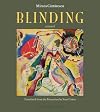
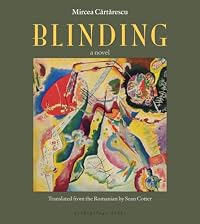
Mircea Cartarescu's prize-winning, genre-crossing memoir-novel of hallucinatory Bucharest is a bestseller in Romania. Blinding follows the protagonist's childhood and teenaged hospitalisation, his family's migration from Bulgaria the century before, his parents' courtship and the installation of the Communist regime. Personal and political history forms a lush backdrop to an engrossing tale that connects a travelling circus, secret police, zombie armies, American fighter pilots and New show more Orleanian swamps. show lessTags
Recommendations
















Member Reviews
What Orbitor (having read 2 out of 3 volumes) is:
* It's the autobiography of Mircea Cărtărescu, born in 1956, growing up in Ceaușescu's Romania with everything that that entails, and eventually deciding to write his autobiography of Mircea Cărtărescu, born in 1956, growing up in...
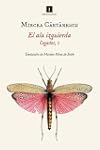
* It's three volumes, roughly 500 pages each, subtitled Left Wing, Body, Right Wing. The central metaphor is a giant butterfly that can only move by flapping its wings: one in the past that cannot be changed or controlled, one in the future that cannot be known, and in the middle a thin, prosaic body of Now that nobody sees, being too busy looking at the colourful wings. Larva, pupa, flight. Feed, digest, write.
* It's often quite straight-forward and show more realistic. It's often anything but. The line between the two gets... blurry.
* It's chaos theory; like a butterfly flapping its wings can cause a hurricane, every tiny detail of life is part of what makes everyone end up where they are.
* It's a paradox, much like life in a dictatorship where anyone might be an informant must be: everything is a secret, everything is transparent. Whenever the narrator sees anything, he sees everything; their past and that of their ancestors, every step along the way that brought them here, the endlessly complex wings of Past and Future flapping alongside their everyday bodies. The narrator has compound eyes. Any person, any object down to the simplest fixtures (elevator buttons!), can be used as a starting point to explore the world. He can zoom in endlessly, but like a Mandelbrot set, each story contains itself within itself. Or maybe he's just projecting. It's four-dimensional storytelling to give Pynchon vertigo.
* It's unstuck in time.
* It's a world where magical thinking works - or at least exists. The first volume is partly set in the once-upon-a-time past, it's all fairy tale and myth, as any history set in central Europe tends to be; the second volume in Mircea's youth, and like all children, his life is so full of both terrors and wonders that it gets both difficult and irrelevant to draw a strict line between reality and imagination (no talking tigers named after philosophers as of yet, though). The third volume...?
* It is, you might argue if you're not sick of namedropping, a post-Iron curtain post-Marquez Tristram Shandy done really well.
* It's occasionally full-on psychedelic body horror that would make David Cronenberg literally weep blood. (OK, he's David Cronenberg, that's what he always weeps.) At other points, it crosses over into science fiction. There's an entire subplot set in early 20th century New Orleans - you need jazz in a story like this. Anyone arguing that there's something cyberpunkish about the whole setup, dissolving the very idea of a clearly defined human body and a clearly defined human mind as the subject, would get no disagreement from me.
* It's both similar and completely different to another huge autobiographical novel, Knausgård's My Struggle; both are the stories of their own creation, autobiography as a way of understanding the world; but where Knausgård starts out with Descartes and draws his solipsist ergos one by one, Cartarescu starts in the other end, submerging himself in everything around him in order to create himself.
* It's "an impossible book, an unreadable book" that I can't help but keep reading.
* It's about a young man gazing out from a window in a concrete house in Bucharest.
* It's FUN. Hard work. But fun. show less
* It's the autobiography of Mircea Cărtărescu, born in 1956, growing up in Ceaușescu's Romania with everything that that entails, and eventually deciding to write his autobiography of Mircea Cărtărescu, born in 1956, growing up in...
* It's three volumes, roughly 500 pages each, subtitled Left Wing, Body, Right Wing. The central metaphor is a giant butterfly that can only move by flapping its wings: one in the past that cannot be changed or controlled, one in the future that cannot be known, and in the middle a thin, prosaic body of Now that nobody sees, being too busy looking at the colourful wings. Larva, pupa, flight. Feed, digest, write.
* It's often quite straight-forward and show more realistic. It's often anything but. The line between the two gets... blurry.
* It's chaos theory; like a butterfly flapping its wings can cause a hurricane, every tiny detail of life is part of what makes everyone end up where they are.
* It's a paradox, much like life in a dictatorship where anyone might be an informant must be: everything is a secret, everything is transparent. Whenever the narrator sees anything, he sees everything; their past and that of their ancestors, every step along the way that brought them here, the endlessly complex wings of Past and Future flapping alongside their everyday bodies. The narrator has compound eyes. Any person, any object down to the simplest fixtures (elevator buttons!), can be used as a starting point to explore the world. He can zoom in endlessly, but like a Mandelbrot set, each story contains itself within itself. Or maybe he's just projecting. It's four-dimensional storytelling to give Pynchon vertigo.
* It's unstuck in time.
* It's a world where magical thinking works - or at least exists. The first volume is partly set in the once-upon-a-time past, it's all fairy tale and myth, as any history set in central Europe tends to be; the second volume in Mircea's youth, and like all children, his life is so full of both terrors and wonders that it gets both difficult and irrelevant to draw a strict line between reality and imagination (no talking tigers named after philosophers as of yet, though). The third volume...?
* It is, you might argue if you're not sick of namedropping, a post-Iron curtain post-Marquez Tristram Shandy done really well.
* It's occasionally full-on psychedelic body horror that would make David Cronenberg literally weep blood. (OK, he's David Cronenberg, that's what he always weeps.) At other points, it crosses over into science fiction. There's an entire subplot set in early 20th century New Orleans - you need jazz in a story like this. Anyone arguing that there's something cyberpunkish about the whole setup, dissolving the very idea of a clearly defined human body and a clearly defined human mind as the subject, would get no disagreement from me.
* It's both similar and completely different to another huge autobiographical novel, Knausgård's My Struggle; both are the stories of their own creation, autobiography as a way of understanding the world; but where Knausgård starts out with Descartes and draws his solipsist ergos one by one, Cartarescu starts in the other end, submerging himself in everything around him in order to create himself.
* It's "an impossible book, an unreadable book" that I can't help but keep reading.
* It's about a young man gazing out from a window in a concrete house in Bucharest.
* It's FUN. Hard work. But fun. show less
Blinding is a fever dream; a baroque hallucinatory journey through a labyrinth of gorgeous language and discovered meaning. It is a memoir and a collection of fantasy scenes woven tight into the Bucharest landscape — a twilight that extends through centuries...a circus of the macabre and misbegotten. I could not put it down and I was continually getting lost, in the best possible way.
Cartarescu’s language, and this magisterial translation by Sean Cotter, can be compared to nothing completely, but is Joycean in it’s scope, with Ishmael Reed’s bop prosody and Thomas Pynchon’s improbable continuity mixed in with Grimm, Kafka and Calvino.
I find it impossible to describe the book further or the events that are chronicled. There is show more a sense that the story morphs from page to page like fungal growth and develops in the way the pupae of a butterfly that is a recurring theme. The story is liquid and cunning and by the end you are exhausted and exhilarated. show less
Cartarescu’s language, and this magisterial translation by Sean Cotter, can be compared to nothing completely, but is Joycean in it’s scope, with Ishmael Reed’s bop prosody and Thomas Pynchon’s improbable continuity mixed in with Grimm, Kafka and Calvino.
I find it impossible to describe the book further or the events that are chronicled. There is show more a sense that the story morphs from page to page like fungal growth and develops in the way the pupae of a butterfly that is a recurring theme. The story is liquid and cunning and by the end you are exhausted and exhilarated. show less
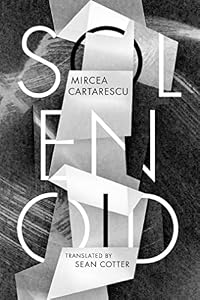
Mircea Cartarescu is an excellent writer. About that I have no doubt. Having previously read "Solenoid", I had great confidence that "Blinding" would be an equally impressive read. In some sense, that proved true. The prose and storytelling in "Blinding" is as good as any you will find. The reader is allowed to experience memorable people, places and eras from Cartarescu's home country of Romania. Moreover, Cartarescu shares perspectives and insights rarely to be found in modern literature. I often found myself mesmerized by the stories the author would weave.
The problem for me began about 300 pages in. I felt like I was reading virtually discreet stories which connected with previous ones only loosely. None of the book's elements show more disappointed. None lacked power or vision. What I began to question however, was what was holding all this together. I have read and enjoyed enough post-modern fiction to not expect a formal overarching plot. However, on the other hand, I began to picture the work as a collection of powerful but not tightly connected short stories. In fact, at times, it felt as if the author was telling a powerful and beautifully expressed story over and over in moderately different dress.
For me, the crushing blow was the final chapter. I was expecting some form of unifying or at least insightful closure. Instead I read a seemingly endless repetition of every spiritual and mystical imagery the author could collect. Everything was posited and quickly destroyed. And, we are asked to accept that this auto-da-fe of spiritual and philosophical reason as some form of truth. It felt like, finally, smoke and mirrors. I expected to briefly see the Wizard behind the curtain.
None of this is to say "Blinding" is a book to be ignored. It is beautifully and powerfully written. Cartarescu's storytelling is among the best in modern fiction. With the above caveats, a work not to be missed. 3.5 stars. show less
The problem for me began about 300 pages in. I felt like I was reading virtually discreet stories which connected with previous ones only loosely. None of the book's elements show more disappointed. None lacked power or vision. What I began to question however, was what was holding all this together. I have read and enjoyed enough post-modern fiction to not expect a formal overarching plot. However, on the other hand, I began to picture the work as a collection of powerful but not tightly connected short stories. In fact, at times, it felt as if the author was telling a powerful and beautifully expressed story over and over in moderately different dress.
For me, the crushing blow was the final chapter. I was expecting some form of unifying or at least insightful closure. Instead I read a seemingly endless repetition of every spiritual and mystical imagery the author could collect. Everything was posited and quickly destroyed. And, we are asked to accept that this auto-da-fe of spiritual and philosophical reason as some form of truth. It felt like, finally, smoke and mirrors. I expected to briefly see the Wizard behind the curtain.
None of this is to say "Blinding" is a book to be ignored. It is beautifully and powerfully written. Cartarescu's storytelling is among the best in modern fiction. With the above caveats, a work not to be missed. 3.5 stars. show less
Now this is the post-modern surrealistic epic full of nightmare logic I was looking for! Books like these are extra difficult because I am torn wanting to continue on to see what new wild imagery emerges, while wanting to reread passages to make sure I understand what is actually going on. Definitely going to look out for more Cartarescu in the future and I am sure I will revisit this more than once in the coming years.
Monsu held the butterfly uterus in the open palm of his right hand. Its skin fibers gently pulsed. In the end, it took flight, not through the mechanical beating of lepidoptera, but by undulations within the gelatinous medium, the way transparent beings on the bottom of the ocean proceed dreamlike through the abyss. P. 458
This book is nuts. In ways reminiscent of snatches of William S. Burroughs. But Cărtărescu's approach to the novel appears to stem from a deep appreciation for poetry. His habitual use of arcane scientific terms can only be intentional, geared toward, one would hope, precise observation and the enhancement of photo-realistic depictions alongside the dreamlike, demented transformations and unholy images recorded by show more the detached narrator. It's enchanting, unnerving and brilliant. But it would be easy to pick apart his hastily conjured juxtapositions. Death and birth, death and sex, death and lust, death and dreams, and lots of skeletons, both sentient and inanimate, human and animal, all cut a jig through the tormented landscape of post-war Romania. Wallpapered with more butterflies than the books of Nabokov, the texture and tone puts me in mind of a wild Dia de los Muertos procession, an exaggerated show of fanciful horror. Every ingredient under the sun makes it into his witch's brew, concocted for sheer entertainment. Even the above quotation, while elegant in its imagery, requires a leap of faith. You must suspend your disbelief and turn off your critical faculty. The only way to enjoy this luscious prose is to 'see it' rather than 'read it.' Flaws of logic make way for jungles of interpretation and labyrinths of the imagination.
Blinding thrives on impressionism. It follows its omniscient eye through uncanny valleys of hospital nightmares and filthy streets, where coupling ghosts wreak havoc alongside childish phantasms. He stirs in helpings of philosophy and sprinkles in holy relics. The author challenges your mind while delighting the senses. Many will be offended, as he does not shirk away from fluids and acts often better left in the dark, but his brand of magical realism casts wide nets, roping in astral projections, macrocosmic wombs, and ending in an unwelcome exegesis. Luckily, Mircea eases the reader into his madness, describing lengthy family and community rituals, focussing his intense author's lens on the finest of details, tackling every topic you can think of, while descending into moments of traditional coming-of-age narration. Truly this is how I would have liked My Struggle by Karl Ove Knausgård to read. This is more imposing, acerbic writing. You can learn from his fantastic gravitas, whereas Realism so often strikes me as pointless reiterations of thoughts and emotions that are all too familiar. If done right, this is not always the case, of course.
Once again, prepare for long descriptions, flights of fancy, and an uncontrolled narrative. This will obviously rub many readers the wrong way. It cannot be called autobiography unless you consider Dante's Inferno autobiographical as well. Nor is it strictly a dream diary. Much effort went into the craft of the sentences, even if the scattering of the themes and watering down of the plot inevitably followed. It is also a remarkable feat of translation that we can read this in English and still be astounded at the density of invention on display.
This novel is a bold experiment and a delight to read. It sustains a high pitch of aesthetic value and political relevance. It relishes, celebrates and shames human anatomy, religion symbols, and urban squalor. Like Pessoa, Cărtărescu lives vicariously through dreaming. Welcome to his madhouse, watch your step, when you come out the other side, the world may not look quite the same... show less
This book is nuts. In ways reminiscent of snatches of William S. Burroughs. But Cărtărescu's approach to the novel appears to stem from a deep appreciation for poetry. His habitual use of arcane scientific terms can only be intentional, geared toward, one would hope, precise observation and the enhancement of photo-realistic depictions alongside the dreamlike, demented transformations and unholy images recorded by show more the detached narrator. It's enchanting, unnerving and brilliant. But it would be easy to pick apart his hastily conjured juxtapositions. Death and birth, death and sex, death and lust, death and dreams, and lots of skeletons, both sentient and inanimate, human and animal, all cut a jig through the tormented landscape of post-war Romania. Wallpapered with more butterflies than the books of Nabokov, the texture and tone puts me in mind of a wild Dia de los Muertos procession, an exaggerated show of fanciful horror. Every ingredient under the sun makes it into his witch's brew, concocted for sheer entertainment. Even the above quotation, while elegant in its imagery, requires a leap of faith. You must suspend your disbelief and turn off your critical faculty. The only way to enjoy this luscious prose is to 'see it' rather than 'read it.' Flaws of logic make way for jungles of interpretation and labyrinths of the imagination.
Blinding thrives on impressionism. It follows its omniscient eye through uncanny valleys of hospital nightmares and filthy streets, where coupling ghosts wreak havoc alongside childish phantasms. He stirs in helpings of philosophy and sprinkles in holy relics. The author challenges your mind while delighting the senses. Many will be offended, as he does not shirk away from fluids and acts often better left in the dark, but his brand of magical realism casts wide nets, roping in astral projections, macrocosmic wombs, and ending in an unwelcome exegesis. Luckily, Mircea eases the reader into his madness, describing lengthy family and community rituals, focussing his intense author's lens on the finest of details, tackling every topic you can think of, while descending into moments of traditional coming-of-age narration. Truly this is how I would have liked My Struggle by Karl Ove Knausgård to read. This is more imposing, acerbic writing. You can learn from his fantastic gravitas, whereas Realism so often strikes me as pointless reiterations of thoughts and emotions that are all too familiar. If done right, this is not always the case, of course.
Once again, prepare for long descriptions, flights of fancy, and an uncontrolled narrative. This will obviously rub many readers the wrong way. It cannot be called autobiography unless you consider Dante's Inferno autobiographical as well. Nor is it strictly a dream diary. Much effort went into the craft of the sentences, even if the scattering of the themes and watering down of the plot inevitably followed. It is also a remarkable feat of translation that we can read this in English and still be astounded at the density of invention on display.
This novel is a bold experiment and a delight to read. It sustains a high pitch of aesthetic value and political relevance. It relishes, celebrates and shames human anatomy, religion symbols, and urban squalor. Like Pessoa, Cărtărescu lives vicariously through dreaming. Welcome to his madhouse, watch your step, when you come out the other side, the world may not look quite the same... show less
I very much enjoyed the depiction of Soviet-era Bucharest.
Members
- Recently Added By
Published Reviews
ThingScore 50
A good sense of time and place is the highlight of this overstuffed novel set in 20th century Romania—volume one of a trilogy that continues with Blinding: The Body and Blinding: The Right Wing.
added by DorsVenabili
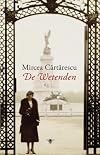
Op dit troosteloze Boekarest laat de in 1956 geboren Cartarescu in De Wetenden zijn verbeelding los. Het resultaat is een hallucinerende reis door de onder- en de bovenwereld van de stad, door de 20ste-eeuwse geschiedenis van Roemenië en de betoverende verhalen die Cartarescu daardoorheen weeft, langs alledaagse straattaferelen en apocalyptische visioenen, door het lichaam van de show more stadsbewoners en vooral de dromende geest van de verteller die het hele boek bijeenhoudt.
De Wetenden is een boek dat gemengde gevoelens oproept. De woorden zijn prachtig, de beelden indringend, de barokke stijl soms nét iets over de rand. Wanneer Cartarescu zijn fantasie gebruikt om de werkelijkheid te beschrijven, weet hij moeiteloos te overtuigen. Wanneer hij die de vrije teugel geeft, wordt van de lezer érg veel willigheid verwacht en blijft het alleen voor de liefhebbers genietbaar.
En toch is hier een imponerend schrijver aan het werk geweest. Door alle reserves heen blijft de bewondering voor het vakmanschap, de trefzekerheid en óók de verbeeldingskracht van Cartarescu overeind. De Wetenden is een boek dat maar half bevredigt, maar daarom des te meer naar werkelijke bevrediging door deze schrijver doet uitzien. show less
De Wetenden is een boek dat gemengde gevoelens oproept. De woorden zijn prachtig, de beelden indringend, de barokke stijl soms nét iets over de rand. Wanneer Cartarescu zijn fantasie gebruikt om de werkelijkheid te beschrijven, weet hij moeiteloos te overtuigen. Wanneer hij die de vrije teugel geeft, wordt van de lezer érg veel willigheid verwacht en blijft het alleen voor de liefhebbers genietbaar.
En toch is hier een imponerend schrijver aan het werk geweest. Door alle reserves heen blijft de bewondering voor het vakmanschap, de trefzekerheid en óók de verbeeldingskracht van Cartarescu overeind. De Wetenden is een boek dat maar half bevredigt, maar daarom des te meer naar werkelijke bevrediging door deze schrijver doet uitzien. show less
added by sneuper
Lists

Top Five Books of 2013
1,564 works; 722 members

contemporary literary fiction list to check out
47 works; 1 member
Author Information

66+ Works 2,643 Members
Some Editions
Awards and Honors
Series

Belongs to Publisher Series
Work Relationships
Is contained in
Has as a commentary on the text
Common Knowledge
- Canonical title
- Blinding
- Original title
- Orbitor. Aripa stângă
- Alternate titles*
- Die Wissenden - Orbitor-1
- Original publication date
- 1996
- Important places*
- Boekarest, Roemenië; Roemenië
- Disambiguation notice*
- Oorspronkelijke titel: Orbitor. Aripa stângă.
*Some information comes from Common Knowledge in other languages. Click "Edit" for more information.
Classifications
Statistics
- Members
- 443
- Popularity
- 68,770
- Reviews
- 11
- Rating
- (4.13)
- Languages
- 11 — Catalan, Dutch, English, French, German, Italian, Norwegian (Bokmål), Portuguese, Romanian, Spanish, Swedish
- Media
- Paper, Ebook
- ISBNs
- 28
- ASINs
- 3