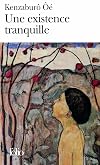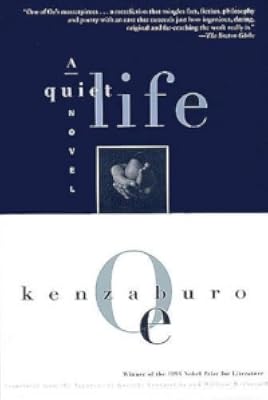
A Quiet Life
by Kenzaburō Ōe
On This Page
Description
This classic work of world literature by the 1994 Japanese Nobel laureate is a devastating and moving blend of memoir and fiction.An uncanny blend of the real with the imagined, of memoir with fiction, A Quiet Life is narrated by Ma-chan, a twenty-year-old woman. Her father is a famous and fascinating novelist; her older brother, though severely brain-damaged, possesses an almost magical gift for musical composition; and her mother's life is devoted to the care of them both.Ma-chan and her show more younger brother find themselves emotionally on the outside of this oddly constructed nuclear family. But when her father accepts a visiting professorship from an American university, Ma-chan finds herself suddenly the head of the household and at the center of family relationships that "are movingly illuminated" (TheNew York Times) through Oe's unique and unpredictable genius. show lessTags
Recommendations









Member Reviews
Summary: Ma-chan, a quiet, college age woman is left to care for her older brother who has a neurological disorder and younger, college-bound brother while her father, a famous writer, sorts out his life and faith in California on a writer’s residency.
All Ma-Chan wants is to live a quiet life, writing her thesis on Celine, a French novelist, while caring for her brother, nicknamed Eeyore, who suffers from epileptic fits that have caused brain damage, yet left him with an unusual musical talent. She has been more or less marginalized, an orphan even before her parents left Japan for California. Her parents tended to focus on the afflictions of the older brother and the promise of the younger brother, O-Chan, preparing for his college show more entrance exams while his parents are in America, Her father, a famous writer, has left for a writer’s residency in California. In reality, he is suffering from a “pinch” of the spirit, having suffered a loss of faith that causes him to wonder “how is a faithless person to cope with life?”
Ma-Chan is left to cope at a more practical level. She has to help her older brother deal with his sexual urges in socially appropriate ways while seeing that he gets to his sheltered workshop each day. She has to help others understand her brother’s seizures and resist their mockery of him, often in internal cries of “Hell no! Hell no!” She also takes him to the Shigetos, who help Eeyore discover and develop his unique gift for musical composition. One of these is titled “Sutego” or orphan. Both brother and sister are orphans together.
Eventually, it is recommended that Eeyore take swim lessons to channel some of his physical energies. It is here that they meet Mr. Arai, a shady character who agrees to teach Eeyore to swim. And he is very good at it and a bond develops between them, even as everything in us screams “predator!” Mr Shigeto starts watching out for them until a confrontation with Arai in which Mr. Shigeto is severely beaten, opening the way for Mr. Arai to pursue his designs.
The “quiet life” Ma-Chan wants comes at the cost of submerging her own selfhood. She describes herself as “robotizing.” She sees herself as a skinny thing with stick legs, oblivious of her own sexuality and that others might notice her. Yet there are her “Hell Nos” and her “Diary of Life,” written that “her papa might remember he has a family.” One comes to the end of this novel wondering whether Ma-Chan will find her voice and her self in more than a diary and her internal monologue. Will she heed the self that says “Hell No!” or let her father treat her as an orphan while he pursues an esoteric spiritual search? Will she emerge as the scholar in her own right?
Many of us want a quiet life. Life doesn’t always permit this, and more than that, at what price do we secure such a life? Is it at the price of our selves? Must we robotize? It seems these are the questions Oe’s novel asks of us. Meanwhile, he seems to take a swipe at the pretensions of literary figures who think their existential “pinches” more important than the real pinches they make those around them endure. show less
All Ma-Chan wants is to live a quiet life, writing her thesis on Celine, a French novelist, while caring for her brother, nicknamed Eeyore, who suffers from epileptic fits that have caused brain damage, yet left him with an unusual musical talent. She has been more or less marginalized, an orphan even before her parents left Japan for California. Her parents tended to focus on the afflictions of the older brother and the promise of the younger brother, O-Chan, preparing for his college show more entrance exams while his parents are in America, Her father, a famous writer, has left for a writer’s residency in California. In reality, he is suffering from a “pinch” of the spirit, having suffered a loss of faith that causes him to wonder “how is a faithless person to cope with life?”
Ma-Chan is left to cope at a more practical level. She has to help her older brother deal with his sexual urges in socially appropriate ways while seeing that he gets to his sheltered workshop each day. She has to help others understand her brother’s seizures and resist their mockery of him, often in internal cries of “Hell no! Hell no!” She also takes him to the Shigetos, who help Eeyore discover and develop his unique gift for musical composition. One of these is titled “Sutego” or orphan. Both brother and sister are orphans together.
Eventually, it is recommended that Eeyore take swim lessons to channel some of his physical energies. It is here that they meet Mr. Arai, a shady character who agrees to teach Eeyore to swim. And he is very good at it and a bond develops between them, even as everything in us screams “predator!” Mr Shigeto starts watching out for them until a confrontation with Arai in which Mr. Shigeto is severely beaten, opening the way for Mr. Arai to pursue his designs.
The “quiet life” Ma-Chan wants comes at the cost of submerging her own selfhood. She describes herself as “robotizing.” She sees herself as a skinny thing with stick legs, oblivious of her own sexuality and that others might notice her. Yet there are her “Hell Nos” and her “Diary of Life,” written that “her papa might remember he has a family.” One comes to the end of this novel wondering whether Ma-Chan will find her voice and her self in more than a diary and her internal monologue. Will she heed the self that says “Hell No!” or let her father treat her as an orphan while he pursues an esoteric spiritual search? Will she emerge as the scholar in her own right?
Many of us want a quiet life. Life doesn’t always permit this, and more than that, at what price do we secure such a life? Is it at the price of our selves? Must we robotize? It seems these are the questions Oe’s novel asks of us. Meanwhile, he seems to take a swipe at the pretensions of literary figures who think their existential “pinches” more important than the real pinches they make those around them endure. show less
This novel, like many other of Oe's works, looks at the life of a young woman who must care for her mentally challenged brother. It's amazing how this same theme permeates almost all of Oe's work (undoubtedly influenced by the fact that Oe's own son is mentally challenged), and yet it never feels over-written or repetitive. Each of his novels lends a different perspective/feeling regarding this theme and compliments his other writing. The way that he brings a sense of respect and understanding and appreciation to people with intellectual disabilities, in a manner that doesn't feel at all patronizing or overly simplified, is as uncommon as it is admirable. This novel felt a bit less angry and was less visceral than most of his other show more work; I enjoyed it, but it wasn't my favorite. show less
In a piece of remarkable serendipity, I happened upon A Quiet Life at Powell's just after reading Claire's post about the authors she planned to read for the Japanese Literature Challenge. Knowing the lady has taste, I picked it up and started reading. I got through the first chapter in the store, bought it, came home and devoured the rest of it over the course of three days, letting it eclipse any other reading I might have been doing. I've been reading a lot of the bizarre and macabre lately, and the understated, minimally-drawn yet intimate realism of A Quiet Life felt like exactly the contrast I needed at this moment in time. It's always such a gift to happen upon something so precisely calculated to resonate with my mood at a show more particular juncture, and when it happens I always try to welcome it with open arms.
Two things really made this book for me: the quality of the writing, and my warm liking for the main character, Ma-chan. The plot, which is apparently an artful mixture of fiction and autobiography, concerns the three adult children of a famous Japanese author, K, who retreats to a temporary post at UC-Berkeley to deal with one of his recurring existential crises (which he calls "pinches.") His wife accompanies him, leaving the three kids, the eldest of whom (Eeyore) is brain-damaged, to fend for themselves. They are all making their ways through that liminal space between adolescence and adulthood, and the quietly-narrated events of the year or so in which they live alone in their parents' house serve to deliver them a bit closer to realizing who they are as human beings.
I've seen several reviews that claim this book is essentially written from Oe's (or K's) own perspective, and only "ostensibly" narrated by his daughter, Ma-chan, who is used as something like a smokescreen. I didn't find this to be the case at all. Ma-chan, for me, is vividly her own person, and I feel a great deal of wamth and tenderness toward her. It's been a while since I've read a book whose main character I flat-out liked as much as I like Ma-chan. She's struggling with all the universal difficulties of being 20 and figuring out what kind of adult she's going to be, and, as a young Japanese woman, she's been socialized in the importance of filial piety, respect for her elders, and some degree of submissiveness. These things are genuinely important to her; she's no cultural revolutionary. At the same time, there is a core of confidence and vehemence to her that coexists with her diffidence. She is honest with herself about her growing consciousness of faults in her parents, particularly her father, and of the feelings those faults arouse in her. She sees herself as "a coward" in social situations, yet she finds the courage to do a wide variety of scary things - call attention to an assault on a young girl, care for her brother, write her college thesis on a writer everyone says she is too female and inexperienced to understand. When she encounters attitudes and actions that she doesn't like, she may not say anything out loud, but her inner refrain of "Hell no! Hell no!" articulates her strong selfhood.
As a side-note: Ma-chan is writing her undergraduate thesis on Céline, who she was inspired to read after meeting Kurt Vonnegut (K.V. in the novel) and having him autograph a volume of Céline's work for which Vonnegut had written the introduction. Coincidentally, I also came to Céline's first through Vonnegut. I think this must be pretty common for American readers who read Céline at all - after all, Vonnegut is extremely popular, and praises the French writer in one of his most famous books, Cat's Cradle - but it was yet another endearing connection with Ma-chan.
Above all, I love Ma-chan's thoughtful intelligence. Not only does she cultivate a loving and observant relationship with Eeyore, but she thinks deeply about the ways in which people interact with the mentally handicapped. She and her siblings (and their parents) live a rich life of the mind, conversing about films, novels, and philosophy in a way that is real and profound without ever seeming ostentatious. Despite the difficulties in Ma-chan's relationship with her father, I felt so tenderly toward them both for the way they respect each other's intelligence and do their best to help each other along their diverging paths.
One of the things that struck me about A Quiet Life was how enigmatic the supposedly autobiographical character - the novelist/father K - is to all the other characters. Wherever Ma-chan and Eeyore go, people are speculating about the cause of K's "pinch." His old friend Mr. Shigeto thinks that K is having some kind of religious crisis - that his all-or-nothing "lack of faith" (K perceives a necessity for sacrificing all worldly entanglements in order to be a "person of faith," and he has chosen instead a family and material success), is throwing him into a metaphysical quandary. Ma-chan's aunt, with whom the main characters converse while attending K's brother's funeral, theorizes that K was frightened by the looming reality of his brother's death, and ran away to California in order to avoid dealing with end-of-life issues. Ma-chan herself wonders whether her parents have retreated to the United States in order to repair damage done to their relationship over the years - damage partly caused by K's attitude toward Eeyore. Ma-chan's mother suggests that K's "pinch" may be caused by his feelings of inferiority and failure as family patriarch, which were touched off when he was forced to call a professional plumber to sort out a sewage problem.
In the midst of all this theorizing, K himself comes almost to resemble a blank canvas, onto whom each character projects their own interpretation of his actions. Even his name, K, while possibly short for "Kenzaburo," is also familiar to Kafka fans as the shorthand for "everyman." I wondered whether this blankness was a comment on the traditional, patriarchal family structure, in which the father is supposed to be removed and inscrutable, and is therefore left without any confidantes. It also occurred to me that the reduction of palpable selfhood in K, which allows all the other characters to project their own theories onto him, is a good approximation of severe depression, in which the sufferer often feels less and less "like himself" the longer the malady continues. Compared with this sliding into a lack of self, Ma-chan's refrain of "Hell no! Hell no!" seems even more remarkable, as does Mrs. Shigeto's insistence on standing up for the basic human dignity of oneself and all the other so-called "nobodies" with whom one lives:
I strongly recommend this understated story of figuring out what actions are important for human beings to take. A big thanks to Claire for putting me on Oe's track; I anticipate enjoying more of his novels in the future. show less
Two things really made this book for me: the quality of the writing, and my warm liking for the main character, Ma-chan. The plot, which is apparently an artful mixture of fiction and autobiography, concerns the three adult children of a famous Japanese author, K, who retreats to a temporary post at UC-Berkeley to deal with one of his recurring existential crises (which he calls "pinches.") His wife accompanies him, leaving the three kids, the eldest of whom (Eeyore) is brain-damaged, to fend for themselves. They are all making their ways through that liminal space between adolescence and adulthood, and the quietly-narrated events of the year or so in which they live alone in their parents' house serve to deliver them a bit closer to realizing who they are as human beings.
I've seen several reviews that claim this book is essentially written from Oe's (or K's) own perspective, and only "ostensibly" narrated by his daughter, Ma-chan, who is used as something like a smokescreen. I didn't find this to be the case at all. Ma-chan, for me, is vividly her own person, and I feel a great deal of wamth and tenderness toward her. It's been a while since I've read a book whose main character I flat-out liked as much as I like Ma-chan. She's struggling with all the universal difficulties of being 20 and figuring out what kind of adult she's going to be, and, as a young Japanese woman, she's been socialized in the importance of filial piety, respect for her elders, and some degree of submissiveness. These things are genuinely important to her; she's no cultural revolutionary. At the same time, there is a core of confidence and vehemence to her that coexists with her diffidence. She is honest with herself about her growing consciousness of faults in her parents, particularly her father, and of the feelings those faults arouse in her. She sees herself as "a coward" in social situations, yet she finds the courage to do a wide variety of scary things - call attention to an assault on a young girl, care for her brother, write her college thesis on a writer everyone says she is too female and inexperienced to understand. When she encounters attitudes and actions that she doesn't like, she may not say anything out loud, but her inner refrain of "Hell no! Hell no!" articulates her strong selfhood.
As a side-note: Ma-chan is writing her undergraduate thesis on Céline, who she was inspired to read after meeting Kurt Vonnegut (K.V. in the novel) and having him autograph a volume of Céline's work for which Vonnegut had written the introduction. Coincidentally, I also came to Céline's first through Vonnegut. I think this must be pretty common for American readers who read Céline at all - after all, Vonnegut is extremely popular, and praises the French writer in one of his most famous books, Cat's Cradle - but it was yet another endearing connection with Ma-chan.
Above all, I love Ma-chan's thoughtful intelligence. Not only does she cultivate a loving and observant relationship with Eeyore, but she thinks deeply about the ways in which people interact with the mentally handicapped. She and her siblings (and their parents) live a rich life of the mind, conversing about films, novels, and philosophy in a way that is real and profound without ever seeming ostentatious. Despite the difficulties in Ma-chan's relationship with her father, I felt so tenderly toward them both for the way they respect each other's intelligence and do their best to help each other along their diverging paths.
I don't have the ability to comment on French style, but with Céline, I get the impression that he writes in a way that, contrary to what I had imagined, presents a serious subject in a light and straightforward manner - and I like this. I had copied this passage on one of my cards a few days before, and was translating it far into the night, when I realized Father was standing beside me, having snuck up without my noticing - which is another reason this passage, in particular, remains in my heart. Father doesn't dare touch my letters, but he readily picks up the books I read, or the reference cards I make, and looks at them. He does this all the time, and it has irritated me since I was in kindergarten. And that night, while I was copying down some more passages from the book, he picked up a few of the cards and said, "Hmm ... 'the old have nothing more to hope for, these kids, all ...' How true." His voice was so unusually earnest and sad that I couldn't make a face at him for having read my cards without asking me.
The next day, however, Father brought me volumes one and two of Céline's Novels, from the shelf of the Pléide editions he especially treasures...
One of the things that struck me about A Quiet Life was how enigmatic the supposedly autobiographical character - the novelist/father K - is to all the other characters. Wherever Ma-chan and Eeyore go, people are speculating about the cause of K's "pinch." His old friend Mr. Shigeto thinks that K is having some kind of religious crisis - that his all-or-nothing "lack of faith" (K perceives a necessity for sacrificing all worldly entanglements in order to be a "person of faith," and he has chosen instead a family and material success), is throwing him into a metaphysical quandary. Ma-chan's aunt, with whom the main characters converse while attending K's brother's funeral, theorizes that K was frightened by the looming reality of his brother's death, and ran away to California in order to avoid dealing with end-of-life issues. Ma-chan herself wonders whether her parents have retreated to the United States in order to repair damage done to their relationship over the years - damage partly caused by K's attitude toward Eeyore. Ma-chan's mother suggests that K's "pinch" may be caused by his feelings of inferiority and failure as family patriarch, which were touched off when he was forced to call a professional plumber to sort out a sewage problem.
In the midst of all this theorizing, K himself comes almost to resemble a blank canvas, onto whom each character projects their own interpretation of his actions. Even his name, K, while possibly short for "Kenzaburo," is also familiar to Kafka fans as the shorthand for "everyman." I wondered whether this blankness was a comment on the traditional, patriarchal family structure, in which the father is supposed to be removed and inscrutable, and is therefore left without any confidantes. It also occurred to me that the reduction of palpable selfhood in K, which allows all the other characters to project their own theories onto him, is a good approximation of severe depression, in which the sufferer often feels less and less "like himself" the longer the malady continues. Compared with this sliding into a lack of self, Ma-chan's refrain of "Hell no! Hell no!" seems even more remarkable, as does Mrs. Shigeto's insistence on standing up for the basic human dignity of oneself and all the other so-called "nobodies" with whom one lives:
"Ma-chan," she said, "the little relief I find in what you told me, if I can call it that, is that you apologized for Eeyore before the girl called you dropouts and not afterwards. I wouldn't have gone so far as to slap her in the face, but if I'd been there, I would at least have made her take it back. I wish you had. It's very important for a human being to take such action."
I strongly recommend this understated story of figuring out what actions are important for human beings to take. A big thanks to Claire for putting me on Oe's track; I anticipate enjoying more of his novels in the future. show less
Masquerading as his college aged daughters journal this novel sets out to describe a period of 6 months or so when Kenzaburo (here known as K) and his wife leave their children behind in Japan so he can pursue a visiting professorship in California and resolve the 'pinch' he feels which seems something akin to writers block. The daughter Ma-Chan is left to take care of her brain damaged from birth older brother Hikari (almost always referred here by his nickname 'Eeyore' and her younger brother O-Chan who is constantly seen studying for his university entrance exams. Although Eeyore is brain damaged he almost dominates this book and is very high functioning in his own way--first as a kind of classical music savant composing musical show more scores and often throughout with his occasional but usually penetrating and somewhat oblique commentary on daily happenings. The interaction between these siblings--the space they give each other--the overall generosity is something to behold and almost unbelievable but in any case is not cloying. It's possible I suppose but it's just not something I've seen yet from my own kids. The major events include Ma-Chan's and Eeyore's trip back to the village where K was born to attend the funeral of K's brother in which K's extended family speculate (not at all nastily) on whether K's absence has something or other to do with his brothers' illness. Ma-Chan's foiling of a potential rape and her subsequent actions that lead to the perpetrators' arrest, Eeyore's music lessons with a Mr. Shigeto, Ma-Chan's college thesis in French literature--on Celine's Rigadoon particularly because of the section of that book where the author is stuck with the responsibility of taking care of a group of mentally retarded children--Ma-Chan is also attracted by the part of Celine's cat Bebert in his latter works and Eeyore's swimming lessons in which Eeyore makes great progress but as it turns out his swimming instructor will have some evil designs on Ma-Chan and will in pursuit of these badly beat up the aforementioned Mr. Shigeto and later having lured Ma-Chan to his apartment will have to be forcibly stopped by Eeyore when he begins to physically assault her. All of which brings Mom home from California. Anyway as with all of Oe's works that I have read it is very well written and described. The pace is unhurried but the book itself is thoughtful and intriguing and well worth reading. show less
A Quiet Life is narrated by Ma-chan, a twenty year old girl. When her father, a novelist, goes off to California because of a ‘pinch’ that he is facing, her mother goes along with him to make sure that nothing untoward happens. This suddenly leaves Ma-chan the temporary head of the family, responsible for both Eeyore, her mentally-handicapped older brother, and O-Chan, her go-it-alone younger brother.
The description on the cover jacket says this is a Japanese “I”-novel, a blend of the real with the imagined, memoir with fiction. And it seems that this is true for most of Oe’s work. Eeyore is very much like his own son, Hikaru, both mentally handicapped, but amazingly talented in music. In the book, the father, referred to as K show more (perhaps K for Kenzaburo?) is described as someone particularly protective of Eeyore, so much to the extent of somewhat neglecting Ma-chan. This creates a tension between father and daughter, but ironically, Ma-chan probably followed her father’s footsteps closest, as she is the only one who picked up literature.
Because the story is narrated by Ma-chan, I found it especially interesting how she viewed her father, and what she thought of his actions. She specifically mentions that her decision to take up literature was not influenced by her father, but even as she says that, her own story then negates her conviction. Could it be that she was trying to find a connection to her father through literature?
*
A Quiet Life is not a plot-heavy story. In fact, perhaps there is little to suggest a story-line at all. What the book does deliver is a certain affection for the characters within it. Almost all the characters feel like they have been delicately crafted with a lot of love and patience down to the very last detail, and reading the book is like getting to know them up close. show less
The description on the cover jacket says this is a Japanese “I”-novel, a blend of the real with the imagined, memoir with fiction. And it seems that this is true for most of Oe’s work. Eeyore is very much like his own son, Hikaru, both mentally handicapped, but amazingly talented in music. In the book, the father, referred to as K show more (perhaps K for Kenzaburo?) is described as someone particularly protective of Eeyore, so much to the extent of somewhat neglecting Ma-chan. This creates a tension between father and daughter, but ironically, Ma-chan probably followed her father’s footsteps closest, as she is the only one who picked up literature.
Because the story is narrated by Ma-chan, I found it especially interesting how she viewed her father, and what she thought of his actions. She specifically mentions that her decision to take up literature was not influenced by her father, but even as she says that, her own story then negates her conviction. Could it be that she was trying to find a connection to her father through literature?
*
A Quiet Life is not a plot-heavy story. In fact, perhaps there is little to suggest a story-line at all. What the book does deliver is a certain affection for the characters within it. Almost all the characters feel like they have been delicately crafted with a lot of love and patience down to the very last detail, and reading the book is like getting to know them up close. show less
Kenzaburo Oe's A Quiet Life is a clever novel that purports to be the diary of Ma-chen where she notes the daily happenings and her thoughts and memories while her parents are away. Her father is K-chan, a writer of novels who has periods of depression nicknamed "pinches". He leaves his family for periods disguised as academic postings to foreign universities and immerses himself in research.
This time, her mother is very concerned and accompanies K-chan to the US. They leave behind Ma-chen, 20 years of age to care for her older brother, Eeyore, who works in a sheltered workshop but has musical savant qualities and her younger brother O-chan, who is studying a second year in order to enter University.
Each page is both a coming-of-age show more experience for Ma-chan, but also a musing of the purpose of life, a philosophizing of K-chan/Kenzaburo Oe. There is a lot about Eeyore's disability/ability and the weakness and strength in all of us.
I liked A Quiet Life a lot, but at times it's quite dense. I wondered whether I needed to be a scholar of Western philosophy, French and Russian literature and Blake. You can't help but be intrigued by the structure of the novel and its seeming recursiveness. Ma-chen, Eeyore and O-chan are very sympathetic characters, as are Mr Shigeto, Eeyore's composition teacher and his wife.
This novel gave me a greater insight into the workings of a Japanese family, their relatives and friends and their role in society. I liked it. show less
This time, her mother is very concerned and accompanies K-chan to the US. They leave behind Ma-chen, 20 years of age to care for her older brother, Eeyore, who works in a sheltered workshop but has musical savant qualities and her younger brother O-chan, who is studying a second year in order to enter University.
Each page is both a coming-of-age show more experience for Ma-chan, but also a musing of the purpose of life, a philosophizing of K-chan/Kenzaburo Oe. There is a lot about Eeyore's disability/ability and the weakness and strength in all of us.
I liked A Quiet Life a lot, but at times it's quite dense. I wondered whether I needed to be a scholar of Western philosophy, French and Russian literature and Blake. You can't help but be intrigued by the structure of the novel and its seeming recursiveness. Ma-chen, Eeyore and O-chan are very sympathetic characters, as are Mr Shigeto, Eeyore's composition teacher and his wife.
This novel gave me a greater insight into the workings of a Japanese family, their relatives and friends and their role in society. I liked it. show less
Very everyday, but well worth the read.
Members
- Recently Added By
Lists

Japanese Literature
230 works; 40 members
Author Information

141+ Works 8,438 Members
Kenzaburo Oe was born on January 31, 1935. He was born in a small village on the island of Shikoku, Japan. A winner of numerous Japanese literary prizes, Oe came to manhood during World War II and the occupation. At Tokyo University, Oe studied Jean-Paul Sartre and absorbed many popular leftist ideas. These influences appear in his early writings, show more which often deal with contemporary issues. With the birth of his deformed son, father and son became the new focus of his work. In his two books, A Personal Matter (1964) and A Healing Family (1996), Oe describes the pain involved with accepting his brain-damaged son and the small victories involved their lives as his son progressed. In 1994, Oe won the Nobel Prize for Literature. (Bowker Author Biography) show less
Awards and Honors
Notable Lists
Series
Belongs to Publisher Series
Gallimard, Folio (2924)
Work Relationships
Has the adaptation
Common Knowledge
- Canonical title
- A Quiet Life
- Original title
- 静かな生活; Shizuka na seikatsu
- Original publication date
- 1990
- People/Characters
- Ma-chan; Eeyore; O-chan; Mr Shigeto; Mrs Shigeto; K-chan
- Important places
- Tokyo, Japan
- First words
- This all happened the year Father was invited to be a writer-in-residence at a university in California, and circumstances required that Mother accompany him.
- Last words
- (Click to show. Warning: May contain spoilers.)Eeyore, who was lying on his stomach on the dining room carpet, writing music on staff paper-with a composure I never saw in him while Mother was away-took his time, and then replied, "How about A Quiet Life? That's what our life's all about!"
Classifications
- Genres
- General Fiction, Fiction and Literature
- DDC/MDS
- 895.635 — Literature & rhetoric Literatures of other languages Literatures of East and Southeast Asia Japanese Japanese fiction 1945–2000
- LCC
- PL858 .E14 .S4913 — Language and Literature Languages and literatures of Eastern Asia, Africa, Oceania Languages of Eastern Asia, Africa, Oceania Japanese language and literature Japanese literature Individual authors and works
- BISAC
Statistics
- Members
- 366
- Popularity
- 86,299
- Reviews
- 9
- Rating
- (3.85)
- Languages
- 5 — English, French, German, Japanese, Portuguese
- Media
- Paper, Ebook
- ISBNs
- 11
- ASINs
- 4