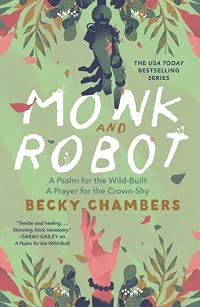
Monk and Robot: A Psalm for the Wild-Built, A Prayer for the Crown-Shy
by Becky Chambers
Monk & Robot (Collections and Selections — 1-2)
On This Page
Description
"It's been centuries since the robots of Panga gained self-awareness and laid down their tools; centuries since they wandered, en masse, into the wilderness, never to be seen again; centuries since they faded into myth and urban legend. One day, the life of a tea monk is upended by the arrival of a robot, there to honor the old promise of checking in. The robot cannot go back until the question of "What do people need?" is answered. But the answer to that question depends on who you ask, and show more how. They're going to need to ask it a lot" -- Back cover. show lessTags
Recommendations

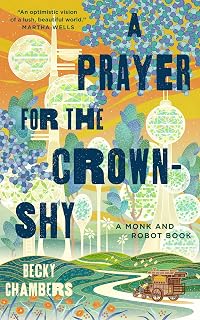





Member Reviews
Occasionally I run into a charming little tale that gently leads me to unanticipated profundity. That's what this book is trying to do. It does it much better than The Little Prince or The Cat Who Saved Books (my opinion, you don't have to agree), but it requires an "I'm being taught something" mind-set. If you're like me, the plot won't carry you along on its own. The action is slow; the characters are more sketches than fully-formed beings I could grow attached to.
I admit I'm an outlier here. If you enjoyed The Little Prince or The Cat Who Saved Books, Monk and Robot will probably charm you. You'll imagine reading it to your children/grandchildren/young friends/students and giving them an experience that provides for both awe and show more delight. Go for it! Just because I'm cynical doesn't mean you have to be.
I received a free electronic review copy of this title from the publisher via Edelweiss; the opinions are my own. show less
I admit I'm an outlier here. If you enjoyed The Little Prince or The Cat Who Saved Books, Monk and Robot will probably charm you. You'll imagine reading it to your children/grandchildren/young friends/students and giving them an experience that provides for both awe and show more delight. Go for it! Just because I'm cynical doesn't mean you have to be.
I received a free electronic review copy of this title from the publisher via Edelweiss; the opinions are my own. show less
I really wanted to like this book more than I did, I ended up DNFing it at about page 103. I really love the concept, but there were a couple of things that didn't quite click for me. First, I just didn't really connect with the main character. I felt like there could have been more character background to build interest before jumping further into the story. It also felt like the plot was moving along very slowly at times without much action to keep the momentum going. Admittedly I do tend to read a lot of fast paced action-packed books so that may be more of a personal preference. Overall I just didn't find myself being excited enough about the plot or invested enough in the characters to keep going.
That said, I feel like there were show more several things this book did very well. If I was rating the writing style and language alone it would absolutely be a 4/5 star review. I would almost describe the descriptions of the world as poetic and the writing was overall really immersive and beautiful. I also feel like the world building was very well done, I was very interested in the dynamics of the world it was set in and how it came to be. I love nature, so the forest like environment combined with sci-fi elements was very cool.
Even though I DNF this book at this time, I could possibly see picking it up again at a time when I'm really in the mood for a more contemplative and cozy sci-fi read. show less
That said, I feel like there were show more several things this book did very well. If I was rating the writing style and language alone it would absolutely be a 4/5 star review. I would almost describe the descriptions of the world as poetic and the writing was overall really immersive and beautiful. I also feel like the world building was very well done, I was very interested in the dynamics of the world it was set in and how it came to be. I love nature, so the forest like environment combined with sci-fi elements was very cool.
Even though I DNF this book at this time, I could possibly see picking it up again at a time when I'm really in the mood for a more contemplative and cozy sci-fi read. show less
It's been ten years or a decade since I read Becky Chambers' debut novel, "The Long Way to a Small, Angry Planet". Back then, it was a refreshing read in the world of science fiction, even if the focus was heavily on the different characters and how they treated and interacted with each other. Almost a perfect world, one could say. The kind of story that warms the heart in times of geopolitical trouble... which we're again (or still) in.
I've read the rest of her books then as well, though that wasn't always a success. When her duology of the "Monk and Robot" novellas came out, I remained reluctant. Not because I feared the stories would be of lower quality, but foremost because those novellas costed as much as a full-blown novel. And show more then, a edition combining both novellas came out at a reasonable price, the moment to acquire them.
Both novellas are supposedly independent, but they aren't, except maybe the first, "A Psalm for the Wild-Built". The story actually continues in "A Prayer for the Crown-Shy", as the story feel a little weird if you haven't read "A Psalm...". And like in her "Wayfarers" series, there's room for more stories, though not needed, I find.
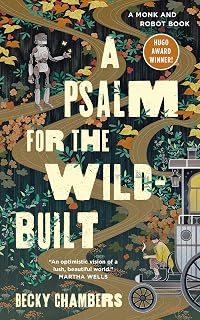
"A Psalm for the Wild-Built" revolves around a young monk, Sibling Dex, who goes out into the world to break free from everyday structure and see what's out there, how he can give purpose to his life. This he does as a tea monk, setting up shop and selling tea, just like you have those mobile coffee stands in big cities. At some point, he meets a robot, Mosscap. Or rather, the robot meets Dex. Both are on a sort of mission or quest to find... themselves? Or a purpose? Dex for himself, proving to himself he can be independent, Mosscap more altruistic: "What do you need and how can I help?".
Mosscap is not your regular robot, but composed of parts from broken robots. Recycled, in other words. There are more robots out there, especially since there has been a revolution: They've broken out, away from the factories and similar they had been used in. Robots wanted a life of their own, find out what that was, how it would be, instead of following mankind's rules and orders. But again, Mosscap is a "wild" robot, was never part of a factory or similar. Hence his alternative outlook on life, the world.
B1oth characters will stay together for a long time and even go out more into the world, they'll complement and challenge each other mentally, philosophically, ... with the goal to find answers or just exchange thoughts. And perhaps mutually become wiser or have a broader view on life and the world.
"A Psalm for the Wild-Built", with Mosscap being that wild-built, focuses on meaningful exchanges, about taking the time to do what you want or like doing, but without the constraints or pressure from everyday life. It's about questioning life, purpose, ... Taking the time to reflect on this is in our contemporary rat-race of a society not (always) possible, precisely because our lives are determined by the economic and political system of working, performing, shopping, profit, always busy/active, etc. In that way, "A Psalm..." is indeed a highly recommended story that challenges the reader to ask him/herself the same kind of questions. As Mrs Chambers wrote on one of the first pages: "For anyone who could use a break".
----------
"A Prayer for the Crown-Shy" continues the adventures of Dex and Mosscap, but this time, they really make a tour around the country. Mosscap's quest has not ended, he still seeks answers from other humans, wants to meet humans in more difficult conditions, not just those who have it well. It doesn't take long before everyone knows about Dex and Mosscap. Many have even never seen a robot in real life. It isn't until an internal part of Mosscap breaks off that they really need the help and skills of fellow humans. Because of Mosscap's popularity, they're welcomed as heroes, as celebrities and everything's free. While Mosscap finds a purpose in helping people with their chores - he's making himself useful, all the while learning in practice about humans -, Dex feels a little guilty about not being able to provide back. He's been taught that one should always give back, be it in terms of money or something else, i.e. not profit from other people's generosity.
And so, the philosophical aspect remains a crucial red line. Of course, and I agree with other reviews, "A Prayer..." contains more fluffy stuff, filling if you will that doesn't really add to the deeper message that Mrs Chambers tried to convey. But perhaps from her POV, it did. Even a one-night stand is thrown in there, which is weird and naïve from Dex's part. Luckily, the rest of the story picks up on the philosophical exchanges between Dex and Mosscap again, with references to their adventures in "A Psalm...". Here too, Mrs Chambers wrote about "A Prayer...": "For anybody who doesn't know where they're going". What is meant here, is that Dex, after being on the road for so long and together with a "wild-built" robot reminiscing about life, about purpose, ... they come to the conclusion that not every question can be answered. Especially not when the question is aimed at themselves.
"What do you need?" can be answered in many ways or can result to a wide variety of answers, but all depends on context, on your person, your feelings, your past, your outlook on the future, ... It's not always about needing money to do this or that, or to need a car to get somewhere. It's also about one's happiness, about concepts like friendship, and so on. And it's a question that's difficult to answer. What do you need?
"A Prayer..." does indeed stretch the story, the adventures Dex and Mosscap had, needlessly sometimes. I find it, therefore, a less attractive story, put a bit of a damper on the reading experience. And yet, some scenes form the basis for what comes next.
Long story short: "Monk and Robot" is a (recommended) collection of two connected stories "for anyone who could use a break" (in these rat-race times or when things get tough/rough) and "for anybody who doesn't know where they're going". They're - as I see them - stories about life, about finding your way, finding a purpose, despite the constraints, the sociopolitical situations, and whatever else you went through. You can read the stories as entertainment, but in essence, they're an invitation to reflect on how your life has been until now and which way you would like to go (be it possible or not) and perhaps aim to do so, one way or another, be it in small or bigger steps.
----------
----------
Previously read by Becky Chambers:
* The Long Way to a Small, Angry Planet (Wayfarers, #1) (review)
* A Closed and Common Orbit (Wayfarers, #2) (review)
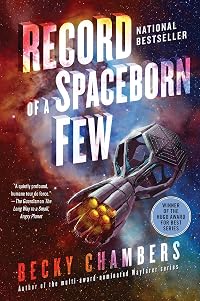
* Record of a Spaceborn Few (Wayfarers, #3) (review)
* The Galaxy, and the Ground Within (Wayfarers, #4) (review)
* To be Taught, If Fortunate (review) show less
I've read the rest of her books then as well, though that wasn't always a success. When her duology of the "Monk and Robot" novellas came out, I remained reluctant. Not because I feared the stories would be of lower quality, but foremost because those novellas costed as much as a full-blown novel. And show more then, a edition combining both novellas came out at a reasonable price, the moment to acquire them.
Both novellas are supposedly independent, but they aren't, except maybe the first, "A Psalm for the Wild-Built". The story actually continues in "A Prayer for the Crown-Shy", as the story feel a little weird if you haven't read "A Psalm...". And like in her "Wayfarers" series, there's room for more stories, though not needed, I find.
"A Psalm for the Wild-Built" revolves around a young monk, Sibling Dex, who goes out into the world to break free from everyday structure and see what's out there, how he can give purpose to his life. This he does as a tea monk, setting up shop and selling tea, just like you have those mobile coffee stands in big cities. At some point, he meets a robot, Mosscap. Or rather, the robot meets Dex. Both are on a sort of mission or quest to find... themselves? Or a purpose? Dex for himself, proving to himself he can be independent, Mosscap more altruistic: "What do you need and how can I help?".
Mosscap is not your regular robot, but composed of parts from broken robots. Recycled, in other words. There are more robots out there, especially since there has been a revolution: They've broken out, away from the factories and similar they had been used in. Robots wanted a life of their own, find out what that was, how it would be, instead of following mankind's rules and orders. But again, Mosscap is a "wild" robot, was never part of a factory or similar. Hence his alternative outlook on life, the world.
B1oth characters will stay together for a long time and even go out more into the world, they'll complement and challenge each other mentally, philosophically, ... with the goal to find answers or just exchange thoughts. And perhaps mutually become wiser or have a broader view on life and the world.
"A Psalm for the Wild-Built", with Mosscap being that wild-built, focuses on meaningful exchanges, about taking the time to do what you want or like doing, but without the constraints or pressure from everyday life. It's about questioning life, purpose, ... Taking the time to reflect on this is in our contemporary rat-race of a society not (always) possible, precisely because our lives are determined by the economic and political system of working, performing, shopping, profit, always busy/active, etc. In that way, "A Psalm..." is indeed a highly recommended story that challenges the reader to ask him/herself the same kind of questions. As Mrs Chambers wrote on one of the first pages: "For anyone who could use a break".
----------
"A Prayer for the Crown-Shy" continues the adventures of Dex and Mosscap, but this time, they really make a tour around the country. Mosscap's quest has not ended, he still seeks answers from other humans, wants to meet humans in more difficult conditions, not just those who have it well. It doesn't take long before everyone knows about Dex and Mosscap. Many have even never seen a robot in real life. It isn't until an internal part of Mosscap breaks off that they really need the help and skills of fellow humans. Because of Mosscap's popularity, they're welcomed as heroes, as celebrities and everything's free. While Mosscap finds a purpose in helping people with their chores - he's making himself useful, all the while learning in practice about humans -, Dex feels a little guilty about not being able to provide back. He's been taught that one should always give back, be it in terms of money or something else, i.e. not profit from other people's generosity.
And so, the philosophical aspect remains a crucial red line. Of course, and I agree with other reviews, "A Prayer..." contains more fluffy stuff, filling if you will that doesn't really add to the deeper message that Mrs Chambers tried to convey. But perhaps from her POV, it did. Even a one-night stand is thrown in there, which is weird and naïve from Dex's part. Luckily, the rest of the story picks up on the philosophical exchanges between Dex and Mosscap again, with references to their adventures in "A Psalm...". Here too, Mrs Chambers wrote about "A Prayer...": "For anybody who doesn't know where they're going". What is meant here, is that Dex, after being on the road for so long and together with a "wild-built" robot reminiscing about life, about purpose, ... they come to the conclusion that not every question can be answered. Especially not when the question is aimed at themselves.
"What do you need?" can be answered in many ways or can result to a wide variety of answers, but all depends on context, on your person, your feelings, your past, your outlook on the future, ... It's not always about needing money to do this or that, or to need a car to get somewhere. It's also about one's happiness, about concepts like friendship, and so on. And it's a question that's difficult to answer. What do you need?
"A Prayer..." does indeed stretch the story, the adventures Dex and Mosscap had, needlessly sometimes. I find it, therefore, a less attractive story, put a bit of a damper on the reading experience. And yet, some scenes form the basis for what comes next.
Long story short: "Monk and Robot" is a (recommended) collection of two connected stories "for anyone who could use a break" (in these rat-race times or when things get tough/rough) and "for anybody who doesn't know where they're going". They're - as I see them - stories about life, about finding your way, finding a purpose, despite the constraints, the sociopolitical situations, and whatever else you went through. You can read the stories as entertainment, but in essence, they're an invitation to reflect on how your life has been until now and which way you would like to go (be it possible or not) and perhaps aim to do so, one way or another, be it in small or bigger steps.
----------
----------
Previously read by Becky Chambers:
* The Long Way to a Small, Angry Planet (Wayfarers, #1) (review)
* A Closed and Common Orbit (Wayfarers, #2) (review)
* Record of a Spaceborn Few (Wayfarers, #3) (review)
* The Galaxy, and the Ground Within (Wayfarers, #4) (review)
* To be Taught, If Fortunate (review) show less
Lovely speculative fiction about life on a peaceful moon whose people abandoned technology long ago. A tea monk, who has more wanderlust than most people, ventures into the wild which is believed to be dangerous. There he encounters a robot, and an unlikely friendship grows.
Ratings
Members
- Recently Added By
Lists

2025 Christmas Gifts
70 works; 19 members

Overdue Podcast
806 works; 9 members
Author Information

19+ Works 25,217 Members
Awards and Honors
Awards
Series

Work Relationships
Common Knowledge
- Canonical title
- Monk and Robot: A Psalm for the Wild-Built, A Prayer for the Crown-Shy
- Alternate titles
- Monk & Robot
- Original publication date
- 2025-05-06
- Publisher's editor
- Harris, Lee
- Original language
- English
Classifications
Statistics
- Members
- 322
- Popularity
- 98,918
- Reviews
- 4
- Rating
- (4.36)
- Languages
- English, Spanish
- Media
- Paper, Ebook
- ISBNs
- 5
- ASINs
- 2