On This Page
Description
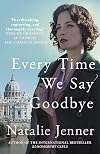
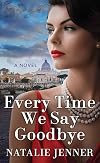
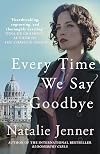
"In 1955, Vivien Lowry is facing the greatest challenge of her life. Her latest play, the only female-authored play on the London stage that season, has opened in the West End to rapturous applause from the audience. The reviewers, however, are not as impressed as the playgoers and their savage notices not only shut down the play but ruin Lowry's last chance for a dramatic career. With her future in London not looking bright, at the suggestion of her friend, Peggy Guggenheim, Vivien takes a show more job as a script doctor on a major film shooting in Rome's Cinecittà Studios. There she finds a vibrant movie-making scene filled with rising stars, acclaimed directors, and famous actors in a country that is torn between its past and its potentially bright future, between the liberation of the post-war cinema and the restrictions of the Catholic Church that permeates the very soul of Italy. As Vivien tries to forge a new future for herself, she also must face the long-buried truth of the recent World War and the mystery of what really happened to her deceased fiancé."-- show lessTags
Recommendations















Member Reviews
Natalie Jenner’s debut novel, The Jane Austen Society, was a welcome and inspiring read in spring 2020. Set after the devastation of WWII, a community is formed by a love of Austen and the desire to preserve Chawton cottage. Jenner next took one of the characters to a London bookstore in Bloomsbury Girls. And now, in Every Time We Say Goodbye, Jenner takes Vivian Lowry from the bookstore to post-war Italy, working as a script doctor in the movies after her play is a flop. Vivian carries her own war wounds: her beloved fiance disappeared in Italy during the war, necessitating some difficult decisions and leaving her heart hardened against further heartbreak. She takes lovers but avoids love.
Post-War Italy is a glamorous time and place, show more the novel filled with up and coming actresses like Gina Lollobrigida and Sophia Loren, aggressively pursued by street photographers. It is also a time and place of great contradictions, as Vivian says, a “former Fascist regime…shapeshifting into an ostensible democracy that was heavily influenced by a sensorial church and half-heartedly administered by the police.”
The church is policing the movie industry, censoring anything that is critical of its role under Fascism or what it deems immoral. And yet Catholic church leaders hide their own sullied characters.
The director of the movie Vivian is working on wants to make a movie about the woman he loved, a teenaged Resistance courier who was brutally murdered. Her story is revealed in alternating chapters.
The novel has it all: passion and love, glamor and the grim reality of war, refugees and orphans and the priviledged rich, the imperious authority of the church, scandalous men, and women struggling to live and work and love. Vivian’s insights into the conflicted times are eerily reflective of our own. She struggles with how a few men could “conjure a false enemy and unfounded fear across several nations,” and wonders if it is possible to “eradicate” this hate for good. The impact of movies to tell transformative stories of truth is also central.
You don’t have to have read the previous novels to enjoy Every Time We Say Goodbye. I loved being carried away into this rich and conflicted world.
Thanks to the publisher for a free book. show less
Post-War Italy is a glamorous time and place, show more the novel filled with up and coming actresses like Gina Lollobrigida and Sophia Loren, aggressively pursued by street photographers. It is also a time and place of great contradictions, as Vivian says, a “former Fascist regime…shapeshifting into an ostensible democracy that was heavily influenced by a sensorial church and half-heartedly administered by the police.”
The church is policing the movie industry, censoring anything that is critical of its role under Fascism or what it deems immoral. And yet Catholic church leaders hide their own sullied characters.
The director of the movie Vivian is working on wants to make a movie about the woman he loved, a teenaged Resistance courier who was brutally murdered. Her story is revealed in alternating chapters.
The novel has it all: passion and love, glamor and the grim reality of war, refugees and orphans and the priviledged rich, the imperious authority of the church, scandalous men, and women struggling to live and work and love. Vivian’s insights into the conflicted times are eerily reflective of our own. She struggles with how a few men could “conjure a false enemy and unfounded fear across several nations,” and wonders if it is possible to “eradicate” this hate for good. The impact of movies to tell transformative stories of truth is also central.
You don’t have to have read the previous novels to enjoy Every Time We Say Goodbye. I loved being carried away into this rich and conflicted world.
Thanks to the publisher for a free book. show less
Compelling!
Jenner continues exploring the lives of various of characters we’ve met in the “Austen Society” and “Bloomsbury Girls.” This time the action is mostly set in post World War II Rome. Vivien Lowrey is a playwright. Through her works she tries to capture the truth of things. Having been savaged by theatre critics for her latest production she comes to Rome to work as a script doctor for “When All Else Fails” a Douglas Curtis film being produced in Italy.
Joseph McCarthy has started his witch hunts for communist and socialists in the film industry and many have fled here. Mussolini had built a huge studio complex in Rome specifically for propaganda. Now, in 1955, Cinecittà Studios is being well used by the Italian show more and other film makers, including the Americans.
Vivien catches up with others of the Austen and Bloomsbury women who flit in and out of the story, including Peggy Guggenheim.
The names! I’m starry eyed! Sophia Loren, Gina Lollobrigida, Anna Magnani, Orson Wells, Eartha Kitt!
The story is complex. Layers upon layers build up a picture of Vivian and those around her. Vivien had been engaged to David St. Vincent, heir to an earldom. David had been captured in North Africa, then sent to Italy, escaped and then disappeared. Vivian had always believed he was dead. When she finds out he’d lived, she has hope. That’s part of her reason for coming to Italy.
In Rome she learns the story of many in the Italian underground, particularly the women. One was La Scolaretta, girlfriend of underground leader Prince Nino Tremonti, now filmmaker. La Scolaretta became an assassin. She was helped by an Italian nun, Sister Justina. Their reasons for helping are different, but their bravery and resistance is awe inspiring.
A film is to be made about Scolaretta. The Vatican shuts it down!
The Vatican comes under fire. Where were they during the time when the country was occupied by the Nazis. Did they seek to hold onto power at any cost?
Meanwhile the search for news of David and for others comes to the fore for Vivien. During her search Vivien faces facts about her own life.
As she and her friend Gabriella Giacometti discuss when Claudia (a reporter for Life Magazine) moves onto a new life, “Our secrets are who we really are.”
A deeply moving story of loss and gain, of power abused, and of a time in history that has stained generations.
A St. Martins Press ARC via NetGalley.
Many thanks to the author and publisher.
Please note: Quotes taken from an advanced reading copy maybe subject to change show less
Jenner continues exploring the lives of various of characters we’ve met in the “Austen Society” and “Bloomsbury Girls.” This time the action is mostly set in post World War II Rome. Vivien Lowrey is a playwright. Through her works she tries to capture the truth of things. Having been savaged by theatre critics for her latest production she comes to Rome to work as a script doctor for “When All Else Fails” a Douglas Curtis film being produced in Italy.
Joseph McCarthy has started his witch hunts for communist and socialists in the film industry and many have fled here. Mussolini had built a huge studio complex in Rome specifically for propaganda. Now, in 1955, Cinecittà Studios is being well used by the Italian show more and other film makers, including the Americans.
Vivien catches up with others of the Austen and Bloomsbury women who flit in and out of the story, including Peggy Guggenheim.
The names! I’m starry eyed! Sophia Loren, Gina Lollobrigida, Anna Magnani, Orson Wells, Eartha Kitt!
The story is complex. Layers upon layers build up a picture of Vivian and those around her. Vivien had been engaged to David St. Vincent, heir to an earldom. David had been captured in North Africa, then sent to Italy, escaped and then disappeared. Vivian had always believed he was dead. When she finds out he’d lived, she has hope. That’s part of her reason for coming to Italy.
In Rome she learns the story of many in the Italian underground, particularly the women. One was La Scolaretta, girlfriend of underground leader Prince Nino Tremonti, now filmmaker. La Scolaretta became an assassin. She was helped by an Italian nun, Sister Justina. Their reasons for helping are different, but their bravery and resistance is awe inspiring.
A film is to be made about Scolaretta. The Vatican shuts it down!
The Vatican comes under fire. Where were they during the time when the country was occupied by the Nazis. Did they seek to hold onto power at any cost?
Meanwhile the search for news of David and for others comes to the fore for Vivien. During her search Vivien faces facts about her own life.
As she and her friend Gabriella Giacometti discuss when Claudia (a reporter for Life Magazine) moves onto a new life, “Our secrets are who we really are.”
A deeply moving story of loss and gain, of power abused, and of a time in history that has stained generations.
A St. Martins Press ARC via NetGalley.
Many thanks to the author and publisher.
Please note: Quotes taken from an advanced reading copy maybe subject to change show less
Every Time We Say Goodbye follows Vivien Lowery who readers first met in Bloomsbury Girls. After her latest London play receives negative reviews, Vivien travels to Rome to find both a new start and a closure for old heartbreaks. This novel is set during the film heyday that Italy enjoyed in the 1950s. American screenwriters, directors, and actors enjoyed a kind of freedom not found during the McCarthy-era witch hunts in Hollywood. But with this “freedom” comes a new kind of censorship from the Catholic church. I found this thread of the novel interesting, and real-life Hollywood stars make their appearances, giving the novel a touch of glitz and glamour. But it is the second plot line that I found the most intriguing. The reader is show more introduced to the Italian resistance fighters of WWII. I found the fabricated fairytale lives of those in the film making industry an insightful backdrop to the selflessness of those who sacrificed so much. There is so much contradiction — those wanting to forget or tidy up the past and those who want to expose it in all its harsh reality. In the end the novel is one of finding purpose and truth in a world that seems only to want a perfect storybook ending.
Fans of Jenner’s earlier novels and those who love historical fiction set in the mid-20th century will not want to miss this book!
Recommended.
Audience: Adults.
(Thanks to NetGalley for a complimentary copy. All opinions expressed are mine alone.) show less
Fans of Jenner’s earlier novels and those who love historical fiction set in the mid-20th century will not want to miss this book!
Recommended.
Audience: Adults.
(Thanks to NetGalley for a complimentary copy. All opinions expressed are mine alone.) show less
Thanks to NetGalley and St. Martin’s Press for a digital advanced reader copy. All comments and opinions are my own unless otherwise noted.
I have read the first two books in Natalie Jenner’s Jane Austen Society series, so was excited to receive an ARC of the third. While you can read this as a stand-alone, I recommend you read them in order as the characters continue to appear in each novel, and there are some spoilers in this book related to the other two. Plus you definitely should read "The Jane Austen Society" and "Bloomsbury Girls," which I think are both 5-star reads!
That said, this story was very different from the first two, and it took me a while to get into it. Taking place primarily in 1955 post-war Italy, British show more playwright Vivien Lowry travels from London to Rome for a fresh writing start, working on movie scripts at the famed Cinecittà Studios.
Though most of the novel takes place in 1955, there are flashbacks to war-time Italy. The trauma and loss of war is never far from anyone’s thoughts. The story focuses on those who have lost someone due to the war, exploring themes of grief, truth, trust, secrets, and forgiveness.
Many real-life people appeared in this story, which made it fun to do a little photo research (Sophia Loren, Gina Lollobrigida, Peggy Guggenheim, Ada “Bricktop” Smith, several Italian film directors).
While I love Jenner’s writing and her research is excellent, I found this story to be very “heavy” for me. Overall, the exploration of grief and loss was darker than I expected. I had to push myself to continue reading. show less
I have read the first two books in Natalie Jenner’s Jane Austen Society series, so was excited to receive an ARC of the third. While you can read this as a stand-alone, I recommend you read them in order as the characters continue to appear in each novel, and there are some spoilers in this book related to the other two. Plus you definitely should read "The Jane Austen Society" and "Bloomsbury Girls," which I think are both 5-star reads!
That said, this story was very different from the first two, and it took me a while to get into it. Taking place primarily in 1955 post-war Italy, British show more playwright Vivien Lowry travels from London to Rome for a fresh writing start, working on movie scripts at the famed Cinecittà Studios.
Though most of the novel takes place in 1955, there are flashbacks to war-time Italy. The trauma and loss of war is never far from anyone’s thoughts. The story focuses on those who have lost someone due to the war, exploring themes of grief, truth, trust, secrets, and forgiveness.
Many real-life people appeared in this story, which made it fun to do a little photo research (Sophia Loren, Gina Lollobrigida, Peggy Guggenheim, Ada “Bricktop” Smith, several Italian film directors).
While I love Jenner’s writing and her research is excellent, I found this story to be very “heavy” for me. Overall, the exploration of grief and loss was darker than I expected. I had to push myself to continue reading. show less
Vivian is a screen writer in London when she decides to travel to Rome Italy to escape the harsh criticism from her latest one woman play. It is 1955 in the post WWII years and Vivian takes a job as a script doctor in the bustling new movie making machine in Rome’s Cinecitta Studios. Here she meets many up and coming actors and it was fun hearing the names dropped of such actors like Sophia Loren. But Vivian also has another very personal reason for her trip to Italy. It is where her fiancé disappeared and was presumed dead during the war. She still has a smidgeon of hope that he might be alive and she goes looking for him. In the midst of her search trying to mend her broken heart she meets many interesting people, most are scarred show more by the recent war and as she opens herself up to what really happened in Italy she begins to finally heal. This was a sad yet moving novel that I enjoyed very much. The information regarding the power the Vatican had over movie scripts and what was allowed to be filmed was quite and eye opener for me, the church controlled everything. Highly recommended.
Many thanks to Net Galley and Macmillan Audio for a chance to read/listen to the audio version of this ARC audiobook. show less
Many thanks to Net Galley and Macmillan Audio for a chance to read/listen to the audio version of this ARC audiobook. show less
I think there are some beautiful things to be learned from this book, particularly in the last 40% or so. It didn’t resonate with me as much as I’d hoped it would (I was a big fan of The Jane Austen Society), but I am certain it will work for other readers.
•••
Vivien’s career as a playwright has been destroyed with the savage reviews of critics after seeing her last play. She moves from London to Italy, where she works as a “script doctor,” tidying up and fixing a movie script that doesn’t pass muster. In this new world, she is faced with challenges and setbacks, unwanted admirers, oppression, and several mysteries, including what happened to her fiancé after the war. Vivien has to face difficult truths and learn to show more grow past the grief that has kept her tethered for the past decade.
•••
I think I struggled to connect with Vivien. She is supposed to be a woman still grieving the loss of her fiancé, but she felt passionless to me, and much too willing to give in to everything she said she wouldn’t. I didn’t like John Lassiter and his whole part in the story—particularly what we find out about him later—just confused me and didn’t feel necessary. I loved Claudia and Levi and would have loved seeing more of them on page. And I really loved Sir Alfred. I think that’s a big reason why the last 25%-30% or so was my favorite—Vivien finally started figuring herself out and we got more of Sir Alfred. Overall I think the history is interesting, and I was sad for Vivien and her loss (there is one particular scene that really finally helped me see what she’d gone through, and I wished we had gotten it sooner).
I think if you like history, 1950’s films or filmmaking, women’s fiction, and mysteries, this book could be for you.
TW/CW: war related stories and deaths; giving up child for adoption; child abduction; church oppression; kissing; mention of sexual relations
3.5 stars, rounded up.
AUDIOBOOK REVIEW: Narrated by Juliet Aubrey—I am torn about this reader. On one hand, I thought her accents and voices were really good, so I knew who was speaking and where they were from immediately. On the other hand, her narration for the narrative and the main character’s voice felt so apathetic and lackluster, even when the character was feeling something deeply or emotional in some way. While her voice is soothing, I didn’t feel like it fit with the emotions of the character. Unfortunately, I do think the narrator made it hard to feel engaged with the character and negatively influenced my overall opinion of this book. There are some really redeeming qualities, but still not my favorite.
3 stars for the narration.
**Many thanks to the publisher, Austen Prose, and NetGalley for the e-copy and audio. A positive review was not required. show less
•••
Vivien’s career as a playwright has been destroyed with the savage reviews of critics after seeing her last play. She moves from London to Italy, where she works as a “script doctor,” tidying up and fixing a movie script that doesn’t pass muster. In this new world, she is faced with challenges and setbacks, unwanted admirers, oppression, and several mysteries, including what happened to her fiancé after the war. Vivien has to face difficult truths and learn to show more grow past the grief that has kept her tethered for the past decade.
•••
I think I struggled to connect with Vivien. She is supposed to be a woman still grieving the loss of her fiancé, but she felt passionless to me, and much too willing to give in to everything she said she wouldn’t. I didn’t like John Lassiter and his whole part in the story—particularly what we find out about him later—just confused me and didn’t feel necessary. I loved Claudia and Levi and would have loved seeing more of them on page. And I really loved Sir Alfred. I think that’s a big reason why the last 25%-30% or so was my favorite—Vivien finally started figuring herself out and we got more of Sir Alfred. Overall I think the history is interesting, and I was sad for Vivien and her loss (there is one particular scene that really finally helped me see what she’d gone through, and I wished we had gotten it sooner).
I think if you like history, 1950’s films or filmmaking, women’s fiction, and mysteries, this book could be for you.
TW/CW: war related stories and deaths; giving up child for adoption; child abduction; church oppression; kissing; mention of sexual relations
3.5 stars, rounded up.
AUDIOBOOK REVIEW: Narrated by Juliet Aubrey—I am torn about this reader. On one hand, I thought her accents and voices were really good, so I knew who was speaking and where they were from immediately. On the other hand, her narration for the narrative and the main character’s voice felt so apathetic and lackluster, even when the character was feeling something deeply or emotional in some way. While her voice is soothing, I didn’t feel like it fit with the emotions of the character. Unfortunately, I do think the narrator made it hard to feel engaged with the character and negatively influenced my overall opinion of this book. There are some really redeeming qualities, but still not my favorite.
3 stars for the narration.
**Many thanks to the publisher, Austen Prose, and NetGalley for the e-copy and audio. A positive review was not required. show less
War changes so much in people, not just those who are directly involved. In either case, there are losses. Many of these take years and some are never reconciled. Vivian, a young English woman, is trying to make peace with the past and the loss of her beloved fiancee and follows his trail to Italy where he was captured, reported missing, and ultimately dead. She is also dealing her unsuccessful career in play writing. In Italy she attempts to remake her life by getting involved in film making and rewriting scripts. Her path crosses some famous people and she seems to be enjoying her gay life style, but she is not able to get over the anger of her losses.
There is a second story running through this plot of a young Italian girl who works show more with the resistance as an assassin against the Nazis. As the two stories merge through their shared characters, things really begin to get interesting.
Making peace with the past sometimes means letting go of losses and guilt and understanding where ones strength and hope lies. The author does a wonderful job of building this story in each of the characters who seem to come alive on the pages.
This is a lovely and well written story of hope and life in the aftermath of loss. I think it would be a good read for nearly anyone who appreciates historical fiction.
Although I have not read the author's previous books with some of these characters, I do plan to remedy that soon. My thanks to the publisher and NetGalley for the opportunity to read and review this title. show less
There is a second story running through this plot of a young Italian girl who works show more with the resistance as an assassin against the Nazis. As the two stories merge through their shared characters, things really begin to get interesting.
Making peace with the past sometimes means letting go of losses and guilt and understanding where ones strength and hope lies. The author does a wonderful job of building this story in each of the characters who seem to come alive on the pages.
This is a lovely and well written story of hope and life in the aftermath of loss. I think it would be a good read for nearly anyone who appreciates historical fiction.
Although I have not read the author's previous books with some of these characters, I do plan to remedy that soon. My thanks to the publisher and NetGalley for the opportunity to read and review this title. show less
Members
- Recently Added By
Author Information

6 Works 2,239 Members
Series

Common Knowledge
- Canonical title
- Every Time We Say Goodbye
Classifications
Statistics
- Members
- 104
- Popularity
- 311,905
- Reviews
- 14
- Rating
- (3.77)
- Languages
- English
- Media
- Paper, Audiobook, Ebook
- ISBNs
- 12
- ASINs
- 3