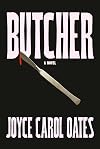
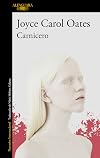
Butcher
by Joyce Carol Oates
On This Page
Description
"In the 1840s, a young man named Silas Weir begins practicing medicine in Pennsylvania. Though he is considered inept by family, neighbors, and even his mentor, Dr. Weir discovers he has a gift for phlebotomy, treating patients by bleeding them to purify their bodies. But when an experimental procedure goes horribly wrong, Dr. Weir is forced to start over, relocating his family to Trenton, New Jersey, and taking a position at the New Jersey State Asylum for Female Lunatics. There, in the show more hopes of proving his detractors wrong, Dr. Weir continues practicing dangerous procedures, and soon becomes infatuated with Brigit - a pregnant woman he treats - whom he tries to take her under his wing as an apprentice. As Dr. Weir's experiments grow more intense - and as he isolates himself from his family and the world beyond the facility - he grows obsessed with Brigit and the other residents who remain at his mercy, and before long, establishes himself as "the father of gyno-psychiatry.""-- show lessTags
Recommendations












Member Reviews
Butcher is, in my view, technically perfect.
The research is meticulous without ever feeling paraded. The historical detail does not overwhelm the narrative; it breathes through it. More impressively, the writing itself is controlled at the sentence level. There is not a wasted word. The voice is steady, deliberate, and unsentimental. The style never flinches, never overreaches, and never indulges in melodrama. It trusts the material.
And the material is horrifying.
Silas is not misunderstood. He is not romanticized. He is not softened by narrative tricks. He is a monster. The novel does not excuse him, and it does not grant the reader emotional distance. Instead, it forces us to sit with the consequences of his actions and the systems show more that allow him to operate.
There were moments I almost put the book down — not because it faltered, but because it did not. The content is difficult. It demands endurance. That difficulty is not gratuitous; it is purposeful. The horror lies not only in what happens, but in how precisely it is rendered.
This is not an enjoyable book in any conventional sense. It is a controlled, unflinching examination of brutality and complicity. Its perfection is technical and structural, not comforting. show less
The research is meticulous without ever feeling paraded. The historical detail does not overwhelm the narrative; it breathes through it. More impressively, the writing itself is controlled at the sentence level. There is not a wasted word. The voice is steady, deliberate, and unsentimental. The style never flinches, never overreaches, and never indulges in melodrama. It trusts the material.
And the material is horrifying.
Silas is not misunderstood. He is not romanticized. He is not softened by narrative tricks. He is a monster. The novel does not excuse him, and it does not grant the reader emotional distance. Instead, it forces us to sit with the consequences of his actions and the systems show more that allow him to operate.
There were moments I almost put the book down — not because it faltered, but because it did not. The content is difficult. It demands endurance. That difficulty is not gratuitous; it is purposeful. The horror lies not only in what happens, but in how precisely it is rendered.
This is not an enjoyable book in any conventional sense. It is a controlled, unflinching examination of brutality and complicity. Its perfection is technical and structural, not comforting. show less
Oof. I actually stopped and said aloud "This fck'n guy!" many times to reduce my stress and anger while reading.
I wish I could say that all of this has changed for the lower classes and women in general, but it really hasn't. Women have never been treated well by the medical establishment, and continue to be brushed aside in many ways. Our pain is treated as an afterthought. Our distress met with a condescending smile. If we object, we are treated like an unruly child, or if we're very unlucky, a "Karen" who is recorded and put on the Internet to be mocked. It's a poison that continues to float. If you know, you know.
Well, at least we all get anesthesia during surgery now.
I read several other reviews, and I'd like to point out that the show more book is also based upon accounts of other men who experimented on vulnerable people, not just Sims. The biggest difference, of course, being that Weir, the character in the book, experimented upon mentally ill women exclusively. Sims did not. The book is also based upon the lives of "Silas Weir Mitchell, M.D. (1829–1914), “the Father of Medical Neurology”; and Henry Cotton, M.D. (1876–1933), the director of the New Jersey Lunatic Asylum from 1907 to 1930”.
A much longer review - This might be triggery, so I am hiding it under spoiler. Edit 10/19/24:
I had to process this last night. Now, I want to write about it. Oates also did a gorgeous job of including indentured servitude in the list of wrongs to humanity prior to the mid-1800s. Too many people forget indentured servitude was still strong in the north. Too many people forget that indentured servitude still exists underground in many forms, around the world, including underpaid illegal migrants and sex trafficking. They have no protection from those who turn their eyes away from the problems that are bubbling under the surface.
The book also touches on the horrors of adoption of the era. "Unworthy" (white) mother's children were stolen away immediately after birth and sold to a family of higher standing in society. It was essentially the buying and selling of a human being. In the age of open indentured servitude, the rich needed no permission, nor did they need to notify the father or family of the child's birth.
The practice did not end with the outlawing of indentured servitude and the 13th Amendment. Eventually, the unscrupulous practice turned to social manipulation and to the black market, then bribery to procure babies from more lawless lands. Lawyers, (usually religious) NGOs, and the medical community continue the practice to this day. If anyone thinks that adoption is a mercy for the child or the mother, you should examine what adoption is to the biological family.
The experiments with separated twins described in the book continued well into the 20th century. With the advent of DNA testing and the opening of sealed adoption records, separated twins are still finding each other, unaware that their other half existed.
I'm glad that Oates included it. Even though it was a side issue, she did a wonderful job. I wish she would write a book about the modern version. show less
I wish I could say that all of this has changed for the lower classes and women in general, but it really hasn't. Women have never been treated well by the medical establishment, and continue to be brushed aside in many ways. Our pain is treated as an afterthought. Our distress met with a condescending smile. If we object, we are treated like an unruly child, or if we're very unlucky, a "Karen" who is recorded and put on the Internet to be mocked. It's a poison that continues to float. If you know, you know.
Well, at least we all get anesthesia during surgery now.
I read several other reviews, and I'd like to point out that the show more book is also based upon accounts of other men who experimented on vulnerable people, not just Sims. The biggest difference, of course, being that Weir, the character in the book, experimented upon mentally ill women exclusively. Sims did not. The book is also based upon the lives of "Silas Weir Mitchell, M.D. (1829–1914), “the Father of Medical Neurology”; and Henry Cotton, M.D. (1876–1933), the director of the New Jersey Lunatic Asylum from 1907 to 1930”.
A much longer review - This might be triggery, so I am hiding it under spoiler. Edit 10/19/24:
The book also touches on the horrors of adoption of the era. "Unworthy" (white) mother's children were stolen away immediately after birth and sold to a family of higher standing in society. It was essentially the buying and selling of a human being. In the age of open indentured servitude, the rich needed no permission, nor did they need to notify the father or family of the child's birth.
The practice did not end with the outlawing of indentured servitude and the 13th Amendment. Eventually, the unscrupulous practice turned to social manipulation and to the black market, then bribery to procure babies from more lawless lands. Lawyers, (usually religious) NGOs, and the medical community continue the practice to this day. If anyone thinks that adoption is a mercy for the child or the mother, you should examine what adoption is to the biological family.
The experiments with separated twins described in the book continued well into the 20th century. With the advent of DNA testing and the opening of sealed adoption records, separated twins are still finding each other, unaware that their other half existed.
I'm glad that Oates included it. Even though it was a side issue, she did a wonderful job. I wish she would write a book about the modern version.
This is fiction, but Joyce Carol Oates provides quite a window into the practice of medicine in the 19th century, particularly as it related to women. Set mostly in a female insane asylum, it tells the story of the doctor there who experiments on them as a forerunner to gynecology, performing operations that are as cruel as they are ignorant. Believing that insanity stems from parts of the uterus set loose in the blood and therefore around the body, for example, he performs hysterectomies, removes clitorises, or pulls every tooth without a second thought. He uses “medicine” like cocaine drops, arsenic, and mercury, bleeds patients to “cool their blood,” and forcibly restrains them with straitjackets and other means. Those who show more die are secretly buried, off the record. Oates dedicates the book to “the unnamed as well as the named” women in the past who endured these kinds of trials, mostly without a voice.
This is a period of time when admission to the asylum could be forced by the family or husband over a woman showing some independence, speaking up for herself, or not wearing a corset, with the poor in particular then prone to experimentation. Doctors look down on midwives or even studying the female body as a “hell-hole of filth & corruption.” As a lot of it occurs over the 1830’s through the 1850’s, there are parallels drawn to slavery, especially as it related to the indentured servitude of nurses which was often extended beyond the seven year “contracts” for arbitrary reasons, with those indentured powerless to alter their circumstances. One of the doctor’s nurses comes up with a procedure for fistula, a true step forward, but he then takes all the credit for it. Aside from critiquing the state of medicine at the time, it’s clearly a critique of the patriarchy as well, and true of any time.
While it’s a compelling read, one of the things that held the book back for me was how repetitive its middle was, with the doctor going from one outrageous procedure to the next, his nickname “the red-handed butcher” growing as he goes. I thought the early sections which had a couple different narrators were effective, and wish this had been done more uniformly throughout the book. Oates saves the voice of the deaf-mute Irish girl for the end which was refreshing, but by then I just wanted to finish. A tough read, and obviously prepare yourself to be outraged if you take it on. Pretty impressive work for Oates at 86 though.
Just this quote, on the affluent:
“That is the lie, Brigit. That those who are ‘blessed by God’ are deserving & those who are poor, who have no property or possessions, who are unwell or disabled deserve their fate & not our sympathy.” show less
This is a period of time when admission to the asylum could be forced by the family or husband over a woman showing some independence, speaking up for herself, or not wearing a corset, with the poor in particular then prone to experimentation. Doctors look down on midwives or even studying the female body as a “hell-hole of filth & corruption.” As a lot of it occurs over the 1830’s through the 1850’s, there are parallels drawn to slavery, especially as it related to the indentured servitude of nurses which was often extended beyond the seven year “contracts” for arbitrary reasons, with those indentured powerless to alter their circumstances. One of the doctor’s nurses comes up with a procedure for fistula, a true step forward, but he then takes all the credit for it. Aside from critiquing the state of medicine at the time, it’s clearly a critique of the patriarchy as well, and true of any time.
While it’s a compelling read, one of the things that held the book back for me was how repetitive its middle was, with the doctor going from one outrageous procedure to the next, his nickname “the red-handed butcher” growing as he goes. I thought the early sections which had a couple different narrators were effective, and wish this had been done more uniformly throughout the book. Oates saves the voice of the deaf-mute Irish girl for the end which was refreshing, but by then I just wanted to finish. A tough read, and obviously prepare yourself to be outraged if you take it on. Pretty impressive work for Oates at 86 though.
Just this quote, on the affluent:
“That is the lie, Brigit. That those who are ‘blessed by God’ are deserving & those who are poor, who have no property or possessions, who are unwell or disabled deserve their fate & not our sympathy.” show less
A very compelling and bleak novel. It’s true horror lies in how real the fiction handles historical accuracy as it follows a main character who is a composite of three actual medical professionals from the 1800’s to early 1900’s. The evil of Silas Weir lies in the earnestness in which he believes his experiments are needed for the benefit of women, and in so doing leads to decades of torture of slaves, indentured servants and asylum patients. Modern medicine is nothing more than a stark reminder of the war that has been waged on women, immigrants and marginalized communities since the beginning of time; and how expendable lives can be if the government decides that ends justify means. This novel feels ever prescient now more than show more ever. show less
Butcher is an unsettling novel, dramatising the real-life medical horrors afflicted on women by surgeons in the mid-1800s.
The fictional protagonist, Silas Weir, is an unattractive man who fails to excel at school, obtaining a medical degree from a mediocre university and seeming inevitably destined for life as a lowly country doctor. Through happenstance, Weir gets the opportunity to carry out gynaecological surgery on some indentured servant inmates at a psychiatric hospital, and when the cards all remarkably land in his favour and he ends up director of the asylum, his ego overtakes his medical capabilities at speed. Thus begins his reign as butcher of the hospital, performing increasingly barbaric gynaecological and other surgeries show more on other indentured servants whilst self-promoting himself as the pioneer in 'gyno-psychiatry'. Weir solidly believes in his own greatness, murdering women and babies in his quest for further scientific experimentation, and it's interesting to have much of the novel narrated by Weir himself through his memoirs, book-ended by the perspective of his son and his favourite deaf-mute albino Irish servant girl who served as both nurse and scientific subject for Weir.
It's an interesting premise for a book, which although fictional is based on many historical documents of such atrocities. However, it could easily have been 50 or so pages shorter. Certainly my interest was waning in the last few hours of listening.
3.5 stars - not my favourite JCO, but was worth a listen. show less
The fictional protagonist, Silas Weir, is an unattractive man who fails to excel at school, obtaining a medical degree from a mediocre university and seeming inevitably destined for life as a lowly country doctor. Through happenstance, Weir gets the opportunity to carry out gynaecological surgery on some indentured servant inmates at a psychiatric hospital, and when the cards all remarkably land in his favour and he ends up director of the asylum, his ego overtakes his medical capabilities at speed. Thus begins his reign as butcher of the hospital, performing increasingly barbaric gynaecological and other surgeries show more on other indentured servants whilst self-promoting himself as the pioneer in 'gyno-psychiatry'. Weir solidly believes in his own greatness, murdering women and babies in his quest for further scientific experimentation, and it's interesting to have much of the novel narrated by Weir himself through his memoirs, book-ended by the perspective of his son and his favourite deaf-mute albino Irish servant girl who served as both nurse and scientific subject for Weir.
It's an interesting premise for a book, which although fictional is based on many historical documents of such atrocities. However, it could easily have been 50 or so pages shorter. Certainly my interest was waning in the last few hours of listening.
3.5 stars - not my favourite JCO, but was worth a listen. show less
[3.75] One of my favorite authors has penned a dark, disturbing, even grotesque work that uses historical documents to chronicle vile medical experiments performed on patients in an insane asylum for women in the 19th century.
During a library event in Des Moines, Iowa, Oates said the inspiration for this fictionalized composite biography of three physicians was her interest in “American medical malpractice.” Her extensive research unearthed many jaw-dropping details about medical practices in the 1800s, many of which are highlighted in “Butcher.”
Even with the shocking and graphic content, the book became a bit of a slog midway through — yet another example of a novel that would have hit 4.5 stars had it been trimmed by 25 show more percent or so. But the gripping finale (no spoilers) provides a worthy payoff. And book aficionados can’t help but admire this prolific author in her mid-80s who has written nearly 60 novels. show less
During a library event in Des Moines, Iowa, Oates said the inspiration for this fictionalized composite biography of three physicians was her interest in “American medical malpractice.” Her extensive research unearthed many jaw-dropping details about medical practices in the 1800s, many of which are highlighted in “Butcher.”
Even with the shocking and graphic content, the book became a bit of a slog midway through — yet another example of a novel that would have hit 4.5 stars had it been trimmed by 25 show more percent or so. But the gripping finale (no spoilers) provides a worthy payoff. And book aficionados can’t help but admire this prolific author in her mid-80s who has written nearly 60 novels. show less
1/5
Historical Fiction but with the erasure of the enslaved Black women it actually happened to.
At first, I didn't want to research who Silas Aloysius Weir was based on because I thought it might spoil the book. But the book started to drag in the middle, it's just one experiment after another with no real conflict other than the possible death of the woman. I found out that J. Marion Sims did create the speculum and the procedure for repairing fistula. Cool!
But.
And this is a big BUT.
J. Marion Sims experimented primarily on enslaved Black women. Not only white women. Not Irish-Catholic women, like Brigit Kinealy. He did sometimes experiment on white women, but he's known for his experiments on over 16 Black women.
Why was this left show more out? Why is the focus so heavily on Brigit? Could she not have been Black instead of Irish? It feels wrong to me. I thought it was horrible enough that he was torturing all of these women (who I thought were all white) but the truth is even worse. He does several procedures on Brigit, but there were some women who had over 30 procedures done to them by J. Marion Sims.
Obviously, since most of the book is from Silas's own book, he'll gloss over things. But his son doesn't make mention of the true horror either. Basically, nothing happens and this book barely touches the true horrors of this part in history.
Silas as a character was interesting, at first. You get to watch him grow from a timid, weak doctor to one with pride and confidence. You get to watch his religious zealotry guide him through everything. But his pompous attitude and his creepy obsessions get old real fast. The reason I thought that all the characters were white in this is because he doesn't mention skin colour unless they're white. They're white women but since they're of lower class than Silas, they're absolute dirt and sub-human. There isn't a part where he treats a patient worse because of skin colour or subjects them to even worse experiments because of it. He even tries to experiment on white children. I can see why he believes he's a perfect Christian, that aspect of his character made sense.
The ending. What. Did I like it? I guess? It was cute, I guess? It was just odd at the end. That "startling conclusion, with unexpected romance" felt a little too Hallmark. And since it comes very very late into the book, it was already dead in the water for me. Maybe if there was more interspersed between Silas's chapters, I would have been less bored.
I don't recommend this. If it had some more truth to it, I would have given it 3 stars since it was really boring by the middle and still wouldn't recommend it. But since the only time that Black slaves are ever mentioned is when it's talking about which character sides or doesn't side with the Abolitionists, I'm done with it. show less
Historical Fiction but with the erasure of the enslaved Black women it actually happened to.
At first, I didn't want to research who Silas Aloysius Weir was based on because I thought it might spoil the book. But the book started to drag in the middle, it's just one experiment after another with no real conflict other than the possible death of the woman. I found out that J. Marion Sims did create the speculum and the procedure for repairing fistula. Cool!
But.
And this is a big BUT.
J. Marion Sims experimented primarily on enslaved Black women. Not only white women. Not Irish-Catholic women, like Brigit Kinealy. He did sometimes experiment on white women, but he's known for his experiments on over 16 Black women.
Why was this left show more out? Why is the focus so heavily on Brigit? Could she not have been Black instead of Irish? It feels wrong to me. I thought it was horrible enough that he was torturing all of these women (who I thought were all white) but the truth is even worse. He does several procedures on Brigit, but there were some women who had over 30 procedures done to them by J. Marion Sims.
Obviously, since most of the book is from Silas's own book, he'll gloss over things. But his son doesn't make mention of the true horror either. Basically, nothing happens and this book barely touches the true horrors of this part in history.
Silas as a character was interesting, at first. You get to watch him grow from a timid, weak doctor to one with pride and confidence. You get to watch his religious zealotry guide him through everything. But his pompous attitude and his creepy obsessions get old real fast. The reason I thought that all the characters were white in this is because he doesn't mention skin colour unless they're white. They're white women but since they're of lower class than Silas, they're absolute dirt and sub-human. There isn't a part where he treats a patient worse because of skin colour or subjects them to even worse experiments because of it. He even tries to experiment on white children. I can see why he believes he's a perfect Christian, that aspect of his character made sense.
The ending. What. Did I like it? I guess? It was cute, I guess? It was just odd at the end. That "startling conclusion, with unexpected romance" felt a little too Hallmark. And since it comes very very late into the book, it was already dead in the water for me. Maybe if there was more interspersed between Silas's chapters, I would have been less bored.
I don't recommend this. If it had some more truth to it, I would have given it 3 stars since it was really boring by the middle and still wouldn't recommend it. But since the only time that Black slaves are ever mentioned is when it's talking about which character sides or doesn't side with the Abolitionists, I'm done with it. show less
Members
- Recently Added By
Lists

Llibres que he llegit el 2024
77 works; 1 member

The LonesomeReader Book Club
36 works; 1 member
Author Information

481+ Works 62,311 Members
Joyce Carol Oates was born on June 16, 1938 in Lockport, New York. She received a bachelor's degree in English from Syracuse University and a master's degree in English from the University of Wisconsin. She is the author of numerous novels and collections of short stories. Her works include We Were the Mulvaneys, Blonde, Bellefleur, You Must show more Remember This, Because It Is Bitter, Because It Is My Heart, Solstice, Marya : A Life, and Give Me Your Heart. She has received numerous awards including the National Book Award for Them, the PEN/Malamud Award for Excellence in Short Fiction, and the F. Scott Fitzgerald Award for Lifetime Achievement in American Literature. She was a finalist for the 2015 Pulitzer Prize for Fiction with her title Lovely, Dark, Deep. She also wrote a series of suspense novels under the pseudonym Rosamond Smith. In 2015, her novel The Accursed became listed as a bestseller on the iBooks chart. She worked as a professor of English at the University of Windsor, before becoming the Roger S. Berlind Distinguished Professor of Humanities at Princeton University. She and her late husband Raymond J. Smith operated a small press and published a literary magazine, The Ontario Review. (Bowker Author Biography) Joyce Carol Oates is one of the most eminent and prolific literary figures and social critics of our times. She has won the National Book Award and several O. Henry and Pushcart prizes. Among her other awards are an NEA grant, a Guggenheim fellowship, the PEN/Malamud Lifetime Achievement Award, and the F. Scott Fitzgerald Award for Lifetime Achievement in American Literature. (Publisher Provided) show less
Awards and Honors
Common Knowledge
- Canonical title
- Butcher
Classifications
- Genres
- Fiction and Literature, Historical Fiction, General Fiction, Horror
- DDC/MDS
- 813.54 — Literature & rhetoric American literature in English American fiction in English 1900-1999 1945-1999
- LCC
- PS3565 .A8 .B88 — Language and Literature American literature American literature Individual authors 1961-
- BISAC
Statistics
- Members
- 221
- Popularity
- 147,727
- Reviews
- 10
- Rating
- (4.03)
- Languages
- English, French, Spanish, Swedish
- Media
- Paper, Audiobook, Ebook
- ISBNs
- 17
- ASINs
- 6