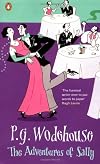
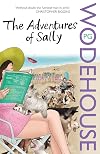
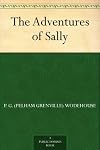
The Adventures of Sally
by P. G. Wodehouse
On This Page
Description
Regarded as one of the most skilled humor writers ever to write in English, Sir Pelham Grenville Wodehouse's works of fiction usually pillory the British upper classes that represented the social milieu into which he was born. In The Adventures of Sally, Wodehouse turned his attention to a young American heiress whose sudden wealth brings with it an array of unforeseen problems..
Tags
Recommendations























Member Reviews
I was surprised how much I enjoyed this one. It's the first Wodehouse I've read since The Pothunters to really include no deliberate comedy, at least outside of a few turns of phrase; it might more accurately be termed a kind of romance, or perhaps just a "novel of young people."
The book follows young Sally, who - having come into a certain amount of money - gets buffeted from one young man in her life to another, guided by her allegiances (real or assumed) to her brother, her fiance, a kindly older acquaintance, an arrogant young man on the prowl, and her daffy new best friend, "Ginger"—whom she comes to regard with the most affection, of course. It's never heavy enough to be a melodrama, but there are sequences with melodramatic show more aspirations, as well as romantic ones.
Wodehouse's grasp of language keeps it light, but what probably keeps it from turning too emotional is his circumspection. Several major, dramatic events happen entirely outside of the view of the reader, almost exactly as in a stage comedy, and one significant shift takes place over a short epistolary interlude. It's almost as if Wodehouse is admitting that his strength is in scenes where two people banter with each other, and he really can't be bothered with very much else.
Still, it's enjoyable to see Wodehouse take on a female protagonist and treat her completely respectfully, with only one or two groan-worthy sexist cliches that might be put down to her generous nature. Sally is as close to a real person as Wodehouse ever wrote, and it's interesting to see Wodehousian characters in a context outside of farce. Here, they may banter and preen and talk in slang, but there's none of the neat and tidy assurance of a closed sphere (such as a gentleman's club, a boys' school, or a country estate) that everything will come out all right. It does, of course - but only because in a Wodehouse world, it would be too harsh for anything else to happen. They still experience heartache, loss, and even ruined dreams along the way. show less
The book follows young Sally, who - having come into a certain amount of money - gets buffeted from one young man in her life to another, guided by her allegiances (real or assumed) to her brother, her fiance, a kindly older acquaintance, an arrogant young man on the prowl, and her daffy new best friend, "Ginger"—whom she comes to regard with the most affection, of course. It's never heavy enough to be a melodrama, but there are sequences with melodramatic show more aspirations, as well as romantic ones.
Wodehouse's grasp of language keeps it light, but what probably keeps it from turning too emotional is his circumspection. Several major, dramatic events happen entirely outside of the view of the reader, almost exactly as in a stage comedy, and one significant shift takes place over a short epistolary interlude. It's almost as if Wodehouse is admitting that his strength is in scenes where two people banter with each other, and he really can't be bothered with very much else.
Still, it's enjoyable to see Wodehouse take on a female protagonist and treat her completely respectfully, with only one or two groan-worthy sexist cliches that might be put down to her generous nature. Sally is as close to a real person as Wodehouse ever wrote, and it's interesting to see Wodehousian characters in a context outside of farce. Here, they may banter and preen and talk in slang, but there's none of the neat and tidy assurance of a closed sphere (such as a gentleman's club, a boys' school, or a country estate) that everything will come out all right. It does, of course - but only because in a Wodehouse world, it would be too harsh for anything else to happen. They still experience heartache, loss, and even ruined dreams along the way. show less
I thought this was a cute, slightly comic rom-com from the 20's....
But I didn't think it was Wodehouse.
If I had read it without knowing who the author was, he wouldn't have been my guess. While there are some really humorous turns of phrase and great comic moments, it's not nearly as madcap and deliberately nonsensical as his other books. This was one of his earlier works (1921), and it feels strangely earnest. Maybe it's because he's writing with a female as his main character, or maybe it's just that he hadn't found his tone yet.
It's light-hearted but it still takes itself slightly more seriously than what I am accustomed to in a Wodehouse. That said, I did really like both Sally and Ginger.
But I didn't think it was Wodehouse.
If I had read it without knowing who the author was, he wouldn't have been my guess. While there are some really humorous turns of phrase and great comic moments, it's not nearly as madcap and deliberately nonsensical as his other books. This was one of his earlier works (1921), and it feels strangely earnest. Maybe it's because he's writing with a female as his main character, or maybe it's just that he hadn't found his tone yet.
It's light-hearted but it still takes itself slightly more seriously than what I am accustomed to in a Wodehouse. That said, I did really like both Sally and Ginger.
The Adventures of Sally, first published in serial form in 1921, is a rather unusual Wodehouse story. The author's irrepressible comic wit peeps through occasionally, but the novel takes a much more serious tone than the usual lighthearted farce that is Wodehouse's signature. I didn't know what to make of it at first, having been accustomed to a steady diet of Jeeves and Blandings, but I found that a more plot-driven Wodehouse isn't a bad storyteller at all.
Sally Nicholas, who has been scraping a living for several years as a professional ballroom dancer, has just come into her inheritance. The future looks rosy—she can quit her job, she's going to tour Europe, and she's engaged to Gerald, an up-and-coming playwright (though the show more engagement is secret because his plays haven't yet caught on). Her only worry is her brother, Fillmore, whose crazy schemes for hitting it big in business usually go badly... until he invests in Gerald's latest play and it becomes wildly popular. But Sally's comfortable world is turned on its head when her friend Ginger Kemp brings her bad news. Suddenly Sally must decide what to do with the rest of her life—a life nothing like what she had dreamt of.
The characters, though fitting into somewhat stereotypical roles, play their parts well and even with depth. Bruce Carmyle is brilliantly named and I can see him so clearly in my mind. Sally is sympathetically drawn and suffers serious loss and depression quite unlike Wodehouse's more generally known heroines. Ginger is one of those characters you start off feeling patronizing about and end up cheering madly on. Wodehouse also makes some keen observations about what people will sacrifice for their careers; rather chilling. And Uncle Donald, though a bit player, smacks of the comical relatives that will later populate Wodehouse's literary worlds.
It was interesting to see a different side of Wodehouse—or perhaps a less-developed Wodehouse who hadn't yet found his footing as a master of comedy. It makes perfect sense that he would be able to write characters who go through devastating betrayals and touch the reader with sympathy rather than amusement. This insight is probably why Wodehouse can soar to such hilarious heights in his better-known works; it's grounded in a real knowledge of human emotion. I wouldn't exactly call this a serious novel—there's too much fun in it—but it's certainly the closest I've seen Wodehouse come to somber. And that's not a bad thing at all, once you know what to expect. show less
Sally Nicholas, who has been scraping a living for several years as a professional ballroom dancer, has just come into her inheritance. The future looks rosy—she can quit her job, she's going to tour Europe, and she's engaged to Gerald, an up-and-coming playwright (though the show more engagement is secret because his plays haven't yet caught on). Her only worry is her brother, Fillmore, whose crazy schemes for hitting it big in business usually go badly... until he invests in Gerald's latest play and it becomes wildly popular. But Sally's comfortable world is turned on its head when her friend Ginger Kemp brings her bad news. Suddenly Sally must decide what to do with the rest of her life—a life nothing like what she had dreamt of.
The characters, though fitting into somewhat stereotypical roles, play their parts well and even with depth. Bruce Carmyle is brilliantly named and I can see him so clearly in my mind. Sally is sympathetically drawn and suffers serious loss and depression quite unlike Wodehouse's more generally known heroines. Ginger is one of those characters you start off feeling patronizing about and end up cheering madly on. Wodehouse also makes some keen observations about what people will sacrifice for their careers; rather chilling. And Uncle Donald, though a bit player, smacks of the comical relatives that will later populate Wodehouse's literary worlds.
It was interesting to see a different side of Wodehouse—or perhaps a less-developed Wodehouse who hadn't yet found his footing as a master of comedy. It makes perfect sense that he would be able to write characters who go through devastating betrayals and touch the reader with sympathy rather than amusement. This insight is probably why Wodehouse can soar to such hilarious heights in his better-known works; it's grounded in a real knowledge of human emotion. I wouldn't exactly call this a serious novel—there's too much fun in it—but it's certainly the closest I've seen Wodehouse come to somber. And that's not a bad thing at all, once you know what to expect. show less
[This is an old review, and I had to guess at a star rating. I listened to the LibriVox recording, which can be downloaded here.]
I expected to love this book. Its setup seemed very similar to another one of Wodehouse's works, Jill the Reckless (see my post for that book). The main female character is engaged to a guy who seems great but turns out not to be. Both books involved theater productions with horribly dysfunctional things going on behind the scenes, both books featured charming, much-loved heroines, and both books included relatives who were less than stellar about not wasting the heroine's money.
I sat back, expecting another fun romantic comedy, but the longer I listened, the more I disliked this book. I didn't like Sally as show more much as the characters seemed to, I hated that Ginger seemed to find nothing wrong with the way Sally treated him, Sally's brother was completely unappealing, and just about every scene near the end that involved Sally and either Bruce Carmyle or Gerald either made me mad or chilled me when I thought about what Sally had only narrowly avoided. Sally didn't even avoid disaster by her own wits. No, her happy ending just fell into her lap.
It started out fairly promisingly. Sally and Ginger were cute together (although, even that early on in the book, there were things I disliked about their relationship), and Sally seemed nice enough. I was a little surprised at how similar some things seemed to be to Jill the Reckless, but I decided I was okay with more of the same, if that was what it was going to turn out to be. I figured Sally's brother would be like Jill's Uncle Chris, and Gerald would be like Derek Underhill. I wasn't, at first, sure that Ginger was really going to be the guy Sally would end up with, since he seemed less like Wally and more like Freddie – I wondered if maybe Bruce Carmyle would turn out to secretly be a great guy and morph into Sally's surprise love interest.
Noticing the similarities between Jill the Reckless and The Adventures of Sally only seemed to put The Adventures of Sally's faults in greater relief. Jill was nice, naive, and in possession of both a spine and her pride. I found her interactions with Wally to mostly be charming. Sally's interactions with Ginger, on the other hand, did not have the same effect on me. I thought Sally treated Ginger like a cute, squirming puppy. It seemed to me like she used him when she needed him (he was her emotional sounding board), but she never seemed to recognize that she was taking without giving much in return. Then again, I think Wodehouse intended to his readers to see Sally's beauty, energy, and interest in talking to Ginger as reward enough.
I hated it when Sally wrote Ginger letter after letter, but asked him not to write her in return – she knew he was attracted to her and probably missed her, so if she was going to use him as a way to vent, the least she could have done was let him write her back. I found her behavior selfish, and the worst of it was that Ginger didn't see it that way. He happily did whatever Sally asked, because he liked having whatever contact with her she was willing to give. While I didn't want Sally to end up with Gerald (who I imagine would have eventually turned into an alcoholic, abusive husband) or Mr. Carmyle (who had never really been in love with her, anyway), I didn't want Sally to end up with Ginger until Ginger proved that he wasn't going to let her walk all over him and that he could love Sally without putting her on a pedestal. Unfortunately, I don't think Ginger got to that point, or at least Wodehouse didn't take the time to show it.
I was pretty sure I'd continue to dislike Sally's brother until the very end (I did), but I was surprised at how deep my dislike of Gerald ended up going. I think the last straw, for me, was when he got drunk, broke things, and whined to Sally about all the things that had gone wrong in his life. While Gerald came across as pathetic and potentially abusive (I shudder to think what his and Sally's married life would have been like once his plays started to flop), Mr. Carmyle just came across as cold and over-controlled. I didn't end up disliking him as much as I did Gerald, but I was incredibly frustrated with Sally for not only agreeing to marry him (which I could have forgiven – everyone has weak moments), but also for choosing to stick with that decision. She kept saying that she had to marry Mr. Carmyle because she said she would. I didn't see why she couldn't just tell him she'd changed her mind.
Sally's self-destructive stubbornness would have been her downfall, except that a misunderstanding fixed everything without her having to do a thing but keep her mouth shut. I would have much preferred it if she had purposefully done something with the intention of fixing her own mistakes, and it was incredibly disappointing that good fortune just fell into her lap.
I would recommend that those looking for a light, fun comedy by Wodehouse read Jill the Reckless instead. I'd only recommend The Adventures of Sally to someone if they were looking for something a little less bright and shiny – I do think The Adventures of Sally had a slightly darker feel than Jill the Reckless, particularly near the end.
(Original review, with read-alikes and watch-alikes, posted on A Library Girl's Familiar Diversions.) show less
I expected to love this book. Its setup seemed very similar to another one of Wodehouse's works, Jill the Reckless (see my post for that book). The main female character is engaged to a guy who seems great but turns out not to be. Both books involved theater productions with horribly dysfunctional things going on behind the scenes, both books featured charming, much-loved heroines, and both books included relatives who were less than stellar about not wasting the heroine's money.
I sat back, expecting another fun romantic comedy, but the longer I listened, the more I disliked this book. I didn't like Sally as show more much as the characters seemed to, I hated that Ginger seemed to find nothing wrong with the way Sally treated him, Sally's brother was completely unappealing, and just about every scene near the end that involved Sally and either Bruce Carmyle or Gerald either made me mad or chilled me when I thought about what Sally had only narrowly avoided. Sally didn't even avoid disaster by her own wits. No, her happy ending just fell into her lap.
It started out fairly promisingly. Sally and Ginger were cute together (although, even that early on in the book, there were things I disliked about their relationship), and Sally seemed nice enough. I was a little surprised at how similar some things seemed to be to Jill the Reckless, but I decided I was okay with more of the same, if that was what it was going to turn out to be. I figured Sally's brother would be like Jill's Uncle Chris, and Gerald would be like Derek Underhill. I wasn't, at first, sure that Ginger was really going to be the guy Sally would end up with, since he seemed less like Wally and more like Freddie – I wondered if maybe Bruce Carmyle would turn out to secretly be a great guy and morph into Sally's surprise love interest.
Noticing the similarities between Jill the Reckless and The Adventures of Sally only seemed to put The Adventures of Sally's faults in greater relief. Jill was nice, naive, and in possession of both a spine and her pride. I found her interactions with Wally to mostly be charming. Sally's interactions with Ginger, on the other hand, did not have the same effect on me. I thought Sally treated Ginger like a cute, squirming puppy. It seemed to me like she used him when she needed him (he was her emotional sounding board), but she never seemed to recognize that she was taking without giving much in return. Then again, I think Wodehouse intended to his readers to see Sally's beauty, energy, and interest in talking to Ginger as reward enough.
I hated it when Sally wrote Ginger letter after letter, but asked him not to write her in return – she knew he was attracted to her and probably missed her, so if she was going to use him as a way to vent, the least she could have done was let him write her back. I found her behavior selfish, and the worst of it was that Ginger didn't see it that way. He happily did whatever Sally asked, because he liked having whatever contact with her she was willing to give. While I didn't want Sally to end up with Gerald (who I imagine would have eventually turned into an alcoholic, abusive husband) or Mr. Carmyle (who had never really been in love with her, anyway), I didn't want Sally to end up with Ginger until Ginger proved that he wasn't going to let her walk all over him and that he could love Sally without putting her on a pedestal. Unfortunately, I don't think Ginger got to that point, or at least Wodehouse didn't take the time to show it.
I was pretty sure I'd continue to dislike Sally's brother until the very end (I did), but I was surprised at how deep my dislike of Gerald ended up going. I think the last straw, for me, was when he got drunk, broke things, and whined to Sally about all the things that had gone wrong in his life. While Gerald came across as pathetic and potentially abusive (I shudder to think what his and Sally's married life would have been like once his plays started to flop), Mr. Carmyle just came across as cold and over-controlled. I didn't end up disliking him as much as I did Gerald, but I was incredibly frustrated with Sally for not only agreeing to marry him (which I could have forgiven – everyone has weak moments), but also for choosing to stick with that decision. She kept saying that she had to marry Mr. Carmyle because she said she would. I didn't see why she couldn't just tell him she'd changed her mind.
Sally's self-destructive stubbornness would have been her downfall, except that a misunderstanding fixed everything without her having to do a thing but keep her mouth shut. I would have much preferred it if she had purposefully done something with the intention of fixing her own mistakes, and it was incredibly disappointing that good fortune just fell into her lap.
I would recommend that those looking for a light, fun comedy by Wodehouse read Jill the Reckless instead. I'd only recommend The Adventures of Sally to someone if they were looking for something a little less bright and shiny – I do think The Adventures of Sally had a slightly darker feel than Jill the Reckless, particularly near the end.
(Original review, with read-alikes and watch-alikes, posted on A Library Girl's Familiar Diversions.) show less
This was a great one!!! Full of laughs and strangely prescient talk of the Spanish Flu that sounded so familiar in the midst of Covid-19. Love PG Wodehouse. This audio version was especially wonderful. The lightness and humor is greatly appreciated right now.
Another Wodehouse classic, which this time sees the unfortunate Sally gaining and losing both a fortune and several suitors before finding domestic bliss in an unexpected quarter. Add in the difficulties of explaining the duties of a scrum-half to a bewildered American and keeping several large dogs - not to mention several Broadway actresses - under control, and copious quantities of Wodehouse wit and style, and you have the makings of a wonderful story.
P.G. Wodehouse is a master of charming wit. Sally is one of those vivacious characters that you just love right from the start! She tends to be a bit of a softie for anyone down on their luck and this causes a few complications. If you want a light, cleverly written, makes you smile book, give this a go. The authors use of language is brilliant!
Members
- Recently Added By
Lists

Boarding House and Hotel Fiction
73 works; 25 members

Books Read in 2019
4,052 works; 110 members
Author Information

657+ Works 111,068 Members
P. G. Wodehouse was born in Guildford, United Kingdom on October 15, 1881. After completing school, he spent two years as a banker at the Hong Kong and Shanghai Bank in London and then took a job as a sports reporter and columnist for the Globe newspaper. His first novel, The Pothunters, was published in 1902. He wrote over 100 novels and short show more story collections during his lifetime including A Perfect Uncle, Love Among the Chickens, The Swoop, P. Smith in the City, Meet Mr. Milliner, Doctor Sally, Quick Service, The Old Reliable, Uneasy Money, A Damsel in Distress, Jill the Reckless, The Adventures of Sally, A Pelican at Blandings, The Girl in Blue, and Aunts Aren't Gentlemen. His most famous characters, Bertie Wooster and his manservant, Jeeves, appeared in books such as Much Obliged, Jeeves. He also wrote lyrics for musical comedies and worked as screenwriter in Hollywood in the 1930s. In 1939, he bought a villa in Le Touquet on the coast of France. He remained there when World War II started in 1939. The following year, the Germans appropriated the villa, confiscated property, and arrested him. He was detained in various German camps for almost one year before being released in 1941. He went to Berlin and spoke of his experience in five radio talks to be broadcast to America and England. The talks themselves were completely innocuous, but he was charged with treason in England. He was cleared, but settled permanently in the United States. He became a citizen in 1955. He was made a Knight Commander of the Order of the British Empire in 1975. He died from a heart attack after a long illness on February 14, 1975 at the age of 93. (Bowker Author Biography) show less
Some Editions
Series
Belongs to Publisher Series
Common Knowledge
- Original title
- The Adventures of Sally
- Alternate titles
- Mostly Sally (U.S.) (U.S.)
- Original publication date
- 1922
- People/Characters
- Sally Nicholas; Lancelot "Ginger" Kemp; Elsa Doland; Fillmore Nicholas; Gerald Foster; Bruce Carmoyle
- First words
- Sally looked contentedly down at the long table.
- Last words
- (Click to show. Warning: May contain spoilers.)"We're going to be millionaires before we know where we are, so we can afford it."
- Disambiguation notice
- UK title 'The Adventures of Sally', US title 'Mostly Sally'
Classifications
Statistics
- Members
- 796
- Popularity
- 35,219
- Reviews
- 27
- Rating
- (3.87)
- Languages
- 6 — Dutch, English, Finnish, French, Hungarian, Italian
- Media
- Paper, Audiobook, Ebook
- ISBNs
- 84
- ASINs
- 39