On This Page
Description
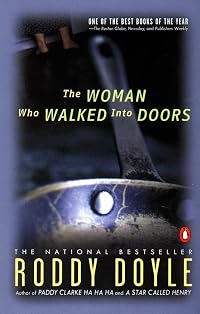
This is the heart-rending story of a woman struggling to reclaim her dignity after a violent, abusive marriage and a worsening drink problem. Paula Spencer recalls her contented childhood, the audacity she learned as a teenager, the exhilaration of her romance with Charlo, and the marriage to him that left her powerless. Capturing both her vulnerability and her strength, Doyle gives Paula a voice that is real and unforgettable.Tags
Recommendations











Member Reviews
DO NOT read this book. Not if you've been a victim of domestic abuse. Not unless you can live under smothering apprehension and depression. Not if you don't want to live through Doyle's book which is so well-written you feel you've suffered the whole 17 years Paula was with her husband in only 188 pages. The writing mirrors the angst of the woman in the story. Staccato sentences filled with self-loathing and delusion. I actually had to quit reading for about a month before I could finish. Powerful. Awful. Great writing.
In the face of her abusive husband's violent death, 39-year-old Paula Spencer mentally processes her life, hoping to make some sense of it, trying to hold on to the illusion of normalcy she has fostered for nearly 20 years. Everything we see takes place in Paula's head; this is stream of consciousness on a very approachable level. As she moves back and forth through her teen years, her early married life and her present circumstances, her perception of reality is challenged, her memories boiling up so that the ones she prefers to suppress keep rising to the surface, confirming some of the reader's suspicions about what she may be hiding from herself, and yet surprising us too with some less obvious conclusions. It's only brilliant.
This is a powerful book -- a character study of an alcoholic woman looking back on her life upon learning of the violent death of her husband, Charlo. She had kicked Charlo out a year earlier, after seventeen years of serious abuse. Paula tries to understand how Charlo could have hit her that first time, and why she believed, and continued to believe despite escalating violence, that everything would be all right. We see both Paula's strengths and weaknesses, her relationships with Charlo, her sisters and her children. Her voice is strong and this book is so well written. Life is seldom easy and everyone has a story -- Paula's will move you.
Paul Spencer is a woman abused by her husband, the one love of her life, a creep called Charlo. Until she has enough. A truly harrowing story, brilliantly written with the true horror of Paula's circumstances withheld until it can't be concealed any longer.
A quick plot summary of this book might result in a reaction of, "Yes, so I've been told." The Irish working life is hard. The men drink (and so do the women). The fathers are mean to their children and the husbands beat their wives. It makes one feel hardened to react so, but it's not my reality, and there's nothing I can do about these others' realities, so really how many times do I have to have my nose rubbed in it?
Yes, a quick plot summary might produce such a reaction. But a reading of this book most certainly would not. For Doyle (this is my first book of his so I only have this one to go by) is a spell-binding story teller, and his character creation here is stunning indeed. He is able to create the voice and viewpoint of Paula show more Spencer, the first-person protagonist, in such a way that 1) we forget it is a man doing the writing and 2) we see an extremely well crafted individual rather than a an common archetype. As hinted in the book's title and told to the reader very early on, Paula takes, basically, a non-stop beating from her husband for 17 years. The story is told in flashback with a narrative that jumps around quite a bit in time, fleshing out Paula's early family life and the back-story of her early romance with her husband and her relationships with her own children. Cleverly, Doyle saves the horrifically detailed accounts of the beatings themselves for the final third of the book, so that by the time we're living through them, we've already been presented with a fully rounded character to empathize with.
This is a hard book to read, especially towards the end, but really a terrific piece of writing and a memorable character. show less
Yes, a quick plot summary might produce such a reaction. But a reading of this book most certainly would not. For Doyle (this is my first book of his so I only have this one to go by) is a spell-binding story teller, and his character creation here is stunning indeed. He is able to create the voice and viewpoint of Paula show more Spencer, the first-person protagonist, in such a way that 1) we forget it is a man doing the writing and 2) we see an extremely well crafted individual rather than a an common archetype. As hinted in the book's title and told to the reader very early on, Paula takes, basically, a non-stop beating from her husband for 17 years. The story is told in flashback with a narrative that jumps around quite a bit in time, fleshing out Paula's early family life and the back-story of her early romance with her husband and her relationships with her own children. Cleverly, Doyle saves the horrifically detailed accounts of the beatings themselves for the final third of the book, so that by the time we're living through them, we've already been presented with a fully rounded character to empathize with.
This is a hard book to read, especially towards the end, but really a terrific piece of writing and a memorable character. show less
Ouch. This book, The Woman Who Walked Into Doors, hurt me. It really hurt me. The kind of hurt where I was lying in bed at night reading it and my partner walked in to kiss me hello after coming home from a 12-hour shift in a 1,000 degree kitchen and I just batted him away without looking away from the book because how could someone possibly interrupt a person when they were going through something so emotional, hello!
Thankfully he's used to living with a book nerd and he didn't take it personally. I wish I could say the same for this book - that I didn't take it personally - but I did. So personally.
The story follows an alcoholic woman who's a mess because she just found out her husband was shot and killed by the cops. Terrible, timely show more situation, though it was written some years ago and does not take place in America. Still, already grabbing at my heart strings.
And then . . . it gets more complicated. But not in the way you're thinking. In that the narrator is perhaps the most unreliable one I've ever read and as I kept reading, more and more lies were uncovered, her story shifted, we learned more things, we discovered the horrible abuse she'd suffered and blamed herself for. Nothing was as it seemed and everything changed time and time again. At first I was annoyed with this woman, then I begrudgingly felt some compassion for her and then, well, my heart really started to hurt. Such an emotional, raw story. I'm all bummed out thinking about it but am ultimately glad I read it. Good showing, Roddy. show less
Thankfully he's used to living with a book nerd and he didn't take it personally. I wish I could say the same for this book - that I didn't take it personally - but I did. So personally.
The story follows an alcoholic woman who's a mess because she just found out her husband was shot and killed by the cops. Terrible, timely show more situation, though it was written some years ago and does not take place in America. Still, already grabbing at my heart strings.
And then . . . it gets more complicated. But not in the way you're thinking. In that the narrator is perhaps the most unreliable one I've ever read and as I kept reading, more and more lies were uncovered, her story shifted, we learned more things, we discovered the horrible abuse she'd suffered and blamed herself for. Nothing was as it seemed and everything changed time and time again. At first I was annoyed with this woman, then I begrudgingly felt some compassion for her and then, well, my heart really started to hurt. Such an emotional, raw story. I'm all bummed out thinking about it but am ultimately glad I read it. Good showing, Roddy. show less
How is a self destroyed? Why? And how is it restored? That seems to be the question Doyle asks.
The confused pregnant 20 years old child Paula does not believe that Charlo´s first hit meant something - It is so outside what she would do, that she doesn't quite believe in it as a fact. Or if it is a fact - surely she must have provoked - he cannot act like that just because he can? Because it gives him a power-kick? What normal person can believe in violence out of the blue - from your lover, the father of your child - to be his most characteristic trait?
Superficially it is the story of the husband who maltreats his wife: Charlo hits, kicks, breaks and burns Paula for 17 years. But the book uses few only a few - and late - pages on show more describing the actual physical violence. The real theme is Paula´s slow awakening process - her way out of hell, how she thinks, verbalizes and thereby reflects herself to herself in a way no-one - few - her first teacher and her mother in glimpses - has done, as a capable responsible woman who can stand up for herself.
Roddy Doyle does not choose such a simple solution as to pinpoint Charlo as "The Evil Protagonist". Nor does he let Paula come across as a stupid, alcoholic woman who chooses to stay, taking punishment for 17 years. The door Paula walks into is not Charlo - Charlo is evil, but evil in the form of one person does not get power unless supported by many. Charlo stays for 17 years because he is only the last and most vicious mirror, the last in a long row of persons who brainwashes Paula to take responsibility for the malpractice she is treated by. The malign mirror of her as a punchbag has deep roots; None has mirrored her as a human being worthy respect: Her father calls her "slut" just for growing up. When her teacher stepped over physical boundaries, she once more learned that the one she depended on had (took) the right to defile. "There was nothing exciting about it , a grown-up man feeling me, feeling me while he was correcting my mistakes". Dad, teacher, brother and cousin all paved the way for Charlo: "Waters and his wandering thumb and Dillon with his wandering snot made me feel filthy; There was something about me that drew them to me: It was my tits that I was too young for; I´d no right to tem. It was my hair. It was my legs and my arms and my neck. There were things about me that were wrong and dirty. I thought it then; I felt it.... I was a dirty slut in some way that I didn't´t understand and couldn't´t control; I made men and boys do things." and "I wasn´t the only one. It happened to all of us. We went in children and we turned into animals".
So when Charlo takes the maltreatment to new heights, she hasn't any experience but the feeling that something is wrong with her to meet it with - for how can dad, brother, teacher and now husband all be wrong? Charlo´s malign reflection of Paula as a worthless nobody is supported by the best: "The doctor never looked at me. He studied parts of me but never looked me in the eye" - by anyone and everyone she meets -: "I could answer the door, I could get on the train. I could go to the shops. And no-one saw me.etc etc etc I could see all these people, but they could´t see me." And for no other reason than exercising the blind animal power of the non-thinking: "Laughing at me. The woman who walked into doors. They didn't´t wink at each other because they didn't´t have to". Non could see her for what she is - she only learns who she is the moment she becomes an onlooker: When Charlo turns his eye on her daughter, she finally recognizes the hate - "But it was sheer hate. It was clear in his face. He wanted to ruin her, to kill her. His own daughter." And then she acts. She does not become a malign mirror for her daughter - teaching her to take it - From dad ... brother ... by turning a blind eye.
It´s Doyle´s attack on a vicious system, kept up by the best. It is also a curious apology for the Church: "One thing for certain: I wouldn't´t have done it if I´d gone to the Holy Rosary. show less
The confused pregnant 20 years old child Paula does not believe that Charlo´s first hit meant something - It is so outside what she would do, that she doesn't quite believe in it as a fact. Or if it is a fact - surely she must have provoked - he cannot act like that just because he can? Because it gives him a power-kick? What normal person can believe in violence out of the blue - from your lover, the father of your child - to be his most characteristic trait?
Superficially it is the story of the husband who maltreats his wife: Charlo hits, kicks, breaks and burns Paula for 17 years. But the book uses few only a few - and late - pages on show more describing the actual physical violence. The real theme is Paula´s slow awakening process - her way out of hell, how she thinks, verbalizes and thereby reflects herself to herself in a way no-one - few - her first teacher and her mother in glimpses - has done, as a capable responsible woman who can stand up for herself.
Roddy Doyle does not choose such a simple solution as to pinpoint Charlo as "The Evil Protagonist". Nor does he let Paula come across as a stupid, alcoholic woman who chooses to stay, taking punishment for 17 years. The door Paula walks into is not Charlo - Charlo is evil, but evil in the form of one person does not get power unless supported by many. Charlo stays for 17 years because he is only the last and most vicious mirror, the last in a long row of persons who brainwashes Paula to take responsibility for the malpractice she is treated by. The malign mirror of her as a punchbag has deep roots; None has mirrored her as a human being worthy respect: Her father calls her "slut" just for growing up. When her teacher stepped over physical boundaries, she once more learned that the one she depended on had (took) the right to defile. "There was nothing exciting about it , a grown-up man feeling me, feeling me while he was correcting my mistakes". Dad, teacher, brother and cousin all paved the way for Charlo: "Waters and his wandering thumb and Dillon with his wandering snot made me feel filthy; There was something about me that drew them to me: It was my tits that I was too young for; I´d no right to tem. It was my hair. It was my legs and my arms and my neck. There were things about me that were wrong and dirty. I thought it then; I felt it.... I was a dirty slut in some way that I didn't´t understand and couldn't´t control; I made men and boys do things." and "I wasn´t the only one. It happened to all of us. We went in children and we turned into animals".
So when Charlo takes the maltreatment to new heights, she hasn't any experience but the feeling that something is wrong with her to meet it with - for how can dad, brother, teacher and now husband all be wrong? Charlo´s malign reflection of Paula as a worthless nobody is supported by the best: "The doctor never looked at me. He studied parts of me but never looked me in the eye" - by anyone and everyone she meets -: "I could answer the door, I could get on the train. I could go to the shops. And no-one saw me.etc etc etc I could see all these people, but they could´t see me." And for no other reason than exercising the blind animal power of the non-thinking: "Laughing at me. The woman who walked into doors. They didn't´t wink at each other because they didn't´t have to". Non could see her for what she is - she only learns who she is the moment she becomes an onlooker: When Charlo turns his eye on her daughter, she finally recognizes the hate - "But it was sheer hate. It was clear in his face. He wanted to ruin her, to kill her. His own daughter." And then she acts. She does not become a malign mirror for her daughter - teaching her to take it - From dad ... brother ... by turning a blind eye.
It´s Doyle´s attack on a vicious system, kept up by the best. It is also a curious apology for the Church: "One thing for certain: I wouldn't´t have done it if I´d gone to the Holy Rosary. show less
Members
- Recently Added By
Lists

Irish writers
87 works; 17 members

Books Read in 2017
4,249 works; 130 members

Blue Pyramid 1,276 Best Books of All Time
1,248 works; 32 members

Stephen King's 'On Writing' reading list
95 works; 4 members
Author Information

73+ Works 21,404 Members
Roddy Doyle is the author of five previous novels, including a Booker Prize nominee, The Van, and a Booker Prize winning international bestseller Paddy Clarke Ha Ha Ha. He has also written several screenplays, most recently When Brendan Met Trudy. His first children's book, The Giggler Treatment, will be published in September by Scholastic. He show more lives in Dublin. (Publisher Provided) Roddy Doyle was born in Dublin on May 8, 1958, and grew up in Kilbarrack, Ireland. Doyle graduated with a Bachelor of Arts degree from University College Dublin. He spent several years as an English and geography teacher before becoming a full-time writer in 1993. His personal notes and work books reside at the National Library of Ireland. Doyle's first three novels, The Commitments (1987), The Snapper (1990) and The Van (1991) comprise The Barrytown Trilogy, a trilogy centred around the Rabbitte family. All three novels were made into successful films. In 1993, Doyle published Paddy Clarke Ha Ha Ha, winner of the 1993 Man Booker Prize. Doyle is the author of ten novels for adults, seven books for children, seven plays and screenplays, and dozens of short stories. His work is set primarily in Ireland, especially working-class Dublin, and is notable for its heavy use of dialogue written in slang and Irish English dialect. (Bowker Author Biography) show less
Awards and Honors
Awards
Distinctions
Notable Lists
Series

Belongs to Publisher Series
Fischer Taschenbuch (14204)
Work Relationships
Common Knowledge
- Canonical title
- The Woman who Walked into Doors
- Original title
- The woman who walked into doors
- Original publication date
- 1996
- People/Characters
- Paula Spencer; Charlo Spencer; Nicola Spencer; John Paul Spencer; Leanne Spencer; Jack Spencer (show all 7); Carmel
- Important places
- Dublin, Ireland
- Related movies*
- Family (1994 | IMDb)
- Epigraph*
- At the age of 37 -
She realised she'd never ride -
through Paris -
In a sports car -
With the warm wind in her hair -
Shel Silverstein,
The Ballad of Lucy Jordan - Dedication
- This book is dedicated to Jack
- First words
- I was told by a Guard who came to the door.
- Last words
- (Click to show. Warning: May contain spoilers.)It was a great feeling. I'd done something good.
- Blurbers
- See, Carolyn
*Some information comes from Common Knowledge in other languages. Click "Edit" for more information.
Classifications
Statistics
- Members
- 2,399
- Popularity
- 8,157
- Reviews
- 43
- Rating
- (3.77)
- Languages
- 13 — Catalan, Chinese, Danish, Dutch, English, Finnish, French, German, Italian, Norwegian (Bokmål), Portuguese, Spanish, Swedish
- Media
- Paper, Audiobook, Ebook
- ISBNs
- 62
- ASINs
- 14