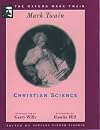
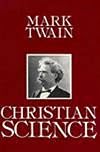
Christian Science
by Mark Twain 
On This Page
Description
Though Mark Twain is best remembered as perhaps the quintessential American humor writer, he was also a keen observer and critic of cultural and social trends. In this vein, he undertook a book-length discussion and analysis of Christian Science and New Thought, both of which enjoyed immense popularity in the nineteenth and early twentieth centuries in the United States. The controversial text was originally rejected by Twain's publisher, a gesture that the author saw as confirming the show more influence and power of the religious movement. show lessTags
Recommendations

























Member Recommendations

Member Reviews
Twain turns his acerbic wit to examining what was then a new religion on the American scene. He uses Mary Baker Eddy's own words to demonstrate that Christian Science is vacuous, fatuous, and incoherent. Heavy use of irony could lead some concrete thinkers to assume that he admires the woman (at times), but those familiar with Twain's style will get the joke. There are many good moments, though some of the work lacks the charm of his other outings, though the anger he feels clearly shines through. Twain was wrong, however, in predicting that Christian Science would become the dominant religion in America and would be in full control of the government by the middle of the century.
The lighter side of a truly grim religion. This is the bitingly satirical look at Christian Science and its founder that embarrassed Mary Baker Eddy into abandoning her claim to the title of "Mother" (belatedly stating "I regard self-deification as blasphemous"), closing the Mother's Room at the Mother Church in Boston, and passing a church bylaw saying that "it is the duty of Christian Scientist to drop the word mother and substitute the word Leader" in referring to Mrs Eddy.
By the time 'Christian Science' went to press, Mary Baker Eddy had long needed a good trimming. Tom Sawyer's daddy probably did a better job than any other writer of that era could have managed. Sic 'em, Boy! Sic 'em!
Ratings
Members
- Recently Added By
Lists

Vlogbrothers Book Recommendations
307 works; 4 members
Author Information

2,751+ Works 208,738 Members
Mark Twain was born Samuel L. Clemens in Florida, Missouri on November 30, 1835. He worked as a printer, and then became a steamboat pilot. He traveled throughout the West, writing humorous sketches for newspapers. In 1865, he wrote the short story, The Celebrated Jumping Frog of Calaveras County, which was very well received. He then began a show more career as a humorous travel writer and lecturer, publishing The Innocents Abroad in 1869, Roughing It in 1872, and, Gilded Age in 1873, which was co-authored with Charles Dudley Warner. His best-known works are The Adventures of Tom Sawyer, Mississippi Writing: Life on the Mississippi, and The Adventures of Huckleberry Finn. He died of a heart attack on April 21, 1910. (Bowker Author Biography) show less
Mark Twain has a Legacy Library. Legacy libraries are the personal libraries of famous readers, entered by LibraryThing members from the Legacy Libraries group.
Some Editions
Work Relationships
Is contained in
Is expanded in
Has as a reference guide/companion
Common Knowledge
- Canonical title
- Christian Science
- Original title
- Christian Science
- Original publication date
- 1899
Classifications
- Genres
- Nonfiction, Religion & Spirituality
- DDC/MDS
- 289.5 — Religion Christian denominations Other denominations and sects Christian Science
- LCC
- BX6995 .T84 — Philosophy, Psychology and Religion Christian Denominations Christian Denominations Protestantism Other Protestant denominations Christian Science
- BISAC
Statistics
- Members
- 318
- Popularity
- 100,203
- Reviews
- 4
- Rating
- (3.55)
- Languages
- English, German
- Media
- Paper, Audiobook, Ebook
- ISBNs
- 56
- ASINs
- 23