Technofeudalism: What Killed Capitalism
by Yanis Varoufakis
On This Page
Description
No one noticed when capitalism died. Perhaps we were too distracted by the implosion of global finance, or the rise of populism, or the demise of the planet - or all of those cute cats on Instagram. But gradually, quietly, a yet more exploitative new system has taken hold- techno-feudalism. Written in the form of a letter to his late father, who first taught him about the power of new technologies to shape human history, Yanis Varoufakis explains how Big Tech has effected an invisible but show more fundamental transformation in all our lives. Drawing on stories from Greek Myth and pop culture, from Mad Men to Karl Marx, he explains how the key ingredients of capitalism - profit and markets - have both been replaced. And he exposes the hidden connection between your personal data and the transformative power of 'cloud capital' which means that without our realising it, we are all working every day for the tech giants, for free. show lessTags
Recommendations


















Member Reviews
It is always great to read Yanis Varoufakis. His thought processes lead him to such revealing and faraway places that he needs to use his daughter, or in this case, his father, to make his position and his findings accessible to all. In Technofeudalism, an adventure is well underway in post capitalism that has turned out to be if anything, far worse than what it replaces. The book solves a number of mysteries along the way.
Tech and the Federal Reserve Bank (the Fed) have teamed up to produce a system that laps capitalism and leaves it in its dust. The thing about tech is that it rarely produces anything real. It provides services instead. This allows it to employ far fewer people, avoid most manufacturing and distribution, and turn all show more the world into rent-payers and free labor. The thing about the Fed is that it keeps delivering truckloads of money to the extremely wealthy, who pump up these massive tech companies, giving them the power to rearrange the economy in their image.
Today, instead of buying real products, we license them, we subscribe to them, we store virtual link/copies, or we use them and pay with our labor. This is a service economy like we’ve never experienced. From Uber to medium, from Microsoft to Facebook, we no longer take ownership. Apple may sell iPhones, but its real moneymaker is apps, for which it gets 30% of the revenues from all the entrepreneurs who offer them in its store. We use Windows at the pleasure of Microsoft, and it can withdraw its use from us at any time.
The price of gold or oil or real estate don’t figure in tech’s books. This is cloud capital and it is bigger than anything we’ve ever seen. It has been nurtured by the printers at the Fed, and pumped by the extremely rich, who invest in the shares of them, driving them to TRILLION dollar valuations. That, and loans that have been essentially interest-free since 2008 have meant oceans of money loaned, hedged, leveraged and margined to ten times the total income of the whole world.
America’s gigantic trade deficits show up as the credits and profits of the manufacturing countries like Japan and China. America feared they would buy it out with all their newly acquired dollars. So it restricted them to FIRE – finance, insurance and real estate. No more corporate takeovers. Maybe the occasional football team.
That inbound flood of overseas dollars, looking for someplace to land decently safe (sometimes just getting it out of their country), means the huge investment fund houses of Wall Street have so much money on their hands, they have to invest in literally everything, Varoufakis says. Their assets now count in the trillions, and if you wonder why the stock of companies like Tesla kept soaring despite bad quarter after bad quarter, it’s because repatriated dollars needed a home, and Tesla had the tech profile, the intrinsic value proposition and the daily volume of trades to make those investments feasible. That explains a lot.
Then consider crypto. It was an amusing diversion for about a decade, and then suddenly, things got serious when China said it was considering a digital yuan. Alarm bells went off all over Wall Street. As Varoufakis explains, there is a long line of middlemen waiting for every little currency transaction. It starts with the client’s bank, then the central bank of that country, Swift, Wall Street’s financial message system of record, the Fed, and the local bank where money finally ends up. Every one of them takes its cut. It can take days.
With crypto, customers tap their digital wallets and move currency into someone else’s account in an instant. This is an existential threat to American global finance, and had to be stopped at all costs. That is why (to everyone’s great puzzlement) the Fed announced it was looking to create a digital dollar. But why, everyone asked. The dollar is already king. It can already be sent electronically. It can already be changed into any other currency. Well this is why. Wall Street likes currency inefficient, cumbersome, unaccountable, opaque and a constant source of expensive valueless fees. That’s the way the world has worked for a couple of centuries, and no little crypto fad is going to block the trough. The pressure is on the Fed to save the currency Bros, just like it always saves the bank Bros. This is why the USA has suddenly banned the export of the most powerful computer chips to China – where the USA has them made for it! That explains a lot.
Varoufakis says it all fits the age-old fallacy we keep pushing: “Capitalism is about freedom, efficiency and democracy; socialism turns on justice, equality and statism. In fact, from the very start, the left was all about emancipation.” And Varoufakis is a living testament to that, having served as the economy minister in the leftist government of Greece that was going to go its own way, and avoid crippling austerity living under the thumb of the IMF. But the government caved, and Varoufakis rode off on his motorcycle. Greece has been a basket case ever since.
This movable cloud capital resulted in major changes of its own. Most lamentably, the world has provided Big Tech companies with free labor, technoserfs, who create content, from videos to (ahem!) book reviews that they leverage to attract more eyeballs and more free labor. Serfs snitch on family and friends, help refine advertising campaigns, political campaigns, and scams. Influencers provide marketing. Trolls keep up the temperature. Varoufakis, says this is the major difference: where capitalism demonstrated its power to control people in the workplace, technofeudalism demonstrates its even stronger control outside the workplace. Unremunerated pay in the service of cloud capital, “unremediated by any market,” for services that can be offered anywhere at no additional cost.
Feudalism also had vassals. Technovassals are small businesspeople who fork over large portions of their revenue to the Lord Amazon or Alibaba. These are the lords of platforms, where everyone pays stiff rent or doesn’t get to play at all. Restaurant prices soared not so much from the pandemic, as suddenly having to pay 30% for online reservation services. It is feudalism via electrons.
He says Europe is complicit. It will not strengthen the euro and complete its monetary union with new rules making it a potential reserve currency, because European bankers are enjoying repatriating dollars to the USA in the form of those insanely profitable FIRE investments. Who needs the burden of managing a global reserve currency when you can get rich from someone else doing it? So it shall remain. That explains a lot.
This has also had the heretofore bizarre effect of trillions of dollars rushing to the USA every time the dollar comes under pressure for a bad economic or political report. Normally, the dollar would fall, but bankers wanting the gravy train to keep running, flood the financial system buying up dollars, actually boosting it, even, if not especially, in times of terrible news. That explains a lot.
As for our free and competitive markets, they are not even real markets, just platforms, Varoufakis says. There is no jostling among buyers, no negotiating with sellers. Everyone deals completely in isolation of everyone else, and platform owners keep all the data to themselves. It is way beyond the death of capitalism, which was supposedly about freedom, efficiency and democracy, he says. Today’s 99% vs 1% has worse inequality than in feudal times.
Varoufakis takes readers on a grand tour from the Nixon administration to the present. Nixon unhitched the dollar from gold, so the Fed could print as much money as it wanted and not have to pay for it. The gold standard was holding the whole world hostage because there is simply not enough gold on the planet to satisfy the demand for money. And capitalism must continually expand – or die. Distortions appeared everywhere as the US went from net producing to net consuming, and consequently into swelling deficits. So money had to be unleashed.
All these factors meant US dollars came flooding back, inflating Wall Street to silly heights. In 1970 the Dow Jones Industrial Average was stuck at 900-1000, not much higher than it had been (300-400) in 1929. Today, it ranges from 31,000-35,000 (Though after the Fed announcement in December 2023, it finally broke out to the 37,000 level). That explains a lot.
By directing its deficit spending back round to finance, America has ensured the very rich will get richer, while the rest get poorer. He says it was “socialism for bankers and austerity for the rest.” Exporting all the manufacturing processes overseas has left millions underemployed at home, in debt, and unable to progress in their careers. Decent jobs evaporated, replaced by what Varoufakis calls cloud proles, those slaving away on computers for little or no money. They work for pennies offered by Amazon’s Mechanical Turk, or 60 hour weeks at X, (fka twitter). Or gig workers, delivery bikers or affiliate professors. The pressure is on them to never take a break, lest they lose their posts altogether. This is the new feudalism in action, cloud-based and vastly more profitable than actually having to make something real.
America had to make returns attractive to those overseas dollars. Varoufakis says the result was the “intentional impoverishment” of America’s working classes. It is no secret that the 99% have seen their incomes fall well below inflation since the mid 1970s, that labor unions have been all but banished, that benefits and pensions have vaporized for the working classes. Meanwhile, finance has grown out of all proportion. Coincidence? Nothing on this scale, where trillions of dollars are waiting, is coincidence. Bankers needed to improve the bottom lines of their client corporations, so they bled the middle classes. Here’s how: Big Tech’s workforce collects less than 1% of corporate revenues, while under capitalism, that figure was typically 35%. Meta (Facebook), for example, makes $600,000 profit from each staffer.
Varoufakis compares the Enclosure laws in Britain, which threw the peasants off the land and made them tenants, to our access to our own identities. They are owned and exploited by the technostructure, and we do not even have access to them. They record every comment we make, every show we watch, every step we take, every call we make, every trip we take. Between them, they know everyone far better than individuals do themselves. Stores know the very aisles we walk, the shelves we stop at, the clothes we try on – everything, thanks to the monitor we carry with us so they can collect all that data – the free app we downloaded so we could get the occasional 10% off. With data like that, free markets are totally redundant. They make the demand (aka overconsumption in the USA).
And this is the value of the book. Here are answers to why things work backwards today. Why nothing makes sense, and why things are not getting better. This is the basis for how the country actually works, and it is not free and competitive markets. They left the building with the 2008 financial crisis.
The book goes to great lengths to be accessible. Varoufakis structures it as answers to longstanding questions from his father, who represents a left that never had to deal with anything like this. He also repeatedly uses the character Don Draper, of Mad Men, to hang all the evils of capitalism on. He shows how the dissolute, hard-drinking and corrupt fraud Don Draper reshaped consumer sentiment again and again, making the old new again, instilling desires the middle classes never had on their own, and living the high life while the working classes – even in his own firm – slaved away. He was the ideal capitalist. Then too, in Technofeudalism there are no mathematical formulas, just a revelatory alternate history of the end of capitalism and the silent takeover by cloud capital. And it’s a helluva tale.
Nonetheless, Varoufakis says a lot of things I would argue with: “The rise of the technostructure transformed American capitalism from a decentralized market society into a centralized economy-with-markets. It was precisely what the Soviet planners had always hoped to achieve, but failed.” The centralization he talks about is not mandated by the federal government, but implemented by financialization and the constant merging of giant companies that leave consumers no choice, and which give makers a complete view of the market. With their all-seeing heft, they can plan and produce to satisfy the all but totally predictable demand. It is capitalism on steroids, not the centralized command and control of the USSR, but more a blatant, monopoly system.
As anyone who reads me regularly knows, I have long been on the record that giant global corporations are taking over from capitalism, in a transition that becomes more obvious every day. That those corporations can and do shape the policies and even the activities of governments is repugnant. Varoufakis is saying a lot of the same things, but he has the resources to organize and prove them. He has done a thrilling job of explaining it in ways readers will not merely understand, but acknowledge that they feel themselves. Technofeudalism is a powerful and necessary achievement.
David Wineberg show less
Tech and the Federal Reserve Bank (the Fed) have teamed up to produce a system that laps capitalism and leaves it in its dust. The thing about tech is that it rarely produces anything real. It provides services instead. This allows it to employ far fewer people, avoid most manufacturing and distribution, and turn all show more the world into rent-payers and free labor. The thing about the Fed is that it keeps delivering truckloads of money to the extremely wealthy, who pump up these massive tech companies, giving them the power to rearrange the economy in their image.
Today, instead of buying real products, we license them, we subscribe to them, we store virtual link/copies, or we use them and pay with our labor. This is a service economy like we’ve never experienced. From Uber to medium, from Microsoft to Facebook, we no longer take ownership. Apple may sell iPhones, but its real moneymaker is apps, for which it gets 30% of the revenues from all the entrepreneurs who offer them in its store. We use Windows at the pleasure of Microsoft, and it can withdraw its use from us at any time.
The price of gold or oil or real estate don’t figure in tech’s books. This is cloud capital and it is bigger than anything we’ve ever seen. It has been nurtured by the printers at the Fed, and pumped by the extremely rich, who invest in the shares of them, driving them to TRILLION dollar valuations. That, and loans that have been essentially interest-free since 2008 have meant oceans of money loaned, hedged, leveraged and margined to ten times the total income of the whole world.
America’s gigantic trade deficits show up as the credits and profits of the manufacturing countries like Japan and China. America feared they would buy it out with all their newly acquired dollars. So it restricted them to FIRE – finance, insurance and real estate. No more corporate takeovers. Maybe the occasional football team.
That inbound flood of overseas dollars, looking for someplace to land decently safe (sometimes just getting it out of their country), means the huge investment fund houses of Wall Street have so much money on their hands, they have to invest in literally everything, Varoufakis says. Their assets now count in the trillions, and if you wonder why the stock of companies like Tesla kept soaring despite bad quarter after bad quarter, it’s because repatriated dollars needed a home, and Tesla had the tech profile, the intrinsic value proposition and the daily volume of trades to make those investments feasible. That explains a lot.
Then consider crypto. It was an amusing diversion for about a decade, and then suddenly, things got serious when China said it was considering a digital yuan. Alarm bells went off all over Wall Street. As Varoufakis explains, there is a long line of middlemen waiting for every little currency transaction. It starts with the client’s bank, then the central bank of that country, Swift, Wall Street’s financial message system of record, the Fed, and the local bank where money finally ends up. Every one of them takes its cut. It can take days.
With crypto, customers tap their digital wallets and move currency into someone else’s account in an instant. This is an existential threat to American global finance, and had to be stopped at all costs. That is why (to everyone’s great puzzlement) the Fed announced it was looking to create a digital dollar. But why, everyone asked. The dollar is already king. It can already be sent electronically. It can already be changed into any other currency. Well this is why. Wall Street likes currency inefficient, cumbersome, unaccountable, opaque and a constant source of expensive valueless fees. That’s the way the world has worked for a couple of centuries, and no little crypto fad is going to block the trough. The pressure is on the Fed to save the currency Bros, just like it always saves the bank Bros. This is why the USA has suddenly banned the export of the most powerful computer chips to China – where the USA has them made for it! That explains a lot.
Varoufakis says it all fits the age-old fallacy we keep pushing: “Capitalism is about freedom, efficiency and democracy; socialism turns on justice, equality and statism. In fact, from the very start, the left was all about emancipation.” And Varoufakis is a living testament to that, having served as the economy minister in the leftist government of Greece that was going to go its own way, and avoid crippling austerity living under the thumb of the IMF. But the government caved, and Varoufakis rode off on his motorcycle. Greece has been a basket case ever since.
This movable cloud capital resulted in major changes of its own. Most lamentably, the world has provided Big Tech companies with free labor, technoserfs, who create content, from videos to (ahem!) book reviews that they leverage to attract more eyeballs and more free labor. Serfs snitch on family and friends, help refine advertising campaigns, political campaigns, and scams. Influencers provide marketing. Trolls keep up the temperature. Varoufakis, says this is the major difference: where capitalism demonstrated its power to control people in the workplace, technofeudalism demonstrates its even stronger control outside the workplace. Unremunerated pay in the service of cloud capital, “unremediated by any market,” for services that can be offered anywhere at no additional cost.
Feudalism also had vassals. Technovassals are small businesspeople who fork over large portions of their revenue to the Lord Amazon or Alibaba. These are the lords of platforms, where everyone pays stiff rent or doesn’t get to play at all. Restaurant prices soared not so much from the pandemic, as suddenly having to pay 30% for online reservation services. It is feudalism via electrons.
He says Europe is complicit. It will not strengthen the euro and complete its monetary union with new rules making it a potential reserve currency, because European bankers are enjoying repatriating dollars to the USA in the form of those insanely profitable FIRE investments. Who needs the burden of managing a global reserve currency when you can get rich from someone else doing it? So it shall remain. That explains a lot.
This has also had the heretofore bizarre effect of trillions of dollars rushing to the USA every time the dollar comes under pressure for a bad economic or political report. Normally, the dollar would fall, but bankers wanting the gravy train to keep running, flood the financial system buying up dollars, actually boosting it, even, if not especially, in times of terrible news. That explains a lot.
As for our free and competitive markets, they are not even real markets, just platforms, Varoufakis says. There is no jostling among buyers, no negotiating with sellers. Everyone deals completely in isolation of everyone else, and platform owners keep all the data to themselves. It is way beyond the death of capitalism, which was supposedly about freedom, efficiency and democracy, he says. Today’s 99% vs 1% has worse inequality than in feudal times.
Varoufakis takes readers on a grand tour from the Nixon administration to the present. Nixon unhitched the dollar from gold, so the Fed could print as much money as it wanted and not have to pay for it. The gold standard was holding the whole world hostage because there is simply not enough gold on the planet to satisfy the demand for money. And capitalism must continually expand – or die. Distortions appeared everywhere as the US went from net producing to net consuming, and consequently into swelling deficits. So money had to be unleashed.
All these factors meant US dollars came flooding back, inflating Wall Street to silly heights. In 1970 the Dow Jones Industrial Average was stuck at 900-1000, not much higher than it had been (300-400) in 1929. Today, it ranges from 31,000-35,000 (Though after the Fed announcement in December 2023, it finally broke out to the 37,000 level). That explains a lot.
By directing its deficit spending back round to finance, America has ensured the very rich will get richer, while the rest get poorer. He says it was “socialism for bankers and austerity for the rest.” Exporting all the manufacturing processes overseas has left millions underemployed at home, in debt, and unable to progress in their careers. Decent jobs evaporated, replaced by what Varoufakis calls cloud proles, those slaving away on computers for little or no money. They work for pennies offered by Amazon’s Mechanical Turk, or 60 hour weeks at X, (fka twitter). Or gig workers, delivery bikers or affiliate professors. The pressure is on them to never take a break, lest they lose their posts altogether. This is the new feudalism in action, cloud-based and vastly more profitable than actually having to make something real.
America had to make returns attractive to those overseas dollars. Varoufakis says the result was the “intentional impoverishment” of America’s working classes. It is no secret that the 99% have seen their incomes fall well below inflation since the mid 1970s, that labor unions have been all but banished, that benefits and pensions have vaporized for the working classes. Meanwhile, finance has grown out of all proportion. Coincidence? Nothing on this scale, where trillions of dollars are waiting, is coincidence. Bankers needed to improve the bottom lines of their client corporations, so they bled the middle classes. Here’s how: Big Tech’s workforce collects less than 1% of corporate revenues, while under capitalism, that figure was typically 35%. Meta (Facebook), for example, makes $600,000 profit from each staffer.
Varoufakis compares the Enclosure laws in Britain, which threw the peasants off the land and made them tenants, to our access to our own identities. They are owned and exploited by the technostructure, and we do not even have access to them. They record every comment we make, every show we watch, every step we take, every call we make, every trip we take. Between them, they know everyone far better than individuals do themselves. Stores know the very aisles we walk, the shelves we stop at, the clothes we try on – everything, thanks to the monitor we carry with us so they can collect all that data – the free app we downloaded so we could get the occasional 10% off. With data like that, free markets are totally redundant. They make the demand (aka overconsumption in the USA).
And this is the value of the book. Here are answers to why things work backwards today. Why nothing makes sense, and why things are not getting better. This is the basis for how the country actually works, and it is not free and competitive markets. They left the building with the 2008 financial crisis.
The book goes to great lengths to be accessible. Varoufakis structures it as answers to longstanding questions from his father, who represents a left that never had to deal with anything like this. He also repeatedly uses the character Don Draper, of Mad Men, to hang all the evils of capitalism on. He shows how the dissolute, hard-drinking and corrupt fraud Don Draper reshaped consumer sentiment again and again, making the old new again, instilling desires the middle classes never had on their own, and living the high life while the working classes – even in his own firm – slaved away. He was the ideal capitalist. Then too, in Technofeudalism there are no mathematical formulas, just a revelatory alternate history of the end of capitalism and the silent takeover by cloud capital. And it’s a helluva tale.
Nonetheless, Varoufakis says a lot of things I would argue with: “The rise of the technostructure transformed American capitalism from a decentralized market society into a centralized economy-with-markets. It was precisely what the Soviet planners had always hoped to achieve, but failed.” The centralization he talks about is not mandated by the federal government, but implemented by financialization and the constant merging of giant companies that leave consumers no choice, and which give makers a complete view of the market. With their all-seeing heft, they can plan and produce to satisfy the all but totally predictable demand. It is capitalism on steroids, not the centralized command and control of the USSR, but more a blatant, monopoly system.
As anyone who reads me regularly knows, I have long been on the record that giant global corporations are taking over from capitalism, in a transition that becomes more obvious every day. That those corporations can and do shape the policies and even the activities of governments is repugnant. Varoufakis is saying a lot of the same things, but he has the resources to organize and prove them. He has done a thrilling job of explaining it in ways readers will not merely understand, but acknowledge that they feel themselves. Technofeudalism is a powerful and necessary achievement.
David Wineberg show less
Varoufakis addresses [b:Technofeudalism : What Killed Capitalism|75560036|Technofeudalism What Killed Capitalism|Yanis Varoufakis|https://i.gr-assets.com/images/S/compressed.photo.goodreads.com/books/1684846614l/75560036._SY75_.jpg|100873751] to his father as a response to the questions his father asked when faced with the internet in 1993: 'Now that computers spreak to each other, will this network make capitalism impossible to overthrow? Or might it finally reveal its Achilles heel?' Despite Varoufakis' wit and warmth, his conclusions are undoubtedly a total downer. He contends that capitalism is indeed being transformed and crowded out by the economic effects of the internet, but it's being replaced by something worse. To date the show more fullest description of this new economic form has been surveillance capitalism, coined by [a:Shoshana Zuboff|710768|Shoshana Zuboff|https://images.gr-assets.com/authors/1563298665p2/710768.jpg]. Varousfakis argues that it is instead a new form of feudalism and helpfully summarises its structure and value flows as parasitic upon capitalism in figure 3 on page 234.
Although initially sceptical of how useful comparisons with feudalism could be, I came around to Varoufakis' idiodyncratic analysis if not his terminology. He builds on [b:The Age of Surveillance Capitalism: The Fight for a Human Future at the New Frontier of Power|26195941|The Age of Surveillance Capitalism The Fight for a Human Future at the New Frontier of Power|Shoshana Zuboff|https://i.gr-assets.com/images/S/compressed.photo.goodreads.com/books/1521733914l/26195941._SY75_.jpg|46170685] and [b:Capitalism without Capital: The Rise of the Intangible Economy|34928269|Capitalism without Capital The Rise of the Intangible Economy|Jonathan Haskel|https://i.gr-assets.com/images/S/compressed.photo.goodreads.com/books/1493303382l/34928269._SY75_.jpg|56192358] by adding international financial and geopolitical factors. I found his discussion of quantitative easing and explanation for economic tensions between China and the US well-argued. Regarding the former, this passage from chapter 4 punched me right in the face:
What the absolute fuck! I hadn't realised that hedge funds had consolidated to this deranged extent. On the geopolitical front, I wasn't previously aware of China's digital yuan project or how it could reshape financial flows, so found this very informative:
It's instructive to compare this book with Paul Mason's 2015 [b:Postcapitalism: A Guide to Our Future|24878857|Postcapitalism A Guide to Our Future|Paul Mason|https://i.gr-assets.com/images/S/compressed.photo.goodreads.com/books/1437580637l/24878857._SY75_.jpg|44526761], which I reviewed at length in 2016. Of my comments, 'The thought experiment of what if all information really was freely available, somehow, really makes you aware of how many monopolies defend it at present (amazon, google, facebook, et al),' has aged well and, 'I agree with Mason that the current monopolistic situation is fragile and unsustainable,' really has not. Varoufakis admits that he too had techno-utopian hopes:
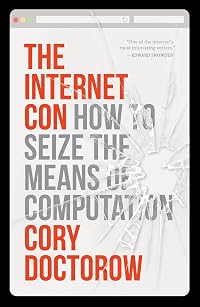
[a:Cory Doctorow|12581|Cory Doctorow|https://images.gr-assets.com/authors/1595482071p2/12581.jpg] extrapolated this very scenario in his 2009 novel [b:Makers|6422238|Makers|Cory Doctorow|https://i.gr-assets.com/images/S/compressed.photo.goodreads.com/books/1442493265l/6422238._SY75_.jpg|6611457] (which I wasn't keen on); now he writes about platform enshittification (I love that term) on pluralistic.net and in books like [b:The Internet Con: How to Seize the Means of Computation|120806182|The Internet Con How to Seize the Means of Computation|Cory Doctorow|https://i.gr-assets.com/images/S/compressed.photo.goodreads.com/books/1684793056l/120806182._SY75_.jpg|142492907]. Everyone's utopian hopes have been crushed by technology becoming a force for monopolisation and rent-seeking. Looking back at my 2020 review of the 2017 book [b:Capitalism without Capital: The Rise of the Intangible Economy|34928269|Capitalism without Capital The Rise of the Intangible Economy|Jonathan Haskel|https://i.gr-assets.com/images/S/compressed.photo.goodreads.com/books/1493303382l/34928269._SY75_.jpg|56192358], the economist authors were starting to grasp it back then:
This is precisely the point that Varoufakis is developing in [b:Technofeudalism : What Killed Capitalism|75560036|Technofeudalism What Killed Capitalism|Yanis Varoufakis|https://i.gr-assets.com/images/S/compressed.photo.goodreads.com/books/1684846614l/75560036._SY75_.jpg|100873751]:
As ever, Varoufakis packs a lot into not many pages. He even makes time to summarise his prior book [b:Another Now: Dispatches from an Alternative Present|49098225|Another Now Dispatches from an Alternative Present|Yanis Varoufakis|https://i.gr-assets.com/images/S/compressed.photo.goodreads.com/books/1599381222l/49098225._SX50_.jpg|74535706], which I highly recommend. Unsurprisingly, [b:Technofeudalism : What Killed Capitalism|75560036|Technofeudalism What Killed Capitalism|Yanis Varoufakis|https://i.gr-assets.com/images/S/compressed.photo.goodreads.com/books/1684846614l/75560036._SY75_.jpg|100873751] is a much more pessimistic read. Appendix 1, which explains his theory economics-textbook style, includes this painful sting in the tail:
It seems petty to quibble about terminology, but I wasn't keen on the terms 'cloud fief', 'cloudalists', 'cloud rent', etc. I can see their usefulness for now, but doubt they will stick longer term. Moreover, I think the emergent economic system we are currently living under deserves a genuinely new name rather incorporating that of a prior system. Referring to feudalism for explanatory purposes makes sense, but implies a return to the pre-capitalist world which is misleading. Ideally this new name will be more sophisticated than 'fuckery', which is all my brain could come up with. Perhaps the nomenclature will come from a language other than English.
It has taken me a while to review [b:Technofeudalism : What Killed Capitalism|75560036|Technofeudalism What Killed Capitalism|Yanis Varoufakis|https://i.gr-assets.com/images/S/compressed.photo.goodreads.com/books/1684846614l/75560036._SY75_.jpg|100873751] as I found it profoundly depressing, in contrast to [b:The Age of Surveillance Capitalism: The Fight for a Human Future at the New Frontier of Power|26195941|The Age of Surveillance Capitalism The Fight for a Human Future at the New Frontier of Power|Shoshana Zuboff|https://i.gr-assets.com/images/S/compressed.photo.goodreads.com/books/1521733914l/26195941._SY75_.jpg|46170685]. This time, improved understanding made me feel worse about the state of the world rather than better. Moreover, I'm keenly aware that by posting a review on amazon-owned goodreads I am working as a cloudserf. Aren't we all! I recommend [b:Technofeudalism : What Killed Capitalism|75560036|Technofeudalism What Killed Capitalism|Yanis Varoufakis|https://i.gr-assets.com/images/S/compressed.photo.goodreads.com/books/1684846614l/75560036._SY75_.jpg|100873751], with the caveat that if you take it seriously you will feel very depressed afterwards. show less
Although initially sceptical of how useful comparisons with feudalism could be, I came around to Varoufakis' idiodyncratic analysis if not his terminology. He builds on [b:The Age of Surveillance Capitalism: The Fight for a Human Future at the New Frontier of Power|26195941|The Age of Surveillance Capitalism The Fight for a Human Future at the New Frontier of Power|Shoshana Zuboff|https://i.gr-assets.com/images/S/compressed.photo.goodreads.com/books/1521733914l/26195941._SY75_.jpg|46170685] and [b:Capitalism without Capital: The Rise of the Intangible Economy|34928269|Capitalism without Capital The Rise of the Intangible Economy|Jonathan Haskel|https://i.gr-assets.com/images/S/compressed.photo.goodreads.com/books/1493303382l/34928269._SY75_.jpg|56192358] by adding international financial and geopolitical factors. I found his discussion of quantitative easing and explanation for economic tensions between China and the US well-argued. Regarding the former, this passage from chapter 4 punched me right in the face:
Socialism for the financiers gave rise to another cluster of financial uber-lords to rival the cloudalists - three US companies with powers exceeding those of private equity all terrestrial capitalists put together: BlackRock, Vanguard, and State Street. These three firms, the Big Three as they are known in financial circles, effectively own American capitalism. No, I am not exaggerating.
[...] Together, the Big Three are the largest single shareholder in almost 90 percent of firms listed in the New York Stock Exchange, including Apple, Microsoft, ExxonMobil, General Electric, and Coca-Cola. [...] At the time of writing, BlackRock manages nearly $10 trillion in investments, Vanguard $8 trillion, and State Street $4 trillion.
[...] This could not have happened before 2008 because until then the ultra-rich simply did not have access to enough cash with which the Big Three could buy a significant chunk of the New York Stock Exchange. After 2008, however, central bank-sponsored socialism for the ultra-rich created more than enough money.
What the absolute fuck! I hadn't realised that hedge funds had consolidated to this deranged extent. On the geopolitical front, I wasn't previously aware of China's digital yuan project or how it could reshape financial flows, so found this very informative:
When you pay for your coffee or train ticket using a smartphone app or microchip-equipped debit card, these conventional digital payments go through the infrastructure of private banks. What China had created with digital money issued directly by a central bank, cutting out those middlemen, the private bankers. [...]
Before 2022, Chinese cloud finance and the digital yuan resembled a brand new road with little traffic. Why would the ultra-wealthy of the world direct money through a yuan-paved road, policed by the People's Bank of China, when they could use the existing, albeit bumpy, dollar-built superhighway? A good reason appeared soon after the first explosions over Kyiv, Kharkiv, and Mariupol: the [...] seizure by America of hundreds of billions of dollars belonging to Russia's central bank.
Blocked from the dollar superhighway, Russian money began to use the under-utilised, glistening Chinese alternative. And it was not just Russian money that chose this new route. Many wealthy non-Russians, too, felt reluctant to continue letting their money race down the dollar freeway. They began to question the wisdom of relying entirely on the kindness of Washington's dollar traffic-rangers, who could pull them over any time. Little by little, they began diversifying.
It's instructive to compare this book with Paul Mason's 2015 [b:Postcapitalism: A Guide to Our Future|24878857|Postcapitalism A Guide to Our Future|Paul Mason|https://i.gr-assets.com/images/S/compressed.photo.goodreads.com/books/1437580637l/24878857._SY75_.jpg|44526761], which I reviewed at length in 2016. Of my comments, 'The thought experiment of what if all information really was freely available, somehow, really makes you aware of how many monopolies defend it at present (amazon, google, facebook, et al),' has aged well and, 'I agree with Mason that the current monopolistic situation is fragile and unsustainable,' really has not. Varoufakis admits that he too had techno-utopian hopes:
I fantasised groups of young designers forming co-operatives using industrial-scale 3D printers to create a variety of goods - from personalised cars to made-to-order refrigerators - at a cost that did not require mass production to stay low. Such co-operatives might, I hoped, steal an advantage over the General Motors and the General Electrics of the capitalist world - that, to use the language of economists, the economies of scale that underpin the power of General Motors and General Electric would be eradicated, activating a process that would at least deplete corporate power and might perhaps pave the way towards a decent non-capitalist future.
[a:Cory Doctorow|12581|Cory Doctorow|https://images.gr-assets.com/authors/1595482071p2/12581.jpg] extrapolated this very scenario in his 2009 novel [b:Makers|6422238|Makers|Cory Doctorow|https://i.gr-assets.com/images/S/compressed.photo.goodreads.com/books/1442493265l/6422238._SY75_.jpg|6611457] (which I wasn't keen on); now he writes about platform enshittification (I love that term) on pluralistic.net and in books like [b:The Internet Con: How to Seize the Means of Computation|120806182|The Internet Con How to Seize the Means of Computation|Cory Doctorow|https://i.gr-assets.com/images/S/compressed.photo.goodreads.com/books/1684793056l/120806182._SY75_.jpg|142492907]. Everyone's utopian hopes have been crushed by technology becoming a force for monopolisation and rent-seeking. Looking back at my 2020 review of the 2017 book [b:Capitalism without Capital: The Rise of the Intangible Economy|34928269|Capitalism without Capital The Rise of the Intangible Economy|Jonathan Haskel|https://i.gr-assets.com/images/S/compressed.photo.goodreads.com/books/1493303382l/34928269._SY75_.jpg|56192358], the economist authors were starting to grasp it back then:
We should consider the possibility that the true nature of intangible investment has changed. Maybe it conceals rent-seeking activities that superficially look like they increase productivity but actually do nothing of the sort.
This is precisely the point that Varoufakis is developing in [b:Technofeudalism : What Killed Capitalism|75560036|Technofeudalism What Killed Capitalism|Yanis Varoufakis|https://i.gr-assets.com/images/S/compressed.photo.goodreads.com/books/1684846614l/75560036._SY75_.jpg|100873751]:
From the factory owners in America's Midwest to poets struggling to sell their latest anthology, from London Uber drivers to Indonesian street hawkers, all are now dependent upon some cloud fief for access to customers. [...] Looked at in totality, it becomes apparent that the world economy is lubricated less and less with profit and increasingly with cloud rent. And so a delightful antinomy of our era comes into focus: capitalist activity is growing within the same process of energetic capitalist accumulation that degrades capitalist profit and gradually replaces capital markets with cloud fiefs. In short, capitalism is withering as a result of burgeoning capitalist activity.
As ever, Varoufakis packs a lot into not many pages. He even makes time to summarise his prior book [b:Another Now: Dispatches from an Alternative Present|49098225|Another Now Dispatches from an Alternative Present|Yanis Varoufakis|https://i.gr-assets.com/images/S/compressed.photo.goodreads.com/books/1599381222l/49098225._SX50_.jpg|74535706], which I highly recommend. Unsurprisingly, [b:Technofeudalism : What Killed Capitalism|75560036|Technofeudalism What Killed Capitalism|Yanis Varoufakis|https://i.gr-assets.com/images/S/compressed.photo.goodreads.com/books/1684846614l/75560036._SY75_.jpg|100873751] is a much more pessimistic read. Appendix 1, which explains his theory economics-textbook style, includes this painful sting in the tail:
Technofeudalism is synonymous with the universalisation of exploitation and with the shrinking of the value base (in proportion to the rise of cloud rent's share of all incomes). This dynamic accentuates the system's propensity to deeper and more frequent crises. As a result, the central banks that funded the initial accumulation of cloud capital will be forced perpetually to print more and more monies to replace the role that profits and wages used to play under capitalism. But this only helps cloud capital accumulate further (since cloudalists will always have a greater capacity than every other class to appropriate the printed central bank money). In short, technofeudalism is condemned to exhibit a dynamic doom-loop more volatile and exploitative than even that of capitalism.
It seems petty to quibble about terminology, but I wasn't keen on the terms 'cloud fief', 'cloudalists', 'cloud rent', etc. I can see their usefulness for now, but doubt they will stick longer term. Moreover, I think the emergent economic system we are currently living under deserves a genuinely new name rather incorporating that of a prior system. Referring to feudalism for explanatory purposes makes sense, but implies a return to the pre-capitalist world which is misleading. Ideally this new name will be more sophisticated than 'fuckery', which is all my brain could come up with. Perhaps the nomenclature will come from a language other than English.
It has taken me a while to review [b:Technofeudalism : What Killed Capitalism|75560036|Technofeudalism What Killed Capitalism|Yanis Varoufakis|https://i.gr-assets.com/images/S/compressed.photo.goodreads.com/books/1684846614l/75560036._SY75_.jpg|100873751] as I found it profoundly depressing, in contrast to [b:The Age of Surveillance Capitalism: The Fight for a Human Future at the New Frontier of Power|26195941|The Age of Surveillance Capitalism The Fight for a Human Future at the New Frontier of Power|Shoshana Zuboff|https://i.gr-assets.com/images/S/compressed.photo.goodreads.com/books/1521733914l/26195941._SY75_.jpg|46170685]. This time, improved understanding made me feel worse about the state of the world rather than better. Moreover, I'm keenly aware that by posting a review on amazon-owned goodreads I am working as a cloudserf. Aren't we all! I recommend [b:Technofeudalism : What Killed Capitalism|75560036|Technofeudalism What Killed Capitalism|Yanis Varoufakis|https://i.gr-assets.com/images/S/compressed.photo.goodreads.com/books/1684846614l/75560036._SY75_.jpg|100873751], with the caveat that if you take it seriously you will feel very depressed afterwards. show less
The style of the writing was very good. Intimate, intellectually interesting and creative. The general thesis is compelling, but some parts didn’t hit with me. The solution parts seemed so far fetched as to be pure fantasy so I couldn’t even read it all. All that said it is a really good book that made me see the whole picture in a clearer if more depressing way.
The best thing about Yanis Varoufakis' books is that they take complex concepts and explain them so clearly.
I am not sure that I am, yet, entirely on board with his idea of Technofeudalism, but in the explaining thereof, he makes so much of everyday economics make sense to a non trained mind.
This book can slip past the reader, if not very carefully read. The style is easy and it becomes easy to nod through each new idea, without giving it forethought. I shall, however, certainly be reading as much of his work as I can lay my hands upon.
I am not sure that I am, yet, entirely on board with his idea of Technofeudalism, but in the explaining thereof, he makes so much of everyday economics make sense to a non trained mind.
This book can slip past the reader, if not very carefully read. The style is easy and it becomes easy to nod through each new idea, without giving it forethought. I shall, however, certainly be reading as much of his work as I can lay my hands upon.
For more reviews and bookish posts visit: https://www.ManOfLaBook.com
Technofeudalism: What Killed Capitalism by Yanis Varoufakis attempts to show how big tech is taking over democracy with a new system. Mr. Varoufakis is a Greek economist, politician, and author.
This was a very interesting book, which gave me a lot to think about. While I don’t agree with some of the author’s views, especially his particular embrace of Marxism, he’s an economist, and I’m just a schmo.
Mr. Varoufakis starts his book, a letter to his late father, with a very short history of how economics shaped societies and their evolution. He also defines several terms that greatly help in understanding some of the theories he discusses.
There are many show more interesting ideas in Technofeudalism by Yanis Varoufakis, including how traditional capitalists are going to simply be vassals to big tech. At the same time, we regular folks supply the very cheap or free labor/information for them to make their money on.
This book made me think, and at this point, we can watch some of Mr. Varoufakis’ ideas come to fruition in real time. Maybe it has been longer, but I’m just paying attention to it more.
There is no doubt that the forces of technology are unleashing a huge disturbance in the markets around the world. This book certainly shines a light on the disturbance and talks about why leaders and politicians either embrace, ignore, or are simply powerless to do anything about it.
I was very interested in the sections about cryptocurrency and how it might change the world. It’s difficult for me to see the benefits of cryptocurrency for governments as it is today, but I’m sure they’ll find a way to either govern it or get steamrolled.
At the end, the author writes about his ideal world of social-democracy and how it might work. Personally, I don’t think it’s realistic since it goes against human nature. I was surprised to learn that he was a politician since, it seems, realpolitik is a foreign concept to him. show less
Technofeudalism: What Killed Capitalism by Yanis Varoufakis attempts to show how big tech is taking over democracy with a new system. Mr. Varoufakis is a Greek economist, politician, and author.
This was a very interesting book, which gave me a lot to think about. While I don’t agree with some of the author’s views, especially his particular embrace of Marxism, he’s an economist, and I’m just a schmo.
Mr. Varoufakis starts his book, a letter to his late father, with a very short history of how economics shaped societies and their evolution. He also defines several terms that greatly help in understanding some of the theories he discusses.
There are many show more interesting ideas in Technofeudalism by Yanis Varoufakis, including how traditional capitalists are going to simply be vassals to big tech. At the same time, we regular folks supply the very cheap or free labor/information for them to make their money on.
This book made me think, and at this point, we can watch some of Mr. Varoufakis’ ideas come to fruition in real time. Maybe it has been longer, but I’m just paying attention to it more.
There is no doubt that the forces of technology are unleashing a huge disturbance in the markets around the world. This book certainly shines a light on the disturbance and talks about why leaders and politicians either embrace, ignore, or are simply powerless to do anything about it.
I was very interested in the sections about cryptocurrency and how it might change the world. It’s difficult for me to see the benefits of cryptocurrency for governments as it is today, but I’m sure they’ll find a way to either govern it or get steamrolled.
At the end, the author writes about his ideal world of social-democracy and how it might work. Personally, I don’t think it’s realistic since it goes against human nature. I was surprised to learn that he was a politician since, it seems, realpolitik is a foreign concept to him. show less
Audiobook: some authors really shouldn't read their own books. Despite his pleasant and sonorous voice, the delivery is marred by inconsistent cadence and an accent so heavy that it was hard to understand what he was saying a lot of the time. I may actually go back and try to re-read the written version, as he does have some interesting ideas. And the terminology is useful in framing discussions on the subject.
I watched a video by Jared Henderson about this concept and decided to pick up the book. Suffice to say, Jared's breakdown of this topic is much easier understood than the source material.
Members
- Recently Added By
Lists

2024
34 works; 1 member

Disco Elysium
19 works; 1 member

La Bibliothèque Mediapart de l’économie
63 works; 1 member
Author Information

40+ Works 3,084 Members
Yanis Varoufakis is a former finance minister of Greece and a cofounder of an international grassroots movement, DiEM25, that is campaigning for the revival of democracy in Europe. He is the author of Talking to My Daughter About the Economy, And the Weak Suffer What They Must?, and The Global Minotaur. He is currently a professor of economics at show more the University of Athens. show less
Some Editions
Awards and Honors
Awards
Common Knowledge
- Canonical title*
- Les nouveaux serfs de l'économie
- Original title
- Technofeudalism: What Killed Capitalism
- Original publication date
- 2023
- People/Characters
- Georgios Varoufakis; The Minotaur (global financial system); Don Draper
- Blurbers
- Doctorow, Cory
- Original language
- English
*Some information comes from Common Knowledge in other languages. Click "Edit" for more information.
Classifications
Statistics
- Members
- 523
- Popularity
- 57,356
- Reviews
- 12
- Rating
- (3.98)
- Languages
- 7 — English, French, Italian, Japanese, Polish, Portuguese, Spanish
- Media
- Paper, Audiobook, Ebook
- ISBNs
- 21
- ASINs
- 12