On This Page
Description
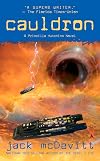
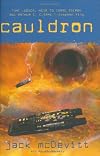
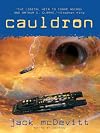
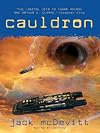
The year is 2255. The academy that trained the starfarers is long gone and veteran star pilot Priscilla "Hutch" Hutchins spends her retirement supporting fund-raising efforts for The Prometheus Foundation, a privately funded organization devoted to deep space exploration. But when a young physicist unveils an efficient star drive capable of reaching the core of the galaxy, Hutch finds herself back in the deepest reaches of space, and on the verge of discovering the origins of the deadly show more Omega clouds that continue to haunt her. show lessTags
Recommendations








Member Reviews
Cauldron was a pretty good book and a fairly satisfying ending to the Academy and Hutch six book series McDevitt created and wrote. A lot of the former characters make appearances again and that's nice to see. A giant mystery is partially solved, so that's good. But still, it's not the best book I've read and thus, four stars and not five.
Perhaps it's because I've read the entire series and know what to expect, but I felt as though a lot in this book was fairly predictable. New worlds are discovered. The crew goes down to a planet to explore ruins. A main character dies, which always happens in these books. They investigate a black hole. They spend a lot of time in space, bored and getting on each other's nerves.
However, there are some show more differences as well. First, the Academy is no more. It's been about, maybe, twenty years since the events in the last novel occurred and the government and the people are sick of space exploration and don't want to fund it anymore. After all, nothing is ever found, for the most part. Why pour billions and billions of dollars into a losing effort? But there's still a foundation in existence for space exploration. And a young scientist who was the protege of a deceased researcher who discovers a new space drive that provides for transportation at incredible speed. As in earth to Pluto in six seconds. Meanwhile, Hutch is retired, missing her dead husband and her kids who are off at college.
Rudy, the man in charge of this foundation, and Jon, the scientist, want to take this new space drive, after testing it, out into deep space where no one's gone before. They have a pilot, Matt, a former Academy pilot who has been selling real estate for several years. But they want to take two ships and they need another pilot, so they talk Hutch into it. Sweet. Also, they take a journalist, Antonio, with them. And they decide to go to the galactic core, the Cauldron, in search of the origin of the Omega clouds seen in so many of these Academy books, which have been so very destructive. They want to find what's behind the clouds, what the secret is. It's a zillion light years from earth and they're going to have to make several stops along the way and the travel will take a number of months.
As I wrote, things are fairly predictable. In fact, I got bored and thought I'd be giving this book three stars. Until I reached the last four or five chapters. The last section of the book, when they reached the Cauldron. And things changed. The ending was pretty cool. It was unexpected. It wasn't totally satisfying, to be honest, but it was original and McDevitt tried to wrap things up while still leaving a bit of a mystery to the story, if that makes any sense. After the final scenes, there's an epilogue telling what happened to the survivors, which is a strategy I don't always like, but in this case, it seemed appropriate. All in all, it was a pretty good series, especially the first three books with Hutch as pilot. It went downhill when she went into administration. This book was an improvement over the previous two though. I'm sad it's over. I've also been reading McDevitt's Alex Benedict series. I have one remaining in that series too and when I'm done with that, I guess I'll be done with McDevitt, which is sad, because I've really enjoyed reading his books. This book can probably be read as a stand alone novel, but I recommend reading the series in order, as you'll have a better understanding of the overall plot. Recommended. show less
Perhaps it's because I've read the entire series and know what to expect, but I felt as though a lot in this book was fairly predictable. New worlds are discovered. The crew goes down to a planet to explore ruins. A main character dies, which always happens in these books. They investigate a black hole. They spend a lot of time in space, bored and getting on each other's nerves.
However, there are some show more differences as well. First, the Academy is no more. It's been about, maybe, twenty years since the events in the last novel occurred and the government and the people are sick of space exploration and don't want to fund it anymore. After all, nothing is ever found, for the most part. Why pour billions and billions of dollars into a losing effort? But there's still a foundation in existence for space exploration. And a young scientist who was the protege of a deceased researcher who discovers a new space drive that provides for transportation at incredible speed. As in earth to Pluto in six seconds. Meanwhile, Hutch is retired, missing her dead husband and her kids who are off at college.
Rudy, the man in charge of this foundation, and Jon, the scientist, want to take this new space drive, after testing it, out into deep space where no one's gone before. They have a pilot, Matt, a former Academy pilot who has been selling real estate for several years. But they want to take two ships and they need another pilot, so they talk Hutch into it. Sweet. Also, they take a journalist, Antonio, with them. And they decide to go to the galactic core, the Cauldron, in search of the origin of the Omega clouds seen in so many of these Academy books, which have been so very destructive. They want to find what's behind the clouds, what the secret is. It's a zillion light years from earth and they're going to have to make several stops along the way and the travel will take a number of months.
As I wrote, things are fairly predictable. In fact, I got bored and thought I'd be giving this book three stars. Until I reached the last four or five chapters. The last section of the book, when they reached the Cauldron. And things changed. The ending was pretty cool. It was unexpected. It wasn't totally satisfying, to be honest, but it was original and McDevitt tried to wrap things up while still leaving a bit of a mystery to the story, if that makes any sense. After the final scenes, there's an epilogue telling what happened to the survivors, which is a strategy I don't always like, but in this case, it seemed appropriate. All in all, it was a pretty good series, especially the first three books with Hutch as pilot. It went downhill when she went into administration. This book was an improvement over the previous two though. I'm sad it's over. I've also been reading McDevitt's Alex Benedict series. I have one remaining in that series too and when I'm done with that, I guess I'll be done with McDevitt, which is sad, because I've really enjoyed reading his books. This book can probably be read as a stand alone novel, but I recommend reading the series in order, as you'll have a better understanding of the overall plot. Recommended. show less
OK late entry in the Academy / Priscilla Hutchins series, undercut by several auctorial decisions. Half the book is about getting Earth back into interstellar travel. I took this as a thinly disguised retelling of our history with moon exploration. There's not much point to this. The more time spent on Earth, the more time you can see that McDevitt has trouble imagining anything but the present. AIs play a bigger role than I recall, both in the home and in the spaceships, but otherwise the trappings of Earth are contemporary. The second bad decision was to take the mission to find the origin of the Omega Clouds and turn into into a multi-stop tour of several other systems along the way. This turns what could have been an extended focus show more on the omegas into a stop and go sequence of stories. The reason for this may be that -- no spoilers I think -- the explanation finally given for the omegas is pretty limp.
That said, it's nice to see Priscilla in space again, and the writing chugs along, never surprising, but passable.
Recommended for fans of McDevitt. show less
That said, it's nice to see Priscilla in space again, and the writing chugs along, never surprising, but passable.
Recommended for fans of McDevitt. show less
Looking back on the other five books in the Academy series, I have to say I like Cauldron the best. It not only engages us back on Earth with something other than a religious diatribe, it gives us a look at the failing drive to get out into the stars.
Oh, and because there is hope for a brand new stardrive that would get us so much farther and faster out there, a great deal of the story is watching each attempt at the drive fail.
But let's cut to the chase. That's all great character-building stuff and when they finally go out there in much smaller ships to encounter and resolve all the great mysteries wondered at in the other novels, we're treated to real resolutions.
Setup, adventure, revisited mysteries, more death, and big reveals.
You show more know, like the Omega cloud, the one that seems to eat spacefaring species.
... And a lot of that is quite welcome. The pacing is much better, too.
But I will say this: the very last reveal was something of a major letdown. McDevitt's build-ups are always pretty awesome, but when we finally have an answer to the mystery, I'm kinda underwhelmed.
This is not a Peter Watts novel. *sigh* show less
Oh, and because there is hope for a brand new stardrive that would get us so much farther and faster out there, a great deal of the story is watching each attempt at the drive fail.
But let's cut to the chase. That's all great character-building stuff and when they finally go out there in much smaller ships to encounter and resolve all the great mysteries wondered at in the other novels, we're treated to real resolutions.
Setup, adventure, revisited mysteries, more death, and big reveals.
You show more know, like the Omega cloud, the one that seems to eat spacefaring species.
... And a lot of that is quite welcome. The pacing is much better, too.
But I will say this: the very last reveal was something of a major letdown. McDevitt's build-ups are always pretty awesome, but when we finally have an answer to the mystery, I'm kinda underwhelmed.
This is not a Peter Watts novel. *sigh* show less
"Cauldron," Jack McDevitt's last installment of the Priscilla Hutchins series of novels, is a double-edged sword. Fans of the series were doubtlessly saddened that this would be the last. Yet, at the same time, it is far from a weak finish.
The world that fans of the series grew to love is, sadly, over. The Academy is gone, and humanity has regressed to narrow-minded isolationism, despite the looming question - and one that occupied several books - of what drives the dreaded Omega Clouds. It's a bleak future, turning even the once vivacious Priscilla Hutchins into a morose, subdued version of herself.
But things change when a largely-unregarded invention is perfected: a new stardrive that puts the core of the galaxy, the source of the show more omegas, within reach. And so, with Hutchins as a semi-reluctant leader, a private expedition sets out for the cauldron of the core to find out, once and for all, the story of the omegas.
Fans of the series will have a difficult time relating to the Hutch of Cauldron, and with good reason: she's quite unlike herself. Her usually energetic, "can-do" spirit is largely packed away, buried under cynicism and, probably, angst at the demolition of the superluminal exploration effort.
Compounding the issue is an usually long and dry exposition. McDevitt books usually start a little slow but manage to catch their gear within 100 pages or so. Cauldron has an atypically slow start, needing about 150 pages to warm up to a canter, and doesn't hit a gallop until the last third of the book.
However, the reader that forgives a slow start is treated with a story well worthy of the master that McDevitt has become. Cauldron is a look not only into the galaxy's core, but the core of the character that has driven a series of books, and an unforgiving look at that. Questions are answered, some of which have been with regular readers for several books.
Cauldron, although unusual for a Hutch book, is nevertheless an excellent read, and a must for fans of the series.
-BrowncoatLibrarian show less
The world that fans of the series grew to love is, sadly, over. The Academy is gone, and humanity has regressed to narrow-minded isolationism, despite the looming question - and one that occupied several books - of what drives the dreaded Omega Clouds. It's a bleak future, turning even the once vivacious Priscilla Hutchins into a morose, subdued version of herself.
But things change when a largely-unregarded invention is perfected: a new stardrive that puts the core of the galaxy, the source of the show more omegas, within reach. And so, with Hutchins as a semi-reluctant leader, a private expedition sets out for the cauldron of the core to find out, once and for all, the story of the omegas.
Fans of the series will have a difficult time relating to the Hutch of Cauldron, and with good reason: she's quite unlike herself. Her usually energetic, "can-do" spirit is largely packed away, buried under cynicism and, probably, angst at the demolition of the superluminal exploration effort.
Compounding the issue is an usually long and dry exposition. McDevitt books usually start a little slow but manage to catch their gear within 100 pages or so. Cauldron has an atypically slow start, needing about 150 pages to warm up to a canter, and doesn't hit a gallop until the last third of the book.
However, the reader that forgives a slow start is treated with a story well worthy of the master that McDevitt has become. Cauldron is a look not only into the galaxy's core, but the core of the character that has driven a series of books, and an unforgiving look at that. Questions are answered, some of which have been with regular readers for several books.
Cauldron, although unusual for a Hutch book, is nevertheless an excellent read, and a must for fans of the series.
-BrowncoatLibrarian show less
A solid conclusion (for now) to the Academy series.
Following from Omega, the Academy is basically dead (lack of funding / interest) and humanity is withdrawing from the stars. Then there's a breakthrough in new FTL drive technology orders of magnitude faster than the previous incarnations. Hutch returns as one of the two pilots sent out on a high speed mission to the origin of the Chindi, a world SETI received a transmission came from, a black hole, and the possible origin of the Omegas (finally).
On the upside: we finally got something in the way of answers for both where the Chindi and the Omegas came from. It's by no means a complete answer, but more than we've had thus far. I'll take it. The addition of the new drive technology show more promises to really shake things up. I hope this isn't the last book in the series--I want to see where this universe goes, now that you can fly to the galactic core in about four months... (As an aside, space is *huge*).
On a slight downside, some of the stops really felt undeveloped. What could have been an entire book earlier in the series was only a chapter or two. Even so, I think this book had the best flow of the six; I finished it in a day. show less
Following from Omega, the Academy is basically dead (lack of funding / interest) and humanity is withdrawing from the stars. Then there's a breakthrough in new FTL drive technology orders of magnitude faster than the previous incarnations. Hutch returns as one of the two pilots sent out on a high speed mission to the origin of the Chindi, a world SETI received a transmission came from, a black hole, and the possible origin of the Omegas (finally).
On the upside: we finally got something in the way of answers for both where the Chindi and the Omegas came from. It's by no means a complete answer, but more than we've had thus far. I'll take it. The addition of the new drive technology show more promises to really shake things up. I hope this isn't the last book in the series--I want to see where this universe goes, now that you can fly to the galactic core in about four months... (As an aside, space is *huge*).
On a slight downside, some of the stops really felt undeveloped. What could have been an entire book earlier in the series was only a chapter or two. Even so, I think this book had the best flow of the six; I finished it in a day. show less
http://nwhyte.livejournal.com/2727826.html
There was a time when each year's Jack McDevitt book appeared on that year's Nebula shortlist, and just as reliably failed to win (with one exception). This one was beaten by Powers, which I felt was a rather minor Le Guin. Cauldron turns out to be the last in a series none of the rest of which I have read, which maybe accounts for a somewhat elegiac tone. I thought it was competent enough hard sf; in a relatively near future earth, a new space drive is discovered and our protagonists set off on a quest to solve a cosmic mystery, stopping off at several planets along the way (rather brave to make the non-human civilisation a bit dull). If you want a bit more spice in your genre (and I usually show more do) this doesn't really push the boundaries - what's really striking is how little difference there is between McDevitt's imagined future human society a couple of centuries hence, and the year 2000 - and there were at least three better books on the Nebula shortlist that year. (Little Brother, Brasyl, and Making Money.) show less
There was a time when each year's Jack McDevitt book appeared on that year's Nebula shortlist, and just as reliably failed to win (with one exception). This one was beaten by Powers, which I felt was a rather minor Le Guin. Cauldron turns out to be the last in a series none of the rest of which I have read, which maybe accounts for a somewhat elegiac tone. I thought it was competent enough hard sf; in a relatively near future earth, a new space drive is discovered and our protagonists set off on a quest to solve a cosmic mystery, stopping off at several planets along the way (rather brave to make the non-human civilisation a bit dull). If you want a bit more spice in your genre (and I usually show more do) this doesn't really push the boundaries - what's really striking is how little difference there is between McDevitt's imagined future human society a couple of centuries hence, and the year 2000 - and there were at least three better books on the Nebula shortlist that year. (Little Brother, Brasyl, and Making Money.) show less
This is nominally the final book in the Hutch / Engines of God series. It's pretty bad, at least relative to the rest of the series.
The first third or so of the book is the rather boring story of the development and testing of a new faster-than-light engine that will finally provide the means to travel to the galactic core in order to determine the origins of the omega clouds. Cool premise, should have been the first chapter instead of the first 100 pages. Hutch and three companions travel in two ships -- more characters would definitely have helped here -- stopping off at three or four other interesting spots along the way. McDevitt really missed his chance here by not having some of the other great characters from the series accompany show more the mission. Why didn't he include them? They get a token cameo appearance at a fundraising dinner. Readers of the series no doubt wanted much more.
The whole plot is rushed, with only a chapter or two devoted to each of these waypoints; most of those had the interesting potential and could have been much more expanded. Then they arrive at the core and find out who/what is making the omega clouds. I won't spoil the surprise, but it's lame. Really, really lame. Like, so lame that it taints the rest of the series. It also doesn't make a heck of a lot of sense.
I'm being fairly generous in giving the book 2.5 stars; if the rest of the series hadn't been so enjoyable, it wouldn't have ranked nearly so high. Had this been the first book in the series, I wouldn't have bothered to continue. It's really lacking in the wonder, majesty, and tension of the first few books in the series. It feels like a rush job; McDevitt's editor needed to tell him to cut out the boring beginning and dial up the thrills and adventure of the rest of the series. Only recommended for those who really want an "answer" to the origins of the omega clouds.
Review copyright 2008 J. Andrew Byers show less
The first third or so of the book is the rather boring story of the development and testing of a new faster-than-light engine that will finally provide the means to travel to the galactic core in order to determine the origins of the omega clouds. Cool premise, should have been the first chapter instead of the first 100 pages. Hutch and three companions travel in two ships -- more characters would definitely have helped here -- stopping off at three or four other interesting spots along the way. McDevitt really missed his chance here by not having some of the other great characters from the series accompany show more the mission. Why didn't he include them? They get a token cameo appearance at a fundraising dinner. Readers of the series no doubt wanted much more.
The whole plot is rushed, with only a chapter or two devoted to each of these waypoints; most of those had the interesting potential and could have been much more expanded. Then they arrive at the core and find out who/what is making the omega clouds. I won't spoil the surprise, but it's lame. Really, really lame. Like, so lame that it taints the rest of the series. It also doesn't make a heck of a lot of sense.
I'm being fairly generous in giving the book 2.5 stars; if the rest of the series hadn't been so enjoyable, it wouldn't have ranked nearly so high. Had this been the first book in the series, I wouldn't have bothered to continue. It's really lacking in the wonder, majesty, and tension of the first few books in the series. It feels like a rush job; McDevitt's editor needed to tell him to cut out the boring beginning and dial up the thrills and adventure of the rest of the series. Only recommended for those who really want an "answer" to the origins of the omega clouds.
Review copyright 2008 J. Andrew Byers show less
Members
- Recently Added By
Lists

hypatian_kat to-read
429 works; 3 members
Author Information

124+ Works 20,897 Members
Jack McDevitt (born 1935) is an American science fiction author whose novels frequently deal with attempts to make contact with alien races, and with archaeology or xenoarchaeology. He attended La Salle University, where a short story of his won the annual Freshman Short Story Contest and was published in the school's literary magazine, Four show more Quarters. He received a Master's degree in literature from Wesleyan University in 1971. Before becoming a full-time author, he was an English teacher, naval officer, Philadelphia taxi driver, customs officer and motivational trainer. His first published story was The Emerson Effect in The Twilight Zone Magazine in 1981. Two years later, he published his first novel, The Hercules Text, which won the Philip K. Dick Special Award. He won the 2006 Nebula Award for Best Novel for Seeker, the UPC International Prize for his novella Ships in the Night in 1991, and the John W. Campbell Memorial Award for best SF novel for Omega in 2003. (Bowker Author Biography) show less
Some Editions
Awards and Honors
Awards
Series

Belongs to Publisher Series
Bastei Science Fiction-Special (24377)
Common Knowledge
- Canonical title
- Cauldron
- Original title
- Cauldron
- Original publication date
- 2007-08
- People/Characters
- Priscilla 'Hutch' Hutchins; Matthew Darwin; Jon Silvestri
- Important places
- Alexandria, Virginia, USA; Union Space Station; Washington, D.C., USA
- Important events
- Invention of the Locarno Drive
- Dedication
- For Jamie Bishop
- First words
- The call came, as such things always seemed to, in the middle of the night.
- Last words
- (Click to show. Warning: May contain spoilers.)She looked at him, and thought of Rudy and Jon, and Dr. Science, and Matt out somewhere in the deeps, and she knew they would be okay.
- Blurbers
- King, Stephen
Classifications
Statistics
- Members
- 783
- Popularity
- 35,603
- Reviews
- 27
- Rating
- (3.52)
- Languages
- English, German, Spanish
- Media
- Paper, Audiobook, Ebook
- ISBNs
- 11
- UPCs
- 1
- ASINs
- 8