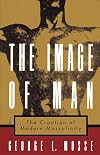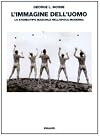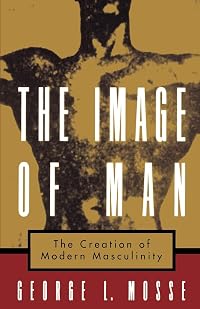
The Image of Man: The Creation of Modern Masculinity
by George L. Mosse
On This Page
Description
Men should be brave, daring, cool under fire and honourable. Who says so? This book by a major US historian sets out to show how our idea of manliness evolved and how long these qualities have been the norm.Tags
Recommendations

























Member Reviews
Although there were several parts that were thoroughly interesting, as a whole ‘The Image of Man’ was somewhat unsatisfactory. Given its short length, the amount of detail that could possibly be included was limited. Consequently, there was a generality to it that I found disappointing. Mosse claims that the basic stereotype of masculinity in Western Europe changed very little between the late 18th century and the mid 20th. To my mind, this can only be considered true if said stereotype is only described in terms of very broad concepts, like toughness, self-control, and stability. I wondered about the evolution of masculine stereotypes in terms of dress, manners, and behaviour, which surely varied a great deal more. Or, if that show more stretches the term ‘stereotype’ too far, how the definitions and manifestations of toughness and the like changed over time. This book discusses this generally, but not specifically enough for my taste.
On the other hand, the chapter on ‘The New Fascist Man’ is more interesting as it deals with a much more limited frame. Mosse compares Italian and German Fascist notions of the masculine and highlights the contradictions that emerge from such an extreme stereotype of manliness. For example, the Nazis glorified the nude male body but wanted to de-sexualise all depictions thereof to avoid the risk of homoeroticism. The methods for abstracting naked bodies from such associations included depersonalising statues into bland archetypes and situating photographic representations of nudity within nature. Another notable point concerned the SS, who were considered the epitome of masculinity and supposed to lead an ascetic warrior existence. Given that their hyper-masculine milieu carried the risk of homoeroticism, they were forbidden from touching each other even when fully clothed! That seems so extreme as to prove deeply counter-productive; surely forbidding all touching implies that even casual touches carry an erotic charge? Actually, that’s a theme that the book barely mentions - the perceived appropriateness of touching in masculine stereotypes.
Another area that was mentioned but only managed to pique my interest before moving on was duelling. Mosse notes that duelling codes in 19th century France and Germany differed considerably, resulting also in contrasting death rates. In England, meanwhile, duelling never attained anything like the same popularity. Reading [b:Alexander Hamilton|16130|Alexander Hamilton|Ron Chernow|https://images.gr-assets.com/books/1436131915s/16130.jpg|1205304] taught me that it was a popular pastime in late 18th & early 19th century America, especially amongst politicians. Presumably that was in part French influence at work? I’d like to read more about duelling, there’s something fascinating about its archaic absurdity. Likewise, as the book was published twenty years ago, there’s hardly a mention of changing masculine stereotypes since the 1970s.
Although it lacked depth in places, one important message is very well conveyed by ‘The Image of Man: that masculine stereotypes can be systematically manipulated to appalling effect. As Mosse puts it: ‘Fascism heightened the warrior qualities of masculinity; racism brutalised them and transformed theory and rhetoric into reality’. I also feel that the title of the book demanded a more specific physical description of this ideal stereotype of masculinity. From the references given, I pictured him as Leyendecker’s Arrow Collar Man. show less
On the other hand, the chapter on ‘The New Fascist Man’ is more interesting as it deals with a much more limited frame. Mosse compares Italian and German Fascist notions of the masculine and highlights the contradictions that emerge from such an extreme stereotype of manliness. For example, the Nazis glorified the nude male body but wanted to de-sexualise all depictions thereof to avoid the risk of homoeroticism. The methods for abstracting naked bodies from such associations included depersonalising statues into bland archetypes and situating photographic representations of nudity within nature. Another notable point concerned the SS, who were considered the epitome of masculinity and supposed to lead an ascetic warrior existence. Given that their hyper-masculine milieu carried the risk of homoeroticism, they were forbidden from touching each other even when fully clothed! That seems so extreme as to prove deeply counter-productive; surely forbidding all touching implies that even casual touches carry an erotic charge? Actually, that’s a theme that the book barely mentions - the perceived appropriateness of touching in masculine stereotypes.
Another area that was mentioned but only managed to pique my interest before moving on was duelling. Mosse notes that duelling codes in 19th century France and Germany differed considerably, resulting also in contrasting death rates. In England, meanwhile, duelling never attained anything like the same popularity. Reading [b:Alexander Hamilton|16130|Alexander Hamilton|Ron Chernow|https://images.gr-assets.com/books/1436131915s/16130.jpg|1205304] taught me that it was a popular pastime in late 18th & early 19th century America, especially amongst politicians. Presumably that was in part French influence at work? I’d like to read more about duelling, there’s something fascinating about its archaic absurdity. Likewise, as the book was published twenty years ago, there’s hardly a mention of changing masculine stereotypes since the 1970s.
Although it lacked depth in places, one important message is very well conveyed by ‘The Image of Man: that masculine stereotypes can be systematically manipulated to appalling effect. As Mosse puts it: ‘Fascism heightened the warrior qualities of masculinity; racism brutalised them and transformed theory and rhetoric into reality’. I also feel that the title of the book demanded a more specific physical description of this ideal stereotype of masculinity. From the references given, I pictured him as Leyendecker’s Arrow Collar Man. show less
George Mosse explores contemporary western culture’s concept of Masculinity or Manliness in The Image of Man: The Creation of Modern Masculinity. Mosse argues that masculinity, as an established and widespread notion, is relatively new in western society, solidifying around the time of the French Revolution. He presents his material chronologically, beginning with the origins of manliness as a desirable ideal; he traces its applications and dissemination, examines the counterexamples, which he stresses are essential to reinforce the ideal, demonstrates how the ideal culminated in the era of the fascist dictators and finally, offers a brief overview of the current state of the concept.
Olika manligheter och hur männens historia har förändrats under de senaste 300 åren är temat för denna bok. Bra som introduktion till djupare studier i ämnet.
Jun 4, 2006Swedish
Ratings
Members
- Recently Added By
Lists

Ten books that most shaped your view of history
91 works; 12 members

Books Read in 2009
464 works; 11 members

Five star books
1,767 works; 110 members
Author Information

52+ Works 1,859 Members
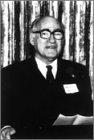
George L. Mosse (1918-99) was an influential historian, legendary teacher, and generous mentor. Over his career he authored more than two dozen books on the study of modern European cultural and intellectual history, the study of fascism, and the history of sexuality and masculinity.
Some Editions
Series
Belongs to Publisher Series
Common Knowledge
- Canonical title
- The Image of Man: The Creation of Modern Masculinity
- Original title
- The Image of Man. The Creation of Modern Masculinity
- Original publication date
- 1998
- Original language*
- Anglais
*Some information comes from Common Knowledge in other languages. Click "Edit" for more information.
Classifications
Statistics
- Members
- 116
- Popularity
- 281,272
- Reviews
- 3
- Rating
- (3.50)
- Languages
- English, French, German, Italian
- Media
- Paper, Ebook
- ISBNs
- 12
- ASINs
- 1