
George L. Mosse (1918–1999)
Author of The Crisis of German Ideology: Intellectual Origins of the Third Reich
About the Author
George L. Mosse (1918-99) was an influential historian, legendary teacher, and generous mentor. Over his career he authored more than two dozen books on the study of modern European cultural and intellectual history, the study of fascism, and the history of sexuality and masculinity.
Image credit: used by permission of the
Mosse Program in History
University of Wisconsin-Madison
Mosse Program in History
University of Wisconsin-Madison
Series
Works by George L. Mosse
Nazi Culture: Intellectual, Cultural, and Social Life in the Third Reich (1968) 190 copies, 1 review
La nazionalizzazione delle masse. Simbolismo politico e movimenti di massa in Germania (1815-1933) (1974) 99 copies, 3 reviews
Nationalism and Sexuality: Respectability and Abnormal Sexuality in Modern Europe (1984) 68 copies, 1 review
The Culture Of Western Europe: The Nineteenth And Twentieth Centuries, Third Edition (1974) 58 copies
Gemans and Jews: The Right, The Left, and the Search for a Third Force in Pre-Nazi Germany (1971) 46 copies, 1 review
Nazism: A Historical and Comparative Analysis of National Socialism (1977) — Author — 32 copies, 1 review
The new history;: Trends in historical research and writing since World War II (Their Journal of contemporary history) (1967) 9 copies
The holy pretence; a study in Christianity and reason of state from William Perkins to John Winthrop (2004) 5 copies
The Struggle for Sovereignty in England, From the Reign of Queen Elizabeth to the Petition of Right (1950) 2 copies
LA CULTURA DELL'EUROPA OCCIDENTALE 2 copies
Il dialogo ebraico-tedesco 1 copy
International Fascism 1 copy
Associated Works
Degenerate Art: The Fate of the Avant-Garde in Nazi Germany (1991) — Contributor — 181 copies, 2 reviews
Survivors, Victims, And Perpetrators: Essays On The Nazi Holocaust (1980) — Contributor — 19 copies, 1 review
Tagged
Common Knowledge
- Legal name
- Mosse, Gerhard Lachmann
- Other names
- Lachmann-Mosse, Georg
- Birthdate
- 1918-09-20
- Date of death
- 1999-01-22
- Gender
- male
- Education
- University of Cambridge
Haverford College (BA|1941)
Harvard University (Ph.D|1946) - Occupations
- historian
professor (History) - Organizations
- The Journal of Contemporary History
United States Holocaust Memorial Museum (research historian in residence)
University of Iowa
University of Wisconsin-Madison
University of Cambridge
Cornell University (show all 9)
University of Tel Aviv
Ludwig Maximilian University of Munich
Hebrew University of Jerusalem - Awards and honors
- American Historical Association's award for Scholarly Distinction
Leo-Baeck-Medal of the Leo Baeck Institute (1998)
Goethe Medal of the Goethe-Institut
Prezzolini Prize
Honorary doctorates from Hebrew University, Hebrew Union College, Lakeland College, and the University of Siegen, Germany - Relationships
- Laqueur, Walter (co-editor)
Tortorice, John (partner) - Short biography
- George Mosse was a cultural and social historian best known for his studies of Nazism. He was born in Berlin. His family's media empire included the newspaper Berliner Tageblatt. He was educated at the Mommsen-Gymnasium and the elite Schule Schloss Salem boarding school. In 1933, with the rise of Nazi power, the family was forced to flee Germany and separated. His mother and sister went to Switzerland, his father moved to France. Mosse attended the Quaker Bootham School in York, England and then Cambridge University. In 1939, he went to the USA with his family and completed his undergraduate studies at Haverford College in 1941. He obtained a Ph.D. at Harvard University in 1946 with a dissertation on 16th- and 17th-century English constitutional history, subsequently published as The Struggle for Sovereignty in England (1950). Mosse joined the history faculty at the University of Iowa, where he focused on religion in early modern Europe, and published a brief study of the Reformation that became a widely-used textbook. In 1955, he moved to the University of Wisconsin–Madison and started to teach modern history. His book The Culture of Western Europe: the Nineteenth and Twentieth Centuries, An Introduction (1961) which summarizes these lectures, also became a popular textbook. Prof. Mosse taught at the University of Wisconsin for more than 30 years, rising to became John C. Bascom Professor of European History and Weinstein-Bascom Professor of Jewish Studies, while also holding the Koebner Professorship of History at the Hebrew University of Jerusalem. He also became a visiting professor at University of Tel Aviv and Ludwig Maximilian University of Munich. After retiring from the University of Wisconsin, he taught at Cambridge and Cornell University. Prof. Mosse was the first research historian in residence at the U.S. Holocaust Memorial Museum. He co-founded and edited The Journal of Contemporary History with Walter Laqueur.
- Nationality
- Germany (birth)
USA (naturalized) - Birthplace
- Berlin, Germany
- Places of residence
- Cambridge, Massachusetts, USA
Cambridge, Cambridgeshire, England, UK
Haverford, Pennsylvania, USA - Place of death
- Madison, Wisconsin, USA
- Associated Place (for map)
- USA
Members
Reviews
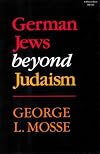
This slim but information-dense book is an impressive overview of German Jewish intellectual history. As the title suggests, Mosse focuses on secular Jews, but his real focus is a secular idea, Bildung, or education. German Enlightenment thinkers argued that everyone can and must cultivate his mind, and so education rather than ancestry or group membership should determine success. Jews ranging from Orthodox to irreligious fell in love with this idea; they who were only recently granted show more equal civil rights saw a path to achievement that didn’t penalize their longstanding social exclusion. But precisely as Bildung became a bedrock of German Jewish identity, this meritocratic idea lost favor among other Germans. Enterprising individualism felt like an inadequate philosophy with which to face the social and economic issues that assailed Germans after World War I. German Jews’ failure to see that their intellectual worldview was no longer widely shared blinded them to the coming dangers. show less
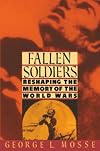
This book, one of the best and most insightful I have read in a long time, rests at a cross-section between art, culture, sociology, and memory. At 225 pages, it is both extremely short, and yet scholarly, well-argued, timely, and convincing.
Does the sudden emergence of trench warfare in any way transmute the ways in which we walk about and experience war? Did the shift from monarchy to burgeoning nation-states during this time period change soldierly ideological motivations in wanting to show more engage in warfare? Why did separate cemeteries appear for soldiers, completely unheard of before the nineteenth century, suddenly start appearing in France and Germany? These questions form a group of concerns the book discusses, yet Mosse manages to touch on a number of other topics, as well.
About 600,000 soldiers died during the American Civil War, while just two generations later in World War I, almost 9 million perished. Mosse argues that facts like this, along with the horrors of trench warfare, gave rise to a construction of civic religion centered around remembrance and a search for human meaning as a way to cope with heretofore unknown amounts of barbarism. This remembrance, along with the various ways of glorifying and sanctifying battle that would arise, Mosse refers collectively to as the "Myth of the War Experience."
At the beginning of the nineteenth century, the constitution of many armies gradually shifted from conscripted poverty-ridden peasants to bourgeois, well-educated professional soldiers, who envisioned themselves fighting for Aufbruch (a nascent national-democratic spirit). Suddenly, going off to war was no cause for angst and concern, but rather a chance to fight for the fatherland, and an opportunity to get to see new and exotic places (see the work of soldier-poets like Lord Byron and Theodor Korner). Aesthetic representations of triumph were built from both classical pagan imagery and Protestant piety, which were used to create "communities of the dead" (military cemeteries) where soldiers could rest pure, away from mere civilians.
Mosse claims that culture and art, too, have a definite place in shaping the ideology of the Myth of the War Experience. The Italian Futurists (like Marinetti) and German Expressionists added to the Myth Experience a sense of camaraderie to war in which a "new man" would be created, forming a society free of hypocrisy and tyranny (highly ironic, as Marinetti is perhaps best remembered for his flirtations with fascism). Youth now symbolized manhood, virility, and pure energy. Death was no long an unfortunate loss, but a sacrifice and a chance for eternal resurrection (again, that Christian imagery) for a glorious cause.
A retroactive Romanticism was also invoked, full of its images of bucolic hills and untainted, rural countryside, and used to symbolize purity away from an ill, noxious city (the literature of the nineteenth century is replete with metaphors of the city as rotten and diseased). Movies touting the moral virtues of mountain climbing as a "manly" conquering of nature filled the screens, effectively masking the dangers of death and destruction while at the same time shoring up ideas that were attractive to far right political elements, like adventure, domination, and conquest.
The Myth's appearance in popular culture was perhaps inevitable, but had a most interesting result: the "process of trivialization." There are several photos in the book depicting the war as a humorous, quaint, distant affair. There is a German postcard of a rabbit laying eggs with the caption "Frohliche Ostern" (Happy Easter), one from Au Bon Marche showing two little girls stomping all over a helpless German toy soldier, and perhaps most disturbingly, a father cradling his baby boy and looking aside admiring another of his boys with the caption "The New Conscripts." Some artists, including the German Rudolf Grossmanns, made a career producing nothing but kitsch showing heroic boys yearning for the joys of the battlefield. Closely related to trivialization is the brutalization of political discourse in which themes and tropes of militarism and aggression gave additional emphasis to notions of manliness, a trend which continued until World War II.
But around this time, these ideological means started to outgrow their political and historical usefulness. After German defeat in the First World War, it could be effectively argued that the courageous Germans had not actually lost the war, they just hadn't yet won. But after losing another World War, the Myth was too tendentious and suspicious to garner populist support for the political right. Thus the fiery rhetoric of manliness and sacrifice in the name of one's country saw its last days.
For anyone convinced that "ideology" is just a word used in the ivory towers of academia, or that popular culture doesn't drastically affect the way we perceive and experience some of the most fundamental aspects of our world, this book will forever change your mind. It is most highly recommended for anyone interested in the history of war memorials, changing perceptions of war and the soldier, and the politics of the interwar years. show less
Does the sudden emergence of trench warfare in any way transmute the ways in which we walk about and experience war? Did the shift from monarchy to burgeoning nation-states during this time period change soldierly ideological motivations in wanting to show more engage in warfare? Why did separate cemeteries appear for soldiers, completely unheard of before the nineteenth century, suddenly start appearing in France and Germany? These questions form a group of concerns the book discusses, yet Mosse manages to touch on a number of other topics, as well.
About 600,000 soldiers died during the American Civil War, while just two generations later in World War I, almost 9 million perished. Mosse argues that facts like this, along with the horrors of trench warfare, gave rise to a construction of civic religion centered around remembrance and a search for human meaning as a way to cope with heretofore unknown amounts of barbarism. This remembrance, along with the various ways of glorifying and sanctifying battle that would arise, Mosse refers collectively to as the "Myth of the War Experience."
At the beginning of the nineteenth century, the constitution of many armies gradually shifted from conscripted poverty-ridden peasants to bourgeois, well-educated professional soldiers, who envisioned themselves fighting for Aufbruch (a nascent national-democratic spirit). Suddenly, going off to war was no cause for angst and concern, but rather a chance to fight for the fatherland, and an opportunity to get to see new and exotic places (see the work of soldier-poets like Lord Byron and Theodor Korner). Aesthetic representations of triumph were built from both classical pagan imagery and Protestant piety, which were used to create "communities of the dead" (military cemeteries) where soldiers could rest pure, away from mere civilians.
Mosse claims that culture and art, too, have a definite place in shaping the ideology of the Myth of the War Experience. The Italian Futurists (like Marinetti) and German Expressionists added to the Myth Experience a sense of camaraderie to war in which a "new man" would be created, forming a society free of hypocrisy and tyranny (highly ironic, as Marinetti is perhaps best remembered for his flirtations with fascism). Youth now symbolized manhood, virility, and pure energy. Death was no long an unfortunate loss, but a sacrifice and a chance for eternal resurrection (again, that Christian imagery) for a glorious cause.
A retroactive Romanticism was also invoked, full of its images of bucolic hills and untainted, rural countryside, and used to symbolize purity away from an ill, noxious city (the literature of the nineteenth century is replete with metaphors of the city as rotten and diseased). Movies touting the moral virtues of mountain climbing as a "manly" conquering of nature filled the screens, effectively masking the dangers of death and destruction while at the same time shoring up ideas that were attractive to far right political elements, like adventure, domination, and conquest.
The Myth's appearance in popular culture was perhaps inevitable, but had a most interesting result: the "process of trivialization." There are several photos in the book depicting the war as a humorous, quaint, distant affair. There is a German postcard of a rabbit laying eggs with the caption "Frohliche Ostern" (Happy Easter), one from Au Bon Marche showing two little girls stomping all over a helpless German toy soldier, and perhaps most disturbingly, a father cradling his baby boy and looking aside admiring another of his boys with the caption "The New Conscripts." Some artists, including the German Rudolf Grossmanns, made a career producing nothing but kitsch showing heroic boys yearning for the joys of the battlefield. Closely related to trivialization is the brutalization of political discourse in which themes and tropes of militarism and aggression gave additional emphasis to notions of manliness, a trend which continued until World War II.
But around this time, these ideological means started to outgrow their political and historical usefulness. After German defeat in the First World War, it could be effectively argued that the courageous Germans had not actually lost the war, they just hadn't yet won. But after losing another World War, the Myth was too tendentious and suspicious to garner populist support for the political right. Thus the fiery rhetoric of manliness and sacrifice in the name of one's country saw its last days.
For anyone convinced that "ideology" is just a word used in the ivory towers of academia, or that popular culture doesn't drastically affect the way we perceive and experience some of the most fundamental aspects of our world, this book will forever change your mind. It is most highly recommended for anyone interested in the history of war memorials, changing perceptions of war and the soldier, and the politics of the interwar years. show less

Mosse explores the development of racism in Europe in an attempt to answer the question of how the Holocaust could have happened. His history begins in the 18th century, when the Enlightenment swept Europe with its passion for ancient Greece, inter alia. The "classical beauty" of Greece and Rome became the new aesthetic standard. Combined, however, with a revival of historical consciousness in Germany, it became necessary to associate the Teutonic with the classical. This was accomplished show more through the valorization of the Aryan roots of the German language. German, Greek and Latin were said to have a common root in Sanskrit. (Later this theory was amended to accommodate the notion that the light-colored Aryans were not Indians at all, but the people who conquered the Indians, took their language, and departed for the north.)
The idea of German superiority required an "other" - for as Mosse explains, culture clashes are essential to the success of racial myths. The Jews, long the subject of Christian enmity anyway, easily filled this role with their different language, dress, and appearance. In an ironic role reversal, the Germans, or Volk, became the [real] Chosen People, who were deemed to have custody of the Holy Grail, and thus, by metaphorical extension, were the vessel of salvation. (Jesus was extracted from his semitic past by virtue of his timelessness and divinity; he became blond and blue-eyed not only to demonstrate this separation, but also to establish his association with the "Aryan" race.)
Darwinian theories such as "natural selection" and "survival of the fittest" were "eagerly adopted by racial theoreticians" to bestow a scientific imprimatur on the already religiously-tinged notions of favored and degenerate races. As the pace of urbanism and population growth accelerated, "racial biology" (i.e., eugenics, racial heredity and racial "hygiene") took on new urgency. Other purportedly scientific theories, such as physiognomy (Johann Lavater) (kinky hair or a hooked nose portended an evil disposition), phrenology (Carl Gustav Carus) (skull proportions as well as coloring - the closer to classical Greek the better - indicated superior and inferior races), and criminology (Cesare Lombroso) (in which a degenerated state of mind was evinced by physical characteristics) contributed to the development and spread of racist ideas. As Mosse observes, "The importance of the emphasis upon the visual for racial thought cannot be overestimated." He suggests that because racial biology had always been a myth, it was particularly open to irrationalism of all kinds.
His tour of influential pseudo-intellectual thought also includes Richard Wagner and his wife Cosima, who stressed the superiority of the German blood strain, the Wagnerian disciple Houston Stewart Chamberlain, who called for a race war, and the self-hating Jew Otto Weininger, who annexed racism to sexual fears (and then killed himself).
As Mosse argues, in the political and economic upheavals at the beginning of the twentieth century, the Jews were used as a foil by any number of interest groups seeking to rally support. They were accused of all manner of conspiracies, the most popular being promulgated in "The Protocols of the Elders of Zion," a polemic forged in France during the time of the Dreyfus Affair to link Dreyfus to a Jewish plot to take over the world. (The Protocols, it should be noted, is experiencing a renaissance in popularity in the Arab world today and has even been made into a television series.) Like the situation in the post-Civil War period in which southern whites endeavored mightily to convince northerners that blacks resembled their stereotypes (and thus whites were justified in enslaving them), Jews were isolated into crowded ghettos and impoverished until they too resembled the worst images conjured up by Europeans.
Mosse also contends that both Catholic and Protestant clergy, fearing "a rising tide of atheism, liberalism, and science" attempted to recapture their congregations by promulgating doctrines conveying an increase in hostility toward the Jews. The two world wars allowed theory to be transformed into practice. (As Tony Judt wrote in "Postwar: A History of Europe Since 1945," "After 1918... the violence of war did not abate. It metamorphosed instead into domestic affairs...") The massive casualties of World War I resulted in, according to Mosse, "a certain brutalization of conscience." Moreover, the Germans then experienced a devastating cycle of defeat, revolution, counter-revolution, and inflation that made them ripe for the communitarian appeal of mass movements, a longing for a return to the mythical halcyon Aryan past, the welcome relief of scapegoating, and the release of violence. As leftist parties became bogged down in internecine quarreling, the right, with its noncomplex black-and-white worldview and promises of a restoration to middle class morality was able to step into the breach.
Hitler, described by Mosse as "a superb politician," announced even before World War II that another war would mean the destruction of Jewry rather than of Europe, and under the cover of war proceeded to implement his "final solution of the Jewish question." However, as Mosse suggests, as much Hitler is now associated with the worst excesses of racism, it was not confined only to his thoughts and actions, nor, unfortunately, did it end with him. He holds: "We have seen the stereotypes of beauty or ugliness formed at the very beginning of the history of European racism. ... From the eighteenth century to its use by the Nazis in the holocaust, this stereotype never changed. The virile, Hellenistic type juxtaposed with the dark and misshapen villain, the Aryan of Greek proportions versus the ill-proporitoned Jew, made racism a visually centered ideology. And this stress on the visual, in turn, made it easy for people to understand the thrust of the ideology." He continues, "The holocaust has passed. ... But racism itself has survived. As many people as ever before think in racial categories. ... And if, under the shock of the holocaust, the postwar world proclaimed a temporary moratorium on anti-Semitism, the black on the whole remained locked into a racial posture which never varied much from the eighteenth century to our time." He contends that "The first step toward victory over this scourge of mankind is to understand what brought it about...." Mosse's book makes a valiant effort to accomplish just that. Well worth reading. (JAF)
Nota Bene:
According to "Ulysses Annotated" by Don Gifford, the terms "anti-Semitic" and anti-Semite" were first coined in Germany in 1879-80 by a pamphleteer of a screed against the Jews. His pamphlet, Gifford says, was a symptom rather than a cause of "the stridency and cruelty of anti-Jewish hysteria in late-nineteenth-century Germany and Europe." His analysis is significant:
"The shift in the 1880s from the term 'anti-Jewish' to the term 'anti-Semitic' was a foretaste of just how sinister this new wave of persecution was to become. The term 'Jewish' means a people with a specifically religious identity, if dispersed among many nations. The idea of religious commitment and belief thus implies the possibility of change and reform, including renewal of faith and new idealism. 'Semitic' (which refers to the ancient Babylonians, Assyrians, and Phoenicians as well as Arabs and Jews) suggest instead a racial identity - complete with the nineteenth-century assumption that each race had biologically innate characteristics that dictated a predetermined racial superiority, mediocrity, or inferiority. The biology of race held that individuals could behave variously, but only in very limited ways because racial characteristics (what we would call stereotypes), while they could be controlled or held in check, could never be eradicated." show less
The idea of German superiority required an "other" - for as Mosse explains, culture clashes are essential to the success of racial myths. The Jews, long the subject of Christian enmity anyway, easily filled this role with their different language, dress, and appearance. In an ironic role reversal, the Germans, or Volk, became the [real] Chosen People, who were deemed to have custody of the Holy Grail, and thus, by metaphorical extension, were the vessel of salvation. (Jesus was extracted from his semitic past by virtue of his timelessness and divinity; he became blond and blue-eyed not only to demonstrate this separation, but also to establish his association with the "Aryan" race.)
Darwinian theories such as "natural selection" and "survival of the fittest" were "eagerly adopted by racial theoreticians" to bestow a scientific imprimatur on the already religiously-tinged notions of favored and degenerate races. As the pace of urbanism and population growth accelerated, "racial biology" (i.e., eugenics, racial heredity and racial "hygiene") took on new urgency. Other purportedly scientific theories, such as physiognomy (Johann Lavater) (kinky hair or a hooked nose portended an evil disposition), phrenology (Carl Gustav Carus) (skull proportions as well as coloring - the closer to classical Greek the better - indicated superior and inferior races), and criminology (Cesare Lombroso) (in which a degenerated state of mind was evinced by physical characteristics) contributed to the development and spread of racist ideas. As Mosse observes, "The importance of the emphasis upon the visual for racial thought cannot be overestimated." He suggests that because racial biology had always been a myth, it was particularly open to irrationalism of all kinds.
His tour of influential pseudo-intellectual thought also includes Richard Wagner and his wife Cosima, who stressed the superiority of the German blood strain, the Wagnerian disciple Houston Stewart Chamberlain, who called for a race war, and the self-hating Jew Otto Weininger, who annexed racism to sexual fears (and then killed himself).
As Mosse argues, in the political and economic upheavals at the beginning of the twentieth century, the Jews were used as a foil by any number of interest groups seeking to rally support. They were accused of all manner of conspiracies, the most popular being promulgated in "The Protocols of the Elders of Zion," a polemic forged in France during the time of the Dreyfus Affair to link Dreyfus to a Jewish plot to take over the world. (The Protocols, it should be noted, is experiencing a renaissance in popularity in the Arab world today and has even been made into a television series.) Like the situation in the post-Civil War period in which southern whites endeavored mightily to convince northerners that blacks resembled their stereotypes (and thus whites were justified in enslaving them), Jews were isolated into crowded ghettos and impoverished until they too resembled the worst images conjured up by Europeans.
Mosse also contends that both Catholic and Protestant clergy, fearing "a rising tide of atheism, liberalism, and science" attempted to recapture their congregations by promulgating doctrines conveying an increase in hostility toward the Jews. The two world wars allowed theory to be transformed into practice. (As Tony Judt wrote in "Postwar: A History of Europe Since 1945," "After 1918... the violence of war did not abate. It metamorphosed instead into domestic affairs...") The massive casualties of World War I resulted in, according to Mosse, "a certain brutalization of conscience." Moreover, the Germans then experienced a devastating cycle of defeat, revolution, counter-revolution, and inflation that made them ripe for the communitarian appeal of mass movements, a longing for a return to the mythical halcyon Aryan past, the welcome relief of scapegoating, and the release of violence. As leftist parties became bogged down in internecine quarreling, the right, with its noncomplex black-and-white worldview and promises of a restoration to middle class morality was able to step into the breach.
Hitler, described by Mosse as "a superb politician," announced even before World War II that another war would mean the destruction of Jewry rather than of Europe, and under the cover of war proceeded to implement his "final solution of the Jewish question." However, as Mosse suggests, as much Hitler is now associated with the worst excesses of racism, it was not confined only to his thoughts and actions, nor, unfortunately, did it end with him. He holds: "We have seen the stereotypes of beauty or ugliness formed at the very beginning of the history of European racism. ... From the eighteenth century to its use by the Nazis in the holocaust, this stereotype never changed. The virile, Hellenistic type juxtaposed with the dark and misshapen villain, the Aryan of Greek proportions versus the ill-proporitoned Jew, made racism a visually centered ideology. And this stress on the visual, in turn, made it easy for people to understand the thrust of the ideology." He continues, "The holocaust has passed. ... But racism itself has survived. As many people as ever before think in racial categories. ... And if, under the shock of the holocaust, the postwar world proclaimed a temporary moratorium on anti-Semitism, the black on the whole remained locked into a racial posture which never varied much from the eighteenth century to our time." He contends that "The first step toward victory over this scourge of mankind is to understand what brought it about...." Mosse's book makes a valiant effort to accomplish just that. Well worth reading. (JAF)
Nota Bene:
According to "Ulysses Annotated" by Don Gifford, the terms "anti-Semitic" and anti-Semite" were first coined in Germany in 1879-80 by a pamphleteer of a screed against the Jews. His pamphlet, Gifford says, was a symptom rather than a cause of "the stridency and cruelty of anti-Jewish hysteria in late-nineteenth-century Germany and Europe." His analysis is significant:
"The shift in the 1880s from the term 'anti-Jewish' to the term 'anti-Semitic' was a foretaste of just how sinister this new wave of persecution was to become. The term 'Jewish' means a people with a specifically religious identity, if dispersed among many nations. The idea of religious commitment and belief thus implies the possibility of change and reform, including renewal of faith and new idealism. 'Semitic' (which refers to the ancient Babylonians, Assyrians, and Phoenicians as well as Arabs and Jews) suggest instead a racial identity - complete with the nineteenth-century assumption that each race had biologically innate characteristics that dictated a predetermined racial superiority, mediocrity, or inferiority. The biology of race held that individuals could behave variously, but only in very limited ways because racial characteristics (what we would call stereotypes), while they could be controlled or held in check, could never be eradicated." show less
Confronting the Nation: Jewish and Western Nationalism (Tauber Institute Series for the Study of European Jewry) by George L. Mosse
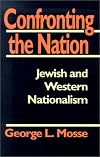
One of the best books that I read and reviewed last year was George L. Mosse’s “Fallen Soldiers: Reshaping the Memory of the World War” (1990) which discusses what he calls the cult of the fallen soldier, the emergent European nationalisms of the nineteenth century, and the impacts these factors had on the cultural experience of war. This book, written three years later, continues his discussion of the different kinds of nationalism in Europe, with a slight focus on Zionism in the last show more third of the book. While there are continuous concerns that are picked up and examined throughout, this reads more like twelve related essays instead of having a tightly unified thesis.
The first two essays, “National Anthems: The Nation Militant” and “National Representation in the 1930s in Europe and the United States,” discuss the ways in which nationalism chose its political accoutrements, its national anthems, ideological art, its flags; Mosse says that these collectively comprise a “political liturgy.” According to Mosse, “Both Italian fascism and the national socialism with their own flags, anthem, rites, and ceremonies created a civic religion which co-opted nationalist traditions. Here the civil religion of nationalism found expression through the rites and ceremonies of the fascist movements” (p. 58). He is deeply concerned with how these helped constitute a politics of self-representation and re-invention, and how it enabled the nation as the expression of a general will. He asks penetrating questions into why the European nationalisms that are so recognizable turned out to look so different from American nationalism, which Mosse identifies as embodied in the image of “the free-roaming, self-reliant young man,” “the quintessential symbol of the new nation. Cowboy heroes fighting nature and the Indians were young, virile, courageous, but not disciplined. Images of unspoilt nature were joined to individual courage and daring” (p. 38).
Mosse historically locates many of the precedents of fascism and nationalism in the French Revolution, which he says is one of the first instances in which there was a “concept of the general will, of the people worshipping themselves” (p. 74). The tie that links all of these phenomena is the nationalization and mobilization of the masses. “The creation of a political liturgy based upon the aesthetic of politics was a consequence of the belief in the artificial construct of ‘the people’ they had to be mobilized, shaped, and disciplined, and the way in which this was done was influenced – if not directly determined – by the French Revolution. The Revolution signaled the break between the old politics of dynasty and privilege, and the new democratic politics supposedly based on the will of the people” (p. 75). While most nationalisms harkened back to a volkish past ensconced in an immutable mythology of national or racial purity, Mosse’s essay “The Political Culture of Futurism” looks at how this artistic and literary movement embraced modernity instead of eschewing it. “This nationalism, then, was not weighted down by volkish ideals. It accepted technology and with it a new speed of time, using the forces unleashed by modernity in order to integrate men and nations. The political culture of futurism was expressed through a political style that sought to propel nationalism into modernity, to give it clarity and form without restraining its dynamic drive” (p. 96).
Another essay, “Bookburning and the Betrayal by the Intellectuals,” considers the May 10, 1933 bookburnings that occurred in dozens of German university towns, and asks the question “How did it come to this? Why did the middle-class intellectuals or ‘Bildungsburger’ burn their own books?” “The bookburnings must be understood as a fire of purification, of awakening, as analogies to the generation of 1914 made clear again and again. Successful mass movements cannot be inspired by negative symbols. The bookburnings were to represent a positive symbolic action within the bounds of the Third Reich” (p. 111). For Mosse, the betrayal of the intellectuals resulted from a “turning inward, the ideal of rebirth, of purification, the craving for eternal values, for being at one with the people, the primary importance of respectability, [and] the exclusion and isolation of the outsider” (p. 112).
The last five essays consider the ways in which Jews dealt with European nationalism after the Napoleonic emancipation, and especially the way Jews tried to carve a middle path between what Mosse calls “Bildung and respectability.” Bildung, at least as Humboldt put it in the early nineteenth century, was a philosophical and educational cultivation of the self sustained through cultural maturation, while respectability was almost a foregone conclusion for those Jews who wanted to be assimilated into the European mainstream and middle classes. These two pursuits might not seem necessarily contradictory, but with the rise of bourgeois values, Mosse seems to argue that they grew to be increasing at odds with one another. Even though Jewish culture had much more in common with liberalism (the pursuit of parliamentary government, for example), Mosse looks at how Jews conscripted some of the same ideas such as physical strength, purity, and nobility of spirit into their own nationalist ideas. For Herzl and Buber, for instance, “the civic religion of nationalism was not a call to battle but an educational process for the individual Jew who must recapture his dignity a human being” (p. 125). The last two essays look at the nationalist approaches of two important Zionist thinkers - Max Nordau and Gershom Scholem.
The only problem with this book, if one can call it that, is that this was only twelve essays, whereas Mosse could have easily written twelve books – and I would have read each one with relish. Each chapter is really just the barest tip of an iceberg into the scholarship, but together they serve as a grand introduction to nationalism as a set of ideas in the nineteenth and twentieth centuries, and how Jews reacted to, adopted, and used those nationalist ideals in various approaches to Zionist thought. show less
The first two essays, “National Anthems: The Nation Militant” and “National Representation in the 1930s in Europe and the United States,” discuss the ways in which nationalism chose its political accoutrements, its national anthems, ideological art, its flags; Mosse says that these collectively comprise a “political liturgy.” According to Mosse, “Both Italian fascism and the national socialism with their own flags, anthem, rites, and ceremonies created a civic religion which co-opted nationalist traditions. Here the civil religion of nationalism found expression through the rites and ceremonies of the fascist movements” (p. 58). He is deeply concerned with how these helped constitute a politics of self-representation and re-invention, and how it enabled the nation as the expression of a general will. He asks penetrating questions into why the European nationalisms that are so recognizable turned out to look so different from American nationalism, which Mosse identifies as embodied in the image of “the free-roaming, self-reliant young man,” “the quintessential symbol of the new nation. Cowboy heroes fighting nature and the Indians were young, virile, courageous, but not disciplined. Images of unspoilt nature were joined to individual courage and daring” (p. 38).
Mosse historically locates many of the precedents of fascism and nationalism in the French Revolution, which he says is one of the first instances in which there was a “concept of the general will, of the people worshipping themselves” (p. 74). The tie that links all of these phenomena is the nationalization and mobilization of the masses. “The creation of a political liturgy based upon the aesthetic of politics was a consequence of the belief in the artificial construct of ‘the people’ they had to be mobilized, shaped, and disciplined, and the way in which this was done was influenced – if not directly determined – by the French Revolution. The Revolution signaled the break between the old politics of dynasty and privilege, and the new democratic politics supposedly based on the will of the people” (p. 75). While most nationalisms harkened back to a volkish past ensconced in an immutable mythology of national or racial purity, Mosse’s essay “The Political Culture of Futurism” looks at how this artistic and literary movement embraced modernity instead of eschewing it. “This nationalism, then, was not weighted down by volkish ideals. It accepted technology and with it a new speed of time, using the forces unleashed by modernity in order to integrate men and nations. The political culture of futurism was expressed through a political style that sought to propel nationalism into modernity, to give it clarity and form without restraining its dynamic drive” (p. 96).
Another essay, “Bookburning and the Betrayal by the Intellectuals,” considers the May 10, 1933 bookburnings that occurred in dozens of German university towns, and asks the question “How did it come to this? Why did the middle-class intellectuals or ‘Bildungsburger’ burn their own books?” “The bookburnings must be understood as a fire of purification, of awakening, as analogies to the generation of 1914 made clear again and again. Successful mass movements cannot be inspired by negative symbols. The bookburnings were to represent a positive symbolic action within the bounds of the Third Reich” (p. 111). For Mosse, the betrayal of the intellectuals resulted from a “turning inward, the ideal of rebirth, of purification, the craving for eternal values, for being at one with the people, the primary importance of respectability, [and] the exclusion and isolation of the outsider” (p. 112).
The last five essays consider the ways in which Jews dealt with European nationalism after the Napoleonic emancipation, and especially the way Jews tried to carve a middle path between what Mosse calls “Bildung and respectability.” Bildung, at least as Humboldt put it in the early nineteenth century, was a philosophical and educational cultivation of the self sustained through cultural maturation, while respectability was almost a foregone conclusion for those Jews who wanted to be assimilated into the European mainstream and middle classes. These two pursuits might not seem necessarily contradictory, but with the rise of bourgeois values, Mosse seems to argue that they grew to be increasing at odds with one another. Even though Jewish culture had much more in common with liberalism (the pursuit of parliamentary government, for example), Mosse looks at how Jews conscripted some of the same ideas such as physical strength, purity, and nobility of spirit into their own nationalist ideas. For Herzl and Buber, for instance, “the civic religion of nationalism was not a call to battle but an educational process for the individual Jew who must recapture his dignity a human being” (p. 125). The last two essays look at the nationalist approaches of two important Zionist thinkers - Max Nordau and Gershom Scholem.
The only problem with this book, if one can call it that, is that this was only twelve essays, whereas Mosse could have easily written twelve books – and I would have read each one with relish. Each chapter is really just the barest tip of an iceberg into the scholarship, but together they serve as a grand introduction to nationalism as a set of ideas in the nineteenth and twentieth centuries, and how Jews reacted to, adopted, and used those nationalist ideals in various approaches to Zionist thought. show less
Lists
Awards

You May Also Like


Associated Authors
Statistics
- Works
- 52
- Also by
- 3
- Members
- 1,846
- Popularity
- #13,938
- Rating
- 4.0
- Reviews
- 27
- ISBNs
- 171
- Languages
- 7
- Favorited
- 1