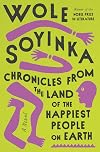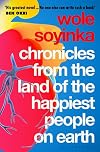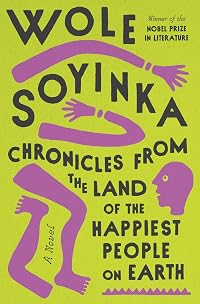
Chronicles from the Land of the Happiest People on Earth
by Wole Soyinka
On This Page
Description
In an imaginary Nigeria, a cunning entrepreneur is selling body parts stolen from Dr Menka's hospital for use in ritualistic practices. Dr Menka shares the grisly news with his oldest college friend, bon viveur, star engineer and Yoruba royal, Duyole Pitan-Payne. The life of every party, Duyole is about to assume a prestigious post at the United Nations in New York, but it now seems that someone is determined that he not make it there. And neither Dr Menka nor Duyole knows why, or how close show more the enemy is, or how powerful. Chronicles from the Land of the Happiest People on Earth is at once a literary hoot, a crafty whodunit and a scathing indictment of political and social corruption. It is a stirring call to arms against the abuse of power from one of our fiercest political activists who also happens to be a global literary giant. show lessTags
Recommendations






Member Reviews
Soyinka has never believed in making life easy for the reader, and this — his first novel since 1972 — is no exception: the action of the plot keeps getting interrupted by long satirical asides that may or may not have something to do with the story. It's almost more of an extended essay with narrative interludes. But it's powerful stuff: Soyinka treats Nigeria with all the kid-glove delicacy of a 21st century Jonathan Swift.
His slightly fictionalised Nigeria is a kleptocracy where there is no longer any meaningful distinction to be made between politics, religion and organised crime. They are all just ways of getting to power and wealth whilst trampling on the faces of the ordinary people and bamboozling them with meaningless show more spectacle. In earlier times he might have held out some hope for the postcolonial world from African spirituality, but by now — or at least for the purposes of this satirical attack — he's clear that "tradition" and "religious law", whether they are indigenous or come from one of the two great imperialist religions, are just mechanisms the strong use to impose their will on the weak and satisfy their own desires and ambitions, whether at the level of the family or the state.
A bleak picture, and Soyinka doesn't show us any handy way to escape from it. The honest, upright characters in the story are never more than a pinprick annoyance for his arch-villains. But I'm sure he did cheer up innumerable readers by giving the most evil of the evil organisations in the book the name "Human Resources". We always knew... I'm sure a lot of evil HR managers will be getting this in their Christmas stocking. show less
His slightly fictionalised Nigeria is a kleptocracy where there is no longer any meaningful distinction to be made between politics, religion and organised crime. They are all just ways of getting to power and wealth whilst trampling on the faces of the ordinary people and bamboozling them with meaningless show more spectacle. In earlier times he might have held out some hope for the postcolonial world from African spirituality, but by now — or at least for the purposes of this satirical attack — he's clear that "tradition" and "religious law", whether they are indigenous or come from one of the two great imperialist religions, are just mechanisms the strong use to impose their will on the weak and satisfy their own desires and ambitions, whether at the level of the family or the state.
A bleak picture, and Soyinka doesn't show us any handy way to escape from it. The honest, upright characters in the story are never more than a pinprick annoyance for his arch-villains. But I'm sure he did cheer up innumerable readers by giving the most evil of the evil organisations in the book the name "Human Resources". We always knew... I'm sure a lot of evil HR managers will be getting this in their Christmas stocking. show less
A long, complex book, capable of feinting with the reader, leading them first in one direction and then in the other, among politics, religion (or rather, superstition), tribalism, apparently paradoxical and humorous, with each page becoming more and more involving and profound, to the point of not being able to let go, until the final deception, which leaves one bewildered and completely breathless. An imaginary Nigeria that is the paradigm of the entire western civilisation is the background to this literary monument, in a text that chastises former oppressed and former oppressors alike, both categories driven only by greed.
I finished the book, with mounting resentment. Brilliant early writing gave way to repetitive tropes, more than one McGuffin and a reveal by the criminals rather than the sleuth. Huge emphasis is placed on Nigerian funerary rites and the custom that the deceased is buried at home. So the failure to explain why anyone would oppose this custom, let alone the family itself, is a crippling flaw in what pretends to be a plot. There are many, many characters, often bearing different names for no reason at all, but to sow confusion. It is as if the same characters in a play were played by many random actors.
Finer minds than mine have raved about the brilliance of this book, and Soyinka is a Nobel Prize winner and all, but … it took ages for me to read this book and even now I'm not sure that I've made sense of it.
So here are some reviews from expert reviewers:
You will have noticed that both Okri and Habila are Nigerian, which means they are 'closer to home' so to speak, about some of the satirical elements in the novel, elements which might pass some of us by. But show more then there's this one by
He also identifies the problem that I had with keeping track of proceedings:
But, he says, the real interest in the novel lies elsewhere: it interrogates the state of a nation where these kinds of things can happen. That makes Chronicles more than just a satire, but for me, it got lost along the way.
To read the rest of my review please visit https://anzlitlovers.com/2021/11/24/chronicles-from-the-land-of-the-happiest-peo... show less
So here are some reviews from expert reviewers:
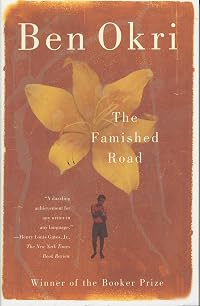
- Ben Okri in The Guardian, who calls it a vast danse macabre. (Yes, that Ben Okri, who won the Booker for The Famished Road which I really liked).
- Helon Habila, also in The Guardian, who says it's Nigeria unmasked. (Yes, that Helon Habila, whose books I really admire too).
You will have noticed that both Okri and Habila are Nigerian, which means they are 'closer to home' so to speak, about some of the satirical elements in the novel, elements which might pass some of us by. But show more then there's this one by
- Juan Gabriel Vásquez in the NYT: Vásquez is from Colombia so he also knows what it's like to live under poor governance. He writes that the novel is a caustic political satire, a murder mystery, a conspiracy story and a deeply felt lament for the spirit of a nation.
He also identifies the problem that I had with keeping track of proceedings:
The plot — convoluted, obscure at times, often tying itself in too many knots — turns on the aptly named Human Resources, a sinister online business that sells human body parts for private use in rituals and superstitions. As often happens in satire, the outrageousness of the fictional premise comes from its proximity to the truth: The belief that human organs have magical properties, leading to business success and political power, has been known to lead to ritual murders in Nigeria...
But, he says, the real interest in the novel lies elsewhere: it interrogates the state of a nation where these kinds of things can happen. That makes Chronicles more than just a satire, but for me, it got lost along the way.
To read the rest of my review please visit https://anzlitlovers.com/2021/11/24/chronicles-from-the-land-of-the-happiest-peo... show less
Crónicas desde el país de la gente más feliz de la Tierra es una divertida y amarga sátira política sobre la corrupción en forma de novela de misterio. En una Nigeria imaginaria, pero muy parecida a la real, un grupo de pícaros, predicadores, emprendedores y políticos se ve inmerso en una trama sobre tráfico de miembros humanos robados de un hospital. El médico que desvela ese turbio negocio se lo cuenta a su íntimo amigo, el hombre de moda en el país, que está a punto de incorporarse a un puesto importante en las Naciones Unidas. Pero alguien parece dispuesto a defender el secreto y pronto queda claro que el enemigo es poderoso, y puede estar en cualquier lado.
A la vez festín narrativo, historia de intriga y denuncia show more mordaz de la corrupción, esta novela, la primera de Soyinka en casi cincuenta años, es también un llamamiento conmovedor a movilizarse contra el abuso de poder. show less
A la vez festín narrativo, historia de intriga y denuncia show more mordaz de la corrupción, esta novela, la primera de Soyinka en casi cincuenta años, es también un llamamiento conmovedor a movilizarse contra el abuso de poder. show less
Nov 25, 2021Spanish
Ratings
Members
- Recently Added By
Lists

The Economist Best Books 2021: Fiction
8 works; 1 member

Books recommended by Calgary Public Library staff
1,588 works; 4 members

BBC World Book Club
265 works; 5 members
Author Information

138+ Works 5,061 Members
Wole Soyinka was born in Abeokuta, Ogun State of Nigeria on July 13, 1934. He attended Government College and University College in Ibadan before receiving a degree in English from the University of Leeds in England in 1958. He has held research and teaching appointments at several universities including the University of Ibadan, the University of show more Ife, Cornell University, Emory University, the University of Nevada, Las Vegas, and Loyola Marymount. He is a distinguished playwright, poet, novelist, essayist, social critic, political activist, and literary scholar. His plays include The Swamp Dwellers, The Lion and the Jewel, A Dance of the Forests, The Bacchae of Euripides, A Play for Giants, Death and the King's Horsemen, From Zia with Love, The Beatification of Area Boy, and King Baabu. His collections of poetry include Idanre and Other Poems, A Shuttle in the Crypt, and Mandela's Earth and Other Poems. His novels include The Interpreters, which won the 1968 Jock Campbell Literary Award, and Season of Anomy. His autobiographical works include Ake: The Years of Childhood, Isara: A Voyage Around Essay, The Open Sore of a Continent: A Personal Memoir of the Nigerian Crisis, and You Must Set Forth at Dawn. His literary essays collections include Myth, Literature and the African World and Art, Dialogue and Outrage. During the civil war in Nigeria, he appealed for cease-fire in an article. Accused of treason, he was held in solitary confinement for 22 months. Two of his works, The Man Died: Prison Notes of Wole Soyinka and Poems from Prison, were secretly written on toilet paper and smuggled out of prison. He won the Nobel Prize for Literature in 1986. (Bowker Author Biography) show less
Some Editions
Awards and Honors
Distinctions
Notable Lists
Common Knowledge
- Canonical title
- Chronicles from the Land of the Happiest People on Earth
- Original publication date
- 2021
Classifications
Statistics
- Members
- 314
- Popularity
- 101,373
- Reviews
- 6
- Rating
- (2.86)
- Languages
- 5 — English, French, German, Portuguese, Spanish
- Media
- Paper, Audiobook, Ebook
- ISBNs
- 18
- ASINs
- 5