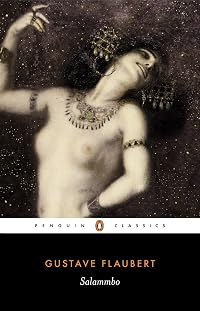
Salammbô
by Gustave Flaubert 
On This Page
Description
With his masterwork Madame Bovary, Gustave Flaubert blazed new trails in literary realism with a gripping tale of a disenchanted wife entangled in an extramarital affair. After that, Flaubert took a completely different tack and dove into the extensive historical research that would form the basis of the novel Salammbo, an action-packed account of the series of wars that devastated Carthage in the 3rd century BC..
Tags
Recommendations

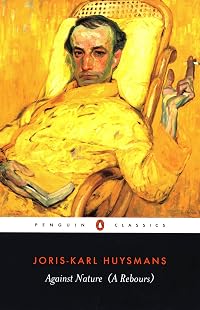

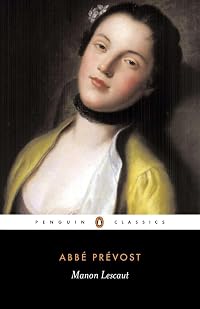
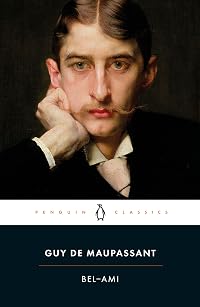
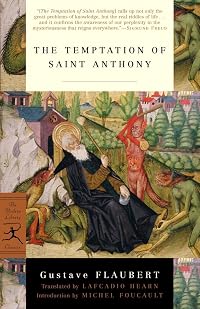
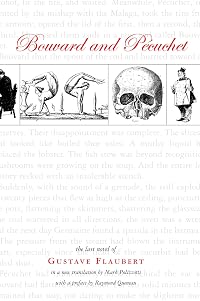








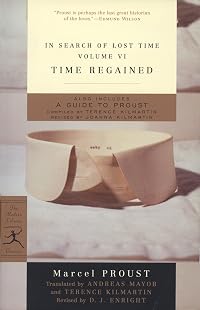
Member Recommendations

CGlanovsky Historical fiction set in the Classical Mediterranean

CGlanovsky Stories of women with strong religious feeling in the Ancient Mediterranean
rahkan Another sumptuous historical tale, featuring scenes of wild emotion and excess
Member Reviews
Flaubert is mostly known for Madame Bovary, but when I first heard of Salammbo I was instantly intrigued. A sword-and-sandal epic set in Carthage during the Mercenary Revolt after the First Punic War? Sign me up! While reading I could see how it influenced later fantasy stories such as Conan the Barbarian and Elric, despite being a work of historical fiction. All the ingredients were there: larger-than-life warriors, sensual priestesses (with the essential accessory of a pet snake), decadent empires, lurid descriptions of battle, lavishly described feasts. Though Salammbo eschews psychological insight in favor of evocative descriptions of a fantastical Carthage, I found it unputdownable once the action got going and devoured the novel show more over the course of a few hours. show less
I was disappointed by this. Having listened to a 4 part podcast series on the first Punic War, which contained a number of dramatic readings from this book, I expected to find it more gripping. But now I have given up on it around a third of the way through. While Flaubert clearly researched the historical background very assiduously from Roman historian Polybius's work, the narrative reads like what we would now call an info dump, as though he was so determined to show off his research that he barely remembered to tell an actual story. I found it an uninteresting drag so cut my losses after chapter 5 of 15.
Orientalistista veristä fantasmagoriaa. Varmasti Flaubertin yksi vähiten kunnioitettuja kirjoja, mutta minuun tämä iskee kuin teurasveitsi sikaan.
It is a paradox really, and a kind of an odd one too, when you consider that Gustave Flaubert was summoned to court on charges of obscenity for a book like “Madame Bovary”, while he got away with such a barbaric monstrosity as “Salammbô”.
The worst thing after all, which happens in Bovary is the suicide of a bored and adulterous “bourgeoise”, while Salammbô, a book bulging with horrors has it all: from bestial love to religious inspired child massacres, from horrendous battles scenes to mass executions of prisoners. Not only did Flaubert get away with his shocking book, but Salammbô became a commercial success as soon as it hit the bookstores in November 1862.
Even Baudelaire was impressed when he commented: “An edition show more of two thousand books sold in two days…, only Flaubert could have written this beautiful book…”. Salammbô did definitively seal the writer’s fame, its exotic topic inspiring painters like Gaston Buissière or even the great Mucha, setting the standard for the next generation of writers, people like Huysman and maybe Oscar Wilde. Salammbô even started, quite exceptional in those days, a fashion craze: “Le style Carthaginois”.
Today however, readers seem to have forgotten Salammbô. A quick glance at the statistics in Library Thing for instance shows that nearly 12.000 people own Bovary while only 700 can boast having Salammbô on their shelves. It is of course true that today the Academic world sees “La Bovary”, as one of the most influential novels ever written and a seminal work of realism, showing the writer’s perfectionist eye for detail and his obsession to find and use “le mot juste”. But so is Salammbô, and probably even more. To claim Bovary as Flaubert’s masterpiece and restricting one’s reading to that single book is simply unfair. Flaubert had not yet displayed all his talent and while his own preference would go to his “Temptation of Saint Anthony”, I think that if you honestly consider the man’s total oeuvre, you come to the same conclusion as I did: “Madame Bovary” is not Flaubert’s best, but clearly Salammbô,…easily, …hands down.
http://macumbeira-macumbeira.blogspot.com/2010/10/salammbo-by-gustave-flaubert.h... show less
The worst thing after all, which happens in Bovary is the suicide of a bored and adulterous “bourgeoise”, while Salammbô, a book bulging with horrors has it all: from bestial love to religious inspired child massacres, from horrendous battles scenes to mass executions of prisoners. Not only did Flaubert get away with his shocking book, but Salammbô became a commercial success as soon as it hit the bookstores in November 1862.
Even Baudelaire was impressed when he commented: “An edition show more of two thousand books sold in two days…, only Flaubert could have written this beautiful book…”. Salammbô did definitively seal the writer’s fame, its exotic topic inspiring painters like Gaston Buissière or even the great Mucha, setting the standard for the next generation of writers, people like Huysman and maybe Oscar Wilde. Salammbô even started, quite exceptional in those days, a fashion craze: “Le style Carthaginois”.
Today however, readers seem to have forgotten Salammbô. A quick glance at the statistics in Library Thing for instance shows that nearly 12.000 people own Bovary while only 700 can boast having Salammbô on their shelves. It is of course true that today the Academic world sees “La Bovary”, as one of the most influential novels ever written and a seminal work of realism, showing the writer’s perfectionist eye for detail and his obsession to find and use “le mot juste”. But so is Salammbô, and probably even more. To claim Bovary as Flaubert’s masterpiece and restricting one’s reading to that single book is simply unfair. Flaubert had not yet displayed all his talent and while his own preference would go to his “Temptation of Saint Anthony”, I think that if you honestly consider the man’s total oeuvre, you come to the same conclusion as I did: “Madame Bovary” is not Flaubert’s best, but clearly Salammbô,…easily, …hands down.
http://macumbeira-macumbeira.blogspot.com/2010/10/salammbo-by-gustave-flaubert.h... show less
Salammbô is set in ancient Carthage and talks about a war between mercenaries and the Carthaginean army, led by Hamilcar Barcas.
Flaubert has mixed classical greek elements with modern, realist ideas. The overall theme of the novel is arrogance -- not the god-defying hybris of classical tragedy, but the very human form: pride, jealousy, greed. These three human characters are intertwined thoughout the story. The mercenaries seemingly start their war because the Carthagineans don't want to pay them, but it is the slave Spendius who stirs them up, deliberately misleading them in his desire for power. Spendius also steers the mercenary general Mâtho, who is mostly driven by his lusting for Salammbô, into stealing the most sacred object show more of the Carthagineans: the Zaimph, the veil of the godess Tanith.
Though the gods seem to get their revenge in the end, it is man who drives the action. It is the greed of the Carthagineans that starts the war, it is the jealousy of the Council of Ancients that doublecrosses Hamilcar every time he is on the verge of winning, it is the pride of Hamilcar's political rival Hannon that leads to gruesome defeats.
Flaubert has interspersed his story with an exotic kind of realism, leading to elaborate descriptions of costumes, ceremonies, military movements, and torturous punishments. Salammbô is a distant relative of The Passion of the Christ in all its gorey historical realism, and perhaps the horrifying descriptions are all too gratuitious. But Salammbô goes deeper than this, it is a biting description of human society as a political structure, showing how party politics will work against the best intents of the state.
Salammbô is an exponent of the french exotism, which took a start with Napoleons Egyptian expeditions and influenced many other artists (Verdi's Aïda is another famous example). Unlike most, however, Flaubert did extensive research for his book, even traveling to Tunisia. Echoes of Homer and Xenophon are scattered throughout his work. It seems to me that the way the novel depicts Carthage as a major character has also inspired Albert Camus when he wrote La Peste, where another African city is closed off from the world while a pseudo-divine punishment chastises the inhabitants. show less
Flaubert has mixed classical greek elements with modern, realist ideas. The overall theme of the novel is arrogance -- not the god-defying hybris of classical tragedy, but the very human form: pride, jealousy, greed. These three human characters are intertwined thoughout the story. The mercenaries seemingly start their war because the Carthagineans don't want to pay them, but it is the slave Spendius who stirs them up, deliberately misleading them in his desire for power. Spendius also steers the mercenary general Mâtho, who is mostly driven by his lusting for Salammbô, into stealing the most sacred object show more of the Carthagineans: the Zaimph, the veil of the godess Tanith.
Though the gods seem to get their revenge in the end, it is man who drives the action. It is the greed of the Carthagineans that starts the war, it is the jealousy of the Council of Ancients that doublecrosses Hamilcar every time he is on the verge of winning, it is the pride of Hamilcar's political rival Hannon that leads to gruesome defeats.
Flaubert has interspersed his story with an exotic kind of realism, leading to elaborate descriptions of costumes, ceremonies, military movements, and torturous punishments. Salammbô is a distant relative of The Passion of the Christ in all its gorey historical realism, and perhaps the horrifying descriptions are all too gratuitious. But Salammbô goes deeper than this, it is a biting description of human society as a political structure, showing how party politics will work against the best intents of the state.
Salammbô is an exponent of the french exotism, which took a start with Napoleons Egyptian expeditions and influenced many other artists (Verdi's Aïda is another famous example). Unlike most, however, Flaubert did extensive research for his book, even traveling to Tunisia. Echoes of Homer and Xenophon are scattered throughout his work. It seems to me that the way the novel depicts Carthage as a major character has also inspired Albert Camus when he wrote La Peste, where another African city is closed off from the world while a pseudo-divine punishment chastises the inhabitants. show less
A bit of a rollicking tale, especially unexpected from Flaubert; it has the feeling of an epic poem, or a medieval romance. That's probably the best way to judge it: not dealing with deep characters (although Spendius is chilling); not interested in a perfectly coherent, driven plot (although there's plenty of action); but filled with asides, descriptions and repetitions. But it's also 'realistic', in the sense of packed with detail; this clashes in an interesting way with the characters' speeches to each other, which feel very mannered. I imagine this is much better studied than read breezily like I did.
But by far the weirdest thing was that it reminded me of 'Blood Meridian.' I wonder if there's anything to that.
But by far the weirdest thing was that it reminded me of 'Blood Meridian.' I wonder if there's anything to that.
Unlike Madame Bovary, it is no ride in the park (But then what goes on inside is much more explicit). Julien Gracq likens the reading of it to a strenuous weight-lifting session. Like Gracq, Flaubert is not sparing with adjectives here and makes use of a richly recondite vocabulary. Briefly, the novel focuses on the barbarian mercenary wars against the city of Carthage - and the ambiguous relationship between Salammbo, the priestess-daughter of the Carthaginian Suffete, Hamilcar, and the leader of the mercenary armies. Most of the novel details the ongoing warfare between the mercenaries and the Punic forces - the savagery of which is ornately, even voluptuously detailed. Beautiful gardens, perfumes, comestibles and odalisques are show more lushly described as are exotic deformative diseases, varied perversities, mutilations, tortures, sadistic deceptions and punishments, cannibalism and child sacrifice. Salammbo is interesting as an historical novel, and as an exotic poetic work of erudtion and decadent excess.
I have an edition illustrated by Mahlon Blaine, in his usual style, but I agree with the author - illustrations are distractions here. show less
I have an edition illustrated by Mahlon Blaine, in his usual style, but I agree with the author - illustrations are distractions here. show less
Members
- Recently Added By
Lists

1001 Books You Must Read Before You Die
1,448 works; 1,133 members

Best Historical Fiction
620 works; 261 members

1898 C.K. Shorter List of Best 100 Novels
100 works; 34 members

Best historical fiction set in the ancient world
126 works; 40 members

Best of French Literature
138 works; 26 members

Historical Fiction
889 works; 90 members

Harold Bloom - The Western Canon: C. The Democratic Age
336 works; 15 members

Lesser known books of well known authors
39 works; 17 members

once upon a time ~ ancient world
46 works; 7 members

Fifty Representative Historical Novels
50 works; 2 members

SHOULD Read Books!
354 works; 9 members

French Fiction of the 18th and 19th Centuries in English Translation
169 works; 3 members

Books Read in 2021
5,361 works; 113 members

Books Referenced by Said's Orientalism
21 works; 1 member

Books Referenced by Izetbegovic's Islam Between East and West
233 works; 2 members
Author Information

Born in the town of Rouen, in northern France, in 1821, Gustave Flaubert was sent to study law in Paris at the age of 18. After only three years, his career was interrupted and he retired to live with his widowed mother in their family home at Croisset, on the banks of the Seine River. Supported by a private income, he devoted himself to his show more writing. Flaubert traveled with writer Maxime du Camp from November 1849 to April 1851 to North Africa, Syria, Turkey, Greece, and Italy. When he returned he began Madame Bovary, which appeared first in the Revue in 1856 and in book form the next year. The realistic depiction of adultery was condemned as immoral and Flaubert was prosecuted, but escaped conviction. Other major works include Salammbo (1862), Sentimental Education (1869), and The Temptation of Saint Antony (1874). His long novel Bouvard et Pecuchet was unfinished at his death in 1880. After his death, Flaubert's fame and reputation grew steadily, strengthened by the publication of his unfinished novel in 1881 and the many volumes of his correspondence. (Bowker Author Biography) show less
Gustave Flaubert has a Legacy Library. Legacy libraries are the personal libraries of famous readers, entered by LibraryThing members from the Legacy Libraries group.
Some Editions
Awards and Honors
Series
Belongs to Publisher Series
Collections Gerfaut (27)
Work Relationships
Common Knowledge
- Canonical title
- Salammbô
- Original title
- Salammbô
- Original publication date
- 1862
- People/Characters
- Salammbô; Hamilcar Barca; Mâtho; Spendius; Hannibal Barca
- Important places
- Carthage
- Important events
- Mercenary War (c. 240 BC)
- Related movies
- Salammbo: Battle for Carthage (2003 | IMDb)
- First words
- C'était à Mégara, faubourg de Carthage, dans les jardins d'Hamilcar.
- Last words
- (Click to show. Warning: May contain spoilers.)Ainsi mourut la fille d'Hamilcar, pour avoir touché au manteau de Tanit.
- Original language*
- ranska
*Some information comes from Common Knowledge in other languages. Click "Edit" for more information.
Classifications
- Genres
- Fiction and Literature, General Fiction, Historical Fiction
- DDC/MDS
- 843.8 — Literature & rhetoric French Literature French fiction Later 19th century 1848–1900
- LCC
- PQ2246 .S3 — Language and Literature French, Italian, Spanish and Portuguese literatures French literature Modern literature 19th century
- BISAC
Statistics
- Members
- 2,136
- Popularity
- 9,563
- Reviews
- 36
- Rating
- (3.68)
- Languages
- 22 — Catalan, Czech, Dutch, English, Estonian, Finnish, French, German, Greek, Hebrew, Hungarian, Italian, Norwegian (Bokmål), Norwegian, Portuguese, Russian, Serbian, Slovak, Spanish, Swedish, Thai, Turkish
- Media
- Paper, Audiobook, Ebook
- ISBNs
- 205
- ASINs
- 112