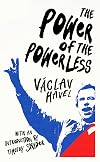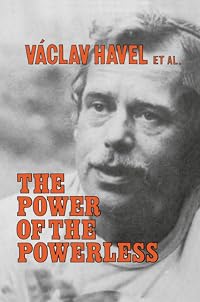
The Power of the Powerless
by Václav Havel
On This Page
Description
Books of great political insight and novelty always outlive their time of birth and this reissued work, initially published in 1985, is no exception. Written shortly after the formation of Charter 77, the essays in this collection are among the most original and compelling pieces of political writing to have emerged from central and Eastern Europe during the whole of the post-war period. Václav Havel's essay provides the title for the book. It was read by all the contributors who in turn show more responded to the many questions which Havel raises about the potential power of the powerless. The essays explain the anti-democratic features and limits of Soviet-type totalitarian systems of power. They discuss such concepts as ideology, democracy, civil liberty, law and the state from a perspective which is radically different from that of people living in liberal western democracies. The authors also discuss the prospects for democratic change under totalitarian conditions. Steven Lukes' introduction provides an invaluable political and historical context for these writings. The authors represent a very broad spectrum of democratic opinion, including liberal, conservative and socialist. show lessTags
Recommendations













Member Reviews
Vaclav Havel's essay, titled 'The Power of the Powerless,' is a powerful piece of writing on the unequal relationship between a dictatorial regime and its citizens, who are stripped of their strength.
I read the essay in one sitting, so I confess every lesson did not sink in. However, while reading the book on my Kindle, I visited Amazon's website and bought the print edition. This book offers invaluable lessons, so I got a paperback copy as a reference for my future writing.
Vaclav Havel's writing style is direct, assertive, spare, and accessible to everyone, unlike academic writing, which uses one hundred convoluted words where one will suffice.
He started the book by comparing traditional dictatorship, which relies on force, to show more modern totalitarianism, relying on force, persuasion, and 'thought control.' Even though he did not reference George Orwell's book, '1984,' you will discern shades of the dystopian novel's lessons in this excellent essay.
Timothy Snyder's excellent introduction is a helpful bonus and sets the stage for Vaclav Havel to take over and speak in his voice. I recommend reading the introduction (many people avoid reading the introduction) because Timothy highlights a few critical spots in the book. For instance, when Vaclav Havel writes about consumerism, the reader can relate his concerns to the rampant growth of destructive consumerism and its havoc in society. When he wrote about the insidious influence of media (the internet was not then the force it is now), you ought to relate it to how politicians, businesspeople, and anarchists use the net to spread their messages.
I am unfamiliar with Czech history, so I confess to being bemused when he used examples of Czech politics or when he wrote about Russian interference in his country. However, don't let this bog you down: relate the lessons in the essay to what is happening in your country.
If you are merely curious, buy the Kindle version, and if you wish to reference the book, buy the print edition. show less
I read the essay in one sitting, so I confess every lesson did not sink in. However, while reading the book on my Kindle, I visited Amazon's website and bought the print edition. This book offers invaluable lessons, so I got a paperback copy as a reference for my future writing.
Vaclav Havel's writing style is direct, assertive, spare, and accessible to everyone, unlike academic writing, which uses one hundred convoluted words where one will suffice.
He started the book by comparing traditional dictatorship, which relies on force, to show more modern totalitarianism, relying on force, persuasion, and 'thought control.' Even though he did not reference George Orwell's book, '1984,' you will discern shades of the dystopian novel's lessons in this excellent essay.
Timothy Snyder's excellent introduction is a helpful bonus and sets the stage for Vaclav Havel to take over and speak in his voice. I recommend reading the introduction (many people avoid reading the introduction) because Timothy highlights a few critical spots in the book. For instance, when Vaclav Havel writes about consumerism, the reader can relate his concerns to the rampant growth of destructive consumerism and its havoc in society. When he wrote about the insidious influence of media (the internet was not then the force it is now), you ought to relate it to how politicians, businesspeople, and anarchists use the net to spread their messages.
I am unfamiliar with Czech history, so I confess to being bemused when he used examples of Czech politics or when he wrote about Russian interference in his country. However, don't let this bog you down: relate the lessons in the essay to what is happening in your country.
If you are merely curious, buy the Kindle version, and if you wish to reference the book, buy the print edition. show less
As a person continuously humiliated by mental torment, when with my mind deprived of privacy (as in -voices), deprived of freedom (as in - obsessive compulsive thinking), I found the same values that Havel found in dissidents whose inner truth did not allow to compromise with living a lie. Of course one should not compare a mentally ill person to a dissident, but often dissidents in Soviet Russia were branded as 'mentally ill' and stuffed psychiatric drugs (Haloperidol et al) to destroy their intellectual capacities. Years later, when my situation got stable, I found that after a human being is stripped of everything - pride, dignity, valor, merit, he discovers what remains - pure ideas, whether it be freedom, love, nobility, show more responsibility, compassion, commitment. These and other ideas are the exit from the Platonic cave. They become a measuring rod of everything around, they make us reach for the humane and the Divine. This is the pre-political, the state of genuine humaneness which is difficult to define, but a person consious enough knows when it is lacking. Havel's work is a super-structure in which the main theme - the pre-political in the humane is equally valid and timelessly important in the modern post-democratic times. It is very important to bear in mind what is it that defines this humaneness, and where exactly we turn into political cyborgs, in a delayed notion of collapse of the human spirit into a wretched digital manipulation of the cognitive cybernetics of mass media and power structures and 'system of rule' of the modern age, that by the means of inverted totalitarianism introduces exactly the notions of post-totalitarian rule, yet in reverse - leading back to totalitarianism by slow, hidden steps, in bright-daylight and a reshuffled sense of concepts of a different economic order. show less
As a person continuously humiliated by mental torment, when with my mind deprived of privacy (as in -voices), deprived of freedom (as in - obsessive compulsive thinking), I found the same values that Havel found in dissidents whose inner truth did not allow to compromise with living a lie. Of course one should not compare a mentally ill person to a dissident, but often dissidents in Soviet Russia were branded as 'mentally ill' and stuffed psychiatric drugs (Haloperidol et al) to destroy their intellectual capacities. Years later, when my situation got stable, I found that after a human being is stripped of everything - pride, dignity, valor, merit, he discovers what remains - pure ideas, whether it be freedom, love, nobility, show more responsibility, compassion, commitment. These and other ideas are the exit from the Platonic cave. They become a measuring rod of everything around, they make us reach for the humane and the Divine. This is the pre-political, the state of genuine humaneness which is difficult to define, but a person consious enough knows when it is lacking. Havel's work is a super-structure in which the main theme - the pre-political in the humane is equally valid and timelessly important in the modern post-democratic times. It is very important to bear in mind what is it that defines this humaneness, and where exactly we turn into political cyborgs, in a delayed notion of collapse of the human spirit into a wretched digital manipulation of the cognitive cybernetics of mass media and power structures and 'system of rule' of the modern age, that by the means of inverted totalitarianism introduces exactly the notions of post-totalitarian rule, yet in reverse - leading back to totalitarianism by slow, hidden steps, in bright-daylight and a reshuffled sense of concepts of a different economic order. show less
As a person continuously humiliated by mental torment, when with my mind deprived of privacy (as in -voices), deprived of freedom (as in - obsessive compulsive thinking), I found the same values that Havel found in dissidents whose inner truth did not allow to compromise with living a lie. Of course one should not compare a mentally ill person to a dissident, but often dissidents in Soviet Russia were branded as 'mentally ill' and stuffed psychiatric drugs (Haloperidol et al) to destroy their intellectual capacities. Years later, when my situation got stable, I found that after a human being is stripped of everything - pride, dignity, valor, merit, he discovers what remains - pure ideas, whether it be freedom, love, nobility, show more responsibility, compassion, commitment. These and other ideas are the exit from the Platonic cave. They become a measuring rod of everything around, they make us reach for the humane and the Divine. This is the pre-political, the state of genuine humaneness which is difficult to define, but a person consious enough knows when it is lacking. Havel's work is a super-structure in which the main theme - the pre-political in the humane is equally valid and timelessly important in the modern post-democratic times. It is very important to bear in mind what is it that defines this humaneness, and where exactly we turn into political cyborgs, in a delayed notion of collapse of the human spirit into a wretched digital manipulation of the cognitive cybernetics of mass media and power structures and 'system of rule' of the modern age, that by the means of inverted totalitarianism introduces exactly the notions of post-totalitarian rule, yet in reverse - leading back to totalitarianism by slow, hidden steps, in bright-daylight and a reshuffled sense of concepts of a different economic order. show less
As a person continuously humiliated by mental torment, when with my mind deprived of privacy (as in -voices), deprived of freedom (as in - obsessive compulsive thinking), I found the same values that Havel found in dissidents whose inner truth did not allow to compromise with living a lie. Of course one should not compare a mentally ill person to a dissident, but often dissidents in Soviet Russia were branded as 'mentally ill' and stuffed psychiatric drugs (Haloperidol et al) to destroy their intellectual capacities. Years later, when my situation got stable, I found that after a human being is stripped of everything - pride, dignity, valor, merit, he discovers what remains - pure ideas, whether it be freedom, love, nobility, show more responsibility, compassion, commitment. These and other ideas are the exit from the Platonic cave. They become a measuring rod of everything around, they make us reach for the humane and the Divine. This is the pre-political, the state of genuine humaneness which is difficult to define, but a person consious enough knows when it is lacking. Havel's work is a super-structure in which the main theme - the pre-political in the humane is equally valid and timelessly important in the modern post-democratic times. It is very important to bear in mind what is it that defines this humaneness, and where exactly we turn into political cyborgs, in a delayed notion of collapse of the human spirit into a wretched digital manipulation of the cognitive cybernetics of mass media and power structures and 'system of rule' of the modern age, that by the means of inverted totalitarianism introduces exactly the notions of post-totalitarian rule, yet in reverse - leading back to totalitarianism by slow, hidden steps, in bright-daylight and a reshuffled sense of concepts of a different economic order. show less
In his essay, The Power of the Powerless, Vaclav Havel discusses the challenge of living with integrity in a totalitarian regime. He wrote this essay in 1978 while Czechoslovakia was behind the Iron Curtain. He was part of a group that had written in support of a rock band, The Plastic People, heavily influenced by The Mothers of Invention that had gotten into trouble with the State. Havel and other authors of the protest, known as Charter 77, were imprisoned for three years. After the Iron Curtain fell, Havel became the President of Czechoslovakia.
Havel is primarily concerned with how the totalitarian regime becomes normalized with everyone in the society just accepting things as they are. This normalization requires people to live show more with a dehumanizing degree of untruth. He begins his analysis with the example of a greengrocer who hangs a sign outside his shop saying "Workers of the World Unite" in order to go along with what the State expects him to do and to conform to what every other proprietor is doing. Although everyone knows that nobody will really read the sign, posting the sign serves the State because it demonstrates everyone conforming to the will of the State. The grocer goes along because he knows he will be punished if he does not. This makes the greengrocer an agent in the normalization of the State.
Havel recognizes that it requires great courage to defy this normalization and cites the example of a man working in a brewery that loved making beer so much that he publicly criticized the management of the brewery urging the to improve. Although the man was punished for this, he was at least able to maintain his integrity.
This e-book contains the original essay from Havel with an introduction from Timothy Snyder. The introduction provides useful historical context and a summary of the main themes of the essay. The essay is worth reading as more and more societies are lurching towards totalitarianism. show less
Havel is primarily concerned with how the totalitarian regime becomes normalized with everyone in the society just accepting things as they are. This normalization requires people to live show more with a dehumanizing degree of untruth. He begins his analysis with the example of a greengrocer who hangs a sign outside his shop saying "Workers of the World Unite" in order to go along with what the State expects him to do and to conform to what every other proprietor is doing. Although everyone knows that nobody will really read the sign, posting the sign serves the State because it demonstrates everyone conforming to the will of the State. The grocer goes along because he knows he will be punished if he does not. This makes the greengrocer an agent in the normalization of the State.
Havel recognizes that it requires great courage to defy this normalization and cites the example of a man working in a brewery that loved making beer so much that he publicly criticized the management of the brewery urging the to improve. Although the man was punished for this, he was at least able to maintain his integrity.
This e-book contains the original essay from Havel with an introduction from Timothy Snyder. The introduction provides useful historical context and a summary of the main themes of the essay. The essay is worth reading as more and more societies are lurching towards totalitarianism. show less
A history and background of the Czechoslovakian dissent in the 1970s by someone who was there and intimately involved. Like a lot of political philosophy, be prepared for dense material. I needed to reread parts multiple times for it to sink in. Overall, the structure is logical and reasoned. Beware that the title is somewhat misleading, because the book doesn't tell you how the powerless can attain power or overthrow power, as I first expected. It's interesting from a historical perspective of the time and place, even more that we're now in the 2020's. There are parallels to be drawn between 1970s Czech and present day US and others. If you're so inclined, it can be thought provoking, especially the last 2-3 chapters.
Members
- Recently Added By
Lists

Totalitarianism and Democratic Erosion: Essential Readings
45 works; 1 member
Author Information

129+ Works 3,468 Members
Václav Harvel (October 5, 1936 - December 18, 2011) was a Czech playwright, essayist, poet, philosopher and politician. He was the ninth and last president of Czechoslovakia (1989-1992) and the first president of the Czech Republic (1993-2003). He wrote more than 20 plays and numerous non-fiction works, translated internationally. At the time of show more his death he was Chairman of the New York-based Human Rights Foundation. Havel received many recognitions, including the United States Presidential Medal of Freedom, the Gandhi Peace Prize, the Philadelphia Liberty Medal, the Order of Canada, the freedom medal of the Four Freedoms Award, the Ambassador of Conscience Award and the Hanno R. Ellenbogen Citizenship Award. Havel died in his home in 2011. He was the author of many poetry collections and plays including, The Garden Party, The Beggar's Opera, Mountain Hotel and The Pig. (Bowker Author Biography) show less
All Editions
Some Editions
Common Knowledge
Classifications
- Genres
- Nonfiction, General Nonfiction, Politics and Government, History, Philosophy
- DDC/MDS
- 323.40947 — Society, government, & culture Political science Civil Rights & Liberties/ Human Rights The state and the individual Biography And History Europe
- LCC
- DJK50 .P68 — History of Europe, Asia, Africa and Oceania Eastern Europe (General) History of Eastern Europe (General) History
- BISAC
Statistics
- Members
- 430
- Popularity
- 71,565
- Reviews
- 9
- Rating
- (4.21)
- Languages
- 7 — Chinese, Czech, Danish, English, Italian, Polish, Spanish
- Media
- Paper, Ebook
- ISBNs
- 27
- ASINs
- 3