
Steven Lukes
Author of Power: A Radical View
About the Author
Steven Lukes is Professor of Politics and Sociology at New York University. Previously, he taught at the London School of Economics and the University of Sienna, and he is the author of numerous works, including Emile Durkheim: His Life and Work; Power: A Radical View; and What Is Left?
Works by Steven Lukes
On Trade-Offs Between Values 1 copy
Associated Works
The Cambridge History of Twentieth-Century Political Thought (2003) — Contributor — 54 copies, 1 review
Tagged
Common Knowledge
- Birthdate
- 1941-03-08
- Gender
- male
- Education
- University of Oxford (Balliol College)
Royal Grammar School, Newcastle-upon-Tyne, England, UK - Occupations
- political and social theorist
university professor - Organizations
- New York University
- Awards and honors
- Fellow, British Academy
- Relationships
- Pollitt, Katha (spouse)
- Short biography
- (b. 1941, fl. 2022).
- Nationality
- UK
- Places of residence
- England, UK
USA
Italy - Map Location
- UK
Members
Reviews
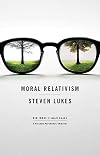
I never had must interest in ethics, and so I figured that this small version would be a nice look at the state of contemporary ethics - which I would say it succeeds at, however superficially some of the content is gone over. For me though, true ethics starts with Kant and ends with Nietzsche. It is for this very reason that I have never taken much interest in it. Ethics today is more an issue of politics than it is one of "living the good life," and I feel that this shows through with the show more content that is presented (which in all fairness he does cover a large base). I personally hold politics in little regard, and so this book, though only about 150 pages, became a bore to me. Nevertheless it is not without it's merit. It gives plenty to mull over and is a great reference source for further readings. show less
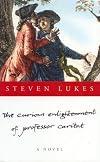
A satirical jaunt through western political philosophy, in the style of Candide and Gulliver's Travels. Perhaps a bit heavy-handed in parts, but often very amusing and definitely an enjoyable read. May send you off to Google details and allusions often, so be warned.

Steven Lukes, somewhat well-known popular philosophical author and also editor of the series "Marxist introductions", addresses perhaps one of the most difficult issues in the Marxist tradition: the problem of Marxism and ethics.
According to Lukes, the book is intended as "a contribution to socialist free-thinking", and in this case the contribution consists of making clear what the problem of moral blindness in Marxism is, what effect it has had on the various people who have discussed show more issues of morality within Marxism, and how Marxism cannot avoid a better elucidation of these issues if it is to be at all convincing. Lukes is very critical but in my view deservedly so - even the most superficial glance at the history of socialist politics will make clear the degree to which the problem of ethics in politics is in particular need of urgent resolution.
Lukes uses mostly the texts of Marx and Engels themselves, in all their contradictions, to posit what he calls the paradox of morality in Marxism: namely that on the one hand the goal of socialism is to be a supremely ethical one, based on the perfectionist and optimist conception of liberty inherent in Marxism, and that on the other hand every ethical theory and issue is downplayed or ridiculed by Marx and Engels as "so many bourgeois prejudices, behind which lurk in ambush so many bourgeois interests". Neither Marx nor Engels were at all consistent in their views on ethics, as Lukes shows, and even the question whether their condemnation of capitalism is or is not one with an ethical component is insoluble due to the contradictions in their texts.
The middle part of the book is really a sideline, in which Lukes establishes exactly what this conception of liberty is in Marxism, to show the aim of the movement to have the aforementioned high ethical level. He does this quite well, emphasising the way in which morality provides a problem even here, because it is never clear how the collectivist view of society and the Aristotelian view of human development are to be reconciled in actual policy in the future, leading most Marxists to shelve questions about the future society altogether as premature and utopian. This in turn causes many people to wonder why the sacrifices they are expected to make in the here and now for this future society are worth it, and how they know that they are worth it.
The meat of the problem in modern Marxism, as real political movement, is discussed by Lukes by way of assessing the various views of fellow travellers and former fellow travellers on the horrors of Stalinism. The major problem of Marxism is shown to be that of the means-ends relation, and how and when 'revolutionary violence' and similar things can be justified. Brecht, Merleau-Ponty, Sartre, Koestler, Trotsky and Lukács all provide different perspectives on this problem, most of them even changing their own views (usually towards a more liberal position) during their lives. This discussion is very interesting and serves excellently to show the possible conclusions about the means-ends relation that a Marxist could draw from the tradition, as well as how different these conclusions can be without any one of them being prima facie more based in the 'canon' than another. Clearly Marxism misses still a good tradition in normative ethics, which (and I say this as someone thorougly skeptical in ethical issues) is clearly a major gap in any major political movement.
Marx wrote that "mankind always sets itself only such tasks as it can solve". But as Lukes shows, this task has not at all been solved yet, despite the whole Leninist experience worldwide showing that the task has certainly been set. Who will solve this for us? show less
According to Lukes, the book is intended as "a contribution to socialist free-thinking", and in this case the contribution consists of making clear what the problem of moral blindness in Marxism is, what effect it has had on the various people who have discussed show more issues of morality within Marxism, and how Marxism cannot avoid a better elucidation of these issues if it is to be at all convincing. Lukes is very critical but in my view deservedly so - even the most superficial glance at the history of socialist politics will make clear the degree to which the problem of ethics in politics is in particular need of urgent resolution.
Lukes uses mostly the texts of Marx and Engels themselves, in all their contradictions, to posit what he calls the paradox of morality in Marxism: namely that on the one hand the goal of socialism is to be a supremely ethical one, based on the perfectionist and optimist conception of liberty inherent in Marxism, and that on the other hand every ethical theory and issue is downplayed or ridiculed by Marx and Engels as "so many bourgeois prejudices, behind which lurk in ambush so many bourgeois interests". Neither Marx nor Engels were at all consistent in their views on ethics, as Lukes shows, and even the question whether their condemnation of capitalism is or is not one with an ethical component is insoluble due to the contradictions in their texts.
The middle part of the book is really a sideline, in which Lukes establishes exactly what this conception of liberty is in Marxism, to show the aim of the movement to have the aforementioned high ethical level. He does this quite well, emphasising the way in which morality provides a problem even here, because it is never clear how the collectivist view of society and the Aristotelian view of human development are to be reconciled in actual policy in the future, leading most Marxists to shelve questions about the future society altogether as premature and utopian. This in turn causes many people to wonder why the sacrifices they are expected to make in the here and now for this future society are worth it, and how they know that they are worth it.
The meat of the problem in modern Marxism, as real political movement, is discussed by Lukes by way of assessing the various views of fellow travellers and former fellow travellers on the horrors of Stalinism. The major problem of Marxism is shown to be that of the means-ends relation, and how and when 'revolutionary violence' and similar things can be justified. Brecht, Merleau-Ponty, Sartre, Koestler, Trotsky and Lukács all provide different perspectives on this problem, most of them even changing their own views (usually towards a more liberal position) during their lives. This discussion is very interesting and serves excellently to show the possible conclusions about the means-ends relation that a Marxist could draw from the tradition, as well as how different these conclusions can be without any one of them being prima facie more based in the 'canon' than another. Clearly Marxism misses still a good tradition in normative ethics, which (and I say this as someone thorougly skeptical in ethical issues) is clearly a major gap in any major political movement.
Marx wrote that "mankind always sets itself only such tasks as it can solve". But as Lukes shows, this task has not at all been solved yet, despite the whole Leninist experience worldwide showing that the task has certainly been set. Who will solve this for us? show less

The best part of this book is the introduction, where the editors provide an extremely useful roadmap to Durkheim's work on law-related issues. The remainder of the chapters offers relevant extracts from various works. While the first draw upon the obvious Division of Labor in Society, less common are the readings on his theory of property and the evolution of the contract.
Lists
Awards

You May Also Like


Associated Authors
Statistics
- Works
- 24
- Also by
- 3
- Members
- 1,232
- Popularity
- #20,834
- Rating
- 3.9
- Reviews
- 8
- ISBNs
- 97
- Languages
- 10