
George Mikes (1912–1987)
Author of How to be an Alien: A Handbook for Beginners and More Advanced Pupils
About the Author
Image credit: Uncredited photo found at BasicFamousPeople.com
Works by George Mikes
How to be an Alien: A Handbook for Beginners and More Advanced Pupils (1946) — Author — 374 copies, 8 reviews
Komisches Europa 4 copies
THE PENGUIN MIKES: How to be an Alien; How to Scrape Skies; How to be Inimitable; How to Tango (1966) 2 copies
Szép lehetsz... [Humoreszkek] 2 copies
LOS ALEMANES EN MOSTAZA 1 copy
Cum sa fii englez 1 copy
Leap Through the Curtain: The True story of Two Hungarian Ballet Stars Who Escaped to Freedom (1955) 1 copy
Los judíos, son judíos? 1 copy
Tangente Wien — Photographer — 1 copy
Associated Works
Linde Waber — Photographer — 1 copy
Tagged
Common Knowledge
- Legal name
- Mikes György
- Birthdate
- 1912-02-15
- Date of death
- 1987-08-30
- Gender
- male
- Education
- Eötvös Loránd University, Budapest
- Occupations
- journalist
author - Organizations
- Garrick Club, London, England, UK
- Nationality
- Hungary (birth)
UK (residence) - Birthplace
- Siklós, Kingdom of Hungary, Austria-Hungary
- Places of residence
- Budapest, Hungary
London, England, UK - Place of death
- London, England, UK
Members
Reviews
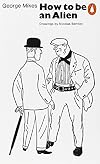
This is affectionate mockery of British (really, middle and upper class London) life, observed by a Hungarian who’d been living here for eight years before publishing this in 1946. It’s illustrated by Nicholas Bentley (whose father invented the Clerihew, a form of comic verse). The first half comprises short pieces about being a “general alien”; the second part looks at specific types of (male) Brits, including Bloomsbury intellectual, playboy, and civil servant.
Image: "The national show more passion... An Englishman, even if he is alone, forms an orderly queue of one."
Oxymoronic Wildean observations
“In England everything is the other way round.”
The richest people have the scruffiest and most peculiar dress; Brits rarely lie, but would not dream of telling you the truth; introductions are a way to conceal a person’s identity, and while bargaining is bad and Continental, compromise is British and therefore good. For example:
“It is all right to have central heating in an English home, except in the bath room, because that is the only place where you are naked and wet at the same time, and you must give British germs a fair chance.”
And you must discuss the weather, but never contradict anyone about it. There’s even sample dialogue to practice!
Image: “The weather. This is the most important topic in the land.”
My favourite piece was the section on towns “designed for inconvenience and to confuse foreigners”: inconsistent house-numbering; houses with names instead of numbers; over 60 synonyms for “street”; lots of variants in close proximity (Belsize Park/Road/Green); the exact same name in different areas of the same town (dozens of Warwick Avenues, none of them near Warwick); street names printed on big signs but put too high, low, or in shadow to see them, and roads that have different names on opposite sides because they back onto different squares (diagram included!).
Quips
• “The British meteorologists forecast the right weather - as it really should be.”
• “Continental people have sex life; the English have hot-water bottles.”
• “It’s bad manners to be clever, to assert something confidently.”
• “The Labour Party is a fair compromise between Socialism and Bureaucracy.”
• “On the Continent people have good food; in England people have good table manners.”
Image: "The English have no soul; they have the understatement instead."
Joking about national stereotypes
I read this book alongside Eddo-Lodge’s Why I'm No Longer Talking to White People About Race, which is an excellent, serious, and up-to-date book about black British history and structural racism in the UK today (see my review HERE).
The combination made me very conscious that this is humour rooted in caricatures of difference. As it’s a minority person making jokes about the majority, that’s fine, as when people make jokes about their own groups:
Me: What do you call a blonde who flies a plane?
Someone else: I don't know. What do you call a blonde who flies a plane?
Me: A pilot, you sexist pig!
As a fair-haired woman, I can make that joke (adapted from one of Manny’s). But if I replaced “blonde” with, for example “black man”, it would be more problematic - even though the whole point of the joke is to call out other people’s prejudice.
Although an alien, Mikes was white, so had the possibility of blending in more than Black Britons born here - if he could just sound English enough. He was once told:
“You really speak the most excellent accent without the slightest English.”
But there was a personal cost, despite his wit. He highlights the word “naturalised”, and says:
“Before you obtain British citizenship, they simply doubt that you are provided by nature.”
And after being granted it:
“You must pretend that you are everything you are not and you must look down upon everything you are.”
Note “are”, not even “were”.
Nevertheless, the book is more amusing than I’m making it sound!
Image: English tea is horrible, but you will always be offered it and must never refuse it, not even “if it is hot; if it is cold; if you are tired; if anybody thinks that you might be tired… if you have just had a cup.”
The start of something
George Mikes came to England in 1938 as the London correspondent for two Hungarian newspapers, switched to working for the BBC, and stayed. He discovered that he’d been an alien all his life (as all non Brits are), that he didn’t really understand the nuances of the language that he spoke fluently, and that there was no escape:
“He may become British; he can never become English”.
The title is poignant because Mikes was interned on the Isle of Man as an “enemy alien” in 1940. This was his first satirical collection, and it contrarily claims to be:
“For xenophobes and anglophobes… Specially recommended to all supplicants for naturalisation”.
If it feels a little unoriginal, that’s only because it’s been copied so often since, including by Mikes himself. After this in 1946, he wrote How to be Inimitable in 1960, How to be Decadent in 1977, and all three were combined into How to be a Brit in 1986.
In a similar vein:
• Bryson’s Notes from a Small Island. See my review HERE.
• The How To Be British Collection
• Kate Fox’s Watching the English. See my review HERE.
• Very British Problems: Making Life Awkward for Ourselves, One Rainy Day at a Time
And what about the Monty Python skit, Dirty Hungarian Phrasebook, that Wikipedia thinks was inspired by English as She Is Spoke: Being a Comprehensive Phrasebook of the English Language, Written by Men to Whom English was Entirely Unknown? You can watch the Pythons here.
Back to this, it includes a comparison of how an incident would be reported in The Times, the House of Commons, the Londoner’s Diary of the Evening Standard, and the Oklahoma Sun - surely an inspiration for these famous lines from Yes, Prime Minister in 1986 that are still broadly true:
Image: "The national show more passion... An Englishman, even if he is alone, forms an orderly queue of one."
Oxymoronic Wildean observations
“In England everything is the other way round.”
The richest people have the scruffiest and most peculiar dress; Brits rarely lie, but would not dream of telling you the truth; introductions are a way to conceal a person’s identity, and while bargaining is bad and Continental, compromise is British and therefore good. For example:
“It is all right to have central heating in an English home, except in the bath room, because that is the only place where you are naked and wet at the same time, and you must give British germs a fair chance.”
And you must discuss the weather, but never contradict anyone about it. There’s even sample dialogue to practice!
Image: “The weather. This is the most important topic in the land.”
My favourite piece was the section on towns “designed for inconvenience and to confuse foreigners”: inconsistent house-numbering; houses with names instead of numbers; over 60 synonyms for “street”; lots of variants in close proximity (Belsize Park/Road/Green); the exact same name in different areas of the same town (dozens of Warwick Avenues, none of them near Warwick); street names printed on big signs but put too high, low, or in shadow to see them, and roads that have different names on opposite sides because they back onto different squares (diagram included!).
Quips
• “The British meteorologists forecast the right weather - as it really should be.”
• “Continental people have sex life; the English have hot-water bottles.”
• “It’s bad manners to be clever, to assert something confidently.”
• “The Labour Party is a fair compromise between Socialism and Bureaucracy.”
• “On the Continent people have good food; in England people have good table manners.”
Image: "The English have no soul; they have the understatement instead."
Joking about national stereotypes
I read this book alongside Eddo-Lodge’s Why I'm No Longer Talking to White People About Race, which is an excellent, serious, and up-to-date book about black British history and structural racism in the UK today (see my review HERE).
The combination made me very conscious that this is humour rooted in caricatures of difference. As it’s a minority person making jokes about the majority, that’s fine, as when people make jokes about their own groups:
Me: What do you call a blonde who flies a plane?
Someone else: I don't know. What do you call a blonde who flies a plane?
Me: A pilot, you sexist pig!
As a fair-haired woman, I can make that joke (adapted from one of Manny’s). But if I replaced “blonde” with, for example “black man”, it would be more problematic - even though the whole point of the joke is to call out other people’s prejudice.
Although an alien, Mikes was white, so had the possibility of blending in more than Black Britons born here - if he could just sound English enough. He was once told:
“You really speak the most excellent accent without the slightest English.”
But there was a personal cost, despite his wit. He highlights the word “naturalised”, and says:
“Before you obtain British citizenship, they simply doubt that you are provided by nature.”
And after being granted it:
“You must pretend that you are everything you are not and you must look down upon everything you are.”
Note “are”, not even “were”.
Nevertheless, the book is more amusing than I’m making it sound!
Image: English tea is horrible, but you will always be offered it and must never refuse it, not even “if it is hot; if it is cold; if you are tired; if anybody thinks that you might be tired… if you have just had a cup.”
The start of something
George Mikes came to England in 1938 as the London correspondent for two Hungarian newspapers, switched to working for the BBC, and stayed. He discovered that he’d been an alien all his life (as all non Brits are), that he didn’t really understand the nuances of the language that he spoke fluently, and that there was no escape:
“He may become British; he can never become English”.
The title is poignant because Mikes was interned on the Isle of Man as an “enemy alien” in 1940. This was his first satirical collection, and it contrarily claims to be:
“For xenophobes and anglophobes… Specially recommended to all supplicants for naturalisation”.
If it feels a little unoriginal, that’s only because it’s been copied so often since, including by Mikes himself. After this in 1946, he wrote How to be Inimitable in 1960, How to be Decadent in 1977, and all three were combined into How to be a Brit in 1986.
In a similar vein:
• Bryson’s Notes from a Small Island. See my review HERE.
• The How To Be British Collection
• Kate Fox’s Watching the English. See my review HERE.
• Very British Problems: Making Life Awkward for Ourselves, One Rainy Day at a Time
And what about the Monty Python skit, Dirty Hungarian Phrasebook, that Wikipedia thinks was inspired by English as She Is Spoke: Being a Comprehensive Phrasebook of the English Language, Written by Men to Whom English was Entirely Unknown? You can watch the Pythons here.
Back to this, it includes a comparison of how an incident would be reported in The Times, the House of Commons, the Londoner’s Diary of the Evening Standard, and the Oklahoma Sun - surely an inspiration for these famous lines from Yes, Prime Minister in 1986 that are still broadly true:
“Hacker: Don't tell me about the press. I know exactly who reads the papers.show less
The Daily Mirror is read by people who think they run the country;
The Guardian is read by people who think they ought to run the country;
The Times is read by the people who actually do run the country;
The Daily Mail is read by the wives of the people who run the country;
The Financial Times is read by people who own the country;
The Morning Star is read by people who think the country ought to be run by another country,
and The Daily Telegraph is read by people who think it is.
Sir Humphrey: Prime Minister, what about the people who read The Sun?
Bernard: Sun readers don't care who runs the country, as long as she's got big tits.”

George Mikes was a Jewish Hungarian who emigrated to England in 1938. Eight years later, he published How to be an Alien (see my review HERE), which was a light-hearted look at the absurdities of the English. A year later, after only two months in America, during which he “talked (personally) to many people”, he published his American equivalent.
“My vision and judgement were not obscured by any previous knowledge of the United States, personal or otherwise”.
He writes with show more self-conscious wit, and it’s mildly amusing to see how many of the obvious targets are still true today: huge cars and food portions, the love of gadgets (which actually work), smart but loud attire for men (this is primarily a book by a man, about men, for other men), soap operas, extravagant funerals, everyone being in a rush, consumerism driven by ubiquitous advertising, informality and friendliness, price tags not including sales tax, and adults cutting their food into small pieces and then eating one-handed, like a British child.
Image: The land of reinvention, whether by necessity or choice.
“Black and White”
What made this impulse purchase worth more than its two pounds was the section on race. He looks at colourism within black communities, but the passion burns with quiet anger when describing the injustices Negroes [sic] endured, and the hypocrisy used to defend it. It is hard-hitting, especially for 1947: segregation was legally enforced in the South, and although we never had that on UK shores, it was 21 years before it was illegal for British landlords to put up signs saying “No Irish, no blacks, no dogs”.
Seventy four years later, the laws have changed, but some of the arguments have not:
But perhaps there’s nothing to worry about:
“Of course, there is no persecution at all. The Fifteenth Amendment of the Constitution declares:
‘The right of the citizens of the United States to vote shall not be denied or abridged by the United States or by any State on account of race, color, or previous, condition of servitude.’”
He then casually mentions poll tax and white primary laws as indirect ways of breaching that, and saying:
“There is segregation in the South but the principle is: separate but equal.”
By changing the conjunction from “but” to “and”, he exposes the real truth:
“Separate and equal: all Negroes are quite separate and all Negroes are equal.”
Finally, he cites a shocking case:
“In May 1947 twenty eight white men were indicted and tried (for the first time in the history of the South) for lynching a Negro youth. Sixteen persons out of twenty eight had admitted in signed statements that they had taken part in the lynching, but an all-white jury acquitted all the defendants on every one of the ninety eight charges.”
Note: Nicholas Bentley’s illustrations in this section feature the thick lips and wide noses of offensive caricature, but Mikes’ message is unequivocally one of acceptance and equality.
To lift the mood, the final section could be a BuzzFeed listicle: “Looney Laws” that were still on the statues in various states.
Image: Adverts and background radio are inescapable
Quips
• “Baseball - which is cricket played with a strong American accent.”
• Cauliflower (over)cooked in a pressure cooker “really was exactly like the best cabbage I have ever tasted.”
• “Is there anything more exciting, inspiring and - should I say - manly than winter in England?” (because of the certainty of pipes bursting, fetching coal, smoke coming down the chimney etc)
• “New York is incomparably the most expensive town in the world, not because prices are so high but because you cannot resist buying anything and everything.”
• “Parallel streets were discovered in England in 1923, but most of the towns had already been built.” (There is a long, detailed, and funny chapter about the confusing geography of London in How to be an Alien)
• “It was decided almost two hundred years ago that English should be the language spoken in the United States. It is not known, however, why this decision has not been carried out.” show less
“My vision and judgement were not obscured by any previous knowledge of the United States, personal or otherwise”.
He writes with show more self-conscious wit, and it’s mildly amusing to see how many of the obvious targets are still true today: huge cars and food portions, the love of gadgets (which actually work), smart but loud attire for men (this is primarily a book by a man, about men, for other men), soap operas, extravagant funerals, everyone being in a rush, consumerism driven by ubiquitous advertising, informality and friendliness, price tags not including sales tax, and adults cutting their food into small pieces and then eating one-handed, like a British child.
Image: The land of reinvention, whether by necessity or choice.
“Black and White”
What made this impulse purchase worth more than its two pounds was the section on race. He looks at colourism within black communities, but the passion burns with quiet anger when describing the injustices Negroes [sic] endured, and the hypocrisy used to defend it. It is hard-hitting, especially for 1947: segregation was legally enforced in the South, and although we never had that on UK shores, it was 21 years before it was illegal for British landlords to put up signs saying “No Irish, no blacks, no dogs”.
Seventy four years later, the laws have changed, but some of the arguments have not:
The Southerners are the great experts on the Negro problem and they will explain to you that the crimes of Negroes are terrible and manifold and their persecution justified.
(1) First of all, the Negro is black… I must admit there is a great deal of truth in this very able observation…
(2) They are illiterate or at least uneducated… It is a very old recipe to exclude people from schools or keep them in utmost poverty so that they should be unable to go to school and then accuse them of being uneducated.
(3) They are over-ambitious and pushing - they learn too much.
(4) They are full of racial prejudice. Millions of them are satisfied with their situation, they believe in their own inferiority and have a strong dislike of Negroes coming from the North and talking about a real abolition of slavery. I should go so far as to state that some of them even like being lynched. Not all of them and not all the time - just a few Negroes, every now and then, let us say twice a year, in the height of the season.
(5) They do not ‘keep in their place’. So-called fair-minded Southerners told me that they have nothing against those Negroes who know their place, they only object to the ‘uppity’ ones. In other words they are perfectly adorable as long as they remain servants, janitors, waiters, sewage cleaners, boot-blacks, unskilled manual workers (preferably receiving very low wages)...
(6) They stink… I met a great number of white Southerners who were too busy to spend much time in washing and I dare say I could tell them without difficulty from a rose in full bloom.
(7) Their fathers were slaves. Note: this is the shame of the Negroes and not of their masters.
(8) They have criminal tendencies. There are indeed some ugly crimes - lynching for instance - in which Negroes are involved without fail, in one way or another.
But perhaps there’s nothing to worry about:
“Of course, there is no persecution at all. The Fifteenth Amendment of the Constitution declares:
‘The right of the citizens of the United States to vote shall not be denied or abridged by the United States or by any State on account of race, color, or previous, condition of servitude.’”
He then casually mentions poll tax and white primary laws as indirect ways of breaching that, and saying:
“There is segregation in the South but the principle is: separate but equal.”
By changing the conjunction from “but” to “and”, he exposes the real truth:
“Separate and equal: all Negroes are quite separate and all Negroes are equal.”
Finally, he cites a shocking case:
“In May 1947 twenty eight white men were indicted and tried (for the first time in the history of the South) for lynching a Negro youth. Sixteen persons out of twenty eight had admitted in signed statements that they had taken part in the lynching, but an all-white jury acquitted all the defendants on every one of the ninety eight charges.”
Note: Nicholas Bentley’s illustrations in this section feature the thick lips and wide noses of offensive caricature, but Mikes’ message is unequivocally one of acceptance and equality.
To lift the mood, the final section could be a BuzzFeed listicle: “Looney Laws” that were still on the statues in various states.
Image: Adverts and background radio are inescapable
Quips
• “Baseball - which is cricket played with a strong American accent.”
• Cauliflower (over)cooked in a pressure cooker “really was exactly like the best cabbage I have ever tasted.”
• “Is there anything more exciting, inspiring and - should I say - manly than winter in England?” (because of the certainty of pipes bursting, fetching coal, smoke coming down the chimney etc)
• “New York is incomparably the most expensive town in the world, not because prices are so high but because you cannot resist buying anything and everything.”
• “Parallel streets were discovered in England in 1923, but most of the towns had already been built.” (There is a long, detailed, and funny chapter about the confusing geography of London in How to be an Alien)
• “It was decided almost two hundred years ago that English should be the language spoken in the United States. It is not known, however, why this decision has not been carried out.” show less
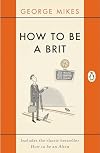
I remember around forty years ago hearing Wilfred Massiah, my English teacher at school, eulogising this book, or at least one of the component sections, [How to be an Alien], citing it as one of the funniest observations of the British that had ever been written. I had then, and retain now, a huge regard for Mr Massiah, and owe him a huge debt for pointing me towards any number of great writers, and regret never having found the opportunity to tell him so. In this instance, however, I fear show more his normally reliable judgement had completely failed him.
Back in the 1970s, when he was recommending this book to me, it was already some thirty or so years old, and it is now more than seventy years since it was first published, so it is reasonable to expect that literary tastes have changed considerably. I still fail, however, to understand why it proved so popular (and in publishing terms it was a huge success, selling hundreds of thousands of copies over the decades). I found it laboured, trite, utterly banal and comprehensively unfunny. It didn't even merit the dismissive judgement of, 'I laughed until I stopped'. Laugh? I never even started show less
Back in the 1970s, when he was recommending this book to me, it was already some thirty or so years old, and it is now more than seventy years since it was first published, so it is reasonable to expect that literary tastes have changed considerably. I still fail, however, to understand why it proved so popular (and in publishing terms it was a huge success, selling hundreds of thousands of copies over the decades). I found it laboured, trite, utterly banal and comprehensively unfunny. It didn't even merit the dismissive judgement of, 'I laughed until I stopped'. Laugh? I never even started show less

Hungarian journalist George Mikes arrived in London to cover the Munich crisis in 1938, and somehow never got around to going home again. In 1945 he got together with the up and coming publisher André Deutsch (a former classmate of his younger brother in Budapest) and the illustrator Nicolas Bentley (not a Hungarian at all, but G K Chesterton’s godson, which seems to be the next best thing) to publish a little satire on the British character called How to be an alien. The British, show more predictably, loved being made fun of, so Mikes and Bentley turned the formula they had established into a cottage industry, helping Deutsch to go independent and become one of the big names of London publishing.
This collection — delightfully marketed as a “minibus” — brings together three of the little books Mikes wrote about the British: the original, Austerity-era How to be an alien, together with How to be inimitable from the “you’ve never had it so good” days of 1960, and How to be decadent from the “British disease” era of 1976. The first is the funniest — like most of us, Mikes seems to have become convinced as he got older that things really are getting worse year by year, and of course that makes it a little harder to be detached and funny. But he did his best to keep the jokes up — his famous chapter on “Sex” in the first book, reads in full: “Continental people have sex life; the English have hot-water bottles.” In the later books he took care to point out that a correspondent had reminded him that we now also have electric blankets.
Less happily he includes a section on “homosexuals”, where he claims to have nothing against us apart from our inability — unlike women, Jews, Black people, the Irish, foreigners, etc. — to take a joke against ourselves. Mikes, in print at least, wasn’t in the habit of telling the kind of nasty jokes about minority groups that were still very current elsewhere in 1976, but there must have been some incident that sparked this isolated and rather mean-spirited comment. Maybe he was less restrained at the dinner table than in his books.
This is gentle humour, for the most part, and it won’t directly tell you much about the 21st century British, but it does pick up a lot of the perceptions about Britishness that the British have internalised over the last hundred years or so and take care either to live up to or to avoid — understatement, talking about the weather a lot, never lying but hardly ever telling the truth, belonging to any class in society except the unfortunate lower-middle-class that everyone despises, avoiding any risk of seeming to “show off” by pretending to be lazy, amateurish, or ignorant in public, etc. show less
This collection — delightfully marketed as a “minibus” — brings together three of the little books Mikes wrote about the British: the original, Austerity-era How to be an alien, together with How to be inimitable from the “you’ve never had it so good” days of 1960, and How to be decadent from the “British disease” era of 1976. The first is the funniest — like most of us, Mikes seems to have become convinced as he got older that things really are getting worse year by year, and of course that makes it a little harder to be detached and funny. But he did his best to keep the jokes up — his famous chapter on “Sex” in the first book, reads in full: “Continental people have sex life; the English have hot-water bottles.” In the later books he took care to point out that a correspondent had reminded him that we now also have electric blankets.
Less happily he includes a section on “homosexuals”, where he claims to have nothing against us apart from our inability — unlike women, Jews, Black people, the Irish, foreigners, etc. — to take a joke against ourselves. Mikes, in print at least, wasn’t in the habit of telling the kind of nasty jokes about minority groups that were still very current elsewhere in 1976, but there must have been some incident that sparked this isolated and rather mean-spirited comment. Maybe he was less restrained at the dinner table than in his books.
This is gentle humour, for the most part, and it won’t directly tell you much about the 21st century British, but it does pick up a lot of the perceptions about Britishness that the British have internalised over the last hundred years or so and take care either to live up to or to avoid — understatement, talking about the weather a lot, never lying but hardly ever telling the truth, belonging to any class in society except the unfortunate lower-middle-class that everyone despises, avoiding any risk of seeming to “show off” by pretending to be lazy, amateurish, or ignorant in public, etc. show less
Lists
Awards

You May Also Like


Associated Authors
Statistics
- Works
- 71
- Also by
- 5
- Members
- 1,630
- Popularity
- #15,773
- Rating
- 3.5
- Reviews
- 44
- ISBNs
- 97
- Languages
- 11
- Favorited
- 3