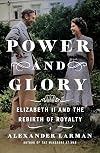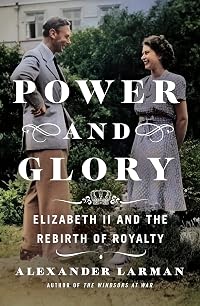
Power and Glory: Elizabeth II and the Rebirth of Royalty
by Alexander Larman
On This Page
Description
"Alexander Larman, the master chronicler of the House of Windsor, brings his acclaimed trilogy to a dramatic and poignant conclusion. When the Royal Family took to the balcony of Buckingham Palace on VE Day in 1945, they knew that the happiness and excitement of the day was illusory. Britain may have been victorious in a painful war, but the peace would be no easier. Between the abdication crisis, the death of King George VI, and the ascension of young Elizabeth II to the throne, the show more continued existence of the monarchy seemed uncertain. And the presence of the former Edward VIII, now the Duke of Windsor, conniving and sniping from the sidelines in an attempt to regain relevance, even down to writing a controversial and revelatory memoir, could only make matters worse. Still, the question of whether or not Elizabeth could succeed and make the monarchy something that once again inspired international pride and even love remained. In Power and Glory, Alexander Larman completes his acclaimed Windsor family trilogy, using rare and previously unseen documents to illuminate their unique family dynamic. Through his chronicling of events like the Royal Wedding, George VI's death and the discovery of the Duke of Windsor's treacherous activities in WWII, Larman paints a vivid portrait of the end of one sovereign's reign and the beginning of another's that heralded a new Elizabethan Age which would bring power and glory back to a monarchy desperately in need of it"-- show lessTags
Recommendations










Member Reviews
If my first book was a ticking-clock’s suspense thriller set against the backdrop of something thought constitutionally unprecedented, and the second a wartime saga that explored a dysfunctional, squabbling family tested to its limits, so this one too has a simple story at its heart: it is an account of a close and loving father-and-daughter relationship, albeit one where the father is dying and the daughter is facing upheaval and change on an unimaginable scale.
From the Introduction of Power and Glory by Alexander Larman
“I am not a monarchist,” Larman writes in his Introduction to Power and Glory. Yet at their best, the royal family exhibited virtues such that when he finished writing this book, Larman wanted to leap onto a table show more and shout, “God Save the Queen!”
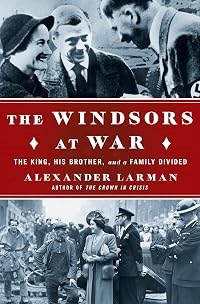
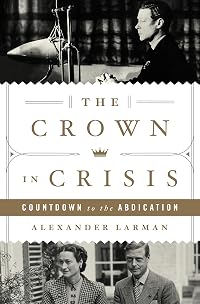
I have been riveted by all three volumes of Larman’s trilogy, beginning with The Crown in Crisis, about the turmoil created with the abdication of Edward VIII, and continuing with The Windsors at War, set during WWII with the new king juggling the threat of Nazi Germany and keeping his ex-king Nazi sympathizer brother out of trouble. Power and Glory finishes the series with the end of the war, England in economic crisis and the king in failing health and Princess Elizabeth coming into adulthood and assuming the throne.
Sure, I knew the basic facts from other books and television series and such. Yet Larman’s narrative is so compelling and accessible, with some snarky humor tossed in, and the political intrigues so interesting, I couldn’t stop reading. In fact, I would love to spend a week and reread the entire trilogy nonstop.
Throughout this time in history, the Duke of Windsor continued to bemoan and complain about the loss of the perks of being royalty, the lack of funds necessary to keep up the lifestyle to which he had been accustomed, and the lack of a permanent home, preferably where he didn’t need to pay taxes. And, he continued to press for Wallis’ reception by the royal family and given the title Her Royal Highness. He claimed she had made him deliriously happy, without either ever seeming happy with their lot in life. Apparently, love isn’t everything. So, the Duke and Duchess got creative with what was apparently insurance fraud. Then the Duke decided to write his biography for easy money, except he was unable to concentrate on getting it done.
Meanwhile, King George VI had exhausted his health during the war, with additional harm from taking up smoking as self-medication for stress. He was dealing with the end of US financial support and rebuilding the British economy and repairing all the war damage. Churchill was out; Atlee and the Labor party were in and the king’s role in government was diminished. There was some question as to the point of a royal family. The king was pretty cranky, even mistreating a corgi. Meantime, the Duke of Windsor fantasized about assuming the role of regent at the King’s death, for obviously Elizabeth was too young for the job.
His daughter Elizabeth was the king’s main support, but she had fallen for her distant cousin Phillip Mountbatten. Philip was handsome, but was not quite up to standards–brusk, informal, shabby, poor, and a Greek citizen to boot. The family whisked the princess away on a tour which did nothing for the king’s health but showed Elizabeth was firm in her love choice.
I am either very brave or very stupid.
Philip Mountbatten, quoted in Power and Glory by Alexander Larman
Elizabeth got her man. In fact, she ‘got’ several other notable men, including President Truman and Winston Churchill, both love-struck. What a gal! And, she not only took on the mantle of queen with aplomb, she showed herself to be serious and informed and ready.
And so the book ends with the beginning of the reign of Elizabeth II, just six months before I was born, and which ended while the author was writing.
Thanks to the publisher for a free book. show less
From the Introduction of Power and Glory by Alexander Larman
“I am not a monarchist,” Larman writes in his Introduction to Power and Glory. Yet at their best, the royal family exhibited virtues such that when he finished writing this book, Larman wanted to leap onto a table show more and shout, “God Save the Queen!”
I have been riveted by all three volumes of Larman’s trilogy, beginning with The Crown in Crisis, about the turmoil created with the abdication of Edward VIII, and continuing with The Windsors at War, set during WWII with the new king juggling the threat of Nazi Germany and keeping his ex-king Nazi sympathizer brother out of trouble. Power and Glory finishes the series with the end of the war, England in economic crisis and the king in failing health and Princess Elizabeth coming into adulthood and assuming the throne.
Sure, I knew the basic facts from other books and television series and such. Yet Larman’s narrative is so compelling and accessible, with some snarky humor tossed in, and the political intrigues so interesting, I couldn’t stop reading. In fact, I would love to spend a week and reread the entire trilogy nonstop.
Throughout this time in history, the Duke of Windsor continued to bemoan and complain about the loss of the perks of being royalty, the lack of funds necessary to keep up the lifestyle to which he had been accustomed, and the lack of a permanent home, preferably where he didn’t need to pay taxes. And, he continued to press for Wallis’ reception by the royal family and given the title Her Royal Highness. He claimed she had made him deliriously happy, without either ever seeming happy with their lot in life. Apparently, love isn’t everything. So, the Duke and Duchess got creative with what was apparently insurance fraud. Then the Duke decided to write his biography for easy money, except he was unable to concentrate on getting it done.
Meanwhile, King George VI had exhausted his health during the war, with additional harm from taking up smoking as self-medication for stress. He was dealing with the end of US financial support and rebuilding the British economy and repairing all the war damage. Churchill was out; Atlee and the Labor party were in and the king’s role in government was diminished. There was some question as to the point of a royal family. The king was pretty cranky, even mistreating a corgi. Meantime, the Duke of Windsor fantasized about assuming the role of regent at the King’s death, for obviously Elizabeth was too young for the job.
His daughter Elizabeth was the king’s main support, but she had fallen for her distant cousin Phillip Mountbatten. Philip was handsome, but was not quite up to standards–brusk, informal, shabby, poor, and a Greek citizen to boot. The family whisked the princess away on a tour which did nothing for the king’s health but showed Elizabeth was firm in her love choice.
I am either very brave or very stupid.
Philip Mountbatten, quoted in Power and Glory by Alexander Larman
Elizabeth got her man. In fact, she ‘got’ several other notable men, including President Truman and Winston Churchill, both love-struck. What a gal! And, she not only took on the mantle of queen with aplomb, she showed herself to be serious and informed and ready.
And so the book ends with the beginning of the reign of Elizabeth II, just six months before I was born, and which ended while the author was writing.
Thanks to the publisher for a free book. show less
Ratings
Members
- Recently Added By
Author Information
8 Works 396 Members
Classifications
- Genres
- History, Nonfiction, Biography & Memoir, General Nonfiction
- DDC/MDS
- 941.085092 — History & geography History of Europe British Isles Historical periods of British Isles 1837- Period of Victoria and House of Windsor 1945-1999 History, geographic treatment, biography Biography
- LCC
- DA590 .L345 — History of Europe, Asia, Africa and Oceania Great Britain History of Great Britain England History By period Modern, 1485- 20th century
- BISAC
Statistics
- Members
- 39
- Popularity
- 748,584
- Reviews
- 2
- Rating
- (4.25)
- Languages
- English
- Media
- Paper, Audiobook, Ebook
- ISBNs
- 6
- ASINs
- 2