On This Page
Tags
Recommendations




Member Reviews
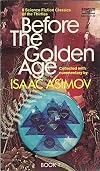
Before the Golden Age is a science fiction anthology compiled by Isaac Asimov that collects his favorite "pre-Golden Age" science fiction. This is the first of three volumes. For those who do not know, the Golden Age of Science Fiction is generally regarded as the period during which Asimov, Clarke, and Heinlein came to prominence, and Campbell served as editor of Astounding Science Fiction. These works, of Asimov's boyhood, were the ones that served to inform that generation of writers, and to a significant extent, were what they were reacting against.
The eight stories in this volume are pulpy in nature, with mad scientists, evil moustache twirling villains, bad science, and sadly but not unexpectedly, a fair amount of overt racism show more (when reading early 20th century fiction, one almost always has to overlook the racism that is inherent in most stories). Some of the ideas were silly even when they were written, even though the author seems to have taken them seriously: the idea of "levels" of evolution for example. Some were merely silly overall: the miniature world of S.P. Meek's stories for example.
The stories are uneven, but they are interspersed with Asimov's comments on his own childhood and how he came to read science fiction, and the impact these books had on him. All of the stories are interesting as a snapshot of the genre as it existed prior to the great changes wrought by the men who grew up reading them. All are good examples of classic pulp, which is good or bad depending on whether one likes the motifs of that genre. I love pulp, and I found Asimov's interstitial commentary concerning his childhood in New York to be very interesting, which taken together, makes for a great book. show less
The eight stories in this volume are pulpy in nature, with mad scientists, evil moustache twirling villains, bad science, and sadly but not unexpectedly, a fair amount of overt racism show more (when reading early 20th century fiction, one almost always has to overlook the racism that is inherent in most stories). Some of the ideas were silly even when they were written, even though the author seems to have taken them seriously: the idea of "levels" of evolution for example. Some were merely silly overall: the miniature world of S.P. Meek's stories for example.
The stories are uneven, but they are interspersed with Asimov's comments on his own childhood and how he came to read science fiction, and the impact these books had on him. All of the stories are interesting as a snapshot of the genre as it existed prior to the great changes wrought by the men who grew up reading them. All are good examples of classic pulp, which is good or bad depending on whether one likes the motifs of that genre. I love pulp, and I found Asimov's interstitial commentary concerning his childhood in New York to be very interesting, which taken together, makes for a great book. show less
Eight Science Fiction Classics of the Thirties:
The Man who Evolved by Edmond Hamilton
The Jameson Satellite by Neil R. Jones
Submicroscopic by Capt. S.P. Meek
Awlo of Ulm by Cap. S.P. Meek
Tetrahedra of Space by P. Schuyler Miller
The World of the Red Sun by CliffordD. Simak
Tumithak of the Corridors by Charles R. Tanner
The Moon Era by Jack Williamson
The Man who Evolved by Edmond Hamilton
The Jameson Satellite by Neil R. Jones
Submicroscopic by Capt. S.P. Meek
Awlo of Ulm by Cap. S.P. Meek
Tetrahedra of Space by P. Schuyler Miller
The World of the Red Sun by CliffordD. Simak
Tumithak of the Corridors by Charles R. Tanner
The Moon Era by Jack Williamson
El presente volumen reúne diez relatos seleccionados por el gran Isaac Asimov. La excusa, recuperar aquellas lecturas que le encandilaron de niño y adolescente, cuando empezó a introducirse en el género a través de las revistas de ciencia ficción. A él le sirve como recuerdo nostálgico de una época en la que el género todavía no había madurado del todo; para ello faltarían algunos años, concretamente 1938 con la entrada de John W. Campbell, Jr. en el panorama. Y a nosotros nos sirve para conocer esa fascinante primera época. Asimov tampoco se explaya mucho, ya que, aparte de no ser esa la intención, este no es un libro ensayístico ni autobiográfico.
Estos son los diez relatos incluidos en ‘La edad de oro de la ciencia show more ficción I’ (Before the Golden Age, 1976):
El hombre que evolucionó (1931), de Edmond Hamilton. (****) Un científico se dispone experimentar, ante sus dos amigos, su invento, basado en rayos cósmicos. La idea, llegar a saber cómo evolucionará la Humanidad. Gran relato, que por momentos me recordó a Lovecraft en cuanto a alguna descripción.
El satélite Jameson (1931), de Neil R. Jones. (***) Jameson ha inventado un método para conservarse indefinidamente una vez muerto: flotar en un ataúd espacial. Hasta que millones de años después, unos extraterrestres lo encuentran. Buen relato.
Submicroscópico (1931), de S.P. Meek. (****) El protagonista ha inventado un método para reducirse de tamaño. Lo que encontrará, es una sorpresa. Muy buen relato, de mis favoritos del libro.
Awlo de Ulm (1931), de S.P. Meek. (****) Continuación del relato anterior, lleno de aventuras.
Tetraedros del espacio (1931), de P. Shuyler Miller. (**) Descripción de la llegada de una extrañas criaturas a la Tierra. No he logrado entrar en la historia, aunque está bien escrito.
El mundo del sol rojo (1931), de Clifford D. Simak. (***) Viaje de dos amigos hacia el futuro en una máquina del tiempo. Interesante, sobre todo el final.
Tumithak de los corredores (1932), de Charles R. Tanner. (****) La Humanidad vive bajo tierra, en túneles. Poco a poco iremos sabiendo más del por qué. Estupendo relato de aventuras, de los mejores de la antología.
La era de la Luna (1932), de Jack Williamson. (***) El protagonista es requerido por su tío, que le plantea la siguiente situación: heredará toda su fortuna solo si está dispuesto a probar su invento, una máquina para viajar a la Luna. Buen relato.
El hombre que despertó (1933), de Laurence Manning. (****) Norman Winters ha inventado una máquina criogénica, y así despertar en el futuro. Otro magnífico relato, de mis favoritos del libro.
Tumithak en Shawn (1933), de Charles R. Tanner. (**) Continuación del relato ‘Tumithak de los corredores’, que no ha acabado de gustarme. show less
Estos son los diez relatos incluidos en ‘La edad de oro de la ciencia show more ficción I’ (Before the Golden Age, 1976):
El hombre que evolucionó (1931), de Edmond Hamilton. (****) Un científico se dispone experimentar, ante sus dos amigos, su invento, basado en rayos cósmicos. La idea, llegar a saber cómo evolucionará la Humanidad. Gran relato, que por momentos me recordó a Lovecraft en cuanto a alguna descripción.
El satélite Jameson (1931), de Neil R. Jones. (***) Jameson ha inventado un método para conservarse indefinidamente una vez muerto: flotar en un ataúd espacial. Hasta que millones de años después, unos extraterrestres lo encuentran. Buen relato.
Submicroscópico (1931), de S.P. Meek. (****) El protagonista ha inventado un método para reducirse de tamaño. Lo que encontrará, es una sorpresa. Muy buen relato, de mis favoritos del libro.
Awlo de Ulm (1931), de S.P. Meek. (****) Continuación del relato anterior, lleno de aventuras.
Tetraedros del espacio (1931), de P. Shuyler Miller. (**) Descripción de la llegada de una extrañas criaturas a la Tierra. No he logrado entrar en la historia, aunque está bien escrito.
El mundo del sol rojo (1931), de Clifford D. Simak. (***) Viaje de dos amigos hacia el futuro en una máquina del tiempo. Interesante, sobre todo el final.
Tumithak de los corredores (1932), de Charles R. Tanner. (****) La Humanidad vive bajo tierra, en túneles. Poco a poco iremos sabiendo más del por qué. Estupendo relato de aventuras, de los mejores de la antología.
La era de la Luna (1932), de Jack Williamson. (***) El protagonista es requerido por su tío, que le plantea la siguiente situación: heredará toda su fortuna solo si está dispuesto a probar su invento, una máquina para viajar a la Luna. Buen relato.
El hombre que despertó (1933), de Laurence Manning. (****) Norman Winters ha inventado una máquina criogénica, y así despertar en el futuro. Otro magnífico relato, de mis favoritos del libro.
Tumithak en Shawn (1933), de Charles R. Tanner. (**) Continuación del relato ‘Tumithak de los corredores’, que no ha acabado de gustarme. show less
Mar 18, 2026 (Edited)Spanish
Edmond Hamilton: El hombre que evolucionó; Neil R. Jones: El satélite Jameson; S. P. Meek: Submicroscópico / Awlo de Ulm; P. Schuyler Miller: Tetraedros del espacio; Clifford D. Simak: El mundo del Sol rojo.
Jan 4, 2020 (Edited)Spanish
Ratings
Members
- Recently Added By
Author Information

2,400+ Works 292,944 Members
Isaac Asimov was born in Petrovichi, Russia, on January 2, 1920. His family emigrated to the United States in 1923 and settled in Brooklyn, New York, where they owned and operated a candy store. Asimov became a naturalized U.S. citizen at the age of eight. As a youngster he discovered his talent for writing, producing his first original fiction at show more the age of eleven. He went on to become one of the world's most prolific writers, publishing nearly 500 books in his lifetime. Asimov was not only a writer; he also was a biochemist and an educator. He studied chemistry at Columbia University, earning a B.S., M.A. and Ph.D. In 1951, Asimov accepted a position as an instructor of biochemistry at Boston University's School of Medicine even though he had no practical experience in the field. His exceptional intelligence enabled him to master new systems rapidly, and he soon became a successful and distinguished professor at Columbia and even co-authored a biochemistry textbook within a few years. Asimov won numerous awards and honors for his books and stories, and he is considered to be a leading writer of the Golden Age of science fiction. While he did not invent science fiction, he helped to legitimize it by adding the narrative structure that had been missing from the traditional science fiction books of the period. He also introduced several innovative concepts, including the thematic concern for technological progress and its impact on humanity. Asimov is probably best known for his Foundation series, which includes Foundation, Foundation and Empire, and Second Foundation. In 1966, this trilogy won the Hugo award for best all-time science fiction series. In 1983, Asimov wrote an additional Foundation novel, Foundation's Edge, which won the Hugo for best novel of that year. Asimov also wrote a series of robot books that included I, Robot, and eventually he tied the two series together. He won three additional Hugos, including one awarded posthumously for the best non-fiction book of 1995, I. Asimov. "Nightfall" was chosen the best science fiction story of all time by the Science Fiction Writers of America. In 1979, Asimov wrote his autobiography, In Memory Yet Green. He continued writing until just a few years before his death from heart and kidney failure on April 6, 1992. (Bowker Author Biography) show less
Series

Belongs to Publisher Series
Work Relationships
Is contained in
Contains
Common Knowledge
- Original title
- Before the Golden Age (I) (I)
- Original publication date
- 1974; 1976; 1931c (The man who evolved) (The man who evolved); 1931c (The jameson satellite) (The jameson satellite); 1931c (Submicroscopic) (Submicroscopic); 1931c (Awlo of ulm) (Awlo of ulm) (show all 10); 1931c (Tetrahedra of space) (Tetrahedra of space); 1931c (The world of the red sun) (The world of the red sun); 1931c (Tumithak of the corridors) (Tumithak of the corridors); 1931c (The moon era) (The moon era)
- Dedication
- To Sam Moskowitz, and myself, and all the other members of First Fandom (those dinosaurs of science fiction), for whom some of the glitter went out of the world in 1938.
- Quotations
- And at last she believed, not because of Tumithak's eloquence, but because of the age-old appeal of sex.
---from "Tumithak of the Corridors" by Charles R. Tanner, p.285 - Original language*
- Inglés
*Some information comes from Common Knowledge in other languages. Click "Edit" for more information.
Classifications
Statistics
- Members
- 394
- Popularity
- 79,098
- Reviews
- 5
- Rating
- (3.59)
- Languages
- English, Spanish
- Media
- Paper
- ISBNs
- 7
- ASINs
- 11