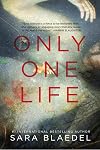
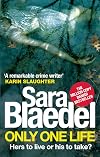
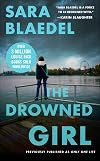
The Drowned Girl (previously published as Only One Life) (Louise Rick Series, 3)
by Sara Blaedel
Louise Rick (3)
On This Page
Description
Inspector Louise Rick is called out to Holbraek Fjord when a young immigrant girl is found drowned, a piece of concrete tied around her waist and two mysterious circular patches on the back of her neck. Navigating the complex web of family and community ties in Copenhagen's tightly knit ethnic communities, Louise must find the remorseless predator, or predators, before it is too late.Tags
Recommendations





























Member Reviews
Denmark has been in the news fairly often lately for conflicts between ethnic Danes and the immigrant Muslim population. This police procedural puts this cultural tension in sharp relief, providing an engaging way to glean insights into the “clash of civilizations” now occurring in the West and particularly in Europe.
Louise Rick, a 37-year-old Inspector with the Copenhagen homicide investigation unit, receives a temporary reassignment to the elite Mobile Task Force. A young Muslim girl has been murdered near Holbaek, an hour or so from Copenhagen. An “honor killing” is suspected.
[Honor killings occur in some cultures in which a family member has done something perceived to bring shame and dishonor upon the entire extended show more family. The “objectionable” behavior can include, among other things, any perceived sexual misconduct including getting raped; associating with others outside the community and adopting their values; or even disobedience. This can cause the whole family to become outcasts if the behavior is not “avenged.” Some women in these tightly-knit cultures prefer that the honor killings take place rather than having to endure the loneliness and humiliation of exclusion. And many of the women, having never been exposed to different systems of thought, cannot transcend the socialization that encourages them to believe the abuse or murder is justified.
As the author indicates in an excerpt from a U.N. report of March 2010, “The United Nations Population Fund estimates that perhaps as many as five thousand women and girls a year are killed by members of their own families. Many women’s groups in the Middle East and Southwest Asia suspect the number of victims is about four times greater.”]
Louise’s best friend Camilla is a reporter, and tries to diffuse the smoldering anti-immigrant mood surrounding the murder story by writing about non-immigrant groups using shame to control their members, especially females. She also reports on the number of girls in these groups who take their own lives as a response to the ostracism and humiliation inflicted upon them.
Meanwhile, in the midst of the investigation, there is a budding romance between two of the characters, and here Blaedel is exceptional at capturing the emotions that accompany new relationships, as in this example:
"’Let’s stop here,’ she said, releasing her firm hold on him, but nonetheless willingly allowing herself to be pushed along as he guided her backward, both hands on her hips, away from the Irish coffee toward the house. As they walked slowly so she wouldn’t stumble, her eyes bore into his to determine how big a catastrophe this was. What did he think of her? Had she pressured him into this? Did he feel like he couldn’t turn her down? How crushing a failure would it be when he said this was all a mistake? That they should have stopped before they even started.… “
In fact, the author’s dialogue is very good when any emotional scene is involved. The scene in which Louise brought bad news to the parents of a second girl killed had me in tears.
Discussion: This turned out to be quite an enjoyable book, but it had to grow on me. Two things took me a while to get used to: (1) It has a largish cast of characters having both Danish and Jordanian names (this adjustment difficulty obviously being my problem rather than the author’s); and (2) It has a somewhat stilted narrative style, which I think could well be a function of translation. At the same time, the parts with dialogue have a much better flow. Certainly it is true that each culture and its language may have a wholly different syntax. Moreover, the arrangement of linguistic elements may be one way for dialogue and another for narration. The fact that the properties of the language may seem alien to us is not necessarily a reflection upon the skill of an author or translator.
At any rate, once I got accustomed to these constituents of the story, it became very engaging.
Evaluation: This book provides the usual suspense, humor, and romantic interludes that characterize squads of dedicated police professionals (at least in fiction!). The thought-provoking look at the tensions between two different cultures and the spotlight on gender politics adds a great deal of interest to the story. I definitely want to read more books by this author. show less
Louise Rick, a 37-year-old Inspector with the Copenhagen homicide investigation unit, receives a temporary reassignment to the elite Mobile Task Force. A young Muslim girl has been murdered near Holbaek, an hour or so from Copenhagen. An “honor killing” is suspected.
[Honor killings occur in some cultures in which a family member has done something perceived to bring shame and dishonor upon the entire extended show more family. The “objectionable” behavior can include, among other things, any perceived sexual misconduct including getting raped; associating with others outside the community and adopting their values; or even disobedience. This can cause the whole family to become outcasts if the behavior is not “avenged.” Some women in these tightly-knit cultures prefer that the honor killings take place rather than having to endure the loneliness and humiliation of exclusion. And many of the women, having never been exposed to different systems of thought, cannot transcend the socialization that encourages them to believe the abuse or murder is justified.
As the author indicates in an excerpt from a U.N. report of March 2010, “The United Nations Population Fund estimates that perhaps as many as five thousand women and girls a year are killed by members of their own families. Many women’s groups in the Middle East and Southwest Asia suspect the number of victims is about four times greater.”]
Louise’s best friend Camilla is a reporter, and tries to diffuse the smoldering anti-immigrant mood surrounding the murder story by writing about non-immigrant groups using shame to control their members, especially females. She also reports on the number of girls in these groups who take their own lives as a response to the ostracism and humiliation inflicted upon them.
Meanwhile, in the midst of the investigation, there is a budding romance between two of the characters, and here Blaedel is exceptional at capturing the emotions that accompany new relationships, as in this example:
"’Let’s stop here,’ she said, releasing her firm hold on him, but nonetheless willingly allowing herself to be pushed along as he guided her backward, both hands on her hips, away from the Irish coffee toward the house. As they walked slowly so she wouldn’t stumble, her eyes bore into his to determine how big a catastrophe this was. What did he think of her? Had she pressured him into this? Did he feel like he couldn’t turn her down? How crushing a failure would it be when he said this was all a mistake? That they should have stopped before they even started.… “
In fact, the author’s dialogue is very good when any emotional scene is involved. The scene in which Louise brought bad news to the parents of a second girl killed had me in tears.
Discussion: This turned out to be quite an enjoyable book, but it had to grow on me. Two things took me a while to get used to: (1) It has a largish cast of characters having both Danish and Jordanian names (this adjustment difficulty obviously being my problem rather than the author’s); and (2) It has a somewhat stilted narrative style, which I think could well be a function of translation. At the same time, the parts with dialogue have a much better flow. Certainly it is true that each culture and its language may have a wholly different syntax. Moreover, the arrangement of linguistic elements may be one way for dialogue and another for narration. The fact that the properties of the language may seem alien to us is not necessarily a reflection upon the skill of an author or translator.
At any rate, once I got accustomed to these constituents of the story, it became very engaging.
Evaluation: This book provides the usual suspense, humor, and romantic interludes that characterize squads of dedicated police professionals (at least in fiction!). The thought-provoking look at the tensions between two different cultures and the spotlight on gender politics adds a great deal of interest to the story. I definitely want to read more books by this author. show less
Louise Rick has been reassigned to the Unit One Mobile Task Force, an elite division of the National Police force, to investigate the murder of Samra Al-Abd. This reassignment requires her to temporarily relocate to Holbaek where the body was found. Louise has the opportunity to reconnect with a former partner, Soren Velis, and meet new officers including Mik Rasmussen, her new partner for this case. The investigation reveals that the Al-Abd family has had problems, with the mother and children briefly leaving the family home for a shelter. The facts are that the family is an immigrant family, Muslim and there is a past history of abuse quickly lead everyone to presume that this murder was a so-called honor killing. After interviewing show more Samra's closest friend, Dicte Moller, Louise learns more about Samra's life and the more she learns the more confusing the case becomes.
Louise's journalist friend, Camilla Lind, makes a return and also goes to Holbaek. She quickly befriends Sada Al-Abd and actually makes an effort to understand the cultural differences between the Al-Abd family and traditional Danish values. After an article that all but blames Sada for her daughter's murder, Camilla quickly does research that shows that Muslim families aren't that different from other strict religious Danish family, something no one wants to admit to or even hear – especially her editor.
After a few weeks and no new information Dicte is found dead, another murder. The police quickly arrest Samra's father and brother for both murders. But there's something that just doesn't ring true to Louise about the arrests. The more she investigates Dicte's murder the more she begins to realize things may not always be as they appear. Just when it looks like the community is going to be torn apart as a result of the deaths of these two teenage girls and the apparent ties to the immigrant community, the youngest Al-Abd daughter disappears. Will the police be able to find the truth before it's too late?
Ms. Blaedel has once again crafted a story that pulls the reader in from the very beginning with Only One Life. The primary cast of characters, Louise Rick and her journalist friend Camilla Lind, are investigating another gruesome murder. Both Louise and Camilla's personal lives are deftly interwoven into the story and provides more insight into what makes these women who they are. Ms. Blaedel doesn't sugarcoat the preconceived prejudices against ethnic groups but makes it the focus of the investigation. Louise and the police immediately presume the murder of Samra is an honor killing, a completely foreign concept, and focus their investigation on obtaining proof that the family was involved. Although Camilla initially presumes that the family may be involved, the more she learns about the family and their values the more she realizes that the concept of shunning due to religious beliefs isn't as foreign as initially presumed.
Originally published in 2007, Only One Life made its US debut earlier this year. This is the third book in the Louise Rick series, but only the second published in the US. If you enjoyed Call Me Princess by Ms. Blaedel, you don't want to miss out on reading Only One Life. I actually found it somewhat difficult to write a review of Only One Life. This was because there was so much I enjoyed about the story that I found it difficult to pick only a few things to highlight. I found Only One Life to be such a riveting read that I completed it in one sitting for my first read, and I savored it over a few days on my second read. If you enjoy crime thrillers then this is one book you want to add to your to-be-read list. show less
Louise's journalist friend, Camilla Lind, makes a return and also goes to Holbaek. She quickly befriends Sada Al-Abd and actually makes an effort to understand the cultural differences between the Al-Abd family and traditional Danish values. After an article that all but blames Sada for her daughter's murder, Camilla quickly does research that shows that Muslim families aren't that different from other strict religious Danish family, something no one wants to admit to or even hear – especially her editor.
After a few weeks and no new information Dicte is found dead, another murder. The police quickly arrest Samra's father and brother for both murders. But there's something that just doesn't ring true to Louise about the arrests. The more she investigates Dicte's murder the more she begins to realize things may not always be as they appear. Just when it looks like the community is going to be torn apart as a result of the deaths of these two teenage girls and the apparent ties to the immigrant community, the youngest Al-Abd daughter disappears. Will the police be able to find the truth before it's too late?
Ms. Blaedel has once again crafted a story that pulls the reader in from the very beginning with Only One Life. The primary cast of characters, Louise Rick and her journalist friend Camilla Lind, are investigating another gruesome murder. Both Louise and Camilla's personal lives are deftly interwoven into the story and provides more insight into what makes these women who they are. Ms. Blaedel doesn't sugarcoat the preconceived prejudices against ethnic groups but makes it the focus of the investigation. Louise and the police immediately presume the murder of Samra is an honor killing, a completely foreign concept, and focus their investigation on obtaining proof that the family was involved. Although Camilla initially presumes that the family may be involved, the more she learns about the family and their values the more she realizes that the concept of shunning due to religious beliefs isn't as foreign as initially presumed.
Originally published in 2007, Only One Life made its US debut earlier this year. This is the third book in the Louise Rick series, but only the second published in the US. If you enjoyed Call Me Princess by Ms. Blaedel, you don't want to miss out on reading Only One Life. I actually found it somewhat difficult to write a review of Only One Life. This was because there was so much I enjoyed about the story that I found it difficult to pick only a few things to highlight. I found Only One Life to be such a riveting read that I completed it in one sitting for my first read, and I savored it over a few days on my second read. If you enjoy crime thrillers then this is one book you want to add to your to-be-read list. show less
Only One Life is the third book in author Sara Blaedel’s Louise Rick Police Procedural series but the second one to be translated from Danish to English. In this outing Louise is involved in the investigation into the death of a Jordanian immigrant teen in a small Danish town. Because the victim was a young emigrant Muslim, the police immediately suspect that she was a victim of a family honor killing and turned their attention on the family.
Although the story was interesting, I found it was moving too slowly and I was beginning to lose interest when a second death occurred which propelled the case forward and finally focused the investigation in the right direction. Unfortunately many believed in the theory of an honor killing and show more there were anti-immigrant slurs and the hint of violence that had to be dealt with.
Overall I found the book lacked suspense, but the tension between the two different cultures was handled well. The author kept a good balance between Louise’s work life and her private life, and I will be reading on in the series. show less
Although the story was interesting, I found it was moving too slowly and I was beginning to lose interest when a second death occurred which propelled the case forward and finally focused the investigation in the right direction. Unfortunately many believed in the theory of an honor killing and show more there were anti-immigrant slurs and the hint of violence that had to be dealt with.
Overall I found the book lacked suspense, but the tension between the two different cultures was handled well. The author kept a good balance between Louise’s work life and her private life, and I will be reading on in the series. show less
Louise Rick is seconded to a mobile unit to investigate the death of a 15 year old girl who immigrated to Denmark from Jordan. Later the girl's best friend is also found murdered and then her sister disappears. I found this book odd. Despite almost immediately wondering if the original murder might be an honour killing, the coroner is not asked to determine whether or not she is a virgin. There is a second protagonist, a journalist called Camilla, whose function puzzled me, and who clearly had an enormous back story from a previous novel. Louise sleeps with the detective she is partnered with (yawn) and the ending with Anne and Aida was horrifying. Louise should lose her job for incompetence.
First Line: She could just make out the blue flashes between the densely grown tree trunks, but she couldn't see how many police vehicles were at the scene.
Inspector Louise Rick is called in to help local Danish police with a drowning that's anything but ordinary. Samra, a young immigrant girl, has been found in Holbraek Fjord, a large slab of concrete tied around her waist and mysterious circular marks on the back of her neck.
Samra's life was short and sad, with a father who'd already been charged with assaulting her and her mother. There's no doubt in her mother's mind that her husband would be capable of killing Samra if he believed she had brought dishonor to the family. But Sada insists that her daughter had done nothing show more dishonorable, even though the girl was supposedly being sent home to Jordan.
Samra's best friend believes her death to be an honor killing. Within days this young girl is also dead, and Samra's younger sister is missing. Louise Rick and her journalist friend, Camilla Lind, have their work cut out for them in solving this case. Is it yet another honor killing in the immigrant community, or is it something else entirely?
This is the third book in the Rick/Lind mystery series and the second to be published in the United States. Author Sara Blaedel is often referred to as the Queen of Danish Crime, but-- to be honest-- I could not warm up to this book or its characters. Almost from the first page, I felt as though I'd missed my bus and kept chasing after it as it disappeared down the street.
Blaedel gives the reader a lot of facts about honor killings before the book even begins. It's a horrible problem that I was made aware of here in Phoenix in 2009 when four boys (aged 9, 10, 13, and 14) lured a developmentally disabled 8-year-old girl into a shed on the pretense of getting some gum. They then held her down and took turns raping her. What was the reaction of the father of the raped girl? The man told the case worker and a police officer, "Take her. I don't want her." As horrible as that is to anyone who wasn't raised with that cultural behavior, at least the man told those two to take her away. She'd brought shame to his family. He could've killed her.
So as far as the topic of honor killings go, this is an informative book to read. However, so little background on the two main characters was given-- and enough references made to things that happened in previous books-- that I constantly felt frustrated. The plot also hinges on the reader believing in one certain outcome, and since I guessed early on that something else was going on, the false trail seemed clumsily done.
My enjoyment of this book might have been greater had I read the previous book in the series, but series books should be able to stand on their own without help from the ones published earlier. The reader should want to read the older books in order to enhance their experience, not feel as though they have to read them in order to understand the characters and what's going on. As much as I wanted to like this book, I'm going to have to quote the late, great W.C. Fields: "On the whole, I'd rather be in Philadelphia." show less
Inspector Louise Rick is called in to help local Danish police with a drowning that's anything but ordinary. Samra, a young immigrant girl, has been found in Holbraek Fjord, a large slab of concrete tied around her waist and mysterious circular marks on the back of her neck.
Samra's life was short and sad, with a father who'd already been charged with assaulting her and her mother. There's no doubt in her mother's mind that her husband would be capable of killing Samra if he believed she had brought dishonor to the family. But Sada insists that her daughter had done nothing show more dishonorable, even though the girl was supposedly being sent home to Jordan.
Samra's best friend believes her death to be an honor killing. Within days this young girl is also dead, and Samra's younger sister is missing. Louise Rick and her journalist friend, Camilla Lind, have their work cut out for them in solving this case. Is it yet another honor killing in the immigrant community, or is it something else entirely?
This is the third book in the Rick/Lind mystery series and the second to be published in the United States. Author Sara Blaedel is often referred to as the Queen of Danish Crime, but-- to be honest-- I could not warm up to this book or its characters. Almost from the first page, I felt as though I'd missed my bus and kept chasing after it as it disappeared down the street.
Blaedel gives the reader a lot of facts about honor killings before the book even begins. It's a horrible problem that I was made aware of here in Phoenix in 2009 when four boys (aged 9, 10, 13, and 14) lured a developmentally disabled 8-year-old girl into a shed on the pretense of getting some gum. They then held her down and took turns raping her. What was the reaction of the father of the raped girl? The man told the case worker and a police officer, "Take her. I don't want her." As horrible as that is to anyone who wasn't raised with that cultural behavior, at least the man told those two to take her away. She'd brought shame to his family. He could've killed her.
So as far as the topic of honor killings go, this is an informative book to read. However, so little background on the two main characters was given-- and enough references made to things that happened in previous books-- that I constantly felt frustrated. The plot also hinges on the reader believing in one certain outcome, and since I guessed early on that something else was going on, the false trail seemed clumsily done.
My enjoyment of this book might have been greater had I read the previous book in the series, but series books should be able to stand on their own without help from the ones published earlier. The reader should want to read the older books in order to enhance their experience, not feel as though they have to read them in order to understand the characters and what's going on. As much as I wanted to like this book, I'm going to have to quote the late, great W.C. Fields: "On the whole, I'd rather be in Philadelphia." show less
I very much enjoy the works of this Danish author. They are filled with twists and turns and surprising endings.
In this story, a young, pretty 15 year old Jordanian girl is found dead in a body of water. She is weighed down by a heavy block of cement.
The author goes into great detail regarding the difficulty of trying to fit into another culture while the strict Muslim family rules. When the detectives discover that the young girl had a Danish boyfriend, all signs point to an honor killing by the family who believe she brought shame to them.
I had not heard of honor killings and thus it was a fascinating point of interest for me.
When yet another pretty young girl is found who is non Muslim, but signs point to similar patterns, the team show more assigned to find the murderer needs to broaden their reference.
Highly recommended. show less
In this story, a young, pretty 15 year old Jordanian girl is found dead in a body of water. She is weighed down by a heavy block of cement.
The author goes into great detail regarding the difficulty of trying to fit into another culture while the strict Muslim family rules. When the detectives discover that the young girl had a Danish boyfriend, all signs point to an honor killing by the family who believe she brought shame to them.
I had not heard of honor killings and thus it was a fascinating point of interest for me.
When yet another pretty young girl is found who is non Muslim, but signs point to similar patterns, the team show more assigned to find the murderer needs to broaden their reference.
Highly recommended. show less
This was a gripping and fast-paced reading which takes place in Denmark. A young girl was found dead in the sea. Because she was from Jordanian ancestry everybody was thinking that this case had something to do with honour killing. Even though a Danish girl was found murdered a short time later the police didn't start to make another link between those two homicides. It was only in the very end when these cases were solved and the outcome was a real surprise.
Members
- Recently Added By
Author Information

32 Works 3,812 Members
Awards and Honors
Awards
Series

Common Knowledge
- Canonical title*
- Vain yksi elämä
- Original title
- Kun ét liv
- Alternate titles
- The Drowned Girl
- Original publication date
- 2007 (original) (original); 2011 (English) (English)
- People/Characters
- Louise Rick; Camilla Lind; Mik Rasmussen; Storm; Samra al-Abd; Ibrahim al-Abd (show all 15); Sada al-Abd; Dicta Møller; Anne Møller; Henrik Møller; Tue Sunds; Michael Mogensen; Hamid al-Abd; Ahmad al-Abd; Aida al-Abd
- Important places
- Holbæk, Denmark
- Dedication
- For Leif and Annegrethe
- First words
- She could just make out the blue flashes between the densely grown tree trunks, but she couldn’t see how many police vehicles were at the scene.
- Last words
- (Click to show. Warning: May contain spoilers.)'Well, then. I can't wait,' she finally said with a smile, as she stood up with the case folder under her arm, ready to accompany him down to the interrogation room.
- Original language
- Danish
- Disambiguation notice
- The Drowned Girl previously published as Only One Life.
*Some information comes from Common Knowledge in other languages. Click "Edit" for more information.
Classifications
Statistics
- Members
- 306
- Popularity
- 104,307
- Reviews
- 18
- Rating
- (3.47)
- Languages
- 6 — Danish, English, Finnish, German, Norwegian (Bokmål), Swedish
- Media
- Paper, Audiobook, Ebook
- ISBNs
- 37
- ASINs
- 6