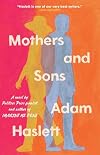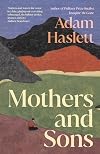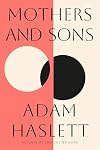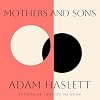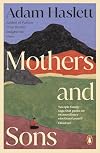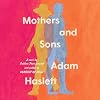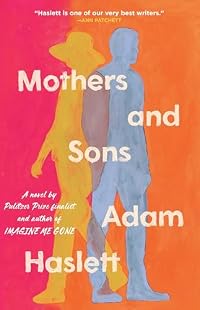
Mothers and Sons
by Adam Haslett
On This Page
Description
"At forty, Peter, an asylum lawyer in New York City, is overworked and isolated. He spends his days immersed in the struggles of immigrants only to return to an empty apartment and occasional hook-ups with a man who wants more than Peter can give. But when the asylum case of a young gay man pierces Peter's numbness, the event that he has avoided for twenty years returns to haunt him. Ann, his mother, who runs a women's retreat center she founded after leaving his father, is hurt by the show more estrangement from Peter but cherishes the world she has built. She long ago put behind her the decision that divided her from her son. But as Peter's case plunges him further into the fraught memory of his first love and the night of violence that changed his life, he and his mother must confront the secret that tore them apart. With unsurpassed emotional depth, Mothers and Sons reveals all that is lost by looking away from the past and the love that might be restored by facing it."--Inside front jacket flap. show lessTags
Recommendations















Member Reviews
Yesterday I went to see a double feature at MoMA with a brilliant friend (whom some of my GR friends know from his past engagement here) who teaches me about film, but who has not engaged a ton with visual art, which is one of my great passions. We had half an hour between features, so I ran him up to the 4th floor to see a couple of Pollocks I like. Jackson Pollock is probably my favorite 20th-century artist, though he has competition. Hung nearby were a number of paintings in a style similar to Pollock. I like this placement because it shows anyone who thinks Pollock just splattered paint how intentional his work is and how it is exponentially better than the work of any of those other artists. That is not to say their work is not show more good. Some of it really is. But the other works are not transcendent and synesthetic like Pollock's. Looking at those juxtaposed works, and explaining my thoughts and feelings when I was close to the end of this book clarified my thoughts about this one.
This is a good book. In fact this is a very good book. And yet, it immediately calls to mind other writers and books, for reasons of both subject and style, that are just better than very good. I recommend this book, but it evokes great books like Crossroads or the Corrections by Jonathan Franzen, Marilynne Robinson's Gilead series (especially the first two books, Gilead and Home), and Ocean Vuong's On Earth We're Briefly Gorgeous. I don't mean to imply there are not many books that have been and are to be written about families where there is love but there is even more pain and disconnection because people are unable to communicate in ways that matter and create connection and safety. Hell, I could write that book and so could most people I know. And we all have different stories with that same foundation because, to crib from Leo Tolstoy, "every unhappy family is unhappy in its own way." All I am saying is that if one is limited in their available reading time for books about families where the members love and care about one another but cannot communicate, this is a good one but there a a number of other books I would get to first because IMO they they transcend the story to get to larger truths, and I don't think this one does that.
Briefly, the book tells the story of Peter, an asylum lawyer living a sad life in New York. Peter has no friends and only the most superficial connections to co-workers. He does nothing but work and occasionally hook up for purposes of release, not connection. It also tells the story of Ann, Peter's mother, but largely only insofar as Ann's story defines Peter's. Peter has distanced himself from possible feelings by immersing himself in other people's profound tragedies. One thing I liked very much was the way Haslett told the stories of people seeking asylum in the US (not that we do that anymore.) Most Americans have no idea what these strangers seeking safety have lived through. That makes it easy for those people to treat refugees with disdain rather than welcome. Ann does some things similar to Peter, though she at least has friends and a partner and some relationship with her other child. Ann is a former Anglican priest and current hospice chaplain who runs a feminist "intentional community" for women with her partner. When emotionally difficult things happen with her family, she assumes the rational remove of the hospice pastor and spirit guide to keep from fully engaging with her loved ones, though she longs for the connection. (The book seems to imply at the end that these people immerse themselves in others' tragedies so they can use that to work through their own relationships to violence and loss. If that is what Haslett was trying to say, I don't think he wrote that well.) Peter takes on a case that triggers him to relive a traumatic period in his past which is what led to his life of emotional shutdown, and to some of his anger at his mother, from whom he is largely estranged. This forces a sort of come-to-Jesus moment for Ann and Peter where they are forced to deal with the aforementioned traumatic series of events and their ties to the violence perpetrated by the patriarchy and Western imperialism. That last part felt a little tacked on, but it did not annoy so much as baffle me. I thought the book's pacing was off in all of this. A LOT of time is spent on this case that triggers Peter, and mostly it was unnecessary and unhelpful in telling Peter's story or in moving toward any sort of resolution. The resolution, when it comes, has some great moments, but is rushed, I believe would have been better if more time had been spent moving toward resolution rather than just giving us a couple of convenient critical conversations, and less time had been spent on Peter's obsession with the coming of age of a traumatized Albanian twink. (The resolution of that storyline was also rushed and ended up feeling facile.) I also think it would have helped to know more about Ann because she is clearly running from her family of origin, and other than the fact that her lineage is loaded with those patriarchal imperialists we don't know why. I did not connect to her at all, and I think it was because she was not well developed. Not telling more of her origin story would have been fine if Haslett did not spend so much time on other parts of her current story. It left a lot of "why?" moments.
A couple of things worth mentioning: I liked that Haslett seems to deeply understand the law, the legal process, and lawyers both in biglaw and public interest. I have been cast out of so many books because the writers get so much wrong, but this is spot on. And he writes movingly and beautifully about asylees and their families. The other thing is that I listened to this, and I thought the narrator, Andrew Gibson, was very good. The other narrator, Janet Metzger, was just fine but a bit flat.
A solid 4-star read. show less
This is a good book. In fact this is a very good book. And yet, it immediately calls to mind other writers and books, for reasons of both subject and style, that are just better than very good. I recommend this book, but it evokes great books like Crossroads or the Corrections by Jonathan Franzen, Marilynne Robinson's Gilead series (especially the first two books, Gilead and Home), and Ocean Vuong's On Earth We're Briefly Gorgeous. I don't mean to imply there are not many books that have been and are to be written about families where there is love but there is even more pain and disconnection because people are unable to communicate in ways that matter and create connection and safety. Hell, I could write that book and so could most people I know. And we all have different stories with that same foundation because, to crib from Leo Tolstoy, "every unhappy family is unhappy in its own way." All I am saying is that if one is limited in their available reading time for books about families where the members love and care about one another but cannot communicate, this is a good one but there a a number of other books I would get to first because IMO they they transcend the story to get to larger truths, and I don't think this one does that.
Briefly, the book tells the story of Peter, an asylum lawyer living a sad life in New York. Peter has no friends and only the most superficial connections to co-workers. He does nothing but work and occasionally hook up for purposes of release, not connection. It also tells the story of Ann, Peter's mother, but largely only insofar as Ann's story defines Peter's. Peter has distanced himself from possible feelings by immersing himself in other people's profound tragedies. One thing I liked very much was the way Haslett told the stories of people seeking asylum in the US (not that we do that anymore.) Most Americans have no idea what these strangers seeking safety have lived through. That makes it easy for those people to treat refugees with disdain rather than welcome. Ann does some things similar to Peter, though she at least has friends and a partner and some relationship with her other child. Ann is a former Anglican priest and current hospice chaplain who runs a feminist "intentional community" for women with her partner. When emotionally difficult things happen with her family, she assumes the rational remove of the hospice pastor and spirit guide to keep from fully engaging with her loved ones, though she longs for the connection. (The book seems to imply at the end that these people immerse themselves in others' tragedies so they can use that to work through their own relationships to violence and loss. If that is what Haslett was trying to say, I don't think he wrote that well.) Peter takes on a case that triggers him to relive a traumatic period in his past which is what led to his life of emotional shutdown, and to some of his anger at his mother, from whom he is largely estranged. This forces a sort of come-to-Jesus moment for Ann and Peter where they are forced to deal with the aforementioned traumatic series of events and their ties to the violence perpetrated by the patriarchy and Western imperialism. That last part felt a little tacked on, but it did not annoy so much as baffle me. I thought the book's pacing was off in all of this. A LOT of time is spent on this case that triggers Peter, and mostly it was unnecessary and unhelpful in telling Peter's story or in moving toward any sort of resolution. The resolution, when it comes, has some great moments, but is rushed, I believe would have been better if more time had been spent moving toward resolution rather than just giving us a couple of convenient critical conversations, and less time had been spent on Peter's obsession with the coming of age of a traumatized Albanian twink. (The resolution of that storyline was also rushed and ended up feeling facile.) I also think it would have helped to know more about Ann because she is clearly running from her family of origin, and other than the fact that her lineage is loaded with those patriarchal imperialists we don't know why. I did not connect to her at all, and I think it was because she was not well developed. Not telling more of her origin story would have been fine if Haslett did not spend so much time on other parts of her current story. It left a lot of "why?" moments.
A couple of things worth mentioning: I liked that Haslett seems to deeply understand the law, the legal process, and lawyers both in biglaw and public interest. I have been cast out of so many books because the writers get so much wrong, but this is spot on. And he writes movingly and beautifully about asylees and their families. The other thing is that I listened to this, and I thought the narrator, Andrew Gibson, was very good. The other narrator, Janet Metzger, was just fine but a bit flat.
A solid 4-star read. show less
Peter Fisher is a 40ish gay immigration attorney in NYC working for a nonprofit. He represents undocumented immigrants seeking legal status. His life is his work and he has no close personal relationships. We learn that he has been estranged from his mother for years, and although he occasionally talks to his sister he rarely sees her. In the sections of the book focusing on Peter we follow his life in current day as he develops cases for several clients. There are also flashbacks to his youth when certain traumatic events led to his estrangement from his mother and led to his inability to form personal relationships.
In alternating sections, the focus is on his mother. She had been a priest, married to Peter's father when she fell in show more love with Clair. She divorced and quit the priesthood to be with Clair. She and Clair now run a woman's retreat in rural Vermont.
I really enjoyed the parts of the book focusing on Peter. There were lots of fascinating, very real, and sometimes heartbreaking immigration stories, and I enjoyed the parts about how evidence would be developed and a case would proceed. I didn't enjoy the parts focusing on life at the woman's retreat as much. There were long section about meditation and centering yourself that didn't make for compelling reading, and that I found rather boring. Nevertheless, the author created a very real and complicated relationship between Peter and his mother. Their relationship as the past and the present collide was beautifully portrayed.
I have read one other book by this author, Imagine Me Gone, and it, like this one was also a book of very real and lovingly created characters.
Recommended.
3 stars show less
In alternating sections, the focus is on his mother. She had been a priest, married to Peter's father when she fell in show more love with Clair. She divorced and quit the priesthood to be with Clair. She and Clair now run a woman's retreat in rural Vermont.
I really enjoyed the parts of the book focusing on Peter. There were lots of fascinating, very real, and sometimes heartbreaking immigration stories, and I enjoyed the parts about how evidence would be developed and a case would proceed. I didn't enjoy the parts focusing on life at the woman's retreat as much. There were long section about meditation and centering yourself that didn't make for compelling reading, and that I found rather boring. Nevertheless, the author created a very real and complicated relationship between Peter and his mother. Their relationship as the past and the present collide was beautifully portrayed.
I have read one other book by this author, Imagine Me Gone, and it, like this one was also a book of very real and lovingly created characters.
Recommended.
3 stars show less
Sensitively written novel about the longlasting effects of trauma and shame. Peter and his mother are fully-formed characters with lots of nuance, rejecting any stereotyping. Haslett dives deep into the complexity of emotions in this touching story. Excellent narrators.
Our protagonists are a gay man who is also an immigration lawyer and his mother, a lesbian living and working in a commune that helps abused women. The stories are told in parallel, and the transitions are sometimes a bit jarring, but this is a well-told story with well-fleshed out characters. It gives insight into the immigration process and how families and queer people are endangered in their home countries.
A tale of a mother and son. The son is an immigration lawyer which felt very timely, given the present moment in US politics. The scenerios gave the early part of the novel some energy. This book is about confliicts and misunderstandings of many kinds. It is also about confronting issues from the past. The title clearly also alludes to Turgenev's novel "Fathers And Sons" (though it should be translated as Fathers and Children) to which it has some similarities.
A very character-driven novel, but I could barely connect with Peter and not at all with Ann.
Ratings
Members
- Recently Added By
Lists

Sexuality & Gender
160 works; 3 members

2026 Tournament of Books Longlist
70 works; 2 members
Author Information

8+ Works 3,088 Members
Adam Haslett is a graduate of Swarthmore College and the Iowa Writers' Workshop. His work has appeared in Zoetrope: All-Story, The Yale Review, BOMB magazine, and on National Public Radio's "Selected Shorts." He has been a finalist for a National Magazine Award and received fellowships from the Provincetown Fine Arts Work Center and the show more Michener/Copernicus Society of America. He is currently a student at Yale Law School show less
Awards and Honors
Awards
Notable Lists
Common Knowledge
- Canonical title
- Mothers and Sons
Classifications
Statistics
- Members
- 170
- Popularity
- 191,790
- Reviews
- 6
- Rating
- (3.71)
- Languages
- English
- Media
- Paper, Audiobook, Ebook
- ISBNs
- 9
- ASINs
- 4