
Milo Todd
Author of The Lilac People
Works by Milo Todd
Tagged
Common Knowledge
Members
Reviews
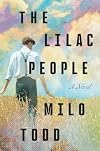
Apologies for the length of this review. I have a lot of feelings. Words and phrases in quotation marks are used by the author and are representative of the time period.
READ THIS BOOK but please ignore the blurbs comparing it to [b:All the Light We Cannot See|18143977|All the Light We Cannot See|Anthony Doerr|https://i.gr-assets.com/images/S/compressed.photo.goodreads.com/books/1451445646l/18143977._SY75_.jpg|25491300] crossed with [b:In Memoriam|59948520|In Memoriam|Alice show more Winn|https://i.gr-assets.com/images/S/compressed.photo.goodreads.com/books/1670866445l/59948520._SX50_.jpg|91373743]. Like most historical fiction, those two well-written books let the reader make a brief visit to the past, and then return to the present reassured that we're all so much more civilized now. The Lilac People doesn't let the reader off the hook so easily. It's a WWII novel about Nazi persecution of transgender and other queer people, but the parallels to recent events in 21st century America are chillingly similar.
The story is based on actual events. In the days of the Weimar Republic, queer Berliners lived fairly openly. There was an actual Institute of Sexual Science that celebrated "third gender" people, issuing "transvestite cards" that allowed transgender people to avoid being arrested for "cross dressing." Tours of the Institute were provided as a way to educate the public about sex-based matters such as STIs and abortion, and the first known transgender surgeries were performed there.
Tragically this brief enlightened period came to an end when Hitler rose to power. The Institute was torched and queer people were murdered or sent to camps. As the novel opens in 1945, the war is finally over. Our transmasc MC Bertie is living a quiet life in the country as a farmer with his lesbian "wife" Sophie, having escaped a deadly 1934 Berlin pogrom. In a particularly cruel twist, the long-awaited American soldiers who are liberating the concentration camps are sending "Pink Triangles" like Bertie back to jail as punishment for being queer. Bertie and Sofie realize they are no longer safe, especially after they take in a young fugitive from Dachau.
Debut author Milo Todd brings the fictional Bertie fully to life. The Americans' unexpected betrayal leaves him fearful and angry on top of his tremendous guilt for surviving when so many fellow queers did not. The soldiers consider all Germans equally culpable of perpetrating the Holocaust, but Bertie has always considered himself a good person. The rationalizations he uses to explain his silence sound all too familiar (he wasn't actively involved in the genocide, he had to keep silent to protect himself, etc.). I was also struck by the hollow prewar reassurances by Bertie's friends that Hitler wouldn't persecute queers because his right-hand man, Ernst Rohm, was a homosexual (so much for my theory that Trump won't go after the Jews because his son-in-law is Jewish).
The book wouldn't have earned five stars if it were only a disturbing mirror of current events. Bertie, Gert, and Karl are wonderful characters who take care of each other and offer support when one of them becomes overwhelmed by negative feelings. Their journey to safe refuge is heart-poundingly suspenseful, and they are frequently confronted with other people's morally gray natures. Although there is a hopeful ending, I know their struggles to live as their true selves would continue in their new home.
I can't help being glad that the characters would not have lived long enough to see the 21st century. Today's activists warn that denying rights to transgender people is only the first step in persecution of all minorities. Eighty years ago, the Institute's director Dr. Hirschfeld (a real person) warned Bertie
READ THIS BOOK but please ignore the blurbs comparing it to [b:All the Light We Cannot See|18143977|All the Light We Cannot See|Anthony Doerr|https://i.gr-assets.com/images/S/compressed.photo.goodreads.com/books/1451445646l/18143977._SY75_.jpg|25491300] crossed with [b:In Memoriam|59948520|In Memoriam|Alice show more Winn|https://i.gr-assets.com/images/S/compressed.photo.goodreads.com/books/1670866445l/59948520._SX50_.jpg|91373743]. Like most historical fiction, those two well-written books let the reader make a brief visit to the past, and then return to the present reassured that we're all so much more civilized now. The Lilac People doesn't let the reader off the hook so easily. It's a WWII novel about Nazi persecution of transgender and other queer people, but the parallels to recent events in 21st century America are chillingly similar.
The story is based on actual events. In the days of the Weimar Republic, queer Berliners lived fairly openly. There was an actual Institute of Sexual Science that celebrated "third gender" people, issuing "transvestite cards" that allowed transgender people to avoid being arrested for "cross dressing." Tours of the Institute were provided as a way to educate the public about sex-based matters such as STIs and abortion, and the first known transgender surgeries were performed there.
Tragically this brief enlightened period came to an end when Hitler rose to power. The Institute was torched and queer people were murdered or sent to camps. As the novel opens in 1945, the war is finally over. Our transmasc MC Bertie is living a quiet life in the country as a farmer with his lesbian "wife" Sophie, having escaped a deadly 1934 Berlin pogrom. In a particularly cruel twist, the long-awaited American soldiers who are liberating the concentration camps are sending "Pink Triangles" like Bertie back to jail as punishment for being queer. Bertie and Sofie realize they are no longer safe, especially after they take in a young fugitive from Dachau.
Debut author Milo Todd brings the fictional Bertie fully to life. The Americans' unexpected betrayal leaves him fearful and angry on top of his tremendous guilt for surviving when so many fellow queers did not. The soldiers consider all Germans equally culpable of perpetrating the Holocaust, but Bertie has always considered himself a good person. The rationalizations he uses to explain his silence sound all too familiar (he wasn't actively involved in the genocide, he had to keep silent to protect himself, etc.). I was also struck by the hollow prewar reassurances by Bertie's friends that Hitler wouldn't persecute queers because his right-hand man, Ernst Rohm, was a homosexual (so much for my theory that Trump won't go after the Jews because his son-in-law is Jewish).
The book wouldn't have earned five stars if it were only a disturbing mirror of current events. Bertie, Gert, and Karl are wonderful characters who take care of each other and offer support when one of them becomes overwhelmed by negative feelings. Their journey to safe refuge is heart-poundingly suspenseful, and they are frequently confronted with other people's morally gray natures. Although there is a hopeful ending, I know their struggles to live as their true selves would continue in their new home.
I can't help being glad that the characters would not have lived long enough to see the 21st century. Today's activists warn that denying rights to transgender people is only the first step in persecution of all minorities. Eighty years ago, the Institute's director Dr. Hirschfeld (a real person) warned Bertie
"Transvestites" are the canaries of the world. They are the first ones removed when an environment turns poisonous. What makes it more worrisome is you represent everything. You represent housing and job security and access to healthcare. You represent workers' rights and voting right and full stomachs and freedom. And perhaps most importantly of all, you represent the right to body and personhood. You represent a country not owning you, not using you however benefits a select few at the top. If transvestites are under attack, then the whole of the country is on the brink of destruction.show less
The lilacs have long since bloomed and gone in my part of the world (thanks to a late spring and a hot spell they’ve been reduced to crumbling brown remnants of their former glorious selves), but as with every year, their memory continues on. Memories are the central tenet of Milo Todd’s expansive novel, The Lilac People, which explores the history of Germany’s queer community through the story of the fictional Bertie Durchdenwald, a transgender man. He works as an administrator for show more Dr. Hirschfeld at the Institute for Sexual Science (a real place, highly invested in scientific research towards knowledge of sexuality and gender), and through his eyes we see the rise of Hitler’s government and the genocide they commit against the queer community. While Bertie’s story may be fictionalized, Todd’s narrative is grounded in research that exposes the complex reality of Germany during the war for a segment of society that is rarely spoken about and reveals a stark parallel to the current events happening throughout the world. With the rise of nationalism and an increase in “traditional” values, the trans community is once again a target, and while the conversation between Bertie and Dr. Hirschfeld is fictionalized where he claims that a society that takes care of its most marginalized peoples (ie: the queer community) is a healthy and flourishing one, it rings with an adage of truth down the ages. While Bertie and his partner Sophie survive the war and make it to America with another trans man who has escaped from Dachau, their story is one of hardship, sadness, and an almost unbelievable level of human cruelty - one that needs to be remembered alongside all the other victims of fascist regimes the world over. show less
You think you've read everything there is to know about WWII, then a book like The Lilac People brings more atrocities to light. I knew that the gay and transgender populations were some of the first groups taken to the German death camps. What I didn't know was that while the American allies freed the prisoners at these camps, they did not free the gay and transgender people. We follow a couple, Bertie and Sophia, from their first meeting through the war and aftermath of the war. While I'm show more not sure how much of this historical fiction is true, I definitely will be doing more follow-up. Recommended. show less
The Lilac people follows Bertie, who is a trans man living in Germany at the start of World War II. As Hitler comes to power, the life Bertie's made from himself starts to crumble. His job at the Institute of Sexual Science is raided, the queer nightclub he frequents is gone, and his best friend has gone missing after rushing to warn Bertie and his girlfriend Sofie of the danger coming their way.
After years living relatively peacefully, the war is almost over when they come across a young show more man who has escaped the camps. He's a trans man like Bertie, and he tells the couple the truth of the ending war - that the Allies are arresting queer people. The three realize they need to flee the country if they have any chance of surviving.
I listened to this on audio, and it was a phenomenal book. The narrator did an amazing job. Highly emotional and written with a lot of love, this was an incredible historical novel. It felt real because it is real - the characters may be fictional, but the reality of queer victims and survivors of the second world war made me hope and fear alongside these characters. This isn't a book you should skip. show less
After years living relatively peacefully, the war is almost over when they come across a young show more man who has escaped the camps. He's a trans man like Bertie, and he tells the couple the truth of the ending war - that the Allies are arresting queer people. The three realize they need to flee the country if they have any chance of surviving.
I listened to this on audio, and it was a phenomenal book. The narrator did an amazing job. Highly emotional and written with a lot of love, this was an incredible historical novel. It felt real because it is real - the characters may be fictional, but the reality of queer victims and survivors of the second world war made me hope and fear alongside these characters. This isn't a book you should skip. show less
Lists
Awards


You May Also Like
Associated Authors
Statistics
- Works
- 1
- Members
- 198
- Popularity
- #110,928
- Rating
- 4.2
- Reviews
- 7
- ISBNs
- 4