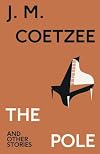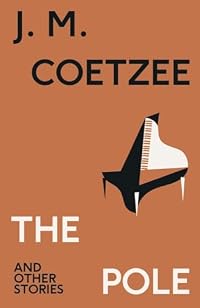
The Pole and Other Stories
by J. M. Coetzee
On This Page
Description
The Pole tells the story of Witold Walczykiewicz, a vigorous, white-haired pianist, who becomes infatuated with Beatriz, a stylish patron of the arts, after she helps organize his Barcelona concert. Although Beatriz, who is married, is initially unimpressed by Wittold, she soon finds herself pursued and ineluctably swept into his world. As he sends her letters, extends countless invitations to travel, and even visits her husband's summer home in Mallorca, their unlikely relationship show more blossoms, though only on her terms. As the power struggle between them intensifies -- Is it Beatriz who limits their passion by controlling her emotions? Or is it Witold, trying to force into life his dream of love? show lessTags
Recommendations











Member Reviews
On the face of it, one might have imagined that Coetzee's publishers thought that 'The Pole' might be too slight as the sole offering and so looked around for other material to pad out the volume to a respectable length. I'm pleased to say that reading proves my cynical self wrong. This is an important addition to Coetzee's body of work for a number of reasons and actually (and appropriately given the subject matter of 'The Pole') the overall impression is of having attended an especially well planned recital where the pieces within illuminate each other. I might add a better recital than the one offered by the titular 'Pole' in the book where the combination of Haydn, Lutoslawski and the complete Chopin Preludes sounds somewhat show more indigestible.
'The Pole' itself is an interestingly structured (each chapter contains numbered paragraphs which move the story on a gradient but also creates an effective testamentary backdrop) story about an episode in the life of Beatriz., who after a recital 'becomes' the muse of Witold (the eponymous Pole). It is typical Coetzee in that from fairly minimal narrative ingredients a very honest moral fable is constructed. Overall we are offered a model of thoughtfulness and generosity in Beatriz and a lesson in showing that what is there in a relationship however apparently deficient can still be a cause for optimism, a reason for living. I found it touching - its deliberately fragmentary nature adding to the wistfulness that is ever present in a lot of late Coetzee.
The rest of the book contains four short episodes featuring Coetzee's key character Elizabeth Costello and a final apparently unconnected story, which I will come to. The Elizabeth Costello material in a way bridges a gap between some of the episodes in the novel of that name - which ends with Elizabeth in a truly Kafkaesque version of the afterlife. The earliest of the stories dates from 2003 and the creative time span then runs for approximately another ten years, all after the publication of the novel (so we don't seem to be dealing with unused fragments from the book). In broad terms they show Elizabeth's slow decline whilst stressing again her stubbornness, individuality and intellect. The final story in the book, 'The Dog', apparently unconnected, appears to offer a sort of dream of Elizabeth's where a refraction of her is concerned with her asserting her rights over that of the dog of the title, whereas animal rights themselves are a major concern of Elizabeth's (in the novel and the stories in this book) and of course Coetzee himself. It's extremely clever. show less
'The Pole' itself is an interestingly structured (each chapter contains numbered paragraphs which move the story on a gradient but also creates an effective testamentary backdrop) story about an episode in the life of Beatriz., who after a recital 'becomes' the muse of Witold (the eponymous Pole). It is typical Coetzee in that from fairly minimal narrative ingredients a very honest moral fable is constructed. Overall we are offered a model of thoughtfulness and generosity in Beatriz and a lesson in showing that what is there in a relationship however apparently deficient can still be a cause for optimism, a reason for living. I found it touching - its deliberately fragmentary nature adding to the wistfulness that is ever present in a lot of late Coetzee.
The rest of the book contains four short episodes featuring Coetzee's key character Elizabeth Costello and a final apparently unconnected story, which I will come to. The Elizabeth Costello material in a way bridges a gap between some of the episodes in the novel of that name - which ends with Elizabeth in a truly Kafkaesque version of the afterlife. The earliest of the stories dates from 2003 and the creative time span then runs for approximately another ten years, all after the publication of the novel (so we don't seem to be dealing with unused fragments from the book). In broad terms they show Elizabeth's slow decline whilst stressing again her stubbornness, individuality and intellect. The final story in the book, 'The Dog', apparently unconnected, appears to offer a sort of dream of Elizabeth's where a refraction of her is concerned with her asserting her rights over that of the dog of the title, whereas animal rights themselves are a major concern of Elizabeth's (in the novel and the stories in this book) and of course Coetzee himself. It's extremely clever. show less
4 stars for the titular novella, not for the short stories.
It is ages since I read anything new by J M Coetzee, winner of the Nobel Prize in 2003, and yet I have four books on the TBR: The Master of Petersburg (1994); Diary of a Bad Year (2007); Summertime (2009), and The Childhood of Jesus (2013). I bought them all between 2009 and 2013 because I thought Disgrace (1999); Life and Times of Michael K (1983) and Slow Man (2005) were brilliant, but my interest faded with The Lives of Animals (1999); and Elizabeth Costello (2001). Only two of all these are reviewed here: Life and Times of Michael K (1983) published in my 'Reviews from the Archive' series, and Foe (1986) which I re-read for Novellas in November in 2021 and realised how much show more I'd missed when I read it the first time.
Which is why I feel confident that I've missed some aspects of 'The Pole' which is the titular novella of this new book. After all in the very next story 'As a Woman Grows Older', Elizabeth Costello muses on how she has made a living out of ambivalence, and she asks herself: Where would the art of fiction be if there were no double meanings?
Narrated by a rather wry observer interpreting only the woman's perspective, The Pole is a tale of unrequited love, first his for her, and then hers for him, half-hearted though it be. The Pole and the woman he desires are poles apart at the beginning, and in a way that I should have predicted but didn't, also at the end.
Helpfully, Coetzee's Pole, the pianist Witold Walczykiewicz makes the allusion to Beatrice from Dante's Divine Comedy explicit but his Spanish Beatriz will have none of it. While he has, inexplicably, developed a huge crush on her, she is not the least little bit interested. The wife of a banker with the sort of social responsibilities that banker's wives have, Beatriz had been roped into escorting Witold around Barcelona when he came to the city on tour. She had tried not to be predictable, and had found it easy not to gush or flirt, (which is what is expected of middle-aged rich ladies doing cultural duties with artistes.) She had not been 'transported' by his music...
So she had been quite startled by his attempt at renewed contact afterwards because his courtly behaviour had not given even a hint that he was keen. ('Courtly' because he's channelling Dante falling in love with Beatrice, but equally, just distant in his manner, and not just because they are using his not-great English as a lingua franca because she doesn't speak Polish and he doesn't speak Spanish or French.)
Indeed, Witold withholds (ha!) his feelings and has an austere persona. Beatriz's first impressions do not bode well for any passion.
To read the rest of my review please visit https://anzlitlovers.com/2024/01/14/the-pole-other-stories-2023-by-j-m-coetzee/ show less
It is ages since I read anything new by J M Coetzee, winner of the Nobel Prize in 2003, and yet I have four books on the TBR: The Master of Petersburg (1994); Diary of a Bad Year (2007); Summertime (2009), and The Childhood of Jesus (2013). I bought them all between 2009 and 2013 because I thought Disgrace (1999); Life and Times of Michael K (1983) and Slow Man (2005) were brilliant, but my interest faded with The Lives of Animals (1999); and Elizabeth Costello (2001). Only two of all these are reviewed here: Life and Times of Michael K (1983) published in my 'Reviews from the Archive' series, and Foe (1986) which I re-read for Novellas in November in 2021 and realised how much show more I'd missed when I read it the first time.
Which is why I feel confident that I've missed some aspects of 'The Pole' which is the titular novella of this new book. After all in the very next story 'As a Woman Grows Older', Elizabeth Costello muses on how she has made a living out of ambivalence, and she asks herself: Where would the art of fiction be if there were no double meanings?
Narrated by a rather wry observer interpreting only the woman's perspective, The Pole is a tale of unrequited love, first his for her, and then hers for him, half-hearted though it be. The Pole and the woman he desires are poles apart at the beginning, and in a way that I should have predicted but didn't, also at the end.
Helpfully, Coetzee's Pole, the pianist Witold Walczykiewicz makes the allusion to Beatrice from Dante's Divine Comedy explicit but his Spanish Beatriz will have none of it. While he has, inexplicably, developed a huge crush on her, she is not the least little bit interested. The wife of a banker with the sort of social responsibilities that banker's wives have, Beatriz had been roped into escorting Witold around Barcelona when he came to the city on tour. She had tried not to be predictable, and had found it easy not to gush or flirt, (which is what is expected of middle-aged rich ladies doing cultural duties with artistes.) She had not been 'transported' by his music...
So she had been quite startled by his attempt at renewed contact afterwards because his courtly behaviour had not given even a hint that he was keen. ('Courtly' because he's channelling Dante falling in love with Beatrice, but equally, just distant in his manner, and not just because they are using his not-great English as a lingua franca because she doesn't speak Polish and he doesn't speak Spanish or French.)
Indeed, Witold withholds (ha!) his feelings and has an austere persona. Beatriz's first impressions do not bode well for any passion.
To read the rest of my review please visit https://anzlitlovers.com/2024/01/14/the-pole-other-stories-2023-by-j-m-coetzee/ show less
Ratings
Members
- Recently Added By
Lists

Best Australian Books of the 21st Century
88 works; 2 members
Author Information

111+ Works 42,092 Members
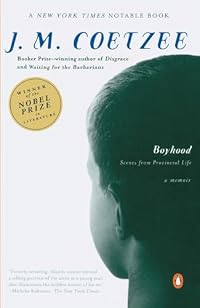
J.M. Coetzee's full name is John Michael Coetzee. Born in Cape Town, South Africa, in 1940, Coetzee is a writer and critic who uses the political situation in his homeland as a backdrop for many of his novels. Coetzee published his first work of fiction, Dusklands, in 1974. Another book, Boyhood, loosely chronicles an unhappy time in Coetzee's show more childhood when his family moved from Cape Town to the more remote and unenlightened city of Worcester. Other Coetzee novels are In the Heart of the Country and Waiting for the Barbarians. Coetzee's critical works include White Writing and Giving Offense: Essays on Censorship. Coetzee is a two-time recipient of the Booker Prize and in 2003, he won the Nobel Literature Award. (Bowker Author Biography) J. M. Coetzee's books include "Boyhood", "Dusklands", "In the Heart of the Country", "Waiting for the Barbarians", "Life & Times of Michael K", "Foe", & "The Master of Petersburg". A professor of general literature at the University of Cape Town, Coetzee has won many literary awards, including the CNA Prize (South Africa's premier literary award), the Booker Prize (twice), the Prix Etranger Femina, the Jerusalem Prize, the Lannan Literary Award, & The Irish Times International Fiction Prize. (Publisher Provided) show less
Some Editions
Awards and Honors
Awards
Distinctions
The Guardian Book of the Day (2023-10-13)
Work Relationships
Contains
Common Knowledge
- Original publication date
- 2023
Classifications
Statistics
- Members
- 67
- Popularity
- 463,963
- Reviews
- 2
- Rating
- (3.42)
- Languages
- English
- Media
- Paper, Ebook
- ISBNs
- 5
- ASINs
- 1