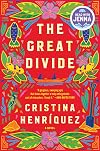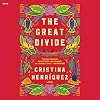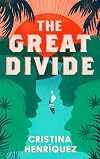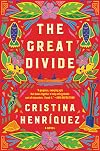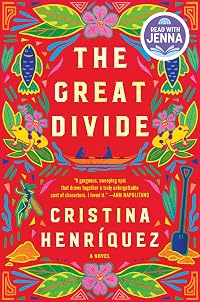
The Great Divide
by Cristina Henríquez
On This Page
Description
A TODAY Show Read With Jenna Book Club Pick!A powerful novel about the construction of the Panama Canal, casting light on the unsung people who lived, loved, and labored there
It is said that the canal will be the greatest feat of engineering in history. But first, it must be built. For Francisco, a local fisherman who resents the foreign powers clamoring for a slice of his country, nothing is more upsetting than the decision of his son, Omar, to work as a digger in the excavation zone. But show more for Omar, whose upbringing was quiet and lonely, this job offers a chance to finally find connection.
Ada Bunting is a bold sixteen-year-old from Barbados who arrives in Panama as a stowaway alongside thousands of other West Indians seeking work. Alone and with no resources, she is determined to find a job that will earn enough money for her ailing sister's surgery. When she sees a young man—Omar—who has collapsed after a grueling shift, she is the only one who rushes to his aid.
John Oswald has dedicated his life to scientific research and has journeyed to Panama in single-minded pursuit of one goal: eliminating malaria. But now, his wife, Marian, has fallen ill herself, and when he witnesses Ada's bravery and compassion, he hires her on the spot as a caregiver. This fateful decision sets in motion a sweeping tale of ambition, loyalty, and sacrifice.
Searing and empathetic,The Great Divide explores the intersecting lives of activists, fishmongers, laborers, journalists, neighbors, doctors, and soothsayers—those rarely acknowledged by history even as they carved out its course.
Named a Most Anticipated Book By: Washington Post * Book Riot * Electric Literature * LitHub * ELLE * The Millions * Goodreads * Reader's Digest
. show less
Tags
Recommendations
Member Reviews
In a Nutshell: A literary fiction focussed on Panama during the time of the construction of the Panama Canal. Note that this isn’t a book directly about the canal or its construction, but about the people connected to the canal in some way or the other during that period. A great book if you go in with the right expectations and enjoy character-oriented fiction.
~~~~~~~~~~~~~~~~~~~~~~~~~~~~
Plot Preview:
I picked up this book because I thought it would tell me how and why the Panama Canal was built. But the story turned out to be so much more! As a literary fiction fan and as someone who loves character-oriented storylines, this revelation came as a pleasant surprise. Once I altered my reading expectations from historical to literary, I was fully absorbed by the storyline.
There is no overarching plot in the novel. So if you wish to read this book hoping to know the hows and whys of the construction of the Panama Canal, you won’t get *that* much information. This is not a novel ABOUT the canal construction but a novel DURING the canal construction. It is not about the place but about its people. Only a small part of the book deals with the American perspective. I applaud this decision of keeping the story of Panama focussed on the Panamanians and other coloured characters.
The title offers a clear idea of the core content. The “great divide” existed not just across the two oceans that the governments were trying to connect but also across the people of and in Panama, many of whose lives were upturned simply because they happened to live near the land taken over for the canal construction. Whenever we read of such larger-than-life projects in fiction, rarely do we get to see the picture of the manual blood and toil that went into the work. This book is one rare exception, and I respect the author for choosing to tell the story from their eyes.
The characters are the heart and soul of this book. I loved their diversity in terms of ethnicity, nationality, and social standing. We understand from local Panamanians how their life has been altered by this forced canal construction, we see the lives of the workers who migrated to Panama from the surrounding Caribbean nations and beyond to work on the canal, and we hear the supposedly superior perspective of the Americans and the French who have taken up the project and are willing to do anything they can to ensure its (and their) success. All the characters are represented realistically, with enough shades of grey to make them human rather than caricatures.
This book is clearly a labour of love by the author, but even its enjoyment will need to be a labour of love by the reader. The start of the book is somewhat episodic, so the progress is slow, and at times, frustrating. Each of the initial chapters focusses on one character, and every subsequent chapter brings a new, often unrelated character. This goes on till at least 30-35%, after which you begin to see hints of the connection across the characters. So, you need to have a lot of patience at the start as it feels more like a short story collection than a novel for the first one-third or so. But the patience is worth it. Once the connection across the characters began popping up, the book turns into a jigsaw puzzle with the stunning final picture coming into view.
Despite the plethora of characters, I was never once confused about who’s who. The chapters that introduce these people are well detailed, and establish their persona clearly before moving on to the next character. The elaborate backstories and plotting to keep all the character arcs in sync were impeccable.
The author has captured the pulse of the era and the location through her descriptions. It is so easy to visualise the place as well as the people, thanks to the lyrical writing. She even incorporates the beliefs and superstitions of the various cultures, while also capturing their solidarity, their resilience, their family values, and their independence of spirit. The plot feels like an ode to all those unsung heroes whose sacrifices made the canal possible.
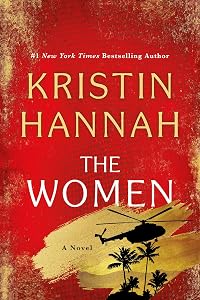
I especially admire the story’s candour. The characters don’t mince words when it comes to declaring their opinions about the external influences ruining their lives. The selfishness, rudeness, racism, and even the ignorance of some Americans who were in Panama comes out clearly. It is refreshing to see the book not indulge in white glorification but stress on their flawed attitudes and their blind adherence to profits and personal success with no eye on the human cost. At the same time, not all the whites are painted as villains tarnished by greed. If Kristin Hannah had shown even half of this cultural sensitivity and sensibility while writing ‘The Women’, it would have been a winner for me.
Only two issues:
1. The ending left me wanting more. The character arcs do come to a satisfying end, and not even in a forced HEA. It was a genuine ‘Life Goes On’ kind of finish. But something still felt missing. I must also add that I have no idea how else the author could have ended this complicated story.
2. I was keen to read the author’s thoughts on her writing choices for this work, and also a small note on the background, the significance, the cost (financial and human) of construction, and the issues currently faced by the Panama Canal thanks to climate change. But my ARC had no elucidatory note at all. I hope there is some kind of add-on content with actual facts and an author’s note detailing her writing choices in the final book, because the story deserves it, maybe even needs it.
All in all, this is an intricately-sketched story focussing on the lives of varied people during the construction of the Panama Canal. It is not a story of the revolutionary waterway, but a story of some flawed humans and their lives against the background of this massive construction endeavour.
Much recommended to lovers of literary fiction who would love to see a historical story from the eyes of the characters who lived through it. From this character-oriented book, you will learn a bit about the Panama Canal, but you will learn much more about humans and what drives them.
This was my first book by this author, and I’d love to read more of her work. Such books show why good writing is a combination of art craft. I hope that readers in this world of instant gratification will have the patience to see its beauty unfold.
4.25 stars.
My thanks to Ecco and NetGalley for the DRC of “The Great Divide”. This review is voluntary and contains my honest opinion about the book.
~~~~~~~~~~~~~~~~~~~~~~~~~~~~
Connect with me through:
My Blog || The StoryGraph || Instagram || X/Twitter || Facebook || show less
~~~~~~~~~~~~~~~~~~~~~~~~~~~~
Plot Preview:
1907, Panama.show more
Francisco, a Panamanian fisherman, hates the commercialisation of his country under the foreigners, and hence resents his son Omar’s joining the canal construction crew. Omar, however, wants to learn and earn more than his little village can offer him.
Sixteen-year-old Ada has heard about Panama having many jobs. She has
stowed away to Panama, hoping to get some work and earn enough for her ailing sister’s surgery back in Barbados. Her mother Lucille, a tailor, doesn’t yet know of her running away from home, but when she finds out the reason, will she be forgiving?
John Oswald, an American medical expert, has only one goal for his work in Panama: to eradicate malaria. His wife Marian, not the same after a tragedy that changed their lives, also accompanies him to Panama, though there isn’t much left in their marriage.
These are just a few of the many characters you will meet over the course of this novel. Through their eyes, you will get a little glimpse what happened in Panama during the construction of the canal that runs till today.
The story comes from the third person perspectives of multiple characters.
I picked up this book because I thought it would tell me how and why the Panama Canal was built. But the story turned out to be so much more! As a literary fiction fan and as someone who loves character-oriented storylines, this revelation came as a pleasant surprise. Once I altered my reading expectations from historical to literary, I was fully absorbed by the storyline.
There is no overarching plot in the novel. So if you wish to read this book hoping to know the hows and whys of the construction of the Panama Canal, you won’t get *that* much information. This is not a novel ABOUT the canal construction but a novel DURING the canal construction. It is not about the place but about its people. Only a small part of the book deals with the American perspective. I applaud this decision of keeping the story of Panama focussed on the Panamanians and other coloured characters.
The title offers a clear idea of the core content. The “great divide” existed not just across the two oceans that the governments were trying to connect but also across the people of and in Panama, many of whose lives were upturned simply because they happened to live near the land taken over for the canal construction. Whenever we read of such larger-than-life projects in fiction, rarely do we get to see the picture of the manual blood and toil that went into the work. This book is one rare exception, and I respect the author for choosing to tell the story from their eyes.
The characters are the heart and soul of this book. I loved their diversity in terms of ethnicity, nationality, and social standing. We understand from local Panamanians how their life has been altered by this forced canal construction, we see the lives of the workers who migrated to Panama from the surrounding Caribbean nations and beyond to work on the canal, and we hear the supposedly superior perspective of the Americans and the French who have taken up the project and are willing to do anything they can to ensure its (and their) success. All the characters are represented realistically, with enough shades of grey to make them human rather than caricatures.
This book is clearly a labour of love by the author, but even its enjoyment will need to be a labour of love by the reader. The start of the book is somewhat episodic, so the progress is slow, and at times, frustrating. Each of the initial chapters focusses on one character, and every subsequent chapter brings a new, often unrelated character. This goes on till at least 30-35%, after which you begin to see hints of the connection across the characters. So, you need to have a lot of patience at the start as it feels more like a short story collection than a novel for the first one-third or so. But the patience is worth it. Once the connection across the characters began popping up, the book turns into a jigsaw puzzle with the stunning final picture coming into view.
Despite the plethora of characters, I was never once confused about who’s who. The chapters that introduce these people are well detailed, and establish their persona clearly before moving on to the next character. The elaborate backstories and plotting to keep all the character arcs in sync were impeccable.
The author has captured the pulse of the era and the location through her descriptions. It is so easy to visualise the place as well as the people, thanks to the lyrical writing. She even incorporates the beliefs and superstitions of the various cultures, while also capturing their solidarity, their resilience, their family values, and their independence of spirit. The plot feels like an ode to all those unsung heroes whose sacrifices made the canal possible.
I especially admire the story’s candour. The characters don’t mince words when it comes to declaring their opinions about the external influences ruining their lives. The selfishness, rudeness, racism, and even the ignorance of some Americans who were in Panama comes out clearly. It is refreshing to see the book not indulge in white glorification but stress on their flawed attitudes and their blind adherence to profits and personal success with no eye on the human cost. At the same time, not all the whites are painted as villains tarnished by greed. If Kristin Hannah had shown even half of this cultural sensitivity and sensibility while writing ‘The Women’, it would have been a winner for me.
Only two issues:
1. The ending left me wanting more. The character arcs do come to a satisfying end, and not even in a forced HEA. It was a genuine ‘Life Goes On’ kind of finish. But something still felt missing. I must also add that I have no idea how else the author could have ended this complicated story.
2. I was keen to read the author’s thoughts on her writing choices for this work, and also a small note on the background, the significance, the cost (financial and human) of construction, and the issues currently faced by the Panama Canal thanks to climate change. But my ARC had no elucidatory note at all. I hope there is some kind of add-on content with actual facts and an author’s note detailing her writing choices in the final book, because the story deserves it, maybe even needs it.
All in all, this is an intricately-sketched story focussing on the lives of varied people during the construction of the Panama Canal. It is not a story of the revolutionary waterway, but a story of some flawed humans and their lives against the background of this massive construction endeavour.
Much recommended to lovers of literary fiction who would love to see a historical story from the eyes of the characters who lived through it. From this character-oriented book, you will learn a bit about the Panama Canal, but you will learn much more about humans and what drives them.
This was my first book by this author, and I’d love to read more of her work. Such books show why good writing is a combination of art craft. I hope that readers in this world of instant gratification will have the patience to see its beauty unfold.
4.25 stars.
My thanks to Ecco and NetGalley for the DRC of “The Great Divide”. This review is voluntary and contains my honest opinion about the book.
~~~~~~~~~~~~~~~~~~~~~~~~~~~~
Connect with me through:
My Blog || The StoryGraph || Instagram || X/Twitter || Facebook || show less
What I was expecting from this historical novel: an indictment of toxic American colonialism as demonstrated by the building of the Panama Canal, regardless of its toll it on the country's natural beauty and its people.
What I got: Yes, that. But also a multi-character, warm-hearted and somehow hopeful story of early 20th century Caribbean life. A significant portion of the book takes place in Barbados, source of many Canal workers. Some of the Panamanian scenes are set in cities and villages that are far from the building site, highlighting native customs and traditions that are in jeopardy. There are the expected examples of American racism, carelessness and cruelty, but there are also chapters devoted to complex family relationships show more and futile but empowering resistance. The whole thing is sprinkled with a touch of magical realism and garnished with a positive outcome for most of the characters, despite the dubious impact of one country buying a poorer one to satiate its greed.
YMMV if you don't like novels with almost a dozen POV characters. show less
What I got: Yes, that. But also a multi-character, warm-hearted and somehow hopeful story of early 20th century Caribbean life. A significant portion of the book takes place in Barbados, source of many Canal workers. Some of the Panamanian scenes are set in cities and villages that are far from the building site, highlighting native customs and traditions that are in jeopardy. There are the expected examples of American racism, carelessness and cruelty, but there are also chapters devoted to complex family relationships show more and futile but empowering resistance. The whole thing is sprinkled with a touch of magical realism and garnished with a positive outcome for most of the characters, despite the dubious impact of one country buying a poorer one to satiate its greed.
YMMV if you don't like novels with almost a dozen POV characters. show less
Kirkus: An anti-imperialist fairy tale about the building of the Panama Canal.
Henríquez’s novel begins in 1907, with work on the canal well underway, and reveals how its construction changes the lives of multiple characters of varying nationalities, classes, and races, each in Panama for their own reasons. Henríquez is skilled at juggling the many subplots. Among the central characters, Ada Bunting from Barbados is the stereotypical sentimental heroine. The biracial 16-year-old has come to Panama to earn money to save her ailing sister’s life; she gets a job nursing the sick wife of wealthy, idealistic, but emotionally stunted malaria researcher John Oswald (whose under-explored complexity makes him one of the book’s more show more interesting characters). Plucky Ada begins a tepid romance with young Panamanian Omar Aquino, whose broken relationship with his fisherman father Francisco exemplifies the divided loyalties and resentments of Panamanians treated as second-class citizens in their own country. Francisco sells to fishmonger Joaquín, whose wife ropes her husband into organizing a demonstration of passive resistance against Canal Commission orders to dismantle and move her entire hometown. A host of other characters are sketched in, from an Antiguan cook who undermines Ada to an inept French doctor, an intuitive palm reader, and a Barbadian sugar planter in love with Ada’s mother but too weak-willed to fight for her. Along the way, Henríquez plugs in the history that many North Americans probably don’t know: the Panamanian civil war and intervention by the United States, which paid the country, newly independent from Colombia, $10 million dollars for full control of the Canal Zone. The depiction of white North Americans and Caribbean planters as at best clueless, more often mercenary and cruelly racist, is undoubtedly accurate. Unfortunately, and despite Henríquez’s lyrical prose, they never feel fully realized as individuals. Neither does virtuous Ada, the noble Panamanians, or Mrs. Oswald, a representative of white female victimhood who has sacrificed her intellectual ambition for a loveless marriage.
Despite panoramic ambitions, the novel never quite catches fire. show less
Henríquez’s novel begins in 1907, with work on the canal well underway, and reveals how its construction changes the lives of multiple characters of varying nationalities, classes, and races, each in Panama for their own reasons. Henríquez is skilled at juggling the many subplots. Among the central characters, Ada Bunting from Barbados is the stereotypical sentimental heroine. The biracial 16-year-old has come to Panama to earn money to save her ailing sister’s life; she gets a job nursing the sick wife of wealthy, idealistic, but emotionally stunted malaria researcher John Oswald (whose under-explored complexity makes him one of the book’s more show more interesting characters). Plucky Ada begins a tepid romance with young Panamanian Omar Aquino, whose broken relationship with his fisherman father Francisco exemplifies the divided loyalties and resentments of Panamanians treated as second-class citizens in their own country. Francisco sells to fishmonger Joaquín, whose wife ropes her husband into organizing a demonstration of passive resistance against Canal Commission orders to dismantle and move her entire hometown. A host of other characters are sketched in, from an Antiguan cook who undermines Ada to an inept French doctor, an intuitive palm reader, and a Barbadian sugar planter in love with Ada’s mother but too weak-willed to fight for her. Along the way, Henríquez plugs in the history that many North Americans probably don’t know: the Panamanian civil war and intervention by the United States, which paid the country, newly independent from Colombia, $10 million dollars for full control of the Canal Zone. The depiction of white North Americans and Caribbean planters as at best clueless, more often mercenary and cruelly racist, is undoubtedly accurate. Unfortunately, and despite Henríquez’s lyrical prose, they never feel fully realized as individuals. Neither does virtuous Ada, the noble Panamanians, or Mrs. Oswald, a representative of white female victimhood who has sacrificed her intellectual ambition for a loveless marriage.
Despite panoramic ambitions, the novel never quite catches fire. show less
3.5? The building/digging of the Panama Canal at the start of the 20th century is something I knew next to nothing about. The fascinating aspect of it was the world-wide labor it attracted and the unbelievable scale of what was accomplished - by men with shovels and pick-axes. Some very likeable characters all converge on Empire, Panama, the heart of the dig, primarily for money. Ada Bunting runs away from her Barbados home so she can earn money to save her sister from her health issues. John Oswald and his wife Marian come to scientifically/medically take on the malaria epidemic from their TN home where he would always be misunderstood in his wealthy family. Omar Aquino is a native Panamanian, and he seeks the work so he doesn't have show more to become a fisherman like his father, starting a rift in their relationship. Joaquin and Valentina are trying to save their town from its fate of being emptied and moved to make way for a dam adjacent to the canal. All these characters criss-cross and interact in ways large and small, and sometimes life-changing. The title is not only the canal itself cutting through Panama but the vast difference in status and wealth between the workers and those directing the project. Lots to think about and would make a good book club book. show less
Set in Panama while the canal was being constructed, this novel in the round has an ensemble cast whose lives intersect in some ways: Ada, a young woman from Barbados who has come to earn money for her sister's surgery; Mr. and Mrs. Oswald from Tennessee, in Panama to eradicate malaria; Omar, who takes a job in the Cut, and his fisherman father Francisco, still grieving his wife Esme's death; and Joaquin and Valeria, who organize a protest against the planned move of Valeria's hometown of Gatun.
Well researched and well paced; a window into an important piece of history that doesn't get much attention, from a variety of perspectives.
Quotes
There was so much to say and nowhere to start. (Lucille, 59)
But she was only herself, and try as show more she might, she could not manage to be any other way. (Millicent, 121)
It was easier...to live in a world of delusion, which was after all not so different from hope, than to stand face-to-face with the truth. (Francisco, 137)
An action born from righteousness quickly transformed into one sustained by pride. (Francisco, 146)
It was a terrible fate to know that nothing on one's actual life would equal the world of one's dreams. (Henry, 225)
He did not deserve her and yet he did not want her to leave. (John Oswald re: Marian, 246)
What he saw as he stared across that vast chasm was not simply a canal, but a great divide that would sever Panama in two. (Francisco, 271)
It was nothing but a blanket and a story, but those two things together felt as sturdy as steel. (Ada, 286)
Little by little was the only way he knew how to get through this life. (Willoughby, 296) show less
Well researched and well paced; a window into an important piece of history that doesn't get much attention, from a variety of perspectives.
Quotes
There was so much to say and nowhere to start. (Lucille, 59)
But she was only herself, and try as show more she might, she could not manage to be any other way. (Millicent, 121)
It was easier...to live in a world of delusion, which was after all not so different from hope, than to stand face-to-face with the truth. (Francisco, 137)
An action born from righteousness quickly transformed into one sustained by pride. (Francisco, 146)
It was a terrible fate to know that nothing on one's actual life would equal the world of one's dreams. (Henry, 225)
He did not deserve her and yet he did not want her to leave. (John Oswald re: Marian, 246)
What he saw as he stared across that vast chasm was not simply a canal, but a great divide that would sever Panama in two. (Francisco, 271)
It was nothing but a blanket and a story, but those two things together felt as sturdy as steel. (Ada, 286)
Little by little was the only way he knew how to get through this life. (Willoughby, 296) show less
In The Great Divide, author Cristina Henriquez tries to capture all of the political and human drama surrounding the construction of the Panama Canal by exploring the lives of a variety of characters in and around the event. From local Panamanian Omar who participates in the actual drudgery of digging to an American doctor brought to battle malaria, Henriquez attempts to explore such a large number of people that at times their stories muddle. Solid writing and engaging narratives keep the book moving, and as the stories clarify, Henriquez manages to bring them all to a satisfying conclusion. Readers who enjoy historical fiction with a revolving cast of voices will not want to miss The Great Divide.
Wonderful story filled with many interesting and believable characters with the backdrop of the digging of the Panama Canal.
The novel is told by many characters who intersect often in rather minor ways. Ada is a young woman who hides in a ship from Barbados who is looking for work to help her sister at home get an operation. Omar, is the son of a fisherman who is very opposed to the Canal. Omar, not wanting to be a fisherman, goes off to join the digging drew much to the displeasure of his father and don't speak to each other for months. Their is an American man working on the canal whose wife is dying; Ada becomes a maid in the house. There are other characters who fill out the scene: the doctor caring for the ill wife, the other show more diggers who form a sort of friendship with Omar, the cruel overseer of the diggers, the jealous cook in the American's home.
The book is not so much plot driven but driven by the experiences of these individuals all caused and connected somehow by the digging of the canal. Very good read. show less
The novel is told by many characters who intersect often in rather minor ways. Ada is a young woman who hides in a ship from Barbados who is looking for work to help her sister at home get an operation. Omar, is the son of a fisherman who is very opposed to the Canal. Omar, not wanting to be a fisherman, goes off to join the digging drew much to the displeasure of his father and don't speak to each other for months. Their is an American man working on the canal whose wife is dying; Ada becomes a maid in the house. There are other characters who fill out the scene: the doctor caring for the ill wife, the other show more diggers who form a sort of friendship with Omar, the cruel overseer of the diggers, the jealous cook in the American's home.
The book is not so much plot driven but driven by the experiences of these individuals all caused and connected somehow by the digging of the canal. Very good read. show less
Members
- Recently Added By
Lists

New Books April 2024
11 works; 1 member

Top Five Books of 2024
795 works; 264 members

Read with Jenna
91 works; 2 members
Author Information

11+ Works 2,422 Members
Some Editions
Awards and Honors
Awards
Distinctions
Notable Lists
Common Knowledge
- Canonical title
- The Great Divide
- Important places
- Panama
Classifications
Statistics
- Members
- 555
- Popularity
- 53,415
- Reviews
- 15
- Rating
- (3.76)
- Languages
- Dutch, English, German, Spanish
- Media
- Paper, Audiobook, Ebook
- ISBNs
- 23
- ASINs
- 5