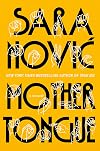
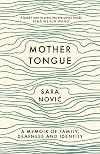
Mother Tongue: A Memoir
by Sara Novic
On This Page
Tags
Recommendations










Member Reviews
I've just finished reading Mother Tongue and this memoir/essay collection has moved and fascinated me to such an extent that I'm tempted to wait on writing my review. I am not, however, giving in to that temptation. Instead, I am going to begin by noting that This. Book. Has. So. Much. Going. On. And every bit of it is important.
Among the topics Mother Tongue explores—
• Motherhood
• Adoption as a process
• Adoption as an ethical issue
• Childbirth
• Deafness
• Creating and maintaining a bilingual home where all members are fully fluent in both English and ASL
• The intersection of conservative Christianity and disability
• The impact of growing up in "purity culture"
• Deaf education
• The spotty record of what can be show more achieved through cochlear implants
• The hearing community's assumption about what the deaf "need"
• Questions of language development
• Fighting educational red tape
• Queer identity
• The current attacks on disabled and gender noncomforming people
• The purpose of education for individuals and the communities within which they live
I could keep going with this list, but I'll pause here.
Basically, Sara Novic—one of my favorite writers—has written a brilliant work that pulls together all these different topics in ways that make sense. That makes for complexity, but Novic has the ability to detail the complex in ways that make it accessible to readers from a variety of backgrounds.
No piece of knowledge, no part of identity lies separate from others. Moving toward understanding requires, well, the best analogy I can come up with is a compound eye of the spirit. It's like looking through one of those insect-eye educational toys or standing in front of a dressing room mirror that gives gives us an infinitude of images of ourselves, every single one of them part of a truthful whole.
I finished reading this book yesterday. I liked/loved it enough that I immediately ordered copies for two friends. One works in the field of theatre accessibility and consent. The other is a mother of children. I didn't want either of them to be without this book any longer than it would take for the book to reach them through the mail. Then, I pre-ordered a copy of the large print edition, coming out in late July, for my wife and I to share. My review copy was electronic, but there are books that a) I want to share with my wife and b) want to reread myself in physical form, not just electronic, which makes large print essential.
I don't know that I've ever spent $100+ on multiple copies of a single book in a single hour, but yesterday doing that felt essential.
I received my review copy from the publisher via NetGalley; the opinions are my own. show less
Among the topics Mother Tongue explores—
• Motherhood
• Adoption as a process
• Adoption as an ethical issue
• Childbirth
• Deafness
• Creating and maintaining a bilingual home where all members are fully fluent in both English and ASL
• The intersection of conservative Christianity and disability
• The impact of growing up in "purity culture"
• Deaf education
• The spotty record of what can be show more achieved through cochlear implants
• The hearing community's assumption about what the deaf "need"
• Questions of language development
• Fighting educational red tape
• Queer identity
• The current attacks on disabled and gender noncomforming people
• The purpose of education for individuals and the communities within which they live
I could keep going with this list, but I'll pause here.
Basically, Sara Novic—one of my favorite writers—has written a brilliant work that pulls together all these different topics in ways that make sense. That makes for complexity, but Novic has the ability to detail the complex in ways that make it accessible to readers from a variety of backgrounds.
No piece of knowledge, no part of identity lies separate from others. Moving toward understanding requires, well, the best analogy I can come up with is a compound eye of the spirit. It's like looking through one of those insect-eye educational toys or standing in front of a dressing room mirror that gives gives us an infinitude of images of ourselves, every single one of them part of a truthful whole.
I finished reading this book yesterday. I liked/loved it enough that I immediately ordered copies for two friends. One works in the field of theatre accessibility and consent. The other is a mother of children. I didn't want either of them to be without this book any longer than it would take for the book to reach them through the mail. Then, I pre-ordered a copy of the large print edition, coming out in late July, for my wife and I to share. My review copy was electronic, but there are books that a) I want to share with my wife and b) want to reread myself in physical form, not just electronic, which makes large print essential.
I don't know that I've ever spent $100+ on multiple copies of a single book in a single hour, but yesterday doing that felt essential.
I received my review copy from the publisher via NetGalley; the opinions are my own. show less
Author Sara Novic reflects on growing up with hearing loss and hiding it; the comfort they found in the deaf community; and the unique insights and challenges they have as a mother of a hearing, biological child and a deaf, internationally adopted child. Complex and far-reaching, this is a thought-provoking read that blends the big picture with the personal.
As soon as I knew the author of True Biz had come out with a memoir, I knew I wanted to read it. Little did I know how much this book would intersect with many of the same topics I am grappling with on top of my interest in the d/Deaf community. I am hearing, but took ASL and concentrated in Deaf Studies at the beginning of my college years, and I remember my professors arguing that show more deafness was not a disability but a language and thus a social barrier. Novic argues differently, that deafness is a disability in a hearing world, and also brings in the added difficulties of intersecting marginal identities, such as being Black and Deaf, which has an even greater risk of police violence (something I didn't know prior to reading this book, but which makes perfect sense). Novic reflects on the expectations the hearing world has about them and their ability to parent, both the challenges when her son S was born and also the hoops she and partner Z had to go through to adopt K, and all the barriers before them to be able to have the same "parental choice" a white woman (and foster mom) can take for granted. The book reads easily and is only 256 pages, but there is a lot here to chew on. Highly recommended. show less
As soon as I knew the author of True Biz had come out with a memoir, I knew I wanted to read it. Little did I know how much this book would intersect with many of the same topics I am grappling with on top of my interest in the d/Deaf community. I am hearing, but took ASL and concentrated in Deaf Studies at the beginning of my college years, and I remember my professors arguing that show more deafness was not a disability but a language and thus a social barrier. Novic argues differently, that deafness is a disability in a hearing world, and also brings in the added difficulties of intersecting marginal identities, such as being Black and Deaf, which has an even greater risk of police violence (something I didn't know prior to reading this book, but which makes perfect sense). Novic reflects on the expectations the hearing world has about them and their ability to parent, both the challenges when her son S was born and also the hoops she and partner Z had to go through to adopt K, and all the barriers before them to be able to have the same "parental choice" a white woman (and foster mom) can take for granted. The book reads easily and is only 256 pages, but there is a lot here to chew on. Highly recommended. show less
This memoir covers, primarily, two of the journeys the author has gone through in their life: the loss of their hearing and their identification as deaf well as the challenges of navigating motherhood, with both their children. Beyond that though, Nović uses their writing to teach and educate. They discuss deaf history, ableism, medical abuse, the adoption system, racism, identity and community, COVID, purity culture, queerness, and more, and their overarching message is in how all these things are interrelated, how history is still here with us, and how all these broad concepts are personal. It's a gripping story, informative, and also a plea to stand together and not forget the most vulnerable members of our society. We are better show more when we include.
I listened to the audiobook, and one thing I found interesting was that, for parts that were signed, they recorded the audio of the author signing and played that sound under Flanagan's narration.
(The author uses they on their website, so that's what I've used for this review.) show less
I listened to the audiobook, and one thing I found interesting was that, for parts that were signed, they recorded the audio of the author signing and played that sound under Flanagan's narration.
(The author uses they on their website, so that's what I've used for this review.) show less
nonfiction (2026) - memoir of d/Deaf queer writer (diagnosed as deaf in the 7th grade and raised in a hearing, religious family) and mother of two terrific boys (S is hearing, born just before the pandemic and K is deaf, adopted and brown-skinned); there is also a lot of deaf history in here (as well as background info on the treatment of "disabled" people and other disenfranchised groups), but well worth reading even if you think you're already familiar with what an a-hole that A.G.Bell was; Novic is a d/Deaf studies instructor and she is very thoughtful about including what you really should know. There's also some background about the adoption industry.
A well-written memoir; Novic is so skilled at explaining all the things I didn't show more know that I didn't know. I wish her and her family the best and hope she continues to write. show less
A well-written memoir; Novic is so skilled at explaining all the things I didn't show more know that I didn't know. I wish her and her family the best and hope she continues to write. show less
MOTHER TONGUE is a book about: d/Deafness, international and transracial adoption, Deaf culture, education, disability rights, ableism, the medical system, queerness, and how all of these things weave together.
See also: True Biz by Sara Novic (fiction), Deaf Utopia by Nyle DiMarco, Train Go Sorry by Leah Hager Cohen, Far From the Tree by Andrew Solomon, Show Me A Sign by Ann Clare LeZotte (middle grade fiction)
Quotes
In a society that conflates speech with intelligence, the ability to talk can confer privilege, but it also doesn't change what I can hear now. (26)
The perception of deafness as neutral rather than a deficit was integral to the success of the [Martha's Vineyard] community, not only breeding "tolerance" or a feeling among the show more hearing of being "used to" sharing spaces with us, but overhauling those spaces entirely. (29)
But the idea that something can't be both an asset and a liability is just internalized ableism....While I can and have learned to read and write in several languages, I cannot learn to hear again. (54)
Doctors' offices and hospitals are among the worst offenders in flouting the ADA by refusing to provide interpreters....Negative outcomes of this inaccessibility are in turn interpreted by the medical community as proof of deaf people's failure to thrive, rather than doctors' failure to listen. (65)
As of 2022, laws permitting the nonconsensual sterilization of disabled people still exist in 31 states and Washington, D.C. (70)
Prioritizing the comfort and convenience of nondisabled people at the expense of disabled ones has long been an American tradition. (71)
Nondisabled people seem unable to wrap their minds around the idea that a disabled person's body might feel or function differently from day to day, though I know the same must be true of their own. (96)
Those living with multiply marginalized identities are both most at risk and least likely to be supported by their communities. (128)
It's overwhelming to some, realizing the necessity of an approach that prioritizes inclusivity from the outset, rather than one that abandons the most vulnerable to be rescued at some undetermined future time. (134)
In learning about themselves, deaf and queer people also both access their cultures and communities sideways, which typically means learning from one's similar-age peers, rather than older role models. (161)
Ultimately, parenting is an impossible task because so much of the job is rooted in anticipating the needs of a person we are still getting to know. Possibly the best we can do is offer up things our younger selves might have needed, all the while knowing that as our children become fully themselves, eventually that won't be enough. (184)
The United States is also one of only three countries in the world that never ratified the UN's Convention on the Rights of Persons with Disabilities... (214)
Everyone with any power over K would continue setting him up to fail through the belief that he already had. (217)
"I only know what I know today." (235)
I imagine a world in which....doctors might...ask questions like...Might I instead use my intellect and expertise to remove barriers, rather than kinds of humans, from my world? (247) show less
See also: True Biz by Sara Novic (fiction), Deaf Utopia by Nyle DiMarco, Train Go Sorry by Leah Hager Cohen, Far From the Tree by Andrew Solomon, Show Me A Sign by Ann Clare LeZotte (middle grade fiction)
Quotes
In a society that conflates speech with intelligence, the ability to talk can confer privilege, but it also doesn't change what I can hear now. (26)
The perception of deafness as neutral rather than a deficit was integral to the success of the [Martha's Vineyard] community, not only breeding "tolerance" or a feeling among the show more hearing of being "used to" sharing spaces with us, but overhauling those spaces entirely. (29)
But the idea that something can't be both an asset and a liability is just internalized ableism....While I can and have learned to read and write in several languages, I cannot learn to hear again. (54)
Doctors' offices and hospitals are among the worst offenders in flouting the ADA by refusing to provide interpreters....Negative outcomes of this inaccessibility are in turn interpreted by the medical community as proof of deaf people's failure to thrive, rather than doctors' failure to listen. (65)
As of 2022, laws permitting the nonconsensual sterilization of disabled people still exist in 31 states and Washington, D.C. (70)
Prioritizing the comfort and convenience of nondisabled people at the expense of disabled ones has long been an American tradition. (71)
Nondisabled people seem unable to wrap their minds around the idea that a disabled person's body might feel or function differently from day to day, though I know the same must be true of their own. (96)
Those living with multiply marginalized identities are both most at risk and least likely to be supported by their communities. (128)
It's overwhelming to some, realizing the necessity of an approach that prioritizes inclusivity from the outset, rather than one that abandons the most vulnerable to be rescued at some undetermined future time. (134)
In learning about themselves, deaf and queer people also both access their cultures and communities sideways, which typically means learning from one's similar-age peers, rather than older role models. (161)
Ultimately, parenting is an impossible task because so much of the job is rooted in anticipating the needs of a person we are still getting to know. Possibly the best we can do is offer up things our younger selves might have needed, all the while knowing that as our children become fully themselves, eventually that won't be enough. (184)
The United States is also one of only three countries in the world that never ratified the UN's Convention on the Rights of Persons with Disabilities... (214)
Everyone with any power over K would continue setting him up to fail through the belief that he already had. (217)
"I only know what I know today." (235)
I imagine a world in which....doctors might...ask questions like...Might I instead use my intellect and expertise to remove barriers, rather than kinds of humans, from my world? (247) show less
Ratings
Members
- Recently Added By
Author Information

5 Works 2,430 Members
Common Knowledge
- Epigraph
- I am sure that there is no one among the deaf who desires to have his affliction handed down to his children.
--ALEXANDER GRAHAM BELL, 1891
Language is a love code.
--M. KOZYK - Dedication
- For Two Boys
- Quotations
- It's worth noting that in the United States, fraud for federal disability supports is extremely low. Standards for receiving benefits are very narrow (likely too rigorous, due to the manufactured panic surrounding suspected m... (show all)alingerers); six out of ten people who apply for Social Security Disability Insurance (SSDI) are rejected and never receive anything. The inspector general estimates fraud for long-term disability support through SSI is extremely rare--1 percent or less--and the majority of that fraud is not due to recipients feigning disability, but when family members continue collecting after the beneficiary has died. (p. 97)
Classifications
Statistics
- Members
- 34
- Popularity
- 840,524
- Reviews
- 5
- Rating
- (4.22)
- Languages
- English
- Media
- Paper
- ISBNs
- 2