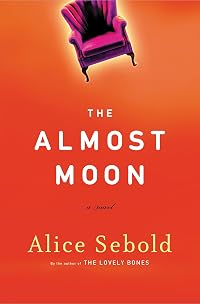
The Almost Moon
by Alice Sebold
On This Page
Description
For years Helen Knightly has given her life to others: to her haunted mother, to her enigmatic father, to her husband and now grown children. When she finally crosses a terrible boundary, her life comes rushing in at her in a way she never could have imagined. Unfolding over the next twenty-four hours, this searing, fast-paced novel explores the complex ties between mothers and daughters, wives and lovers, the meaning of devotion, and the line between love and hate. A challenging, moving, show more gripping story of cumulative disappointments and low self esteem which prevent Helen from planning too far ahead or from expecting too much from the world. She's forever trapped in the muck of low expectations. show lessTags
Recommendations
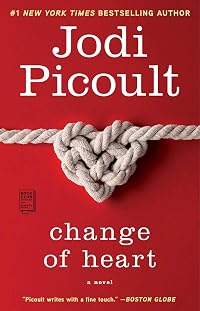
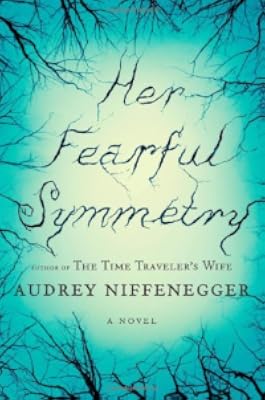
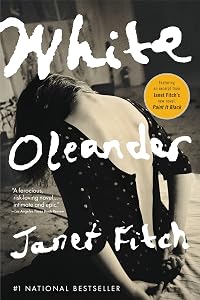
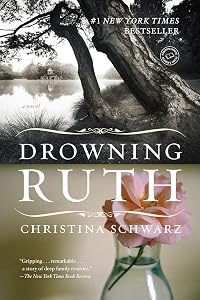

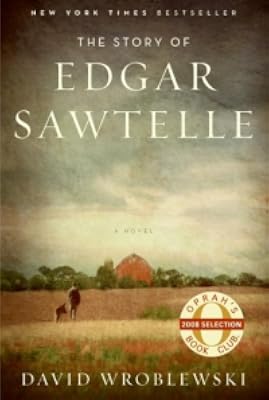
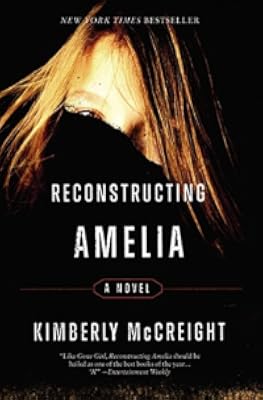
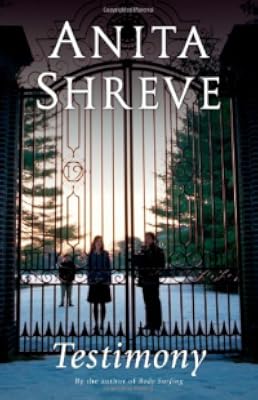
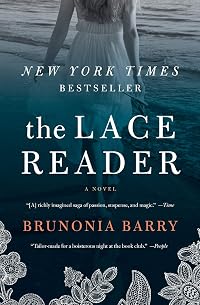
Member Recommendations

Member Reviews
This story is about the mental illness of an entire family, not just a mother. Everyone in the family is a victim, something I think many of those who have reviewed "The Almost Moon" on LT do not understand. Since it is written from the point of view of the daughter, Helen, it is easy to become lost in her memories of her childhood and miss the illness of her father, whom she idolizes. It is a horrifying, dark, and achingly sad book, but compelling, especially for anyone who has experienced caring for a mentally ill parent. The big question for me is, "Why does she stay, why does she continue?"; the same question I have had for myself. But the second important question is, "How could she not stay?"
This is an important book for anyone show more who is honest enough to admit their love/hate relationship with a parent, and who can relate to the desire to end the suffering. show less
This is an important book for anyone show more who is honest enough to admit their love/hate relationship with a parent, and who can relate to the desire to end the suffering. show less
I should preface this by saying that I have never read a book with an accumulative star rating this low before. It also confirms that star ratings are ridiculous - or maybe that one star ratings are compliments in disguise.
Can someone explain to me why a story has to have likable characters? Why someone who is clearly loosing it should act in a way a sane reader finds believable? I'm pretty sure when I read fight club I didn't think I would act that way... but she's a woman, so she has to be in fiction that can be quickly accessed and then resolved with a nice bow on top.
Let me be clear: this book is poisonous. It's hits hard, especially to anyone who understand complicated issues between mothers and daughters. But that's what it's show more supposed to be, it's supposed to be poisonous, it's supposed to disturb the reader and make us feel bad and I thought it was very well crafted.
To me, the character made perfect sense, and I even liked her as much as that is possible. She did the best she could for a long time and then she snapped and did something she couldn't take back. I thought the book depicted that situation beautifully.
Now, I have thing for Alice Sebold: I thought The Lovely Bones was good and entertaining, but my special interest is in those books that were generally described as disappointing, like Lucky and this one. Maybe her way of seeing the world just makes sense to me, and maybe that doesn't bode that well, but just because she describes the world out of the viewpoint from characters who may not fit exactly in the nice, uplifting story with a bow on top formula so predominant in so-called "women's fiction" doesn't mean it's bad writing. show less
Can someone explain to me why a story has to have likable characters? Why someone who is clearly loosing it should act in a way a sane reader finds believable? I'm pretty sure when I read fight club I didn't think I would act that way... but she's a woman, so she has to be in fiction that can be quickly accessed and then resolved with a nice bow on top.
Let me be clear: this book is poisonous. It's hits hard, especially to anyone who understand complicated issues between mothers and daughters. But that's what it's show more supposed to be, it's supposed to be poisonous, it's supposed to disturb the reader and make us feel bad and I thought it was very well crafted.
To me, the character made perfect sense, and I even liked her as much as that is possible. She did the best she could for a long time and then she snapped and did something she couldn't take back. I thought the book depicted that situation beautifully.
Now, I have thing for Alice Sebold: I thought The Lovely Bones was good and entertaining, but my special interest is in those books that were generally described as disappointing, like Lucky and this one. Maybe her way of seeing the world just makes sense to me, and maybe that doesn't bode that well, but just because she describes the world out of the viewpoint from characters who may not fit exactly in the nice, uplifting story with a bow on top formula so predominant in so-called "women's fiction" doesn't mean it's bad writing. show less
"Now, truth be told, I didn't like The Lovely Bones, so I'm not sure what made me decide to read this book. I think I should have liked this book as it talks about dysfunctional families, and in the past I've related well to many stories that have that theme. But this story seemed to totally pass over the uplifing parts; the parts where you admire the tenacity of the human spirit, and simply exposes the underbelly of human weakness. It wasn't a pretty sight.
The writing style is similar to The Lovely Bones, but this time Sebold takes us into the world of mental illness and the dysfunction it can cause in a family. The book is pretty raw and really doesn't shy away from graphic description. Normally, I like that. But in this case, I felt show more it conflicted with the more artistic writing style of the author. And no getting around it, the protagonist in this book is unlikeable. Period. Not unlikeable in that ""love to hate 'em"" kinda way either. Not unlikeable in that ""can't wait to see the next evil thing they do"". Just blah and weak - - I just didn't care about her enough to feel sorry for her or to really care about her fate. And let's just say her fate ends up to be pretty blah as well, as in the ending is not satisfying in any regard. All in all, I suggest giving this one a pass. " show less
The writing style is similar to The Lovely Bones, but this time Sebold takes us into the world of mental illness and the dysfunction it can cause in a family. The book is pretty raw and really doesn't shy away from graphic description. Normally, I like that. But in this case, I felt show more it conflicted with the more artistic writing style of the author. And no getting around it, the protagonist in this book is unlikeable. Period. Not unlikeable in that ""love to hate 'em"" kinda way either. Not unlikeable in that ""can't wait to see the next evil thing they do"". Just blah and weak - - I just didn't care about her enough to feel sorry for her or to really care about her fate. And let's just say her fate ends up to be pretty blah as well, as in the ending is not satisfying in any regard. All in all, I suggest giving this one a pass. " show less
2023 Advent, Day 6: I started reading and instantly became very sad as it was a story about a mature (her kids are fully grown adults) taking care of her aging mother who seemed to have mental struggles and likely developing dementia. This is a subject i am already very sensitive to and so braved myself for some cathartic crying. I was prepared for a novel exploring aging and mortality and healing generational wounds and trauma even if one participant cannot even remember the issues. NOPE. the woman murders her mom. This is a story about trauma, just not the kind i was anticipating, and about matricide.
.
If you should be interested, I do not count the above as spoilers because that all happens in the first couple of chapters, and is show more strongly hinted at in the plot synopsis on the back cover. Judge a book by it's cover? Clearly was not me today..... show less
.
If you should be interested, I do not count the above as spoilers because that all happens in the first couple of chapters, and is show more strongly hinted at in the plot synopsis on the back cover. Judge a book by it's cover? Clearly was not me today..... show less
I am truly baffled by most of the other readers' reviews here. I thought this book was incredible. The main character/narrator was very flawed (aren't we all?) but that is what made her so compelling for me. My copy has many dog-eared pages and lots of underlining of phrases that I thought were beautifully written, believable and struck a personal nerve. Perhaps many critical readers of this book saw too much of themselves here and it made them angry and uncomfortable.
Some of my favorite phrases " Poison and medicine are the same thing, given in different proportions."
"Dead or alive, a mother or the lack of a mother shaped one's whole life."
Much kudos to Alice Sebold for being a brave writer - someone who is not afraid to say what show more doesn't don't dare to. show less
Some of my favorite phrases " Poison and medicine are the same thing, given in different proportions."
"Dead or alive, a mother or the lack of a mother shaped one's whole life."
Much kudos to Alice Sebold for being a brave writer - someone who is not afraid to say what show more doesn't don't dare to. show less
I should preface this by saying that I have never read a book with an accumulative star rating this low before. It also confirms that star ratings are ridiculous - or maybe that one star ratings are compliments in disguise.
Can someone explain to me why a story has to have likable characters? Why someone who is clearly loosing it should act in a way a sane reader finds believable? I'm pretty sure when I read fight club I didn't think I would act that way... but she's a woman, so she has to be in fiction that can be quickly accessed and then resolved with a nice bow on top.
Let me be clear: this book is poisonous. It's hits hard, especially to anyone who understand complicated issues between mothers and daughters. But that's what it's show more supposed to be, it's supposed to be poisonous, it's supposed to disturb the reader and make us feel bad and I thought it was very well crafted.
To me, the character made perfect sense, and I even liked her as much as that is possible. She did the best she could for a long time and then she snapped and did something she couldn't take back. I thought the book depicted that situation beautifully.
Now, I have thing for Alice Sebold: I thought The Lovely Bones was good and entertaining, but my special interest is in those books that were generally described as disappointing, like Lucky and this one. Maybe her way of seeing the world just makes sense to me, and maybe that doesn't bode that well, but just because she describes the world out of the viewpoint from characters who may not fit exactly in the nice, uplifting story with a bow on top formula so predominant in so-called "women's fiction" doesn't mean it's bad writing. show less
Can someone explain to me why a story has to have likable characters? Why someone who is clearly loosing it should act in a way a sane reader finds believable? I'm pretty sure when I read fight club I didn't think I would act that way... but she's a woman, so she has to be in fiction that can be quickly accessed and then resolved with a nice bow on top.
Let me be clear: this book is poisonous. It's hits hard, especially to anyone who understand complicated issues between mothers and daughters. But that's what it's show more supposed to be, it's supposed to be poisonous, it's supposed to disturb the reader and make us feel bad and I thought it was very well crafted.
To me, the character made perfect sense, and I even liked her as much as that is possible. She did the best she could for a long time and then she snapped and did something she couldn't take back. I thought the book depicted that situation beautifully.
Now, I have thing for Alice Sebold: I thought The Lovely Bones was good and entertaining, but my special interest is in those books that were generally described as disappointing, like Lucky and this one. Maybe her way of seeing the world just makes sense to me, and maybe that doesn't bode that well, but just because she describes the world out of the viewpoint from characters who may not fit exactly in the nice, uplifting story with a bow on top formula so predominant in so-called "women's fiction" doesn't mean it's bad writing. show less
(Reprinted from the Chicago Center for Literature and Photography [cclapcenter.com]. I AM THE ORIGINAL AUTHOR OF THIS ESSAY, and also the owner of CCLaP; I am not reprinting this illegally.)
I freely admit it; that as a man, there are sometimes things that women do that utterly baffle me, and will probably continue to baffle me until the day I freaking die, just like it is with women regarding men. And that's because, avoiding any kind of qualitative judgment, I think we can all agree that there are fundamentally different ways that men and women sometimes react in different situations, based on a variety of criteria and societal concerns, and that in some cases such actions and behaviors can seem incomprehensible to the other gender. show more You don't hear of too many men, for example, who just lose their marbles one day, drive their kids to a nearby lake and calmly drown them; not too many male jilted lovers go on insane cross-country drives in the middle of the night, with bizarre weapons in tow and while wearing adult diapers so that they don't have to make bathroom breaks, all in the name of some crazed crackpot scheme thought up in the middle of the night regarding stabbing their lover's new lover then turning the knife on themselves.
It is one of these very topics, in fact, that fuels the entire storyline of acclaimed author Alice Sebold's latest brilliantly twisted dark little novel, The Almost Moon; in fact, that's what the very first chapter of the book is devoted to, is a real-time blow-by-blow accounting of a middle-aged woman suddenly going insane one day and murdering her senile, sh-t-covered old-age mother, just randomly one afternoon while over at her house and preparing to clean her like a baby for the thousandth time in a row now. What the rest of this delightfully wicked story is about, then, is a fascinating and detailed look at the decades leading up to this moment, told in a non-narrative "hyperfiction" style that jumps from early-childhood to just yesterday at the blink of an eye, painting one of the deepest portraits you'll see in contemporary literature of a dysfunctional mother-daughter relationship, and of all the teeny, tiny, strange, entertaining, depressing, hopeless, fascinating ways the relationship affects the way the woman deals with each and every other person in her life too. It is utterly a female story, the kind that can only be told by a female author, but told in a way so that I as a male reader can get it too; I love such novels, as I've mentioned here before, and am always glad to come upon another one like I have this week.
So why does Sebold's name sound so familiar, you're thinking? Well, because she's the mousy dark novelist who seemingly appeared out of nowhere in the early 2000s to write The Lovely Bones, an emotionally devastating crime thriller and meditation on loss that happened to have been written from the standpoint of a murdered teenage girl as she watches the proceedings from heaven. I read it too when it first came out, and like many others it made me openly weep in public; it became not only a runaway bestseller, but is also slated to be the next movie by Lord of the Rings impresario Peter Jackson. Oh yeah, that Alice Sebold!
This is only her second novel, after taking a break between them to pen the true rape memoir Lucky; and it is the best kind of second novel to write, to tell you the truth, one that captures every ephemeral thing that's great about that author while changing all the logistical details of the actual story. Do you know what I mean? Ultimately it's a tricky thing that an audience wants from a surprisingly successful first-time author, when it comes time for their second novel; they don't want a repeat of what they saw before, but they want a repeat of everything that made it so page-turning, and they desperately want that author to be smart enough to understand the difference themselves and deliver it, without them having to spell it out for the author. And if the author in question gets all of this even slightly wrong, the usual reaction is to be disappointed; there's a reason, after all, that they call it the "sophomore slump."
For example, like The Lovely Bones, Sebold in The Almost Moon has an almost magical way of finding the inner intimacy of a moment, the absolutely most still part of an event where there is nothing but that person and their conscience, a place where she holds us and lets us watch what goes on in such a moment; but unlike Bones, here Sebold puts us in a much more normal situation, one that a growing amount of creative projects these days concern themselves with, which is the dilemma of a middle-aged child caring for a dementia-addled parent who was otherwise a raging monster to everyone for the eight previous decades they were sane. It's nice to see Sebold take on a much more believable and ho-hum subject like this, because it would've been so tempting I think to try to duplicate the "edging to the line of gimmicky" hook she uses in the so-admired Bones; having a cutesy gimmick at the core of your story, though, like a dead girl narrating the story of her own murder investigation, is affecting the very first time you see it, diminishingly so each subsequent time, something I wish to f--king God someone would tell M Night Shyamalan.
But this is what I mean by this being such a great second novel; that although Sebold has picked a much more normal subject to base a story around this time and a much more normal way to tell it, she's infused it with the same sparkling dark touch that made Bones such a tear-jerker; it's the story of a woman dealing with this horrid curse-shrieking monster day in and day out, over and over and over, week after week and year after year, for a decade in a row for no help before one random day she just simply snaps. What are we to think of such a woman? And now that you have the answer to that, how are we to think of her if she starts doing crazier and crazier stuff that makes her less and less sympathetic? Like, snip off one of her dead mother's hair trusses and put it in her purse? Or try stuffing her dead mother's body in the basement freezer because she suddenly starts irrationally worrying about the idea of the cadaver rotting before the police arrive? In this, then, The Almost Moon is not really the story of the act itself, a tragic accident that could easily be forgotten in a lot of situations after a legal slap on the wrist; it's instead the story of a woman who goes profoundly more nuts after the crime of passion itself, who ends up making it abundantly clear that this was a deliberate act and that she will need to face some type of punishment in order for justice to be served.
Like I said, the way Sebold tries to explain this, then, is by spending the next 24 hours of the woman's life looking back at the last 50 or so years of her past, of her relationship to her mother over all that time and of the various ways the woman was a complete and out-of-control monster. Because make no mistake, the dead senile mother in question here (Clair Knightly is her name) is the kind of role that Bette Davis would play if Bette Davis were still alive; a cackling kind of old-woman bitterness and anger, a cruelty that makes complete strangers frown and shake their heads when exposed to just a few seconds of her at a public supermarket or the like. Clair is the kind of woman who, when finding out her husband suffers from depression, not only refuses to help the situation but constantly utters things to hasten a suicide attempt, just so she can prove that she's the emotionally stronger of the two; the kind of woman who spends her late dementia screaming random curse words in public and defecating herself in awkward situations, leading you to swear to God that she's doing it all on purpose.
Clair's daughter Helen deals with all this in a variety of ways over the decades, from defiance to acceptance to avoidance and all the rest; and like I said, a big part of this book is also devoted to showing the ways this relationship has affected Helen herself as an adult, not only her own failed marriage but her piddling "career" as a nude model for the local community college, her own two daughters whose relationships are strained at best, her life in the same drab low-class Pennsylvania town where she was raised, living in fact just a few miles away from where she grew up. This is one of the most wonderful things about Sebold as a writer, in fact, or at least in my opinion; she is a master of the deep character study, presenting us in this case with a 290-page portrait of a 50-year-old suburban mess, showing us step by step and page by page how this one overwhelming crisis (the murder of her mother in an unthinking moment of extreme stress) could just snap such a woman's brain like a light switch and send her officially right off the deep end.
It's an utterly fascinating read, just utterly fascinating, much too delicate at points to be a big hit with everyone, but certainly something destined to be a favorite among those who like delicate writers. Given what a big fan I was of The Lovely Bones, I'm relieved and happy to report how great her second novel is, something not only destined to make her a lot of new fans but sure not to disappoint existing fans at all. It gets a big recommendation from me here, especially when adding the final detail of it being a book by a woman and about distinctly female issues, something I admit I don't get to feature enough here, so am always glad when I again get the chance.
Out of 10:
Story: 8.3
Characters: 10
Style: 9.5
Overall: 9.4 show less
I freely admit it; that as a man, there are sometimes things that women do that utterly baffle me, and will probably continue to baffle me until the day I freaking die, just like it is with women regarding men. And that's because, avoiding any kind of qualitative judgment, I think we can all agree that there are fundamentally different ways that men and women sometimes react in different situations, based on a variety of criteria and societal concerns, and that in some cases such actions and behaviors can seem incomprehensible to the other gender. show more You don't hear of too many men, for example, who just lose their marbles one day, drive their kids to a nearby lake and calmly drown them; not too many male jilted lovers go on insane cross-country drives in the middle of the night, with bizarre weapons in tow and while wearing adult diapers so that they don't have to make bathroom breaks, all in the name of some crazed crackpot scheme thought up in the middle of the night regarding stabbing their lover's new lover then turning the knife on themselves.
It is one of these very topics, in fact, that fuels the entire storyline of acclaimed author Alice Sebold's latest brilliantly twisted dark little novel, The Almost Moon; in fact, that's what the very first chapter of the book is devoted to, is a real-time blow-by-blow accounting of a middle-aged woman suddenly going insane one day and murdering her senile, sh-t-covered old-age mother, just randomly one afternoon while over at her house and preparing to clean her like a baby for the thousandth time in a row now. What the rest of this delightfully wicked story is about, then, is a fascinating and detailed look at the decades leading up to this moment, told in a non-narrative "hyperfiction" style that jumps from early-childhood to just yesterday at the blink of an eye, painting one of the deepest portraits you'll see in contemporary literature of a dysfunctional mother-daughter relationship, and of all the teeny, tiny, strange, entertaining, depressing, hopeless, fascinating ways the relationship affects the way the woman deals with each and every other person in her life too. It is utterly a female story, the kind that can only be told by a female author, but told in a way so that I as a male reader can get it too; I love such novels, as I've mentioned here before, and am always glad to come upon another one like I have this week.
So why does Sebold's name sound so familiar, you're thinking? Well, because she's the mousy dark novelist who seemingly appeared out of nowhere in the early 2000s to write The Lovely Bones, an emotionally devastating crime thriller and meditation on loss that happened to have been written from the standpoint of a murdered teenage girl as she watches the proceedings from heaven. I read it too when it first came out, and like many others it made me openly weep in public; it became not only a runaway bestseller, but is also slated to be the next movie by Lord of the Rings impresario Peter Jackson. Oh yeah, that Alice Sebold!
This is only her second novel, after taking a break between them to pen the true rape memoir Lucky; and it is the best kind of second novel to write, to tell you the truth, one that captures every ephemeral thing that's great about that author while changing all the logistical details of the actual story. Do you know what I mean? Ultimately it's a tricky thing that an audience wants from a surprisingly successful first-time author, when it comes time for their second novel; they don't want a repeat of what they saw before, but they want a repeat of everything that made it so page-turning, and they desperately want that author to be smart enough to understand the difference themselves and deliver it, without them having to spell it out for the author. And if the author in question gets all of this even slightly wrong, the usual reaction is to be disappointed; there's a reason, after all, that they call it the "sophomore slump."
For example, like The Lovely Bones, Sebold in The Almost Moon has an almost magical way of finding the inner intimacy of a moment, the absolutely most still part of an event where there is nothing but that person and their conscience, a place where she holds us and lets us watch what goes on in such a moment; but unlike Bones, here Sebold puts us in a much more normal situation, one that a growing amount of creative projects these days concern themselves with, which is the dilemma of a middle-aged child caring for a dementia-addled parent who was otherwise a raging monster to everyone for the eight previous decades they were sane. It's nice to see Sebold take on a much more believable and ho-hum subject like this, because it would've been so tempting I think to try to duplicate the "edging to the line of gimmicky" hook she uses in the so-admired Bones; having a cutesy gimmick at the core of your story, though, like a dead girl narrating the story of her own murder investigation, is affecting the very first time you see it, diminishingly so each subsequent time, something I wish to f--king God someone would tell M Night Shyamalan.
But this is what I mean by this being such a great second novel; that although Sebold has picked a much more normal subject to base a story around this time and a much more normal way to tell it, she's infused it with the same sparkling dark touch that made Bones such a tear-jerker; it's the story of a woman dealing with this horrid curse-shrieking monster day in and day out, over and over and over, week after week and year after year, for a decade in a row for no help before one random day she just simply snaps. What are we to think of such a woman? And now that you have the answer to that, how are we to think of her if she starts doing crazier and crazier stuff that makes her less and less sympathetic? Like, snip off one of her dead mother's hair trusses and put it in her purse? Or try stuffing her dead mother's body in the basement freezer because she suddenly starts irrationally worrying about the idea of the cadaver rotting before the police arrive? In this, then, The Almost Moon is not really the story of the act itself, a tragic accident that could easily be forgotten in a lot of situations after a legal slap on the wrist; it's instead the story of a woman who goes profoundly more nuts after the crime of passion itself, who ends up making it abundantly clear that this was a deliberate act and that she will need to face some type of punishment in order for justice to be served.
Like I said, the way Sebold tries to explain this, then, is by spending the next 24 hours of the woman's life looking back at the last 50 or so years of her past, of her relationship to her mother over all that time and of the various ways the woman was a complete and out-of-control monster. Because make no mistake, the dead senile mother in question here (Clair Knightly is her name) is the kind of role that Bette Davis would play if Bette Davis were still alive; a cackling kind of old-woman bitterness and anger, a cruelty that makes complete strangers frown and shake their heads when exposed to just a few seconds of her at a public supermarket or the like. Clair is the kind of woman who, when finding out her husband suffers from depression, not only refuses to help the situation but constantly utters things to hasten a suicide attempt, just so she can prove that she's the emotionally stronger of the two; the kind of woman who spends her late dementia screaming random curse words in public and defecating herself in awkward situations, leading you to swear to God that she's doing it all on purpose.
Clair's daughter Helen deals with all this in a variety of ways over the decades, from defiance to acceptance to avoidance and all the rest; and like I said, a big part of this book is also devoted to showing the ways this relationship has affected Helen herself as an adult, not only her own failed marriage but her piddling "career" as a nude model for the local community college, her own two daughters whose relationships are strained at best, her life in the same drab low-class Pennsylvania town where she was raised, living in fact just a few miles away from where she grew up. This is one of the most wonderful things about Sebold as a writer, in fact, or at least in my opinion; she is a master of the deep character study, presenting us in this case with a 290-page portrait of a 50-year-old suburban mess, showing us step by step and page by page how this one overwhelming crisis (the murder of her mother in an unthinking moment of extreme stress) could just snap such a woman's brain like a light switch and send her officially right off the deep end.
It's an utterly fascinating read, just utterly fascinating, much too delicate at points to be a big hit with everyone, but certainly something destined to be a favorite among those who like delicate writers. Given what a big fan I was of The Lovely Bones, I'm relieved and happy to report how great her second novel is, something not only destined to make her a lot of new fans but sure not to disappoint existing fans at all. It gets a big recommendation from me here, especially when adding the final detail of it being a book by a woman and about distinctly female issues, something I admit I don't get to feature enough here, so am always glad when I again get the chance.
Out of 10:
Story: 8.3
Characters: 10
Style: 9.5
Overall: 9.4 show less
Members
- Recently Added By
Published Reviews
added by bkswrites
If you welcome the unreal disjunction between killing your mother and reflecting afterward how lucky you are compared with the children of the dead, “uncared for” mothers in Rwanda and Afghanistan, then this book will make you clap your hands with joy. If you find the idea that mothers shape their children’s “whole” lives original rather than simultaneously banal and puerilely show more overstated, then Barnes & Noble, here you come! This novel is so morally, emotionally and intellectually incoherent that it’s bound to become a best seller. show less
added by Lemeritus
...in The Lovely Bones the victim is young and innocent and the killer serial; in The Almost Moon the victim is old and hurtful, the killer barely a murderer at all. There's a similar alertness to the ways in which everyone's a victim and everyone has murderous feelings, and outlandish acts again come out of a need to love and feel loved.... The excess of craziness means we don't have, show more paradoxically, an intimate sense of what Helen is like: she's sardonic, practical, controlled - but then none of those things, just her crazy parents' daughter. show less
added by Lemeritus
Lists

I Can't Finish This Book
189 works; 22 members

Biggest Disappointments
606 works; 168 members
Author Information

6+ Works 49,667 Members
Alice Sebold was born in Madison, Wisconsin on September 6, 1963. She attended college at Syracuse University. She was raped as a freshman. Her first book, Lucky, is a memoir which tells the story of that event in her life and its aftermath. Following graduation from Syracuse, she went to the University of Houston for her graduate degree and show more received an MFA from the University of California, Irvine. Her other books include The Lovely Bones and The Almost Moon. She won the American Booksellers Association Book of the Year Award for Adult Fiction in 2003 for The Lovely Bones and the Bram Stoker Award for First Novel in 2002. In 2009 a feature film was released of The Lovely Bones starring Mark Wahlberg and Rachel Weisz. (Bowker Author Biography) show less
Some Editions
Awards and Honors
Awards
Distinctions
Series
Belongs to Publisher Series
Common Knowledge
- Canonical title
- The Almost Moon
- Original title
- The almost moon
- Original publication date
- 2007-10-15
- People/Characters
- Helen Knightly; Claire Knightly; Jake Trevor; Hamish; Natalie
- Important places
- Limerick nuclear plant
- Dedication
- Always, Glen
- First words
- When all is said and done, killing my mother came easily.
- Quotations
- And there it was, the hole that had given birth to me.…This was not the first time I’d been face-to-face with my mother’s genitalia.
- Last words
- (Click to show. Warning: May contain spoilers.)"There's no sign of her."
- Blurbers
- Grossman, Lev; Katutani, Michiko; Kerr, Sarah; Greenfield, Casey
- Original language*
- Amerikanisch
- Canonical DDC/MDS
- 813.6; 813.54
- Canonical LCC
- PS3619.E26
*Some information comes from Common Knowledge in other languages. Click "Edit" for more information.
Classifications
Statistics
- Members
- 4,530
- Popularity
- 3,235
- Reviews
- 185
- Rating
- (2.79)
- Languages
- 11 — Catalan, Chinese, Dutch, English, French, German, Italian, Norwegian (Nynorsk), Spanish, Swedish, Portuguese (Portugal)
- Media
- Paper, Audiobook, Ebook
- ISBNs
- 49
- ASINs
- 20