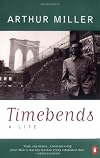
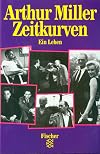
Timebends: A Life
by Arthur Miller
On This Page
Description
The definitive memoir of Arthur Miller-the famous playwright of The Crucible, All My Sons, Death of a Salesman, A View from the Bridge, and other plays-Timebends reveals Miller's incredible trajectory as a man and a writer. Born in 1915, Miller grew up in Harlem in the 1920s and 1930s, developed leftist political convictions during the Great Depression, achieved moral victory against McCarthyism in the 1950s, and became president of PEN International near the end of his life, fighting for show more writers' freedom of expression. Along the way, his prolific output established him as one of the greatest writers of the twentieth century-he wrote twenty-two plays, various screenplays, short stories, and essays, and won the Pulitzer Prize in 1949 for Death of a Salesman and the New York Drama Critics Circle Award in 1947 for All My Sons. Miller also wrote the screenplay for The Misfits, Marilyn Monroe's final film. This memoir also reveals the incredible host of notables that populated his life, including Marilyn Monroe, Elia Kazan, Clark Gable, Sir Laurence Olivier, John F. Kennedy, and Mikhail Gorbachev. Leaving behind a formidable reputation in the worlds of theater, cinema, and politics, Arthur Miller died in 2005 but his memoir continues his legacy. show lessTags
Recommendations






















Member Reviews
While this was published in 1989, it really ends in the late 60s with Miller's involvement with PEN and draws a curtain over his family life in Connecticut with photographer Inge Morath, who he married in February 1962. The meat of this autobiography is professional and artistic development from U of M and NYC dock workers before the plays: Death of a Salesman, The Crucible foreshadowing his haunting by HUAC and the growth of A View from one-act to full, successful play. Of course, much is given over to the marriage to Marilyn Monroe and The Misfits where Miller felt she was lethally overpowered by her insecurity and the complications of Paula Strasberg manipulating involvement.
A small part of this story quite stuck me. In 1955, Miller show more was stuck with the influx of narcotics into New York City neighborhoods, rather recalling Manchild in the Promised Land that I recently read. Anyway, he felt this was "symptomatic of a wider but impossible-to-define disorientation that far transcended the gangs." One evening at dinner with sociologist Richard Cloward of the Columbia University School of Social Work and James McCarthy both of Mobilization for Youth (MFY), "the question arose as to how this generation of youth differed from our own of the Thirties." The hopeful, progressive, leftist Miller hoped for a Thirties-style approach of a community of people caught in a common problem and dealing with it by mutual action and responsibility:
That seems to me remarkably prescient for describing the society we live in, now. Reminds me of "The 'revolution' of the future will not be driven by politics, but by aesthetics." This being a prediction made by J.G. Ballard. show less
A small part of this story quite stuck me. In 1955, Miller show more was stuck with the influx of narcotics into New York City neighborhoods, rather recalling Manchild in the Promised Land that I recently read. Anyway, he felt this was "symptomatic of a wider but impossible-to-define disorientation that far transcended the gangs." One evening at dinner with sociologist Richard Cloward of the Columbia University School of Social Work and James McCarthy both of Mobilization for Youth (MFY), "the question arose as to how this generation of youth differed from our own of the Thirties." The hopeful, progressive, leftist Miller hoped for a Thirties-style approach of a community of people caught in a common problem and dealing with it by mutual action and responsibility:
"If common action of this kind is out, how are people going to visualize their evolution?" I asked Cloward in particular, since he was more the theoretician than McCarthy or I.
"The question is going to be lifestyle," he replied.
I had never heard the expression before. "What's that mean?"
"There will be competing styles of life, symbolic and essentially meaningless differences in clothing, speech patterns, tastes in food, cars, and so forth. The class struggle is over for now, and maybe even the conception of rank-and-file organizing. People are less and less interested in common action, which even now is getting to seem strange and kind of pointless. Identification will be more and more in terms of style—the self-image will be politically neutralized that way. It's going to be style-conscious, not class-conscious."
That seems to me remarkably prescient for describing the society we live in, now. Reminds me of "The 'revolution' of the future will not be driven by politics, but by aesthetics." This being a prediction made by J.G. Ballard. show less
I usually avoid autobiographies, but I read this one and I'm glad I did. In some passages Miller is a bit longwinded and pedantic. In most of the book, he shines. There is a lot more to Arthur Miller than I had imagined. In the end, he comes across as a thoughtful, if frustrated, writer, but his insights into the times in which he lived make the book a gem, well worth reading.
Miller's autobiography is well written, but can seem somewhat defensive at times. It is fascinating to meet so many important figures through his eyes. Plus, it gives one a deeper appreciation for his plays and how they were developed.
He's from Brooklyn and his life is rife with references back to his boyhood there in and around neighborhoods where I grew up. ...Then there was Marilyn, and then his embattlement with McCarthy -- all of great interest to me, topped off by his notion of the world's workings, the randomness of it all, men and women struggling to make something of value in their lives and facing the futility of much that's gone before and lies ahead.20
Timebends by Arthur Miller is a long-winded autobiography that incoherently jumps back and forth. I struggled to get to the good stuff about his landmark plays Death of a Salesman, The Crucible, All my Sons, etc. The overwriting poetic language becomes tiresome after a hundred pages. I skipped over long passages that held little interest to me.
To tell you the truth this book can be a bit of a slog at times if you aren't a Miller nut & I certainly am not....but it's still a very interesting read and worth the effort and contains some very affecting pieces.
From Publishers Weekly: America's most famous living playwright (All My Sons, Death of a Salesman, Incident at Vichy, etc.) here does with his life story what nature does with rock strata, folding it back on itself to achieve the effects of many-layered richness and simultaneity that he aims for in his plays. It's a life as remarkable for its commitment as its achievement. Growing up on the edge of Harlem in the '20s and '30s, the son of a successful but semiliterate coat manufacturer, Miller discovered both his vocation and his leftist political convictions during the Depression and the rise of fascism. He achieved a moral victory against McCarthyism in the '50s; and it was under his presidency that PEN went from an ineffectual show more literary club to a real force for international freedom of expression. While covering these events, Miller traces the genesis of his plays in his life experience, provides vivid portraits of a host of notables in the worlds of theater, cinema and politics, including Elia Kazan, Lee and Paula Strasberg, John Huston, Clark Gable, Sir Laurence Olivier, John F. Kennedy and Mikhail Gorbachev, and a detailed, deeply touching one of his second wife, Marilyn Monroe, who finally slipped from his reach. Tough, compassionate, bristling with intelligence and profound reflections on the dramas of life and stage, this is one of the memorable autobiographies of our time. Photos. BOMC selection. Copyright 1987 Reed Business Information, Inc. show less
Members
- Recently Added By
Lists

Best Autobiographies and Memoirs
370 works; 67 members
Author Information

194+ Works 43,229 Members
The son of a well-to-do New York Jewish family, Miller graduated from high school and then went to work in a warehouse. He was born on October 17, 1915, in Harlem, New York City. His plays have been called "political," but he considers the areas of literature and politics to be quite separate and has said, "The only sure and valid aim---speaking show more of art as a weapon---is the humanizing of man." The recurring theme of all his plays is the relationship between a man's identity and the image that society demands of him. After two years, he entered the University of Michigan, where he soon started writing plays. All My Sons (1947), a Broadway success that won the New York Drama Critics Circle Award in 1947, tells the story of a son, home from the war, who learns that his brother's death was due to defective airplane parts turned out by their profiteering father. Death of a Salesman (1949), Miller's experimental yet classical American tragedy, received both the Pulitzer Prize and the New York Drama Critics Circle Award in 1949. It is a poignant statement of a man facing himself and his failure. In The Crucible (1953), a play about bigotry in the Salem witchcraft trials of 1692, Miller brings into focus the social tragedy of a society gone mad, as well as the agony of a heroic individual. The play was generally considered to be a comment on the McCarthyism of its time. Miller himself appeared before the Congressional Un-American Activities Committee and steadfastly refused to involve his friends and associates when questioned about them. His screenplay for The Misfits (1961), from his short story, was written for his second wife, actress Marilyn Monroe (see Vol. 3); After the Fall (1964) has clear autobiographical overtones and involves the story of this ill-fated marriage as well as further dealing with Miller's experiences with McCarthyism. In the one-act Incident at Vichy (1964), a group of men are picked off the streets one morning during the Nazi occupation of France. The Price (1968) is a psychological drama concerning two brothers, one a police officer, one a wealthy surgeon, whose long-standing conflict is explored over the disposal of their father's furniture. The Creation of the World and Other Business (1973) is a retelling of the story of Genesis, attempted as a comedy. The American Clock (1980) explores the impact of the Depression on the nation and its individual citizens. Among Miller's most recent works is Danger: Memory! (1987), a study of two elderly friends. During the 1980s, almost all of Miller's plays were given major British revivals, and the playwright's work has been more popular in Britain than in the United States of late. Miller died of heart failure after a battle against cancer, pneumonia and congestive heart disease at his home in Roxbury, Connecticut. He was 89 years old. (Bowker Author Biography) Arthur Miller, American playwright, was born on October 17, 1915, in New York City. He earned an AB from the University of Michigan and began to write plays while still a student. He won the first of his many awards, the Avery Hopwood Prize of the University of Michigan, for his first play, Honors at Dawn. This was followed by many other award-winning plays. One of the best-known of these, Death of a Salesman, won the Pulitzer Prize in Drama in 1949 as well as a Drama Critics Circle Award; it continues to be one of the most frequently performed and adapted plays of this century. Some of his other titles include The Crucible, A View From the Bridge, The Misfits, After the Fall, and Vichy. Miller also wrote several travel pieces, including In Russia and Chinese Encounters (both in collaboration with his third wife, Ingeborg Morath); a novel, Focus; and the autobiography, Timebends: A Life. Arthur Miller was married to Mary Grace Slattery in 1940. They had two children and were divorced in 1952. In 1956, he married actress Marilyn Monroe and they divorced in 1961. He married Morath in 1962 and they have two children together. (Bowker Author Biography) show less
Awards and Honors
Distinctions
Notable Lists
Series
Belongs to Publisher Series
Andanzas (78)
Common Knowledge
- Original publication date
- 1987
- People/Characters
- Arthur Miller; Marilyn Monroe; Inge Morath
- Important events
- McCarthy Era
- Dedication
- For Inge
- First words
- The view from the floor is of a pair of pointy black calf-height shoes, one of them twitching restlessly, and just above them the plum-colored skirt rising from the ankles to the blouse, and higher still the young round face ... (show all)and her ever-changing tones of voice as she gossips into the wall telephone with one of her two sisters, something she would go on doing for the rest of her life until one by one they peeled off the wire and vanished into the sky.
Classifications
Statistics
- Members
- 637
- Popularity
- 45,730
- Reviews
- 10
- Rating
- (3.79)
- Languages
- 10 — English, Finnish, French, German, Hungarian, Italian, Polish, Portuguese, Spanish, Swedish
- Media
- Paper, Audiobook, Ebook
- ISBNs
- 35
- ASINs
- 19