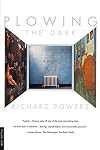
Plowing the Dark
by Richard Powers
On This Page
Description
A dazzling new novel by the author of Galatea 2.2 and GainIn a digital laboratory on the shores of Puget Sound, a band of virtual-reality researchers races to complete the Cavern, an empty white room that can become a jungle, a painting, or a vast Byzantine cathedral. In a war-torn Mediterranean city, an American is held hostage, chained to a radiator in another empty white room. What can possibly join these two remote places? Only the shared imagination, a room that these people unwittingly show more build in common, where they are all about to meet.Adie Klarpol, a skilled but disillusioned artist, comes back to life, revived by the thrill of working with cutting-edge technology. Against the collapse of Cold War empires and the fall of the Berlin Wall, she retreats dangerously into the cyber-realities she has been hired to create. On the other side of the globe, Taimur Martin, an English teacher recovering from a failed love affair, is picked up off the streets in Beirut by Islamic fundamentalists and held in solitary captivity.A mesmerizing fiction that explores the imagination's power to both destroy and save, Plowing the Dark recasts the rules of the novel and stands as Richard Powers's most daring work to date. show lessTags
Recommendations








Member Reviews
The language is sometimes a little too precious. The alliteration is distracting at times—"sallying forth among the salients" and "eidolons of eiderdown"—and when I read the phrase "stipulate the stipule," I got the idea it may have occurred to Powers out of the blue and been the seed for the entire book.
But the final chapters won me over. There are far too many books that are engaging and engrossing for most of their length, only to let you down in the final chapters. There's something to be said for a book that you have to force yourself to plow through to reach a totally satisfying ending that at last wins you over.
Was it intentional that the sections on the artists and programmers working in perfect freedom on such an show more intellectually stimulating project at the Cavern were so dry and superficial, while the chapters on the hostage in Lebanon were so much more compelling and vivid? show less
But the final chapters won me over. There are far too many books that are engaging and engrossing for most of their length, only to let you down in the final chapters. There's something to be said for a book that you have to force yourself to plow through to reach a totally satisfying ending that at last wins you over.
Was it intentional that the sections on the artists and programmers working in perfect freedom on such an show more intellectually stimulating project at the Cavern were so dry and superficial, while the chapters on the hostage in Lebanon were so much more compelling and vivid? show less
PLOWING opening page and subsequent hostage entries could have been extracted from the imagined journal of The Count of Monte Crisco.
A terrifying existence evolves while the VR people revel merrily in The Cavern.
Chained to the radiator Zach and a few of The RL people (Spider, Sue, Ebesen, Jackdaw, O'Reilly)
deliver strong main characters while the actual main ones - Ted, Stevie, and " I will kill you" Adie -
come across mostly as tiresome tropes,
from the abandonment of Art, to (bisexual?) composer leanings, to the sexual conquest of so many, many women.
Deeper development of the RL standouts in place of these three would have been welcome.
The creation of The Cavern, from Jungle Bees to Arles, Hagia Sophia's Dome,
and on to Ronan show more O'Reilly's immersive, transporting Globe was incredibly fascinating and enduring.
And how inspiring to think of what paintings we would Love to Live within!
Yet, readers may find it hard to anticipate when the prisoner suffers even more beatings and betrayals.
What exactly happened with Jackdaw and his date?
Vintage early Richard Powers "...every connection we can lay down between out here and in there...."
Which may be why many of us plow through the tough parts... show less
A terrifying existence evolves while the VR people revel merrily in The Cavern.
Chained to the radiator Zach and a few of The RL people (Spider, Sue, Ebesen, Jackdaw, O'Reilly)
deliver strong main characters while the actual main ones - Ted, Stevie, and " I will kill you" Adie -
come across mostly as tiresome tropes,
from the abandonment of Art, to (bisexual?) composer leanings, to the sexual conquest of so many, many women.
Deeper development of the RL standouts in place of these three would have been welcome.
The creation of The Cavern, from Jungle Bees to Arles, Hagia Sophia's Dome,
and on to Ronan show more O'Reilly's immersive, transporting Globe was incredibly fascinating and enduring.
And how inspiring to think of what paintings we would Love to Live within!
Yet, readers may find it hard to anticipate when the prisoner suffers even more beatings and betrayals.
What exactly happened with Jackdaw and his date?
Vintage early Richard Powers "...every connection we can lay down between out here and in there...."
Which may be why many of us plow through the tough parts... show less
Powers is an amazing writer, even if in the end he can't quite pull it off. The threads here are a team of virtual reality programmers working in Seattle, an American held hostage in Lebanon (the book is set in the late 80s), and a former friend of the researchers battling MS. Each of the threads are creating their own worlds out of necessity or play, and while they do come together in the end it is not altogether convincing.
My comments here will be mostly questions, as that is what this book left me with. Questions like: why did Powers choose a period ten years ago to focus on? Why focus on technology ten years old? If there was a group developing VR to the degree shown in this book, where is it now (or is that the Point, that the military en-Gulfed it?) I kept having to remind myself that the story was happening in 1990, not 2000, despite the level of sophistication of the Cavern. Was that technology really around back then? I tried very hard but failed to see the connection between the hostage story and the VR story. Best I could come up with was the Nature of Perception, how our view of the world and reality is affected by circumstances. Perhaps my show more perception of this book is colored by the science fiction I have read, and my work as an artist and computer programmer. I wanted this book to be a different one. I wanted it to be Galatea meets VR. I wanted it to be about the current day, and current technology, and what it means to us now and to our future. There must have been some point to writing an "historical" novel about a time period so very recent, but I did not see it. I enjoyed the book quite a bit. I appreciated the references to art history mixed in with computer science. But I found myself wondering just how many people happen to have a background in both? If he had been making off-hand remarks about some other arcane areas I'd have been pretty bored, I think. Lost, at least. My favorite by Powers is still Goldbug. There was a book where it made sense to go back in (fairly) recent time, and to mix music with computer science. The characters were more alive in Goldbug. I found it hard to relate or empathize with those in Plowing the Dark. I, too, have turned my back on the world of Fine Art, and endevor to find a life with computers, but I couldn't quite figure out Klarpol's problem. I found a recent interview with Powers, but these questions remain unsolved. show less
A preposterous idea for a novel (a double plot involving Middle Eastern hostage-taking and Silicon Valley virtual reality) is somehow carried off here by Powers. More than anything, this fills me with nostalgia for the early 1990s, when Lawnmower Man was in the theaters. Not as good as Galatea 2.2, but, as always, an interesting premise taken very far by a powerful mind.
The two story lines kept me reading - how can these stories possibly converge? I don't think I can even spoil the story. It's a miracle!
I guess the story is maybe about the transformative power of art?
I guess the story is maybe about the transformative power of art?
I found it to be full of factual errors, cliché and half-undertood buzzwords.
Read the full review here
Read the full review here
Members
- Recently Added By
Lists

Best Contemporary Literary Fiction (Around the Last 30 Years)
388 works; 124 members

Best 21st Century Books (So Far)
670 works; 85 members

Five star books
1,755 works; 107 members
Author Information

21+ Works 22,459 Members
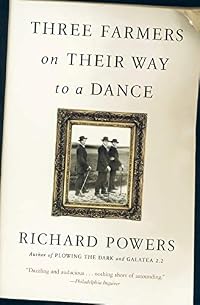
Richard Powers was born on June 18, 1957 in Evanston, Illinois. He received bachelor's and master's degrees in English from the University of Illinois at Urbana-Champaign. After graduation, he moved to Boston, Massachusetts and worked as a computer programmer and freelance data processor. One day he saw August Sander's 1914 black-and-white show more photograph of three Westerwald farm boys heading to a dance at the Museum of Fine Arts. This photograph inspired Powers to quit his job and try writing a novel. Three Farmers on Their Way to a Dance was published in 1985. His other works include Prisoner's Dilemma, The Gold Bug Variations, Operation Wandering Soul, Galatea 2.2, Plowing the Dark, The Time of Our Singing, and Generosity: An Enhancement. He received numerous awards including the James Fenimore Cooper Prize for Best Historical Fiction for Gain, the National Book Award for The Echo Maker, and Pulitzer Prize in fiction for The Overstory: A Novel. (Bowker Author Biography) show less
Some Editions
Common Knowledge
- Canonical title
- Plowing the Dark
- Original title
- Plowing the Dark
- Original publication date
- 2000
Classifications
Statistics
- Members
- 713
- Popularity
- 39,584
- Reviews
- 9
- Rating
- (3.70)
- Languages
- Dutch, English, French, German
- Media
- Paper, Audiobook, Ebook
- ISBNs
- 17
- ASINs
- 4