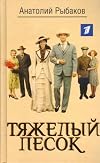
The Dirk
by Anatoli Rybakov
On This Page
Description
Harrison Salisbury says: "The epic tragedy of Stalin's Russia has never been written with such pervasive and dramatic terror as by Anatoli Rybakov in his semifictional novel, "FEAR". "Once read, it is a tale which will be engraved on the mind of the reader for life.''.... The San Francisco Chronicle says: " A landmark in Soviet literary history... Rybakov is a major talent."Tags
Recommendations







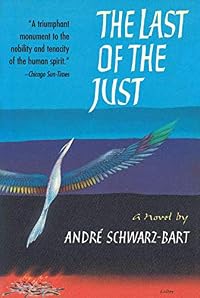


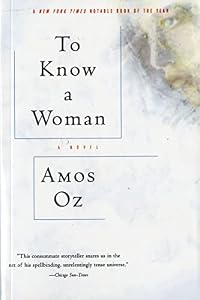
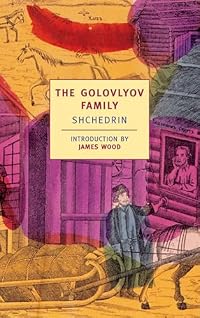








Member Recommendations
Member Reviews
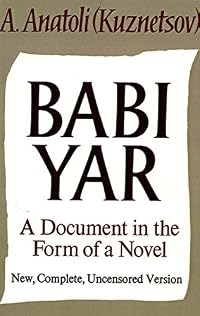
Two stories: the saga of a part-Jewish family in Ukraine from 1909 to about 1950 and the detailed story of the Nazi destruction of the Jewish community in the family’s village in World War Two. The writing couldn’t be more accessible; Rybakov writes as if you’re sitting with him and he’s telling you a story; he tells it brilliantly. That said, although the story is engrossing, this book is not “high” literature and wouldn’t have likely earned great attention anywhere but the USSR when it was published in 1978. Why? Because Rybakov openly addressed so many different topics that were still not simply spoken about then. As one example, he gave a detailed description of Jewish life in the decade before the revolution. The show more first part of the book is a love story/family history set in a village where Russians, Jews, Ukrainians, and Byelorussians all lived amicably. The second part reminded me of Anatoly Kuznetsov’s Babi Yar, a chilling documentary novel about the German’s massacre of 100,000 to 150,000 Jews in Kiev in 1941. While Heavy Sand doesn’t have quite the same effect as Kuznetsov, it is nevertheless a powerful work because the reader has come to identify with the family emotionally and Rybakov tells of the community’s destruction is horrifying detail. Rybakov’s later, vividly anti-Stalinist Children of the Arbat, would not appear for another decade and there is little hint here of his views. Recommended, if the subject is of interest; otherwise not. [For what it’s worth: three of my four grandparents were from Jewish communities in Belarus not terribly far from where this story takes place. Much of the story—both about the family and the village—seems very accurate to me.] show less
If I were to choose a 20th century Russian novelist to take works of which to a deserted island Rybakov would be the one. With 'Children of the Arbat' and 'Fear' Rybakov wrote about the Soviet Union of the 30's and 40's and the Stalin dictatorship--the gulag system juxtaposing it against the terror going on at the same time--the trials and executions of some of the elite political, military and etc. Russian figures of that time and commenting on how it played out historically in the context of World War to come. In 'Heavy Sand' that World War will come to a small village in Southern Ukraine with a vengeance. There seems to be something here more auto-biographical (for a novel) than the 2 above mentioned books as Rybakov was Jewish and show more born in the area described and at about the same times as his narrator. The narrator Boris Ivanovsky (the second son of Jakob and Rachel) goes back in time to when his father Jakob Ivanovsky (born and raised as a lutheran in Switzerland) returns with his father to his fathers native village in the Ukraine. Jakob is a very young man at the time and falls in love with Rachel Rahklenko an even younger girl who is Jewish. Jakob eventually marries Rachel over the objections of his own family and settles with her in Switzerland but she returns on her own because she cannot stand it there and Jakob follows her and their life begins all over again in the Ukraine. They raise a large family and Jakob struggles with the language and his less than robust constitution to find himself a niche within the community. The first half to two thirds of the book centers around this. When the Germans come the family is forced into a ghetto with other Jews from the village and the surrounding area. They are put to hard labor and many are executed for the most specious of reasons. After some time the Germans evacuate one section of the ghetto and execute all those therein. Jakob though not brought up a Jew but a German speaking Swiss--has opportunity after opportunity to leave--he will be given a job by the German speaking authorities but he is obstinate in wanting to remain with his family and suffer whatever fate brings their way. In the end though he leaves them with Rachel's encouragement and also because he can help the partisans outside the ghetto taking a job at the railway depot. A number of his family have already died or been murdered by this time. Eventually he will help bring a small number of weapons into the ghetto--but will turn himself over to the authorities when the Germans announce they will kill 100 men unless someone owns up to it. He is brutally tortured afterwards for names which he does not give and hung in front of the population of the ghetto. His is one of the more brutal deaths but IMO not even the worse. As it works out an uprising does takes place--organized by Rachel's brother Grisha (a partisan who sneaks into the ghetto) on the eve of another German pogrom and some of those trapped in the ghetto are able to break out and survive. Grisha's partisans a smaller group of a unit led by one Sidorov is wiped out in the battle that follows.
This is an excellent book about a village--and about the war and about the most inhumane of ideologies that destroyed that village. Rybakov is a subtle writer--and I don't know if my description above really does the book justice. It is slow at first--more and more gradually picking up momentum as the chapters go by. Rybakov to be is in the first rank of Russian epic novelists--and not just those from the 20th century. His understanding of the psychologies of diverse people as represented by his characters is quite astounding. An excellent book that I would strongly recommend. show less
This is an excellent book about a village--and about the war and about the most inhumane of ideologies that destroyed that village. Rybakov is a subtle writer--and I don't know if my description above really does the book justice. It is slow at first--more and more gradually picking up momentum as the chapters go by. Rybakov to be is in the first rank of Russian epic novelists--and not just those from the 20th century. His understanding of the psychologies of diverse people as represented by his characters is quite astounding. An excellent book that I would strongly recommend. show less
Uha, det er barsk læsning
Description saisissante d’un ghetto juif soviétique, sans jamais sombrer dans le mélodramatique, l’auto-apitoiement, encore moins le sectarisme.
On est bien entendu encore loin de la critique politique de la Trilogie.
On est bien entendu encore loin de la critique politique de la Trilogie.
Sep 18, 2009French
Ratings
Members
- Recently Added By
Author Information

35+ Works 1,383 Members
Some Editions
Awards and Honors
Common Knowledge
- Canonical title
- Heavy sand; The Dirk
- Original title
- Тяжелый песок; Tyazhelyi Pesok
- Original publication date
- 1981 (English translation) (English translation); 1978; 1987-11 (Japanese translation) (Japanese translation)
- Epigraph
- И служил Иаков за Рахиль семь лет,
и они показались ему за несколько дней,
потому что он любил ее.
Бытие, гл. 29,... (show all) ст. 20
Oh that my grief were thoroughly
weighed, and my calamity laid
in the balances together!
For now it would be heavier than the
sand of the sea: therefore my
words are swallowed up.
Job 6:2-3 - First words
- Что было особенного в моем отце?
Was there something special about my father? - Last words*
- (Click to show. Warning: May contain spoilers.)- Да, - ответил я, - все правильно, все точно.
- Original language
- Russian
*Some information comes from Common Knowledge in other languages. Click "Edit" for more information.
Classifications
- Genres
- Fiction and Literature, General Fiction, Historical Fiction
- DDC/MDS
- 891.73 — Literature & rhetoric Asian Literature East Indo-European and Celtic literatures Russian and East Slavic languages Russian fiction
- LCC
- PG3476 .R87 .T513 — Language and Literature Slavic languages and literatures. Baltic languages. Albanian language Slavic. Baltic. Albanian Russian literature Individual authors and works 1917-1960
- BISAC
Statistics
- Members
- 187
- Popularity
- 174,486
- Reviews
- 4
- Rating
- (4.15)
- Languages
- 13 — Danish, Dutch, English, Finnish, French, German, Hebrew, Hungarian, Japanese, Portuguese, Russian, Spanish, Swedish
- Media
- Paper, Ebook
- ISBNs
- 29
- ASINs
- 5