On This Page
Description
Gerald Samper, an effete Englishman, lives on a hilltop in Tuscany. He is a ghostwriter for celebrities, and a foodie, whose weird tastes include 'Mussels in Chocolate and Garlic' and 'Fernet Branca Ice Cream'. His idyll is shattered by the arrival of Marta, a vulgar woman from a former Soviet republic now run by gangsters, notably male members of her family. She is a composer in a neo-folk style who claims to be writing a score for a trendy Italian film director. The neighbours' lives show more disastrously intertwine. The entourages of the rock star and the director come and go; mysterious black helicopters bring news of mayhem in Voynova, Marta's homeland; and along the way the English obsession with Tuscany is satirized mercilessly. World rights for Cooking with Fernet Branca are controlled by Faber. Rights for Germany have already been sold. show lessTags
Recommendations























Member Reviews
This is essentially a comedy of mismatched neighbours on a Tuscan mountainside - an overweeningly arrogant and self-centred Brit called Gerald, in Italy to get away from the plebs, and a slightly distracted, frizzy-haired Central European called Marta, whose friendly overtures towards her neighbour are hindered by her poor English (although she is fluent in Italian and very articulate in her own language when she narrates her sections of the book). To start off with, Gerald's sections are funnier - it's his coruscating snobbishness which produces some of the best lines - but soon you realise that Marta's view of events provides an equal amount of humour, nicely puncturing Gerald's self-importance - and in any case, soon the story is show more bounding off in such bizarre directions that all you can do is hold on.
Food and drink, in the neighbourly relationship, are both gestures of friendliness and weapons of war, with the bitter digestif Fernet Branca appearing in both categories - the latter, for example, when Gerald makes "garlic and Fernet Branca ice-cream" in hopes that it will get Marta to leave him alone.
One of the running jokes of the book is Gerald's penchant for absolutely disgusting-sounding recipes, which are yet almost plausible as the final extreme of the snobbish English foodie's traditional fondness for vanishingly obscure ingredients and combinations. Another is his habit, while he works, of singing made-up Italian operetta arias fitted around phrases that he has seen on packaging (such as 'the expiry date is on the bottom of the container'). Marta's Soviet-mafia family, a celebrated but sex-obsessed Italian film director, and a British boy-band star who wants to be taken seriously, round out the storylines.
All this probably sounds ridiculously over-the-top, but I think one of the most skillful things about the book is the way it leads up to its most bizarre heights gradually. I'm not saying that at the start it is absolutely true to life, but every new excess of implausibility is introduced so gently that it all seems to fit together. At every twist, too, several false leads are laid for the reader. But I only realised all this towards the end - for most of the book, I was laughing too much to do any analysis.
Sample: Well, all right - I can see I'm going to have to come clean about my source of income. It's pretty humiliating but at least I can console myself with the thought that the Queen makes a living out of cutting ribbons while the Archbishop of Canterbury is paid to address the Supreme Ruler of the Universe publicly in a loud voice as if they were old friends. show less
Food and drink, in the neighbourly relationship, are both gestures of friendliness and weapons of war, with the bitter digestif Fernet Branca appearing in both categories - the latter, for example, when Gerald makes "garlic and Fernet Branca ice-cream" in hopes that it will get Marta to leave him alone.
One of the running jokes of the book is Gerald's penchant for absolutely disgusting-sounding recipes, which are yet almost plausible as the final extreme of the snobbish English foodie's traditional fondness for vanishingly obscure ingredients and combinations. Another is his habit, while he works, of singing made-up Italian operetta arias fitted around phrases that he has seen on packaging (such as 'the expiry date is on the bottom of the container'). Marta's Soviet-mafia family, a celebrated but sex-obsessed Italian film director, and a British boy-band star who wants to be taken seriously, round out the storylines.
All this probably sounds ridiculously over-the-top, but I think one of the most skillful things about the book is the way it leads up to its most bizarre heights gradually. I'm not saying that at the start it is absolutely true to life, but every new excess of implausibility is introduced so gently that it all seems to fit together. At every twist, too, several false leads are laid for the reader. But I only realised all this towards the end - for most of the book, I was laughing too much to do any analysis.
Sample: Well, all right - I can see I'm going to have to come clean about my source of income. It's pretty humiliating but at least I can console myself with the thought that the Queen makes a living out of cutting ribbons while the Archbishop of Canterbury is paid to address the Supreme Ruler of the Universe publicly in a loud voice as if they were old friends. show less
Gerald Sampler is an Englishman planing to hide in his quiet house in the NW corner of Tuscany to ghostwrite autobiographies of minor celebrities, mostly sports figures. Upon his arrival, he meets his newly arrived neighbour, Marta, who has escaped from "one of those vague ex-Soviet countries," where her family still lives and appear to be involved in organized crime. She composes film scores for a ....colourful .... Italian film director. Gerald and Marta clash. Gerry sings loud opera, badly, while creating outrageous recipes that involve something savoury, such as sardines, and something sweet, such as butterscotch. Endless combinations. Some of them include dubious and illegal ingredients, such as otter and Jack Russel terrier. And I show more learned early on the "Fernet Branca" is a disgusting herbal spirit (which I'm sure my Italian father-in-law made me sample once) that both characters drinking frequently. Silly me, on reading the title, I assumed Fernet Branca was a person.
Very clever satire, mocking the fantasy "memoirs" such as Under the Tuscan Sun and A Year in Provence, and pretentious books about gourmet cooking, and satirizing a zillion other things as well.
Way too many entertaining passages to quote, but if I have to pick one, I'll share his comment on Jane Austen: "Even the witty old fag-hag Jane Austen started one of her incomparable novels--was it Donna?--with the telling sentence 'It is a truth universally acknowledged, that a good man in possession of a wife must be in want of a tidy fortune.' And there you have it, memorably expressed."
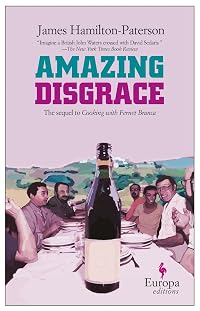
Cooking With Fernet Branca was nominated for the 2004 Booker Prize. There are two sequels: Amazing Disgrace and Rancid Pansies, which I will eventually track down.
Recommended for: People with a sense of humour and who know a lot of stuff. Hamilton-Paterson packs the narrative with obscure details and goes off on many a tangent. Lots were outside my scope of knowledge and didn't mean much, but all the ones I understood were hilarious. If you're one of those people who take pride in being outside everyday culture -- especially 2004 from a Brit male POV, this novel will be gibberish. Otherwise, if you like clever, fun books, I highly recommend it. show less
Very clever satire, mocking the fantasy "memoirs" such as Under the Tuscan Sun and A Year in Provence, and pretentious books about gourmet cooking, and satirizing a zillion other things as well.
Way too many entertaining passages to quote, but if I have to pick one, I'll share his comment on Jane Austen: "Even the witty old fag-hag Jane Austen started one of her incomparable novels--was it Donna?--with the telling sentence 'It is a truth universally acknowledged, that a good man in possession of a wife must be in want of a tidy fortune.' And there you have it, memorably expressed."
Cooking With Fernet Branca was nominated for the 2004 Booker Prize. There are two sequels: Amazing Disgrace and Rancid Pansies, which I will eventually track down.
Recommended for: People with a sense of humour and who know a lot of stuff. Hamilton-Paterson packs the narrative with obscure details and goes off on many a tangent. Lots were outside my scope of knowledge and didn't mean much, but all the ones I understood were hilarious. If you're one of those people who take pride in being outside everyday culture -- especially 2004 from a Brit male POV, this novel will be gibberish. Otherwise, if you like clever, fun books, I highly recommend it. show less
"Cooking With Fernet Branca" by James Hamilton-Paterson is part of oddball publisher Europa Editions's sinister plot to make Murrikins like me aware of the strange and sinister world of lit'rachoor published beyond our shores. Muriel Barbery owes her Murrikin presence to them, too. We all know how *that* turned out....
Well, before moving any farther along in this review process, let me send out the call: Does anyone know how to get hold of (wicked double entendre optional) actor John Barrowman? You know, Captain Jack Harkness of "Torchwood" fame? He is literally missing the key to Murrikin stardom by not reading, optioning, and making this book into a movie. It suits every single national prejudice we have: Eastern Europeans as sinister show more lawbreaking peasants who eat strangely shaped, colored, and named things and call them foods (like Twinkies, Cheetos, and Mountain Dew are *normal*); Englishmen as dudis (you'll have to read the book for that translation) who do eccentric off-the-wall things with food that are repulsively named and gruesomely concocted (spotted dick? bubble-and-squeak?); and Italians as supercilious effete cognoscenti of world culture, who possess the strangest *need* for vulgarity.
The characters in this hilarious romp are the most dysfunctional group of misfits and ignoramuses and stereotypes ever deployed by an English-language author. They do predictable things, yet Hamilton-Paterson's deftly ironic, cruelly flensing eye and word processor cause readerly glee instead of readerly ennui to ensue. The whole bizarre crew...the lumpenproletariat ex-Soviet composer, the Italian superdirector long past his prime, the English snob who refers to Tuscany's glory as "Chiantishire" and "Tuscminster"...gyrates and shudders and clumps towards a completely foreseeable climactic explosion (heeheehee). And all the time, snarking and judging and learning to depend on each other. In the end, the end is nigh for all the established relationships and the dim, Fernet Branca-hangover-hazed outlines of the new configurations are, well, the English say it best...dire.
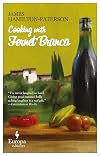
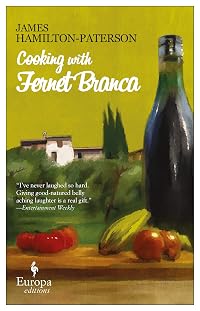
Read it. Really, do. And I dare you not to laugh at these idiots! Don't be put off by the sheer hideousness of the American edition's cover, in all its shades-of-purple garish grisliness. The charm of reading the book is that one needn't look at that...that...illustration...on the cover, but inflict it on those not yet In The Know enough to be reading it themselves.
And seriously...John Barrowman needs to know about this. Pass it on! show less
Well, before moving any farther along in this review process, let me send out the call: Does anyone know how to get hold of (wicked double entendre optional) actor John Barrowman? You know, Captain Jack Harkness of "Torchwood" fame? He is literally missing the key to Murrikin stardom by not reading, optioning, and making this book into a movie. It suits every single national prejudice we have: Eastern Europeans as sinister show more lawbreaking peasants who eat strangely shaped, colored, and named things and call them foods (like Twinkies, Cheetos, and Mountain Dew are *normal*); Englishmen as dudis (you'll have to read the book for that translation) who do eccentric off-the-wall things with food that are repulsively named and gruesomely concocted (spotted dick? bubble-and-squeak?); and Italians as supercilious effete cognoscenti of world culture, who possess the strangest *need* for vulgarity.
The characters in this hilarious romp are the most dysfunctional group of misfits and ignoramuses and stereotypes ever deployed by an English-language author. They do predictable things, yet Hamilton-Paterson's deftly ironic, cruelly flensing eye and word processor cause readerly glee instead of readerly ennui to ensue. The whole bizarre crew...the lumpenproletariat ex-Soviet composer, the Italian superdirector long past his prime, the English snob who refers to Tuscany's glory as "Chiantishire" and "Tuscminster"...gyrates and shudders and clumps towards a completely foreseeable climactic explosion (heeheehee). And all the time, snarking and judging and learning to depend on each other. In the end, the end is nigh for all the established relationships and the dim, Fernet Branca-hangover-hazed outlines of the new configurations are, well, the English say it best...dire.
Read it. Really, do. And I dare you not to laugh at these idiots! Don't be put off by the sheer hideousness of the American edition's cover, in all its shades-of-purple garish grisliness. The charm of reading the book is that one needn't look at that...that...illustration...on the cover, but inflict it on those not yet In The Know enough to be reading it themselves.
And seriously...John Barrowman needs to know about this. Pass it on! show less
I was out in San Francisco with my husband and a friend and I saw Fernet Branca on the drinks memu. I asked the server about it and she admitted that she knew next to nothing about it, never having tasted it herself. I ordered it anyway, thinking of this book sitting on my shelves as I did so. My husband, even used to my quirks, was nonplussed by the fact that I was ordering an unknown drink based entirely on the title of a book I had not yet even read. To my mind, Fernet Branca tastes a little bit like cough syrup. So not exactly a drink I'll be ordering again any time soon. Luckily the book was significantly better than the drink and I would happily revisit Hamilton-Paterson's works again and again.
This novel is an hilarious send-up show more of those moving and starting over travel narrative memoirs where an ex-pat moves to an exotic (usually Mediterranean) locale, restores a marvelous home, gently mocks the eccentric natives, and cooks fabulous meals with fresh local produce. Gerald and Marta are ex-pat neighbors in a small Tuscan hill village but that is where the similarities to the typical travel narratives stop. Gerald is a bit of a fussy, curmudgeonly Englishman who ghostwrites memoirs for the rich and famous (and often dissipated). He has retreated to this out of the way place so that he can write in peace and quiet. Marta is a seemingly stodgy Slav from the former Soviet-block and just about everything about her offends Gerald's sensibilities. That she is also a composer working on the movie score for a famous director's film seems to him to be a fabrication of vast proportions. But as each others' closest neighbors, they cannot escape each other and must exist in an entertaining disharmony.
The narration alternates between Gerald and Marta so that the reader has the opportunity to see all of the comic misunderstandings and assumptions from both eccentric characters' perspectives. Gerald is certain he is a cook of the highest calibre and his inventive if positively ghastly dishes are all included with the text (and contain copious amounts of Fernet Branca, hence the title). Marta seems to egg the prissy, easily offended Gerald on, but she has her own quirks as well. The situations in the novel go from mundane to beyond far-fetched but by the time they get completely unbelievable, readers are already so entertained by the novel that they just laugh harder, thoroughly enjoying the ride. Witty, clever, delightfully sarcastic, and satirical this was a blast to read and I'm looking forward to the next one. show less
This novel is an hilarious send-up show more of those moving and starting over travel narrative memoirs where an ex-pat moves to an exotic (usually Mediterranean) locale, restores a marvelous home, gently mocks the eccentric natives, and cooks fabulous meals with fresh local produce. Gerald and Marta are ex-pat neighbors in a small Tuscan hill village but that is where the similarities to the typical travel narratives stop. Gerald is a bit of a fussy, curmudgeonly Englishman who ghostwrites memoirs for the rich and famous (and often dissipated). He has retreated to this out of the way place so that he can write in peace and quiet. Marta is a seemingly stodgy Slav from the former Soviet-block and just about everything about her offends Gerald's sensibilities. That she is also a composer working on the movie score for a famous director's film seems to him to be a fabrication of vast proportions. But as each others' closest neighbors, they cannot escape each other and must exist in an entertaining disharmony.
The narration alternates between Gerald and Marta so that the reader has the opportunity to see all of the comic misunderstandings and assumptions from both eccentric characters' perspectives. Gerald is certain he is a cook of the highest calibre and his inventive if positively ghastly dishes are all included with the text (and contain copious amounts of Fernet Branca, hence the title). Marta seems to egg the prissy, easily offended Gerald on, but she has her own quirks as well. The situations in the novel go from mundane to beyond far-fetched but by the time they get completely unbelievable, readers are already so entertained by the novel that they just laugh harder, thoroughly enjoying the ride. Witty, clever, delightfully sarcastic, and satirical this was a blast to read and I'm looking forward to the next one. show less
Gerald Samper, Englishman, has bought a house in Camaoire, Italy, seeking warmer weather and peace and quiet in which to write. His neighbour, Marta from Voynovia somewhere in the former USSR, has bought the neighbouring house in order to write the musical score for a film being shot by the famous director Pacini. The story alternates back and forth between the two. Alternates? Ricochets, more accurately.
Gerald swans into the novel first, instantly establishing himself as a bitchy queen with an enormous ego but with the credentials to back this up (although not the bottom he thinks he has), as a very successful ghost writer for the ‘autobiographies’ of rich and famous sports stars. He fancies himself an experimental, cutting edge show more gourmet cook with a beautiful tenor voice. He is a ghastly cook with a warbling falsetto. I didn’t flinch at the first recipe, mussels rolled in Valrhona dark chocolate and deep fried in olive oil with rosemary and soy sauce. But once he and Marta discover Fernet Branca between them, and Gerald begins adding it to everything, the recipes get wilder and more fantastical, featuring everything from a neighbour’s noisy daschund to smoked cat. “Add 1 ½ eggs” he sings. Half an egg? And so they go.
Marta is the daughter of a Voynovian mafia don, fleeing the compound of her father’s love and protectiveness, as well as the isolation of Voynova, to make her mark on the musical world. With her wild frizzy hair occasionally smattened down with bear grease and Voynovian food which almost matches Gerald’s for bizarre, she is the perfect target for the latter’s scorn but Marta too has her credentials in place and is a bona fide musician.
What ensues is one of the funnier books I’ve read in a long time, laugh out loud in the chiropractor’s office and have everyone look at you kind of funny. Whether Gerald is describing a mad dash to an outhouse in Peru or dealing with a UFO believing rock star, Hamilton-Paterson nails it all the way through. The refreshing thing is that there is something of an actual story in here as well, with characters (in every sense of the word) whom we come to understand as individuals, not thin pastiches designed only for a laugh.
The recipes are insane. (“...the single drop of paraffin...I have discovered that this single drop transforms the dish from merely very interesting into an unblushing classic.”) The situations are madcap. (“Down there is the world as run by a handful of corporations, an army of lawyers and millions of religious zealots. It is not a place that has a niche for Gerald Samper. Up here, thank goodness, I needn’t pretend to be a member of the human race at all and can remain minimally contaminated by its germy lies. (Yes! You recognized it! Another anagram of Lyme Regis.) I can enjoy my cold trifle of sweetbreads - tripe and blueberries were made for each other - and a glass or three of Barolo while thinking peacefully anarchic thoughts.”) The anagrams of Lyme Regis are the perfect descriptors of twitchy obsessive compulsiveness. (“It’s the only way I know how to write the world - or scribe my globe, if I want an anagram of Lyme Regis Cobb.”) The timing is perfect and the comedy spot on, whether sardonic or Pythonesque.
I understand that there are sequels, which is almost too bad, because this was complete and done like a dinner as it was. I can't imagine how anything further could need to be said. show less
Gerald swans into the novel first, instantly establishing himself as a bitchy queen with an enormous ego but with the credentials to back this up (although not the bottom he thinks he has), as a very successful ghost writer for the ‘autobiographies’ of rich and famous sports stars. He fancies himself an experimental, cutting edge show more gourmet cook with a beautiful tenor voice. He is a ghastly cook with a warbling falsetto. I didn’t flinch at the first recipe, mussels rolled in Valrhona dark chocolate and deep fried in olive oil with rosemary and soy sauce. But once he and Marta discover Fernet Branca between them, and Gerald begins adding it to everything, the recipes get wilder and more fantastical, featuring everything from a neighbour’s noisy daschund to smoked cat. “Add 1 ½ eggs” he sings. Half an egg? And so they go.
Marta is the daughter of a Voynovian mafia don, fleeing the compound of her father’s love and protectiveness, as well as the isolation of Voynova, to make her mark on the musical world. With her wild frizzy hair occasionally smattened down with bear grease and Voynovian food which almost matches Gerald’s for bizarre, she is the perfect target for the latter’s scorn but Marta too has her credentials in place and is a bona fide musician.
What ensues is one of the funnier books I’ve read in a long time, laugh out loud in the chiropractor’s office and have everyone look at you kind of funny. Whether Gerald is describing a mad dash to an outhouse in Peru or dealing with a UFO believing rock star, Hamilton-Paterson nails it all the way through. The refreshing thing is that there is something of an actual story in here as well, with characters (in every sense of the word) whom we come to understand as individuals, not thin pastiches designed only for a laugh.
The recipes are insane. (“...the single drop of paraffin...I have discovered that this single drop transforms the dish from merely very interesting into an unblushing classic.”) The situations are madcap. (“Down there is the world as run by a handful of corporations, an army of lawyers and millions of religious zealots. It is not a place that has a niche for Gerald Samper. Up here, thank goodness, I needn’t pretend to be a member of the human race at all and can remain minimally contaminated by its germy lies. (Yes! You recognized it! Another anagram of Lyme Regis.) I can enjoy my cold trifle of sweetbreads - tripe and blueberries were made for each other - and a glass or three of Barolo while thinking peacefully anarchic thoughts.”) The anagrams of Lyme Regis are the perfect descriptors of twitchy obsessive compulsiveness. (“It’s the only way I know how to write the world - or scribe my globe, if I want an anagram of Lyme Regis Cobb.”) The timing is perfect and the comedy spot on, whether sardonic or Pythonesque.
I understand that there are sequels, which is almost too bad, because this was complete and done like a dinner as it was. I can't imagine how anything further could need to be said. show less
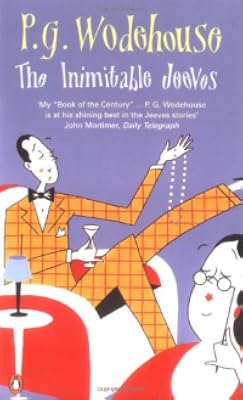
I've been deep in P.G. Wodehouse land lately, listening to Right Ho, Jeeves and The Inimitable Jeeves while driving. These stories have been narrated before by well-knowns such as Hugh Laurie and Richard Briers, but a new-ish series has been published by Audible Partners. They feature the character actor Jonathan Cecil whose superb talent makes you feel that you are listening to a cast of at least a couple of dozen as the foppish Bertie Wooster tackles braying aunts, mismatched lovers and arrogant French cooks. Cecil has brought new life to these old stories and has made my summer commute truly delightful.
So imagine my surprise when I picked up this 2004 Man Booker Prize-nominated book to find distinct parallels between Bertram Wooster show more and the snobby, often clueless "hero", Gerald Samper. Any doubts that Hamilton-Paterson was not channeling Wodehouse were dashed when I reached page 65:
"We Sampers bounce back. I have the piratical makings of a black eye ... but otherwise I am in fine if stiff fettle."
Unlike Bertie, Sampers doesn't have a private income. His small house in Tuscany was purchased by ghost writing biographies of callow entertainment and sports figures, a group he disdains. He also disdains his new neighbor, the stodgy Marta who hails from Voynovia, an Eastern European country, and interrupts his solitude with her music and offerings of disgusting delicacies from home.
Since this is a Bertie without a Jeeves, Gerald takes delight in his own inventive culinary creations. 'Lampreys in Sherry' ("1 kilo live young lampreys, not over a foot long") and 'Rabbit in Cep Custard' are two of the more tame recipes while others suggest cat meat and other revolting ingredients:
"Jack Russells are absolute buggers to bone, notoriously so, but yield a delicate, almost silky pate that seems to welcome the careworn diner with both paws on the edge of the table, as it were." In addition, each recipe is laced with a generous helping of the vile, 48 proof Italian liqueur called Fernet Branca.
So what we have here is a glorious send up of all those ex-pats extolling the virtues of transforming Tuscan piles into shangri-las and immersing themselves in cooking feasts to delight the eye and palate. The author has lived in Italy for years; acclaimed for many serious literary works, this is his first satirical novel, brought about no doubt by a reading of Frances Mayes' Under the Tuscan Sun and its clones.
But of course taking the mickey out of an overworked genre requires a plot too. A lot happens here and the two neighbors remain clueless about each other's motives as helicopters descend on them, and visits from an Italian film director and British pop singer add to the confusion. Marta provides her own version of the tale in alternating chapters and these two very unreliable narrators make assumptions about the same events in very different ways. The language barrier - and generous doses of Fernet Branca - convinces him that she is a slattern with designs on him while she thinks that this gay Englishman is laughably pathetic. It isn't until they realize that they both speak passable Italian that they begin to change their minds.
It's a wild ride and I laughed out loud many, many times. There are two sequels which I plan to read. But a warning: if you're serious about your food, revel in the sparkling travelogues about Tuscany and imagine yourself in Frances Mayes' luxurious Italian sandals one day, you might want to skip it. show less
So imagine my surprise when I picked up this 2004 Man Booker Prize-nominated book to find distinct parallels between Bertram Wooster show more and the snobby, often clueless "hero", Gerald Samper. Any doubts that Hamilton-Paterson was not channeling Wodehouse were dashed when I reached page 65:
"We Sampers bounce back. I have the piratical makings of a black eye ... but otherwise I am in fine if stiff fettle."
Unlike Bertie, Sampers doesn't have a private income. His small house in Tuscany was purchased by ghost writing biographies of callow entertainment and sports figures, a group he disdains. He also disdains his new neighbor, the stodgy Marta who hails from Voynovia, an Eastern European country, and interrupts his solitude with her music and offerings of disgusting delicacies from home.
Since this is a Bertie without a Jeeves, Gerald takes delight in his own inventive culinary creations. 'Lampreys in Sherry' ("1 kilo live young lampreys, not over a foot long") and 'Rabbit in Cep Custard' are two of the more tame recipes while others suggest cat meat and other revolting ingredients:
"Jack Russells are absolute buggers to bone, notoriously so, but yield a delicate, almost silky pate that seems to welcome the careworn diner with both paws on the edge of the table, as it were." In addition, each recipe is laced with a generous helping of the vile, 48 proof Italian liqueur called Fernet Branca.
So what we have here is a glorious send up of all those ex-pats extolling the virtues of transforming Tuscan piles into shangri-las and immersing themselves in cooking feasts to delight the eye and palate. The author has lived in Italy for years; acclaimed for many serious literary works, this is his first satirical novel, brought about no doubt by a reading of Frances Mayes' Under the Tuscan Sun and its clones.
But of course taking the mickey out of an overworked genre requires a plot too. A lot happens here and the two neighbors remain clueless about each other's motives as helicopters descend on them, and visits from an Italian film director and British pop singer add to the confusion. Marta provides her own version of the tale in alternating chapters and these two very unreliable narrators make assumptions about the same events in very different ways. The language barrier - and generous doses of Fernet Branca - convinces him that she is a slattern with designs on him while she thinks that this gay Englishman is laughably pathetic. It isn't until they realize that they both speak passable Italian that they begin to change their minds.
It's a wild ride and I laughed out loud many, many times. There are two sequels which I plan to read. But a warning: if you're serious about your food, revel in the sparkling travelogues about Tuscany and imagine yourself in Frances Mayes' luxurious Italian sandals one day, you might want to skip it. show less
And then quite suddenly she herself was back. I happened to be passing the window upstairs with a pair of binoculars when I caught sight of an unmistakable figure hanging out her laughably misnamed smalls on a washing line among the trees. The Iron Curtain's Mrs. Tiggy-Winkle, although she was actually wearing her voluminous beige shift that for some reason put me in mind of a Bedouin traffic warden. I could barely contain myself for half an hour before drifting ever so casually across.
Cooking with Fernet Branca is about stereotypes of all sorts: gender, nationality, social class. With its unreliable narrators and wacky humor, it challenges our assumptions about how we perceive and reflect the world around us.
The novel begins with show more Gerald who has just moved into a mountaintop villa in Tuscany seeking solitude in which to ghost write the memoirs of pop culture figures. He loves to create wildly uneatable recipes and sings opera parodies. His only neighbor is Marta, a woman from an Eastern European country, who is also seeking solitude. She is hoping to create a life for herself composing the scores for films. As the narrative switches between the two characters, the reader becomes sucked into the stereotypes that each has about the other. Is either what they appear to be?
The first part of the book had some laugh out loud funny scenes, including one involving an old privy situated on a deck, that had me in stitches. Unfortunately, the humor became less funny for me as the stereotypes became more sharply defined. The ending regained some of the beginning's charm, but by then the author had lost me. If you like this type of satirical humor, Cooking with Fernet Branca is smart and has memorable characters. I just stopped finding it as funny. show less
Cooking with Fernet Branca is about stereotypes of all sorts: gender, nationality, social class. With its unreliable narrators and wacky humor, it challenges our assumptions about how we perceive and reflect the world around us.
The novel begins with show more Gerald who has just moved into a mountaintop villa in Tuscany seeking solitude in which to ghost write the memoirs of pop culture figures. He loves to create wildly uneatable recipes and sings opera parodies. His only neighbor is Marta, a woman from an Eastern European country, who is also seeking solitude. She is hoping to create a life for herself composing the scores for films. As the narrative switches between the two characters, the reader becomes sucked into the stereotypes that each has about the other. Is either what they appear to be?
The first part of the book had some laugh out loud funny scenes, including one involving an old privy situated on a deck, that had me in stitches. Unfortunately, the humor became less funny for me as the stereotypes became more sharply defined. The ending regained some of the beginning's charm, but by then the author had lost me. If you like this type of satirical humor, Cooking with Fernet Branca is smart and has memorable characters. I just stopped finding it as funny. show less
Members
- Recently Added By
Lists

1001 Books You Must Read Before You Die
1,448 works; 1,137 members

Booker Prize
491 works; 62 members

Man Booker Prize Longlist 2004
22 works; 2 members

feasting on fiction
24 works; 5 members

Best "Foodie" Books
114 works; 40 members

Food Fiction
24 works; 7 members

Wishlist
50 works; 1 member

A Smorgasbord of Culinary Fiction
226 works; 95 members

Books whose title names an object usually found in the kitchen
171 works; 14 members
Author Information

34+ Works 2,115 Members
James Hamilton-Paterson is the author of Blackbird: A History of the Untouchable Spy Plane and Empires of the Clouds, the classic account of the golden age of British aviation. He won a Whitbread Prize for his novel Gerontius. He lives in Austria.
Awards and Honors
Series

Belongs to Publisher Series
Common Knowledge
- Original publication date
- 2004
- People/Characters
- Gerald Samper
- Epigraph
- "I'm interested in things that are none of my business, and I'm bored by things that are important to know." --Calvin (Bill Watterson, Calvin and Hobbes strip cartoon, 1994)
- Dedication
- To Lyn Rogers and Peter Field
- First words
- If you will insist on arriving at Pisa airport in the summer you will probably have to fight your way out of the terminal building past incoming sun-reddened Brits, snappish with clinking luggage.
- Quotations
- As a matter of fact, reading a book over a solitary evening meal in a foreign restaurant is normally one of my greatest pleasures, following the particular enjoyment of choosing a meal from a menu in a language I can't unders... (show all)tand. Not knowing what I shall shortly be eating is just as exciting as not knowing what I shall be reading in half a chapter's time.
And then quite suddenly she herself was back. I happened to be passing the window upstairs with a pair of binoculars when I caught sight of an unmistakable figure hanging out her laughably misnamed smalls on a washing line am... (show all)ong the trees. The Iron Curtain's Mrs. Tiggy-Winkle, although she was actually wearing her voluminous beige shift that for some reason put me in mind of a Bedouin traffic warden. I could barely contain myself for half an hour before drifting ever so casually across. - Last words
- (Click to show. Warning: May contain spoilers.)Then everything will get back to normal.
- Blurbers
- Ballard, J.G.
- Original language
- English
Classifications
Statistics
- Members
- 614
- Popularity
- 47,782
- Reviews
- 46
- Rating
- (3.68)
- Languages
- 6 — Czech, English, Finnish, German, Italian, Polish
- Media
- Paper, Ebook
- ISBNs
- 13
- ASINs
- 6