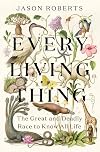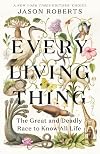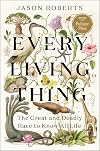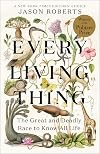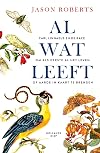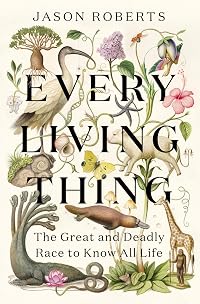
Every Living Thing: The Great and Deadly Race to Know All Life
by Jason Roberts
On This Page
Description
"In the 18th century, two men dedicated their lives to the same daunting task: identifying and describing all life on Earth. Their approaches could not have been more different. Carl Linnaeus, a pious Swedish doctor with a huckster's flair, believed that life belonged in tidy, static categories. Georges-Louis de Buffon, an aristocratic polymath and keeper of France's royal garden, viewed life as a dynamic swirl of complexities. Both began believing their work to be difficult, but not show more impossible--how could the planet possibly hold more than a few thousand species? Stunned by life's diversity, both fell far short of their goal. But in the process they articulated starkly divergent views on nature, on humanity's role in shaping the fate of our planet, and on humanity itself. The rivalry between these two unique, driven individuals created reverberations that still echo today. Linnaeus, with the help of acolyte explorers he called "apostles" (only half of whom returned alive), gave the world such concepts as mammal, primate and homo sapiens--but he also denied species change and promulgated racist pseudo-science. Buffon coined the term reproduction, formulated early prototypes of evolution and genetics, and argued passionately against prejudice. It was a clash that, during their lifetimes, Buffon seemed to be winning. But their posthumous fates would take a very different turn"-- show lessTags
Recommendations

















Member Reviews
Crafted as compare-and-contrast of Linnaeas and Buffon, the book actually delivers much more about the changing understanding of species, adaption,and evolution.
Linnaeas is set up as the fall-guy. Bright, but not too bright, a shameless self-promoter and vindicative to those that challenge - the characterisation might be blunt, and a little biased, but its easy to dislike an unlikable figure,
Buffon is deeper, smarter and more right. But it is Linnaeas who is remembered for the binomial naming system. There is much he got wrong, but . . .
Linnaeas is set up as the fall-guy. Bright, but not too bright, a shameless self-promoter and vindicative to those that challenge - the characterisation might be blunt, and a little biased, but its easy to dislike an unlikable figure,
Buffon is deeper, smarter and more right. But it is Linnaeas who is remembered for the binomial naming system. There is much he got wrong, but . . .
I can see why this book won a Pulitzer Prize as it is vast with a spectacular amount of research done covering the pioneers of Botany and Natural History centering on Linnaeus and Buffon two of the most influential. Linnaeus is rigid based on his strict interpretation of the creation story in the Bible. Buffon has evolution figured out but downplays his beliefs fearing retribution from religious leaders. Linnaeus becomes famous, Buffon does not. (Darwin) A great book.
Jason Roberts is an engaging storyteller (he is also a fiction writer), but he is not a biologist or even a science historian, so some important ideas are not treated as clearly as they might have been, and there are some minor factual errors that I caught (equating Acer and oak; saying Evening Primrose is a bush, rather than herbaceous; saying that nucleic acids were discovered “in the yeast of plants.” (They were actually found in brewer’s yeast). The errors, along with his cattiness and constant reviling of Linnaeus, and adulation of Buffon, as well as a lack of clarity of purpose, are distractions from the text.
The first two thirds of the book follow the work of Carl Linnaeus (1707-1778) and LeClerc, Comte de Buffon show more (1707-1788), as they seek to make sense and order of the diversity of life on earth. It addresses Linnaeus’ racist thinking, which became enshrined in his Systema Naturae. Buffon directed the Jardin des Roi in Paris, which evolved to become the Jardin des Plantes.
After the deaths of Linnaeus and Buffon, from page 246, the book starts to pick up increasing speed, as the next 113 pages cover the development of the theory of evolution, and how that impacted our understanding of what systematics actually is. At first the focus is on the Jardin des Plantes, Cuvier and his theory of catastrophism (page 274), Lamarck and his theory of transformism, or “the law of use and disuse” (in which the giraffe which stretches its neck to reach higher leaves will pass on its strength to its offspring); de Jussieu’s Genera Plantarum (page 281), then on to Sir Joseph Banks, Thomas Huxley, Darwin, Louis Agassiz and Gregor Mendel, and Julian Huxley, Watson and Crick. In the last chapter, gene sequencing shakes up our understanding of relatedness of species.
(I've already returned my library book, so I can't check, but what about Humbolt. Did he even mention Humbolt?)
The Prelude, The Mask and the Veil. We are shown Buffon's grand funeral procession and Linnaeus’s more humble end, and Robert's view that the inferior and inflexible Linnaeus usurped the glory that should have been handsome and brilliant Le Clercs’.
Chapters 1 and 2 tell of Linnaeus’ family and upbringing as a minister’s son in Sweden, his indifferent education, except for his self-education as a botanist, and his move to university in Uppsala.
Chapter 3. Buffon’s family, his father’s work as a salt tax administrator, his unexpected inheritance of his great aunt and uncle’s fortune, and his dueling.
Chapters 4 & 5. Linnaeus’ education at university, influence of his mentor Rothman, the state of the classification of nature at the time, The Great Chain of Being, based on Aristotle’s Scalae Naturae and Tourneforte’s Institutiones Rei Herbariae, published in 1700, with his groupings of plants based on petal characteristics. Linneaus’ publication of Prelude to the Betrothal of Plants, in which he classifies plants based on stamens and pistil arrangement.
Chapter 6. More of Buffon’s dueling shenanigans, natural history vs. natural philosophy, and the establishment of his estate at Montbard, where he planted trees and paid attention to their ecology, developed the statistical theory Buffon’s Needle, and established a writing routine.
Chapter 7. Linnaeus’s Lapland Expedition and exaggerations thereof. Linnaeus’ acceptance of the religious view of the time that life on earth is static (“the lens of fixity.”). Buffon by contrast viewed the web of life as more dynamic.
Chapter 8. Linnaeus’ time at Hartekamp, the private estate of George Clifford with a collection of plants and animals from around the world, and publication of Systema Naturae in 1735.
Chapter 10, Loathsome Harlotry. Roberts describes Linnaeus' classification into four races, with colors assigned to their skin tones.
Chapter 11, Quarrel of the Universals. Buffon is appointed to direct the Jardin de Roi. As an aside, it is mentioned that he has hired Madeleine Francoise Basseport as the chief botanical illustrator. Linnaeus sends Buffon his book, Systema Naturae, and Buffon eviscerates it. There seem to be two objections: that it contains errors, and that distinctions between living organisms are a human invention, for example, as Roberts says, Vermont is. The latter makes no sense: certainly species lines can be blurred by differing definitions and hybridization, among other things, but who would argue that taxonomy has no basis in physical reality? There is no reason but human desire to limit the boundaries of Vermont, and distinguish it from New Hampshire, but human desire does not influence the difference between white oaks and red oaks. Buffon announces his intentions to publish Histoire Naturelle, including an inventory of the Cabinet de Roi, to satisfy Louis XIV.
Chapter 13. In 1749, the first three volumes of Buffon’s Histoire Naturelle are published. They cover his theories of the earth’s formation and development, and humans. Some of his ideas are striking; he talks about skin color as an adaptation, about humans migrating to the Americas across the arctic ocean, and earth and other planets formed from molten matter from the sun, which will eventually decay.
Chapter 14, The Only Prize Available. Linnaeus publishes Philosophy Botanica, in which he lays out rules for being a botanist, and for binomial nomenclature and the naming of plants, most egregiously, that plant binomials cannot be the names of the native people who knew them best, or refer to usage, such as 'lethal' or 'healing.' He also declared that botanists should not be allowed to name plants after themselves.
Chapter 15. In 1753, Buffon publishes the 4th volume of his Histoire, which is about three domesticated animals, the horse, donkey, and bull.
Chapter 16. Michele Adanson is a protégé of Jussieu’s at the Jardin de Roi. He spends years in Senegal collecting, and returns to France to write Famille des Plantes, in which he recommends naming a plant with the oldest known name, because travelling white Europeans are equally known as barbarians when they travel abroad. Too bad this idea was not accepted! His idea about classification was to observe multiple characteristics and weight differences. He recommended naming a genus after its most well known species, as in Pinus, for Pine. (Jacobs also uses as an example, ‘Acer’ for ‘oak’. !) He also imagined taking the genus name and adding one or two letters to designate species, in alphabetical order, so you would know the order in which it was named (but wouldn’t know if it was vulgaris or repens or rubra or japonicum).
Meanwhile, Buffon publishes volumes 4 & 5 of his Histoire, which covers less than a dozen species between them. Roberts points out how much greater his budget is than Linnaeus’.
Chapter 17. Expeditions on Linnaeus’ behalf. Pehr Kalm goes to the New World on a collecting expedition for Linnaeus, earning the genus Kalmia to be named in his honor. He also brings back a sample of Lobelia siphilitica, which the Cherokees considered to be a cure for syphilis. He stayed with Ben Franklin while in Philadelphia.
Chapter 18. In 1758, Linnaeus publishes the 10th edition of Systema Naturae. The class of Quadripedia is changed to Mammalia, which Buffon objects to. The order Anthropomorphia is changed to Primate. His previous 4 categories of humans are described in the most egregiously bigoted way, with European being described as gentle, acute, and inventive, and everyone else described in terms that range from condescending to deeply negative. I do, however, pause at Roberts’ claim that the “modern concept of races” can trace its roots directly back to Linnaeus, since the trans-Atlantic slave trade was well underway by this time. Roberts criticizes apologists for Linnaeus of absolving him of racism, and I absolve him of nothing except originating the distasteful ideas that he wrote about. Propagating, yes, but, I think, originating, no.
Buffon, meanwhile, has come to the conclusion that a species is defined by its individuals’ ability to interbreed and create viable offspring, and since humans of various continents can interbreed (how did he know this?) they were clearly of one species. He considered that humans may have originated in Asia, because there was a more advanced culture there from an earlier time when the European countries “were still only peopled by men who were half savages.” Roberts says that Buffon believed that “to fix inherent attributes” to different groups of people was repugnant. I would have appreciated some direct quotes here.
Chapter 19. Linnaeus is knighted. A review of the current understanding of reproductive systems (animalcules, humunculi, etc).
Chapters 21 and 22. Jeanne Baret shows up on a French expedition lead by Bougainville leaving port 1766. The end of life for both Linnaeus and Buffon, followed by the storming of the Bastille. Fully 113 pages, almost a third of the book, follow.
Chapter 23.The fate of the Jardin staff during the Reign of Terror. Enter Lamarck, Buffon’s son’s tutor, then the Jardin’s herbarium keeper. The Jardin de Roi becomes the Jardin des Plantes. Cuvier is brought in to the Jardin. The rise of Napoleon Bonaparte and the 1798 French invasion of Egypt.
Chapter 24. Transformism and Catastrophism. Cuvier and Lamarck.
Chapter 25. Sir Joseph Banks and the platypus. James Edward Smith and Linnaeus’ collection and notebooks.
Chapter 26. Laughably Like Mine. Darwin reads Buffon and says some of his pages are “laughably like mine.” Thomas Huxley, “Darwin’s bulldog,”
Chapter 27. Louis Agassiz and Mendel. Mendel had read and marked a German translation of Darwin’s Variation of Plants and Animals Under Domestication.
Chapter 28. Hugo Devries fails to credit Mendel. Mendel is rediscovered. Julian Huxley’s UNESCO publication: The Races of Mankind. “The peoples of the earth are all one family.” Julian Huxley proposes a that the classification structure be based on evolutionary relationships, or clades. Watson, Crick and Maurice Wilson are mentioned for their Nobel Prize, while Rosamund Franklin barely nodded to. The genetic code is discovered.
Chapter 29. Duplications of classification (one species- multiple names). More rarely, multiple species and one name. It was only discovered in 2021 that there are four species of giraffe, not one. Understanding of species relationships evolves with gene sequencing technology. show less
The first two thirds of the book follow the work of Carl Linnaeus (1707-1778) and LeClerc, Comte de Buffon show more (1707-1788), as they seek to make sense and order of the diversity of life on earth. It addresses Linnaeus’ racist thinking, which became enshrined in his Systema Naturae. Buffon directed the Jardin des Roi in Paris, which evolved to become the Jardin des Plantes.
After the deaths of Linnaeus and Buffon, from page 246, the book starts to pick up increasing speed, as the next 113 pages cover the development of the theory of evolution, and how that impacted our understanding of what systematics actually is. At first the focus is on the Jardin des Plantes, Cuvier and his theory of catastrophism (page 274), Lamarck and his theory of transformism, or “the law of use and disuse” (in which the giraffe which stretches its neck to reach higher leaves will pass on its strength to its offspring); de Jussieu’s Genera Plantarum (page 281), then on to Sir Joseph Banks, Thomas Huxley, Darwin, Louis Agassiz and Gregor Mendel, and Julian Huxley, Watson and Crick. In the last chapter, gene sequencing shakes up our understanding of relatedness of species.
(I've already returned my library book, so I can't check, but what about Humbolt. Did he even mention Humbolt?)
The Prelude, The Mask and the Veil. We are shown Buffon's grand funeral procession and Linnaeus’s more humble end, and Robert's view that the inferior and inflexible Linnaeus usurped the glory that should have been handsome and brilliant Le Clercs’.
Chapters 1 and 2 tell of Linnaeus’ family and upbringing as a minister’s son in Sweden, his indifferent education, except for his self-education as a botanist, and his move to university in Uppsala.
Chapter 3. Buffon’s family, his father’s work as a salt tax administrator, his unexpected inheritance of his great aunt and uncle’s fortune, and his dueling.
Chapters 4 & 5. Linnaeus’ education at university, influence of his mentor Rothman, the state of the classification of nature at the time, The Great Chain of Being, based on Aristotle’s Scalae Naturae and Tourneforte’s Institutiones Rei Herbariae, published in 1700, with his groupings of plants based on petal characteristics. Linneaus’ publication of Prelude to the Betrothal of Plants, in which he classifies plants based on stamens and pistil arrangement.
Chapter 6. More of Buffon’s dueling shenanigans, natural history vs. natural philosophy, and the establishment of his estate at Montbard, where he planted trees and paid attention to their ecology, developed the statistical theory Buffon’s Needle, and established a writing routine.
Chapter 7. Linnaeus’s Lapland Expedition and exaggerations thereof. Linnaeus’ acceptance of the religious view of the time that life on earth is static (“the lens of fixity.”). Buffon by contrast viewed the web of life as more dynamic.
Chapter 8. Linnaeus’ time at Hartekamp, the private estate of George Clifford with a collection of plants and animals from around the world, and publication of Systema Naturae in 1735.
Chapter 10, Loathsome Harlotry. Roberts describes Linnaeus' classification into four races, with colors assigned to their skin tones.
Chapter 11, Quarrel of the Universals. Buffon is appointed to direct the Jardin de Roi. As an aside, it is mentioned that he has hired Madeleine Francoise Basseport as the chief botanical illustrator. Linnaeus sends Buffon his book, Systema Naturae, and Buffon eviscerates it. There seem to be two objections: that it contains errors, and that distinctions between living organisms are a human invention, for example, as Roberts says, Vermont is. The latter makes no sense: certainly species lines can be blurred by differing definitions and hybridization, among other things, but who would argue that taxonomy has no basis in physical reality? There is no reason but human desire to limit the boundaries of Vermont, and distinguish it from New Hampshire, but human desire does not influence the difference between white oaks and red oaks. Buffon announces his intentions to publish Histoire Naturelle, including an inventory of the Cabinet de Roi, to satisfy Louis XIV.
Chapter 13. In 1749, the first three volumes of Buffon’s Histoire Naturelle are published. They cover his theories of the earth’s formation and development, and humans. Some of his ideas are striking; he talks about skin color as an adaptation, about humans migrating to the Americas across the arctic ocean, and earth and other planets formed from molten matter from the sun, which will eventually decay.
Chapter 14, The Only Prize Available. Linnaeus publishes Philosophy Botanica, in which he lays out rules for being a botanist, and for binomial nomenclature and the naming of plants, most egregiously, that plant binomials cannot be the names of the native people who knew them best, or refer to usage, such as 'lethal' or 'healing.' He also declared that botanists should not be allowed to name plants after themselves.
Chapter 15. In 1753, Buffon publishes the 4th volume of his Histoire, which is about three domesticated animals, the horse, donkey, and bull.
Chapter 16. Michele Adanson is a protégé of Jussieu’s at the Jardin de Roi. He spends years in Senegal collecting, and returns to France to write Famille des Plantes, in which he recommends naming a plant with the oldest known name, because travelling white Europeans are equally known as barbarians when they travel abroad. Too bad this idea was not accepted! His idea about classification was to observe multiple characteristics and weight differences. He recommended naming a genus after its most well known species, as in Pinus, for Pine. (Jacobs also uses as an example, ‘Acer’ for ‘oak’. !) He also imagined taking the genus name and adding one or two letters to designate species, in alphabetical order, so you would know the order in which it was named (but wouldn’t know if it was vulgaris or repens or rubra or japonicum).
Meanwhile, Buffon publishes volumes 4 & 5 of his Histoire, which covers less than a dozen species between them. Roberts points out how much greater his budget is than Linnaeus’.
Chapter 17. Expeditions on Linnaeus’ behalf. Pehr Kalm goes to the New World on a collecting expedition for Linnaeus, earning the genus Kalmia to be named in his honor. He also brings back a sample of Lobelia siphilitica, which the Cherokees considered to be a cure for syphilis. He stayed with Ben Franklin while in Philadelphia.
Chapter 18. In 1758, Linnaeus publishes the 10th edition of Systema Naturae. The class of Quadripedia is changed to Mammalia, which Buffon objects to. The order Anthropomorphia is changed to Primate. His previous 4 categories of humans are described in the most egregiously bigoted way, with European being described as gentle, acute, and inventive, and everyone else described in terms that range from condescending to deeply negative. I do, however, pause at Roberts’ claim that the “modern concept of races” can trace its roots directly back to Linnaeus, since the trans-Atlantic slave trade was well underway by this time. Roberts criticizes apologists for Linnaeus of absolving him of racism, and I absolve him of nothing except originating the distasteful ideas that he wrote about. Propagating, yes, but, I think, originating, no.
Buffon, meanwhile, has come to the conclusion that a species is defined by its individuals’ ability to interbreed and create viable offspring, and since humans of various continents can interbreed (how did he know this?) they were clearly of one species. He considered that humans may have originated in Asia, because there was a more advanced culture there from an earlier time when the European countries “were still only peopled by men who were half savages.” Roberts says that Buffon believed that “to fix inherent attributes” to different groups of people was repugnant. I would have appreciated some direct quotes here.
Chapter 19. Linnaeus is knighted. A review of the current understanding of reproductive systems (animalcules, humunculi, etc).
Chapters 21 and 22. Jeanne Baret shows up on a French expedition lead by Bougainville leaving port 1766. The end of life for both Linnaeus and Buffon, followed by the storming of the Bastille. Fully 113 pages, almost a third of the book, follow.
Chapter 23.The fate of the Jardin staff during the Reign of Terror. Enter Lamarck, Buffon’s son’s tutor, then the Jardin’s herbarium keeper. The Jardin de Roi becomes the Jardin des Plantes. Cuvier is brought in to the Jardin. The rise of Napoleon Bonaparte and the 1798 French invasion of Egypt.
Chapter 24. Transformism and Catastrophism. Cuvier and Lamarck.
Chapter 25. Sir Joseph Banks and the platypus. James Edward Smith and Linnaeus’ collection and notebooks.
Chapter 26. Laughably Like Mine. Darwin reads Buffon and says some of his pages are “laughably like mine.” Thomas Huxley, “Darwin’s bulldog,”
Chapter 27. Louis Agassiz and Mendel. Mendel had read and marked a German translation of Darwin’s Variation of Plants and Animals Under Domestication.
Chapter 28. Hugo Devries fails to credit Mendel. Mendel is rediscovered. Julian Huxley’s UNESCO publication: The Races of Mankind. “The peoples of the earth are all one family.” Julian Huxley proposes a that the classification structure be based on evolutionary relationships, or clades. Watson, Crick and Maurice Wilson are mentioned for their Nobel Prize, while Rosamund Franklin barely nodded to. The genetic code is discovered.
Chapter 29. Duplications of classification (one species- multiple names). More rarely, multiple species and one name. It was only discovered in 2021 that there are four species of giraffe, not one. Understanding of species relationships evolves with gene sequencing technology. show less
Entrevista a Jason Roberts, El País 18.07.2025: https://elpais.com/ciencia/2025-07-18/jason-roberts-premio-pulitzer-uno-de-los-g...
Jul 18, 2025Spanish
Ratings
Members
- Recently Added By
Author Information

3+ Works 813 Members
Awards and Honors
Awards
Common Knowledge
- Canonical title*
- Al wat leeft
- Original title
- Every Living Thing
- Original publication date
- 2024
- People/Characters
- Carl Linnaeus; Georges-Louis de Buffon
- Dedication
- Voor Jesse Eli
For Jesse Eli - First words
- For much of the eighteenth century, two men raced each other to complete a comprehensive accounting of all life on Earth.
- Last words
- (Click to show. Warning: May contain spoilers.)"... Nature is herself a perpetually living finished product, a worker ceaselessly active, who knows how to employ everything, who in working by herself always on the same resources, far from exhausting them, renders them inexhaustible."
- Original language*
- Engels
*Some information comes from Common Knowledge in other languages. Click "Edit" for more information.
Classifications
Statistics
- Members
- 301
- Popularity
- 106,185
- Reviews
- 4
- Rating
- (4.02)
- Languages
- 5 — Dutch, English, French, German, Spanish
- Media
- Paper, Audiobook, Ebook
- ISBNs
- 16
- ASINs
- 7