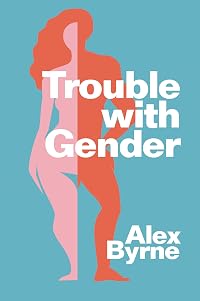
Trouble With Gender: Sex Facts, Gender Fictions
by Alex Byrne
On This Page
Description
"In this provocative, bold, and humane book, the philosopher Alex Byrne pushes back against the new gender revolution. Drawing on evidence from biology, psychology, anthropology and sexology, Byrne exposes the flaws in the revolutionary manifesto. The book applies the tools of philosophy, accessibly and with flair, to gender, sex, transsexuality, patriarchy, our many identities, and our true or authentic selves...Revolutions devour their own children, and the gender revolution is no show more exception. 'Trouble with Gender' joins the forefront of the counter-revolution, restoring sex to its rightful place, at the centre of what it means to be human." -- show lessTags
Recommendations




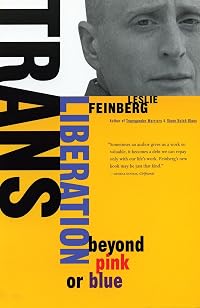
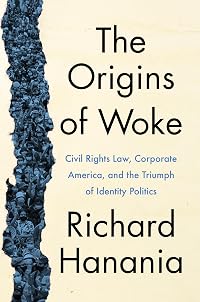


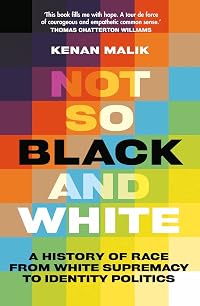

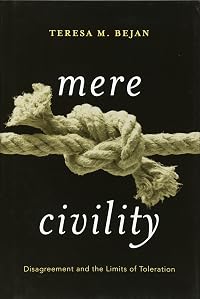








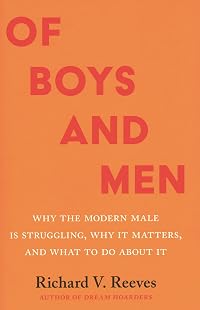
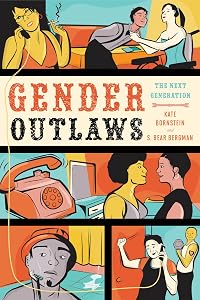
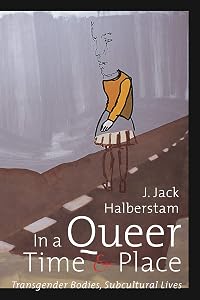
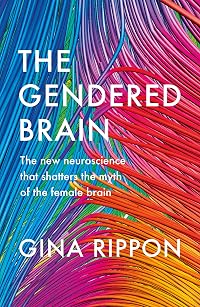

Member Recommendations
themulhern Alex Byrne has mistaken the message of the long persecution of Jack Phillips; this book describes what Phillips has been undergoing, not too engagingly, admittedly, but at least the book is there for the reading.
Member Reviews
This one bumped to the top of my TBR list of books that I don't actually want to read but must as a duty because the author is currently undergoing a cancellation.
But I got angry pretty quickly when I encountered this statement in the introduction:
"Gay rights infringe at best marginally on the rights of others. In 2012 a Christian baker in Colorado refused to design a wedding cake for Charlie and David - that this caused outrage and went to the US Supreme Court shows how far society has come."
First, there is no such thing as "gay rights", there can only be equal rights for everybody. Second, that the Colorado cake artist is still being hounded, a decade later, by various activist organizations is a proof that whatever these show more organizations are doing does, in fact, infringe in a major way on other people's lives and rights, specifically the cake artist's right against compelled speech. So yes, that this case went all the way to the Supreme Court, and this man continues to be hounded by these organizations, does indeed show how far society has come. But the implication in that sentence is that that is an example of how society has come to a better place; I'm quite confident that it is an example of getting to a bad place.
So far, for a professional philosopher, this man is making a poor job of it. show less
But I got angry pretty quickly when I encountered this statement in the introduction:
"Gay rights infringe at best marginally on the rights of others. In 2012 a Christian baker in Colorado refused to design a wedding cake for Charlie and David - that this caused outrage and went to the US Supreme Court shows how far society has come."
First, there is no such thing as "gay rights", there can only be equal rights for everybody. Second, that the Colorado cake artist is still being hounded, a decade later, by various activist organizations is a proof that whatever these show more organizations are doing does, in fact, infringe in a major way on other people's lives and rights, specifically the cake artist's right against compelled speech. So yes, that this case went all the way to the Supreme Court, and this man continues to be hounded by these organizations, does indeed show how far society has come. But the implication in that sentence is that that is an example of how society has come to a better place; I'm quite confident that it is an example of getting to a bad place.
So far, for a professional philosopher, this man is making a poor job of it. show less
Overall, this book is solid, but it has some characteristics that are annoying, and some that are just plain poor thinking. The annoying includes the constant reference to trans individuals by their preferred gender; this becomes confusing trying to sort out who is who, who is trans, who is not, and so forth. It also grates in a book that demonstrates the poverty of the trans gender arguments. There is also way too much acceptance of the male brain/female brain claims, and the differences between the sexes, not just the physiological, which are real, measurable, and quantifiable, but the claimed sociological and psychological differences, which are at best not resting on solid evidence, but on ephemeral research findings that tend to show more disappear when one shines a bright light on them. These differences may be real, or may not. With the data we have, one should not be certain, and boy, is he certain. Perhaps the most annoying, though, is his early on criticism of 'radical' gender critical feminists, when all they are saying is basically the same things he says. This appears to be a requirement these days when publishing anything with the slightest hint of political or sociological; deny you are 'with them', then go on and make your arguments, perhaps misrepresenting 'their' argument to distance yourself from the 'radical' them. Overall, it's a worthwhile book, but there are quite a few cringeworthy moments. show less
Excellent book! Written for a popular audience but without sacrificing clarity and precision. THIS is how philosophers should write. (Not to mention research; Byrne has clearly done his homework.)
If you're looking to understand sex and gender apart from incendiary policy wars, this is the book.
If you're looking to understand sex and gender apart from incendiary policy wars, this is the book.
Ratings
Members
- Recently Added By
Lists

Absent from the Merrimack Valley Library Consortium libraries
192 works; 1 member

Books by Cancelled People
40 works; 2 members
Author Information
7 Works 163 Members
Common Knowledge
- Quotations
- Many other philosophers have written about sex and gender. You might suppose that the philosophy in this book is a report from the cutting edge of research, like pop science books about behavioural genetics or cosmology. Sure... (show all)ly all that philosophizing about sex and gender must have produced some gold, or at least shed some light? In my opinion, not very much. Despite their reputation in some quarters as unflinching logical thinkers, philosophers have done little to diminish the nonsense surrounding sex and gender and in some cases have even managed to increase it. I wrote this book partly to counteract these failings. Other parts of the academy have also fallen short. My aim is constructive, but sometimes construction requires preparatory demolition. The targets of my critiques are academics (and some in the medical profession) who ought to know better. I am sure they will not see it this way!
(p. vii)
Gay rights infringe at best marginally on the rights of others. In 2012 a Christian baker in Colorado refused to design a wedding cake for Charlie and David - that this caused outrage and went to the US Supreme Court shows ho... (show all)w far society has come.
(p. 3) - Last words
- (Click to show. Warning: May contain spoilers.)Setting the afterlife aside, the significance of sex will always be with us. Humans are exceptional animals in many ways, but not in this one. It's not simply that we come in two sexes, but that we come in two sexed forms - humans are sexually dimorphic. If human females and males were practically indistinguishable, there would be no trouble with gender and no need for this book. It is not all trouble, though: without sexual dimorphism, much of value in our society, art and culture would be absent. Underneath the - surely transient - contemporary social currents discussed in this book is the human condition.
(p. 196)
Classifications
- Genres
- Nonfiction, Sexuality and Gender Studies, Philosophy, Science & Nature, General Nonfiction
- DDC/MDS
- 306.76 — Society, government, & culture Social sciences, sociology & anthropology Social Behavior - Dating, Marriage, Divorce Sexual relations Sexual orientation, transgender identity, intersexuality
- LCC
- HQ73 .B97 — Social sciences The family. Marriage, Women and Sexuality The Family. Marriage. Women Sexual life
- BISAC
Statistics
- Members
- 30
- Popularity
- 929,629
- Reviews
- 3
- Rating
- (3.90)
- Languages
- English
- Media
- Paper, Ebook
- ISBNs
- 1
- ASINs
- 1