The Scorpion God: Three Short Novels
by William Golding
On This Page
Description
The three short novels in this collection, The Scorpion God, show Golding at his playful, ironic and mysterious best. In 'The Scorpion God' we see the world of ancient Egypt at the time of the earliest Pharaohs. 'Clonk Clonk' is a graphic account of a crippled youth's triumph over his tormentors in a primitive matriarchal society. And 'Envoy Extraordinary' is a tale of Imperial Rome where the emperor loves his illegitimate grandson more than his own arrogant, loutish heir.Tags
Recommendations














Member Reviews
Princess Pretty – Flower has a problem
Her younger brother, still a child, is not able, not even willing to lie with her and make her pregnant. This is a disaster for she is badly in need to conceive an heir to the Egyptian throne.
Her father, the King, has a problem too.
King “Great – House”, has failed to finish his royal run, a ritual which seals the prolongation of his Godlike status for another year. In the sweltering heat, moments before successfully accomplishing the expected feat he stumbles and crashes down in the dust. The onlookers, his subjects flocked together to encourage their King, are stunned and schocked. If the King cannot succeed his run, how can he keep the skies from falling down, how can he make the Nile rise show more once more?
As the bloodline of the Kings has to remain pure and a non – incestuous relation never an option for the succession, Pretty – Flower’s only possibility is to get her father to sleep with her. With a lascivious dance, during the ensuing ceremonial feast, she tries to get his attention. But the old King is absorbed by the chess-game he plays with his Vizir and the stories his Jester “Liar” tells him. At the end of a furious dance “Pretty – Flower” collapses. She has failed to arouse her father. The weak King, symbol of the kingdom of Egypt” has turned impotent too.
The Vizir, unaware of the Prince unwillingness to sleep with his sister, starts the preparation of the King’s planned death and his immediate succession.
Published in 1971, The Scorpion God is a compilation of different “short novels”: the title story set in a proto-dynastic Egypt ( 3200 – 3000 BC ), the humorous Clonk Clonk, ( 1971 ) and Envoy extraordinary ( 1956 ) . The three stories share the theme of early societies in trouble.
This compilation is nearly the last and only work Faber and Faber could still wrestle out of Golding in ’71. It would effectively mark a long intermission in Golding’s literary output. Some would even announce the end of Golding, seeing in the “Impotent King” a symbolic echo of the drying up of the writer’s inspiration.
During the decade following his first novel “Lord of the Flies”, Golding had been the most fascinating of writers, submitting masterpiece after masterpiece: “the Inheritors” ( 1955 ), “Pincher Martin” ( 1956 ), “Free Fall” ( 1959 ) and “ The Spire” ( 1964 ).
But the sustained hard work and Golding’s personal problems, most notably the depressions of his son David, had taken their toll and indeed after the Scorpion God it was over. It was over for the next eight years until Golding would come back with his “Darkness Visible” and his “To the Ends of the Earth” trilogy.
The writing of the Scorpion God is still brilliant and it is truly impressive with what subtlety and with what few words he creates the ancient civilisation out of the trembling light that hovers over the incandescent desert sand.
But there is more in the Scorpion God than just beautiful phrases. A hint to a deeper understanding lies in the “Liar” character. A slave from the North, he is the Jester and favourite of the King. His nickname “Liar” summarizes the opinion of what the people think about the many stories he tells. However entertaining, these narratives are so “off the wall”, that the Egyptians think of them as fairy tales.
He speaks for example about lands surrounded by salt water, he speaks about countries so cold that if you lie down in the white dust ( which is in fact water ) you turn into a statue,
John Carey, in his biography of Golding calls this the writer’s “Martian Mode”: showing familiar things from an alien viewpoint. We of course understand the “Lies”, but it underscores the fact that we cannot understand the world of the Nile valley in 3200 BC any more than that the Ancient Egyptians could believe anything as alien as a Northern climate. We cannot comprehend the incestuous dynasty or believe in a God – Man who holds up the skies and makes the river swell. We wonder about the killing of the King and disagree with the mass sacrifice of his court...
And, however mesmerized we are by his fictional rendition of the world from the past, we would call our entertaining jester, William Golding, a liar too…
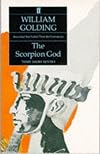
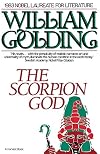
Not that Golding did not aim to be a realist. He had an argument with Faber and Faber, about the cover of his book. The first edition picture, based on an advice by the British Museum, showed a Pharaoh in full regalia. Golding, well informed, argued that the depiction was not of “Narmer”, one of the possible candidates for the mysterious Scorpion God. But it was too late, the printers were in a rush and the depiction of the Narmer Palette was put aside.
If nothing else, my illustrated review gives me the opportunity to give Golding what he asked for: a depiction of the true Scorpion God! show less
Her younger brother, still a child, is not able, not even willing to lie with her and make her pregnant. This is a disaster for she is badly in need to conceive an heir to the Egyptian throne.
Her father, the King, has a problem too.
King “Great – House”, has failed to finish his royal run, a ritual which seals the prolongation of his Godlike status for another year. In the sweltering heat, moments before successfully accomplishing the expected feat he stumbles and crashes down in the dust. The onlookers, his subjects flocked together to encourage their King, are stunned and schocked. If the King cannot succeed his run, how can he keep the skies from falling down, how can he make the Nile rise show more once more?
As the bloodline of the Kings has to remain pure and a non – incestuous relation never an option for the succession, Pretty – Flower’s only possibility is to get her father to sleep with her. With a lascivious dance, during the ensuing ceremonial feast, she tries to get his attention. But the old King is absorbed by the chess-game he plays with his Vizir and the stories his Jester “Liar” tells him. At the end of a furious dance “Pretty – Flower” collapses. She has failed to arouse her father. The weak King, symbol of the kingdom of Egypt” has turned impotent too.
The Vizir, unaware of the Prince unwillingness to sleep with his sister, starts the preparation of the King’s planned death and his immediate succession.
Published in 1971, The Scorpion God is a compilation of different “short novels”: the title story set in a proto-dynastic Egypt ( 3200 – 3000 BC ), the humorous Clonk Clonk, ( 1971 ) and Envoy extraordinary ( 1956 ) . The three stories share the theme of early societies in trouble.
This compilation is nearly the last and only work Faber and Faber could still wrestle out of Golding in ’71. It would effectively mark a long intermission in Golding’s literary output. Some would even announce the end of Golding, seeing in the “Impotent King” a symbolic echo of the drying up of the writer’s inspiration.
During the decade following his first novel “Lord of the Flies”, Golding had been the most fascinating of writers, submitting masterpiece after masterpiece: “the Inheritors” ( 1955 ), “Pincher Martin” ( 1956 ), “Free Fall” ( 1959 ) and “ The Spire” ( 1964 ).
But the sustained hard work and Golding’s personal problems, most notably the depressions of his son David, had taken their toll and indeed after the Scorpion God it was over. It was over for the next eight years until Golding would come back with his “Darkness Visible” and his “To the Ends of the Earth” trilogy.
The writing of the Scorpion God is still brilliant and it is truly impressive with what subtlety and with what few words he creates the ancient civilisation out of the trembling light that hovers over the incandescent desert sand.
But there is more in the Scorpion God than just beautiful phrases. A hint to a deeper understanding lies in the “Liar” character. A slave from the North, he is the Jester and favourite of the King. His nickname “Liar” summarizes the opinion of what the people think about the many stories he tells. However entertaining, these narratives are so “off the wall”, that the Egyptians think of them as fairy tales.
He speaks for example about lands surrounded by salt water, he speaks about countries so cold that if you lie down in the white dust ( which is in fact water ) you turn into a statue,
John Carey, in his biography of Golding calls this the writer’s “Martian Mode”: showing familiar things from an alien viewpoint. We of course understand the “Lies”, but it underscores the fact that we cannot understand the world of the Nile valley in 3200 BC any more than that the Ancient Egyptians could believe anything as alien as a Northern climate. We cannot comprehend the incestuous dynasty or believe in a God – Man who holds up the skies and makes the river swell. We wonder about the killing of the King and disagree with the mass sacrifice of his court...
And, however mesmerized we are by his fictional rendition of the world from the past, we would call our entertaining jester, William Golding, a liar too…
Not that Golding did not aim to be a realist. He had an argument with Faber and Faber, about the cover of his book. The first edition picture, based on an advice by the British Museum, showed a Pharaoh in full regalia. Golding, well informed, argued that the depiction was not of “Narmer”, one of the possible candidates for the mysterious Scorpion God. But it was too late, the printers were in a rush and the depiction of the Narmer Palette was put aside.
If nothing else, my illustrated review gives me the opportunity to give Golding what he asked for: a depiction of the true Scorpion God! show less
Three novellas about kingship. William Golding is a novelist with deserved reputation, and I find these shorter pieces quite as rewarding as his hit, "The Lord of the Flies." We visit an unnamed prehistoric community, Egypt before the pyramids, and a fantastic Rome. I had a fine time.
"There was not a crack in the sky, not a blemish on the dense blue enamel. Even the sun, floating in the middle of it, did no more than fuse the immediate surroundings so that gold and ultramarine ran and mingled. Out of this sky, heat and light fell like an avalanche so that everything between the two long cliffs lay motionless as the cliffs themselves."
Not my favorite work by Golding, but that's like complaining about bacon on your pizza instead of pepperoni. "The Scorpion God" and "Clonk Clonk" were written in the 70s while "Envoy Extraordinary" was published two decades before--and the latter somehow felt more modern to me. Maybe it was all the hints at future inventions failing abysmally in ancient Rome that rang in sympathy with show more the shortcomings in our own times. Or in every time. We still don’t have jetpacks. Now matter how powerful your smartphone may be, it’s not taking you physically through the clouds, over oceans, to another continent. We’re far closer to 𝘔𝘪𝘯𝘰𝘳𝘪𝘵𝘺 𝘙𝘦𝘱𝘰𝘳𝘵 than anything remotely Star Trek. Like Orban before the Byzantines, he and his invention were before their time, and he was forced to seek out Mehmed II.
I’ve read plenty of commentary to “The Scorpion God” to see if I’d missed something. I mostly didn’t. The style was disappointing. The narrative was as flat as the characters. The point was to be had for the taking—I just found the inkwell caked and empty for the stylus. And “Clonk Clonk” . . . I really couldn’t give a fig. Whether it was from (purportedly) seventy thousand years ago or the night before reading in bed. And I like figs. It was all so rushed and populated with so many unmemorable characters, that I once again will have to check other reviews to ensure I got what I indeed thought I had.
The third installment was the charm, though. “Envoy Extraordinary” felt both ancient and new; mythic and modern; as funny and tragic as our own predicament in 2017. America is a toga-less Roman Empire, after all. Instead of reading the viscera of birds and sheep, we’re trawling nets through social media. Instead of the gladiatorial arena, we’ve got war on a 24-hour news cycle. Instead of a Caesar we’ve got . . . I think you get the point. Ink in the inkwell after all?
I’m being too critical, once again. Golding is an astonishing writer. One-third of that greatness in any book is a treasure. However, once you’ve read the open-eyed glory of 𝘋𝘢𝘳𝘬𝘯𝘦𝘴𝘴 𝘝𝘪𝘴𝘪𝘣𝘭𝘦, it’s difficult not to be too difficult on a lesser work.
Did someone say there was bacon on that pizza? show less
Not my favorite work by Golding, but that's like complaining about bacon on your pizza instead of pepperoni. "The Scorpion God" and "Clonk Clonk" were written in the 70s while "Envoy Extraordinary" was published two decades before--and the latter somehow felt more modern to me. Maybe it was all the hints at future inventions failing abysmally in ancient Rome that rang in sympathy with show more the shortcomings in our own times. Or in every time. We still don’t have jetpacks. Now matter how powerful your smartphone may be, it’s not taking you physically through the clouds, over oceans, to another continent. We’re far closer to 𝘔𝘪𝘯𝘰𝘳𝘪𝘵𝘺 𝘙𝘦𝘱𝘰𝘳𝘵 than anything remotely Star Trek. Like Orban before the Byzantines, he and his invention were before their time, and he was forced to seek out Mehmed II.
I’ve read plenty of commentary to “The Scorpion God” to see if I’d missed something. I mostly didn’t. The style was disappointing. The narrative was as flat as the characters. The point was to be had for the taking—I just found the inkwell caked and empty for the stylus. And “Clonk Clonk” . . . I really couldn’t give a fig. Whether it was from (purportedly) seventy thousand years ago or the night before reading in bed. And I like figs. It was all so rushed and populated with so many unmemorable characters, that I once again will have to check other reviews to ensure I got what I indeed thought I had.
The third installment was the charm, though. “Envoy Extraordinary” felt both ancient and new; mythic and modern; as funny and tragic as our own predicament in 2017. America is a toga-less Roman Empire, after all. Instead of reading the viscera of birds and sheep, we’re trawling nets through social media. Instead of the gladiatorial arena, we’ve got war on a 24-hour news cycle. Instead of a Caesar we’ve got . . . I think you get the point. Ink in the inkwell after all?
I’m being too critical, once again. Golding is an astonishing writer. One-third of that greatness in any book is a treasure. However, once you’ve read the open-eyed glory of 𝘋𝘢𝘳𝘬𝘯𝘦𝘴𝘴 𝘝𝘪𝘴𝘪𝘣𝘭𝘦, it’s difficult not to be too difficult on a lesser work.
Did someone say there was bacon on that pizza? show less
If it weren't for his name on the cover I never would have known this was by Golding. Ropey dialogue and characterisation, especially in the first novella. It wouldn't have mattered so much, but this was fully half the book. The narration was beautifully written throughout with a clever and subtlesubtle use of rhythm. It's emotionally cold and distant in the first half. Admirably done, but in a book that depends on emotional engagement in matters of the heart I found it an astonishing artistic choice. He gets one star for the writing and an extra one because I did laugh very hard at one point. It's not put me off Golding. He has a beautiful voice but I think here he's in search of something to say, so I think I'll try The Spire or The show more Inheritors which might be more my kind of thing. show less
Not an inspiring trio of stories, though I would have expected the ancient world backdrop to make them appeal to me. The ancient Egypt one I managed to get through with a bit of a struggle, but the prehistoric one I gave up on after only a few pages, the Roman one a bit further (I'm spoiled by Saylor and McCullough). They lack the naturalism I expect from historical fiction that I like (and which is present in the author's Lord of the Flies).
"Accidentally read the last of the short novels first. The one involving steam power, printing presses, and gunpowder in ancient Rome. - I give that one a rating of 3.5."
"The Scorpion God completed. A story of the Nile. The rise and fall of the river. And the human who is declared a God. Who is to make the river rise, and make the river go down again. - 3.5 stars."
"I have no idea how to "take" the middle short novel. Apparently the point of it is that the only way women can be in control is if all men have the intelligence of fruit flies and are gay. I do not believe I've ever read anything more horrible in my life than the middle short novel of this book."
"The Scorpion God completed. A story of the Nile. The rise and fall of the river. And the human who is declared a God. Who is to make the river rise, and make the river go down again. - 3.5 stars."
"I have no idea how to "take" the middle short novel. Apparently the point of it is that the only way women can be in control is if all men have the intelligence of fruit flies and are gay. I do not believe I've ever read anything more horrible in my life than the middle short novel of this book."
Difficult and Lacking Detail
I am a fan of William Golding and I appreciate his attempts to illuminate the subject of prehistoric humans. Unfortunately, the three novellas included in this collection were very difficult for me to read, especially without context.
As I read the stories, I was frustrated with the lack of detail and context. Although I could place the characters and their actions, the stories dragged tremendously. After I read quiet a few reviews, I feel that I better understand the point of the stories. Nevertheless, the felt like a chore to read, especially compared to some of Golding's other works.
I am a fan of William Golding and I appreciate his attempts to illuminate the subject of prehistoric humans. Unfortunately, the three novellas included in this collection were very difficult for me to read, especially without context.
As I read the stories, I was frustrated with the lack of detail and context. Although I could place the characters and their actions, the stories dragged tremendously. After I read quiet a few reviews, I feel that I better understand the point of the stories. Nevertheless, the felt like a chore to read, especially compared to some of Golding's other works.
Members
- Recently Added By
Published Reviews
ThingScore 75
"The Scorpion God" by William Golding consists of three novellas, each set in a different era and civilization, exploring themes of power, ritual, and the divine. The first story, "The Scorpion God," delves into an ancient Egyptian-like civilization where a god-king's failing power and mortality are scrutinized. The narrative captures the political intrigue and the shifting dynamics between show more the divine ruler, his subjects, and the inevitable decline of his reign. The second, "Clonk Clonk," presents a prehistoric setting, focusing on a tribe's struggle with fertility, leadership, and the brutal realities of their existence, highlighting the primal aspects of humanity. The final story, "Envoy Extraordinary," offers a satirical look at an advanced, Roman-like empire through the invention of a revolutionary, yet potentially destructive, technology, questioning the nature of progress and power. Collectively, these stories examine the corrupting influence of power, the cyclical nature of civilizations, and the eternal human themes of life, death, and the quest for meaning. show less
added by Michael_Vannin
Author Information

75+ Works 68,530 Members
William Golding was born in Cornwall, England on September 19, 1911. Although educated to be a scientist at the request of his father, he developed an interest in literature. At Oxford University, he studied natural science for two years and then transferred to a program for English literature and philosophy. He eventually became a schoolmaster at show more Bishop Wordsworth's School in Salisbury. During World War II, he joined the Royal Navy and was involved in the sinking of the German battleship Bismarck. After the war, he returned to Bishop Wordsworth's School and taught there until 1962. His first novel, Lord of the Flies, was published in 1954 and was made into a film in 1963. His other novels include The Inheritors, Free Fall, The Spire, The Pyramid, The Paper Men, Close Quarters, and Fire down Below. He won the Booker Prize for Rites of Passage in 1980 and the Nobel Prize for Literature in 1983. He also wrote plays, essays, and short stories. He was knighted by Queen Elizabeth II in 1988. He died on June 19, 1993. (Bowker Author Biography) show less
Series
Belongs to Publisher Series
Work Relationships
Contains
Common Knowledge
- Canonical title
- The Scorpion God: Three Short Novels
- Original title
- The Scorpion God: Three Short Novels
Classifications
Statistics
- Members
- 325
- Popularity
- 97,511
- Reviews
- 9
- Rating
- (3.34)
- Languages
- 8 — Dutch, English, French, German, Lithuanian, Polish, Russian, Spanish
- Media
- Paper, Ebook
- ISBNs
- 21
- ASINs
- 7