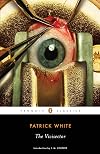
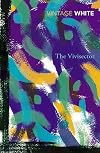
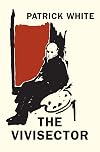
The Vivisector
by Patrick White
On This Page
Description
Hurtle Duffield, a painter, is incapable of loving anything except what he paints. The men and women who court him during his long life are, above all, the victims of his art. He is the vivisector, dissecting their weaknesses with cruel precision: his sister's deformity, a grocer's moonlight indiscretion, and the passionate illusions of his mistress Hero Pavloussi. It is only when Hurtle meets an egocentric adolescent whom he sees as his spiritual child does he experience a deeper, more show more treacherous emotion in this tour de force of sexual and psychological menace that sheds brutally honest light on the creative experience. show lessTags
Recommendations















Member Reviews
White's grappling, rugged, impasto prose is the perfect medium for his portrait of asshole artist Hurtle Duffield. Purchased from his impoverished parents by a well-to-do couple, the first 300 pages or so covering Hurtle's bildung are thrillingly real and immediate, stitching us up inside the skin of a deeply weird boy metamorphosing into an even weirder young man. Hurtle's artistic sensibility isn't just visual (though the book's visual imagery is stunningly rich and original), it's also intensely tactile and olfactory. There are smells on every page, most of them to some degree unpleasant. It's a filthy, sweaty, pissy, shitty, pukey story, as its protagonist develops his vivisectory vision and gropes towards an outlet for it on canvas show more while repudiating society and using up a succession of muses starting with his hunchbacked foster-sister Rhoda who I think is the book's best character.
White loves literary lacunae, and the way he fills in backstory implicitly, casually in third person is seriously cool. (The narration also flips, very effectively, into second person when the focus on Hurtle's inner life is especially close). The major lacuna is about a 10-year gap from the time Hurtle sells his first paintings, and when we pick him up again he's a famous artist living in squalid seclusion in a Sydney suburb. It's here, about halfway through the book, that things start to congeal. Hurtle just sort of goes plodding through life in his skeevy skin-crawly way, changing only insofar as he gets gradually more rancid and obnoxious, and we spend far too long on his three mature dalliances — a rich divorcée he knew as a kid, the wife of a Greek shipping tycoon, and a 13 year-old piano prodigy. None of them are very interesting, and the Lolita-like obsession with young Kathy (who's fine with it, at the time and years later) is made more repugnant by the apparent authorial sanction.
Whenever a novelist writes about an artist in any medium, you assume it's some kind of auto-analysis, and that's surely the case here. The artistic process is glorified to the point of parody, framed as an uncontrollable spiritual agony, a bodily compulsion to channel a mystic truth. The artist/God analogy is explicit. At least there's a hint of irony in the end, as Hurtle, half his body disabled by a stroke, paints himself into oblivion in his garret and seemingly realizes that the real god, the real vivisector isn't him. White's incendiary prose burns itself out in step with his subject's consciousness. show less
White loves literary lacunae, and the way he fills in backstory implicitly, casually in third person is seriously cool. (The narration also flips, very effectively, into second person when the focus on Hurtle's inner life is especially close). The major lacuna is about a 10-year gap from the time Hurtle sells his first paintings, and when we pick him up again he's a famous artist living in squalid seclusion in a Sydney suburb. It's here, about halfway through the book, that things start to congeal. Hurtle just sort of goes plodding through life in his skeevy skin-crawly way, changing only insofar as he gets gradually more rancid and obnoxious, and we spend far too long on his three mature dalliances — a rich divorcée he knew as a kid, the wife of a Greek shipping tycoon, and a 13 year-old piano prodigy. None of them are very interesting, and the Lolita-like obsession with young Kathy (who's fine with it, at the time and years later) is made more repugnant by the apparent authorial sanction.
Whenever a novelist writes about an artist in any medium, you assume it's some kind of auto-analysis, and that's surely the case here. The artistic process is glorified to the point of parody, framed as an uncontrollable spiritual agony, a bodily compulsion to channel a mystic truth. The artist/God analogy is explicit. At least there's a hint of irony in the end, as Hurtle, half his body disabled by a stroke, paints himself into oblivion in his garret and seemingly realizes that the real god, the real vivisector isn't him. White's incendiary prose burns itself out in step with his subject's consciousness. show less
The Vivisector by Patrick White
The Vivisector is about a painter, the one I was destined not to become - another of my frustrations. I had imagined that if I could acquire the technique I might give visual expression to what I have inside me, and that the physical act of painting would exhilarate me far more than grinding away at grey, bronchial prose.
extract from Patrick White’s autobiography [Flaws in the Glass]
Hurtle Duffield could almost be Patrick White’s alter ego. He is fictionalised as one of the greatest painters that Australia has produced and White tells his story from childhood to his final moments when he collapses, paintbrush in hand: reaching for that final insight into the soul of man. Hurtle is obsessive; right from show more early childhood he was aware that he saw the world differently to most people and he had a compulsion to express these insight in drawing and painting. He was only happy when he was painting and all his personal relationships with other non artists had to be sacrificed on the altar of his canvases.
White tells his story in chronological order and like any biography Hurtle is never out of view and White’ elegant prose slips from first person to omnipresent third person with consummate ease. The first quarter of the book tells of Hurtle’s early childhood and later upbringing. He was born to a poor family, but his natural intelligence brought him to the attention of a rich family and he was adopted by them. Maman and Harry Courtenay were a family of some standing and desperately wanted another child as a companion for their hunchbacked daughter Rhoda. Hurtle prospers but his sprit feels constricted to such an extent that he enlists as a soldier in the first world war to escape from the family. White’s evocation of Hurtle’s childhood and early teens is handled brilliantly and his characteristic selfishness is already to the fore. The world revolves around Hurtle and it is no surprise to him that he survives the war.
There is a short time jump and we catch up with Hurtle still in Europe after the war, he is making a living as an odd job man, only painting when he can afford to. His existence is fairly aimless and his only positive thought is to avoid contact with his family. He does drift back to Australia but Harry has died, Maman has re-married and moved to England taking Rhoda with her. Hurtle is penniless but free, however a chance encounter with Nance Lightfoot a Sydney prostitute becomes a catalyst and inspiration for his first important phase of paintings. Nance and Caldicott the homosexual art dealer both in love with Hurtle are sucked in chewed up and thrown out by the juggernaut that is Hurtle’s art.
White then engineers another jump in time, in a masterly short chapter of 9 pages, we meet a mysterious stranger, being propositioned by the homosexual grocer Mr Cutbush. We soon realise that the stranger is an older Hurtle, now a successful painter with a large house in the Sydney suburbs. Through his conversation with Cutbush; White expertly feeds his readers the essentials of the intervening years. The short conversation with the unlikely grocer also sparks in Hurtle another phase in his painting cycle. He meets his patroness Mrs Davenport; a rich society lady with connections to the Courtenay family and she introduces or rather procures for him: Hero; the wife of a wealthy Greek shipping magnate.
Another short linking chapter introduces us to Hurtles final creative phase: Rhoda has drifted back into his life and now lives with him. The couple befriend a thirteen year old girl Kathy Volkov, who has a a talent for music that burns as fiercely and egotistically as Hurtle’s own. The two collide in an unlikely relationship that inspires Hurtle’s next phase of painting, but Kathy's artistic integrity and strength allows her to survive and benefit from their connection. The book ends on a high note with a major retrospective exhibition of Hurtle’s paintings which is attended by the Prime Minister. Hurtle now a stroke sufferer enjoys to some extent his celebrity status, but it still cannot get in the way of his work.
Whites portrayal of the obsessive artist that destroys many of whom come into contact with him and yet still has the capacity to inspire others is extraordinary. Hurtle lives on these pages along with the unfortunate women who love him and those that are strong enough to survive him. White takes his readers on a voyage through the mind of an artist, he makes us see the world through Hurtle’s eyes. He explains how events trigger Hurtles works of art in language that is astonishingly vivid.:
“During the days which followed Kathy Volkov’s necessary but forgettable visit, he drew constantly and furiously. He did many drawings of what he could see was becoming his ‘Girl at Piano’ Out of numerous false starts and the vulgar gloss of a concert grand, the old upright piano grew, the sloping line of the inclined case almost parallel to the straight line of the young girl’s back, her thick plait, the candlestick empty except for the solid drifts of wax and encrustations of verdigris. As he saw it any light must flow from a suggestion of the girl’s face.”
Kathy says in a letter to Hurtle that “It was you who taught me how to see, to be, to know immediately”, surely an attribute that all great artist have and White knows this through his own frustrations in not being able to paint, but he does the next best thing here; by making the reader see his visions through his descriptions of Hurtle’s paintings.
This is a superbly written novel with plenty of White’s sometimes sardonic sometimes caustic remarks. He has Mr Cutbush say about an immoral man of many affairs “He only lets the wrong ones choose him” But what of Hurtle himself? is he just a “Viscous bastard”?: a vivisector of the faults and weaknesses of the people who inspire him? The question is certainly posed and White provides enough characterisation for the reader to make up his own mind. White’s more understanding portrait of the ageing iconoclast in the final sections of the novel and his partial redemption through Kathy Volkova leads me to see where his sympathies lie; after all when describing another of Hurtles proposed pictures he says of him “ But he knew. Where and when doesn’t in the end matter” It is the search for truth that is important.
Over the last year or two I have read eight of White’s novels and “The Vivisector is right up there with the best. In my opinion it ranks with His two great Australian novels “Tree Of Man” and “Voss”. It is by far his longest novel weighing in at over 600 pages, but I get the feeling that it was an inspirational novel, one that White could not let go, could not bear to trim. It is passionate, it is intense and contains much of White himself in his characterisation of Hurtle Duffield. A supreme achievement and a five star read. .
. show less
The Vivisector is about a painter, the one I was destined not to become - another of my frustrations. I had imagined that if I could acquire the technique I might give visual expression to what I have inside me, and that the physical act of painting would exhilarate me far more than grinding away at grey, bronchial prose.
extract from Patrick White’s autobiography [Flaws in the Glass]
Hurtle Duffield could almost be Patrick White’s alter ego. He is fictionalised as one of the greatest painters that Australia has produced and White tells his story from childhood to his final moments when he collapses, paintbrush in hand: reaching for that final insight into the soul of man. Hurtle is obsessive; right from show more early childhood he was aware that he saw the world differently to most people and he had a compulsion to express these insight in drawing and painting. He was only happy when he was painting and all his personal relationships with other non artists had to be sacrificed on the altar of his canvases.
White tells his story in chronological order and like any biography Hurtle is never out of view and White’ elegant prose slips from first person to omnipresent third person with consummate ease. The first quarter of the book tells of Hurtle’s early childhood and later upbringing. He was born to a poor family, but his natural intelligence brought him to the attention of a rich family and he was adopted by them. Maman and Harry Courtenay were a family of some standing and desperately wanted another child as a companion for their hunchbacked daughter Rhoda. Hurtle prospers but his sprit feels constricted to such an extent that he enlists as a soldier in the first world war to escape from the family. White’s evocation of Hurtle’s childhood and early teens is handled brilliantly and his characteristic selfishness is already to the fore. The world revolves around Hurtle and it is no surprise to him that he survives the war.
There is a short time jump and we catch up with Hurtle still in Europe after the war, he is making a living as an odd job man, only painting when he can afford to. His existence is fairly aimless and his only positive thought is to avoid contact with his family. He does drift back to Australia but Harry has died, Maman has re-married and moved to England taking Rhoda with her. Hurtle is penniless but free, however a chance encounter with Nance Lightfoot a Sydney prostitute becomes a catalyst and inspiration for his first important phase of paintings. Nance and Caldicott the homosexual art dealer both in love with Hurtle are sucked in chewed up and thrown out by the juggernaut that is Hurtle’s art.
White then engineers another jump in time, in a masterly short chapter of 9 pages, we meet a mysterious stranger, being propositioned by the homosexual grocer Mr Cutbush. We soon realise that the stranger is an older Hurtle, now a successful painter with a large house in the Sydney suburbs. Through his conversation with Cutbush; White expertly feeds his readers the essentials of the intervening years. The short conversation with the unlikely grocer also sparks in Hurtle another phase in his painting cycle. He meets his patroness Mrs Davenport; a rich society lady with connections to the Courtenay family and she introduces or rather procures for him: Hero; the wife of a wealthy Greek shipping magnate.
Another short linking chapter introduces us to Hurtles final creative phase: Rhoda has drifted back into his life and now lives with him. The couple befriend a thirteen year old girl Kathy Volkov, who has a a talent for music that burns as fiercely and egotistically as Hurtle’s own. The two collide in an unlikely relationship that inspires Hurtle’s next phase of painting, but Kathy's artistic integrity and strength allows her to survive and benefit from their connection. The book ends on a high note with a major retrospective exhibition of Hurtle’s paintings which is attended by the Prime Minister. Hurtle now a stroke sufferer enjoys to some extent his celebrity status, but it still cannot get in the way of his work.
Whites portrayal of the obsessive artist that destroys many of whom come into contact with him and yet still has the capacity to inspire others is extraordinary. Hurtle lives on these pages along with the unfortunate women who love him and those that are strong enough to survive him. White takes his readers on a voyage through the mind of an artist, he makes us see the world through Hurtle’s eyes. He explains how events trigger Hurtles works of art in language that is astonishingly vivid.:
“During the days which followed Kathy Volkov’s necessary but forgettable visit, he drew constantly and furiously. He did many drawings of what he could see was becoming his ‘Girl at Piano’ Out of numerous false starts and the vulgar gloss of a concert grand, the old upright piano grew, the sloping line of the inclined case almost parallel to the straight line of the young girl’s back, her thick plait, the candlestick empty except for the solid drifts of wax and encrustations of verdigris. As he saw it any light must flow from a suggestion of the girl’s face.”
Kathy says in a letter to Hurtle that “It was you who taught me how to see, to be, to know immediately”, surely an attribute that all great artist have and White knows this through his own frustrations in not being able to paint, but he does the next best thing here; by making the reader see his visions through his descriptions of Hurtle’s paintings.
This is a superbly written novel with plenty of White’s sometimes sardonic sometimes caustic remarks. He has Mr Cutbush say about an immoral man of many affairs “He only lets the wrong ones choose him” But what of Hurtle himself? is he just a “Viscous bastard”?: a vivisector of the faults and weaknesses of the people who inspire him? The question is certainly posed and White provides enough characterisation for the reader to make up his own mind. White’s more understanding portrait of the ageing iconoclast in the final sections of the novel and his partial redemption through Kathy Volkova leads me to see where his sympathies lie; after all when describing another of Hurtles proposed pictures he says of him “ But he knew. Where and when doesn’t in the end matter” It is the search for truth that is important.
Over the last year or two I have read eight of White’s novels and “The Vivisector is right up there with the best. In my opinion it ranks with His two great Australian novels “Tree Of Man” and “Voss”. It is by far his longest novel weighing in at over 600 pages, but I get the feeling that it was an inspirational novel, one that White could not let go, could not bear to trim. It is passionate, it is intense and contains much of White himself in his characterisation of Hurtle Duffield. A supreme achievement and a five star read. .
. show less
The vivisector of the title is Hurt Duffield, an artist who "saw rather than thought." He was born into poverty, but was adopted at an early age into a wealthy family (he preferred to think of it as his birth parents "selling" him). The first part of the book is about Hurt's childhood, and I found White's vision of the world through the eyes of an unusual child to be mesmerizing.
The remainder of the book, from Hurt's early adulthood to old age, segments his life into his artistic periods (or visions). His artistic periods usually coincide with his lovers of the time. He coldly and selfishly exploits his lovers as pawns in furtherance of his art.
His first lover is Nance, an uneducated prostitute. His paintings of her, which become more show more and more abstract, bring him his first success and artistic recognition. It is during his affair with Nance that Hurt recognizes and accepts his detachment from other people--the alienation of the artist whose entire being is consumed by his art. In this, Hurt feels a connection with God (if he exists) as a vivisector and himself, the artist as vivisector. Regarding his relationship with Nance,
"Hurt knew every possible movement of her ribs, every reflection of her skin. He had torn the hook from her gills; he had disemboweled her while still alive; he had watched her no less cruel dissection by the knives of light. You couldn't call an experience an experiment, but he profited by whatever it was..."
His victim Nance is not clueless and recognizes his utter selfishness. She tells him:
"'What your sort don't realize,' she wasn't saying, she was firing into his brain, 'is that other people exist. While you're all gummed up in the great art mystery, they're alive, and breaking their necks for love.'"
Another artistic phase is defined by his relationship with his adoptive sister, a hunchback. He obsessively paints her in a series that evolves more and more into abstraction, all masterfully described by White. In old age, Hurt becomes obsessed with Kathy, a (young) teenaged piano prodigy. She becomes his exclusive artistic subject, and she and Hurt quickly engage in a Lolita-like sexual relationship.
This book more than any other I've read conveys the sense of what it's like to be a driven artist. Hurt has no choice in life, other than to paint. Everything and everyone is expendable for his art. In his penetrating consideration of the creative process White makes us see where the ideas come from, and how the artist proceeds to realize his visions.
Perhaps the highest recommendation I can give this book is that on finishing it, I immediately began another book by White. show less
The remainder of the book, from Hurt's early adulthood to old age, segments his life into his artistic periods (or visions). His artistic periods usually coincide with his lovers of the time. He coldly and selfishly exploits his lovers as pawns in furtherance of his art.
His first lover is Nance, an uneducated prostitute. His paintings of her, which become more show more and more abstract, bring him his first success and artistic recognition. It is during his affair with Nance that Hurt recognizes and accepts his detachment from other people--the alienation of the artist whose entire being is consumed by his art. In this, Hurt feels a connection with God (if he exists) as a vivisector and himself, the artist as vivisector. Regarding his relationship with Nance,
"Hurt knew every possible movement of her ribs, every reflection of her skin. He had torn the hook from her gills; he had disemboweled her while still alive; he had watched her no less cruel dissection by the knives of light. You couldn't call an experience an experiment, but he profited by whatever it was..."
His victim Nance is not clueless and recognizes his utter selfishness. She tells him:
"'What your sort don't realize,' she wasn't saying, she was firing into his brain, 'is that other people exist. While you're all gummed up in the great art mystery, they're alive, and breaking their necks for love.'"
Another artistic phase is defined by his relationship with his adoptive sister, a hunchback. He obsessively paints her in a series that evolves more and more into abstraction, all masterfully described by White. In old age, Hurt becomes obsessed with Kathy, a (young) teenaged piano prodigy. She becomes his exclusive artistic subject, and she and Hurt quickly engage in a Lolita-like sexual relationship.
This book more than any other I've read conveys the sense of what it's like to be a driven artist. Hurt has no choice in life, other than to paint. Everything and everyone is expendable for his art. In his penetrating consideration of the creative process White makes us see where the ideas come from, and how the artist proceeds to realize his visions.
Perhaps the highest recommendation I can give this book is that on finishing it, I immediately began another book by White. show less
I've always struggled with Patrick white and this was a big effort for the first third. He's such a misanthrop and I always feel sorry for his mother, he hates her so. But the writing is beautiful and I started to feel some compassion towards Hurtle. Then suddenly I found myself absolutely loving this book. While I wasn't convinced by his descriptions of the painting it was an insightful view of the creative process, of a lifetime of artistic creation.
So I've started a project, in which I read a couple of things by everyone who won the Nobel for literature. No, I'm kidding. I'd rather walk two hundred miles into the middle of nowhere, sit under a freeway bridge, knife myself in the stomach and die slowly over five days in excruciating pain than read things written by most Nobel laureates.
No, I'm reading this because a) the cover of this book is freaking amazing and b) I'm 33 now, and apparently that's the age when culture cringe* starts to fade for uppity Australian men, and I realized there were many authors I should really start reading.
I read The Solid Mandala at university, but only because I was going through a phase of only taking courses with 'gender' or 'class' etc in the show more title, and it happened to be in the course 'Gender in Australian Literature.' SM went completely over my head; 14 years later, I'm in a much better spot to appreciate White's very dense prose.
And for the first 400 or so pages I was blown away. I repeatedly told my wife that this was the best book I'd ever read and so on and so on. It felt like a brutal denunciation of everything, first from the perspective of Hurtle Duffield looking at the rest of the world, and then from the perspective of someone looking at Duffield, who is an horrific human being.
I usually don't like overly descriptive prose, but I was willing to let it slide, because Duffield is meant to be a genius artist; it makes sense that he'd notice the color of things and the way light works etc.
I could see some problems with the book even as I was enjoying it so much--it's much more a composition than a story; people from Duffield's past keep showing up again in utterly ridiculous ways. But again, I let it slide, because everything else was so great.
And then it suddenly turns into Lolita without the shame, White tries to make us sympathize with Duffield, and blah blah blah. For the first two thirds, this is still an amazingly great book. Once the reader's meant to take the overblown Romantic Artist Seeing Into The Truth of Things bullshit seriously, however, I have to tap out.
All of which is to say: White does things with language that stagger me, and I will keep reading his work. But when I re-read this, I'll stop before The Volkov arrives on the scene.
* well known psychological phenomenon in which Australian assume that a work of art/philosophy/etc must be bad simply because it was done by an Australian. show less
No, I'm reading this because a) the cover of this book is freaking amazing and b) I'm 33 now, and apparently that's the age when culture cringe* starts to fade for uppity Australian men, and I realized there were many authors I should really start reading.
I read The Solid Mandala at university, but only because I was going through a phase of only taking courses with 'gender' or 'class' etc in the show more title, and it happened to be in the course 'Gender in Australian Literature.' SM went completely over my head; 14 years later, I'm in a much better spot to appreciate White's very dense prose.
And for the first 400 or so pages I was blown away. I repeatedly told my wife that this was the best book I'd ever read and so on and so on. It felt like a brutal denunciation of everything, first from the perspective of Hurtle Duffield looking at the rest of the world, and then from the perspective of someone looking at Duffield, who is an horrific human being.
I usually don't like overly descriptive prose, but I was willing to let it slide, because Duffield is meant to be a genius artist; it makes sense that he'd notice the color of things and the way light works etc.
I could see some problems with the book even as I was enjoying it so much--it's much more a composition than a story; people from Duffield's past keep showing up again in utterly ridiculous ways. But again, I let it slide, because everything else was so great.
And then it suddenly turns into Lolita without the shame, White tries to make us sympathize with Duffield, and blah blah blah. For the first two thirds, this is still an amazingly great book. Once the reader's meant to take the overblown Romantic Artist Seeing Into The Truth of Things bullshit seriously, however, I have to tap out.
All of which is to say: White does things with language that stagger me, and I will keep reading his work. But when I re-read this, I'll stop before The Volkov arrives on the scene.
* well known psychological phenomenon in which Australian assume that a work of art/philosophy/etc must be bad simply because it was done by an Australian. show less
This book has been sitting on my to read shelf for over a year - it is the only White novel that was nominated for the Booker, and even that was the retrospective "lost Booker" for the 1970 novels that were not eligible for the 1970 and 1971 prizes.
It is powerful but not always comfortable to read, telling the story of Hurtle, an Australian painter from very humble beginnings before to an old age in which he is successful and respected but doesn't feel able to share his most powerful work.
The story is largely about the way artists exploit and abuse the trust of the people around them, and Hurtle's many flaws (some of which would now be regarded as criminal) are ruthlessly exposed, and in some senses it is a book that shows its age, but show more for all that Hurtle is a brilliantly drawn caricature, and for the most part I didn't begrudge the length of the book. show less
It is powerful but not always comfortable to read, telling the story of Hurtle, an Australian painter from very humble beginnings before to an old age in which he is successful and respected but doesn't feel able to share his most powerful work.
The story is largely about the way artists exploit and abuse the trust of the people around them, and Hurtle's many flaws (some of which would now be regarded as criminal) are ruthlessly exposed, and in some senses it is a book that shows its age, but show more for all that Hurtle is a brilliantly drawn caricature, and for the most part I didn't begrudge the length of the book. show less
A great work that is a fictional biograph of the artist. White pours his heart and soul into creating Hurtle Duffield, a painter rather than writer, who is destined to be famous for his depiction of the world as both sordid as much as it is beautiful.
Members
- Recently Added By
Lists

Booker Prize
491 works; 62 members

Lost Man Booker Prize Longlist 1970
6 works; 2 members

To Read Shortlist
20 works; 1 member

Booker Prize Shortlist: Titles Not Yet Read
161 works; 4 members

Published in 1970
58 works; 7 members

1970 Club
85 works; 2 members
Talk Discussions
Past Discussions
The Vivisector in Patrick White 100th Anniversary Challenge (June 2012)
Author Information

42+ Works 7,682 Members
Patrick White was born on May 28, 1912 in Knightsbridge, London, to Australian parents. He studied modern languages at King's College, Cambridge. During World War II, he served in the Royal Air Force. His first novel, Happy Valley, was published in 1939. His other works include The Tree of Man, Voss, Riders in the Chariot, The Solid Mandala, The show more Twyborn Affair, and The Hanging Garden. He also wrote several plays including The Season at Sarsaparilla, Night on Bald Mountain, and Signal Driver. They never met with the success his fiction had and have not been produced outside Australia. He won the Nobel Prize for Literature in 1973. He died on September 30, 1990. (Bowker Author Biography) show less
Some Editions
Awards and Honors
Series
Belongs to Publisher Series
Common Knowledge
- Canonical title*
- De vivisector
- Original title
- The Vivisector
- Original publication date
- 1970
- People/Characters
- Hurtle Duffield; Rhoda Courtney; Olivia Davenport; Kathy Volkov; Hero Pavloussi; Cecil Cutbush (show all 7); Nance Lightfoot
- Important places
- Australia; New South Wales, Australia; Sydney, New South Wales, Australia
- Epigraph
- As I see it, painting and religious experience are the same thing, and what we are all searching for is the understanding and realization of infinity.
&... (show all)nbsp; BEN NICHOLSON
Cruelty has a Human Heart,
And Jealousy a Human Face;
Terror the Human Form Divine,
And Secrecy the Human Dress.
The Human Dress is forged in Iron,
The Human Form a fiery Forge,
The Human Face a Furnace ... (show all)seal'd,
The Human Heart its hungry Gorge.
WILLIAM BLAKE
They love truth when it reveals itself, and they hate it when it reveals themselves.
SAINT AUGUSTINE
He becomes beyond all others the great Invalid, the great Criminal, the great Accursed One - and the Supreme Knower. For he reaches the unknown.
&n... (show all)bsp RIMBAUD - Dedication
- For Cynthia and Sidney Nolan
- First words
- It was Sunday, and Mumma had gone next door with Lena and the little ones.
- Last words
- (Click to show. Warning: May contain spoilers.)'Oh my God my live my lovely.'
'Miss Courtney the bell I tell.'
'Whoever it is they won't dare!'
'Miss Couter? Soon here.'
'Yes Don. The amble. My dear-rest Lord.'
O rose Rose.
Too tierd too end-less obvi indi-ggoddd. - Original language*
- Engels
*Some information comes from Common Knowledge in other languages. Click "Edit" for more information.
Classifications
Statistics
- Members
- 725
- Popularity
- 39,173
- Reviews
- 14
- Rating
- (4.13)
- Languages
- 7 — Dutch, English, French, German, Norwegian (Nynorsk), Polish, Swedish
- Media
- Paper, Audiobook, Ebook
- ISBNs
- 27
- ASINs
- 5