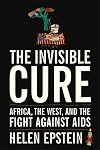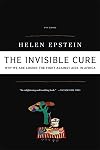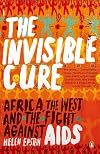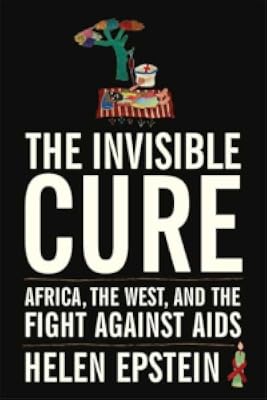
The Invisible Cure: Africa, the West, and the Fight Against AIDS
by Helen Epstein
On This Page
Description
A New York Times Notable Book of 2007The Invisible Cure is an account of Africa's AIDS epidemic from the inside--a revelatory dispatch from the intersection of village life, government intervention, and international aid. Helen Epstein left her job in the US in 1993 to move to Uganda, where she began work on a test vaccine for HIV. Once there, she met patients, doctors, politicians, and aid workers, and began exploring the problem of AIDS in Africa through the lenses of medicine, politics, show more economics, and sociology. Amid the catastrophic failureto reverse the epidemic, she discovered a village-based solution that could prove more effective than any network of government intervention and international aid, an intuitive response that calls into question many of the fundamental assumptions about the AIDS in Africa.Written with conviction, knowledge, and insight,The Invisible Cure will change how we think about the worst health crisis of the past century--and indeed about every issue of global public health. show lessTags
Recommendations











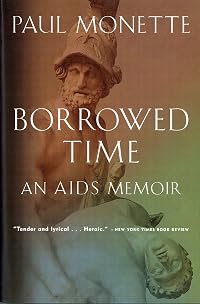






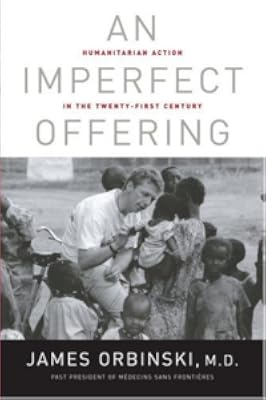

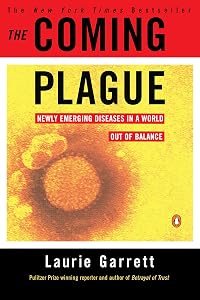







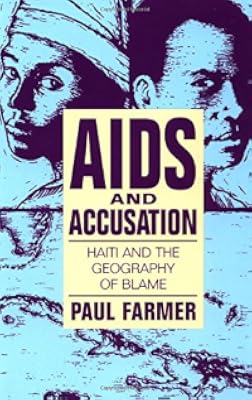














Member Recommendations

espertus Two interesting books on the spread of AIDS in two very different locations and times. "And the Band Played On" is about the emergence of AIDS, with a focus on the San Francisco gay community in the 1980s, which the author was a part of, and the (non-)response by the American government. "The Invisible Cure" is about governments' and NGOs' responses to AIDS in African countries in the 1990s and early 2000s, with varying degrees of success based on different levels of understanding of the problem and effectiveness in directing resources.
Member Reviews
One of the better HIV books I've read recently. Epstein writes well and although this is information-heavy, it moves right along and I was sorry when I finished.
Epstein's focus is on infrastructure misunderstandings about African HIV transmission and faulty prevention and intervention strategies based on incorrect assumptions. She updates the reader on relatively new theories of HIV's origins and early spread (including a very clear explanation of how passaging strengthens a virus). She answers the important questions that were not addressed in Togarasei et al.'s [b:The Faith Sector and HIV/AIDS in Botswana: Responses and Challenges|12210327|The Faith Sector and HIV/AIDS in Botswana Responses and Challenges|Lovemore show more Togarasei|http://photo.goodreads.com/books/1327958008s/12210327.jpg|17183292], which are What did sexual partnerships look like prior to the arrival of Christianity, and does that affect HIV transmission patterns? Her answers are that in many of the areas currently hardest hit by HIV, polygamy/polyandry was socially acceptable, and that concurrent long-term partnerships may spread HIV more effectively than serial monogamy. If that's hard to picture, she's included a flip book. Really. It's the only scientific treatise I've ever seen with a flip book, and it's quite effective.
The last couple of chapters are less-well integrated and read more like articles. The last chapter ends abruptly and disappointingly. I would have liked at least a summary of the book's main recommendations. show less
Epstein's focus is on infrastructure misunderstandings about African HIV transmission and faulty prevention and intervention strategies based on incorrect assumptions. She updates the reader on relatively new theories of HIV's origins and early spread (including a very clear explanation of how passaging strengthens a virus). She answers the important questions that were not addressed in Togarasei et al.'s [b:The Faith Sector and HIV/AIDS in Botswana: Responses and Challenges|12210327|The Faith Sector and HIV/AIDS in Botswana Responses and Challenges|Lovemore show more Togarasei|http://photo.goodreads.com/books/1327958008s/12210327.jpg|17183292], which are What did sexual partnerships look like prior to the arrival of Christianity, and does that affect HIV transmission patterns? Her answers are that in many of the areas currently hardest hit by HIV, polygamy/polyandry was socially acceptable, and that concurrent long-term partnerships may spread HIV more effectively than serial monogamy. If that's hard to picture, she's included a flip book. Really. It's the only scientific treatise I've ever seen with a flip book, and it's quite effective.
The last couple of chapters are less-well integrated and read more like articles. The last chapter ends abruptly and disappointingly. I would have liked at least a summary of the book's main recommendations. show less
After working in Namibia with the Peace Corps from 2004-2006, I have a pretty good knowledge of the HIV/AIDS situation. However, I always find it difficult to annunciate my thoughts on HIV to people who ask me about my time there. With this book, I now have an excellent method of education. This book is a very insightful picture of the situation on the ground in developing countries where HIV is a major issue. Epstein has spent time on the ground and accurately records her experiences in Africa while bringing to light the corruption and waste inherent in the system. Part of the effectiveness of the book comes from her exclusive focus on Africa and African culture which helps the reader to understand why the rate there is so high. show more Although the reader may be more frustrated with the issue of HIV/AIDS in general, the average reader will have a much better idea of the complexity of the situation after reading this book. show less
One of the better AIDS books. Very well written and really quite engaging. Struggles, though, between the desire to follow the science and the need not to be TOO politically incorrect. Ultimately, Epstein believes that the behaviours that spread AIDS in Africa will only change when communities organise to foster that change. I think she perhaps understates the influence that political leadership can have over communities.
An interesting book about how Westerners naively or negligently misunderstood how HIV spread in Africa, spending huge amounts of money on relatively ineffective responses. I found particularly interesting how different African nations responded to the AIDS epidemic and the different consequences. Some of the later chapters read more like standalone essays, rather than part of a cohesive whole, but all of the book was interesting.
Everything I wanted to know about HIV/AIDS and how it functions in Uganda. Written in a way that anyone can understand the complexities of this disease.
Ratings
Members
- Recently Added By
Author Information
2+ Works 156 Members
Awards and Honors
Distinctions
Classifications
- Genres
- Nonfiction, General Nonfiction, Politics and Government, History, Science & Nature
- DDC/MDS
- 362.196 — Society, government, & culture Social problems and social services Social Welfare People with physical illnesses Services to people with specific conditions Diseases
- LCC
- RA643.86 .A35 .E674 — Medicine Public aspects of medicine Public aspects of medicine Public health. Hygiene. Preventive medicine Disease (Communicable and noninfectious) and public
- BISAC
Statistics
- Members
- 156
- Popularity
- 210,519
- Reviews
- 6
- Rating
- (3.76)
- Languages
- English, French
- Media
- Paper, Ebook
- ISBNs
- 6
- ASINs
- 3