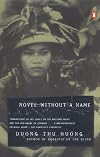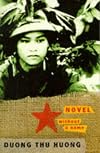
Novel Without a Name
by Dương Thu Hương
On This Page
Description
A piercing, unforgettable tale of the horror and spiritual weariness of war, Novel Without a Name will shatter every preconception Americans have about what happened in the jungles of Vietnam. With Duong Thu Huong, whose Paradise of the Blind was published to high critical acclaim in 1993, Vietnam has found a voice both lyrical and stark, powerful enough to capture the conflict that left millions dead and spiritually destroyed her generation.Banned in the author's native country for its show more scathing dissection of the day-to-day realities of life for the Vietnamese during the final years of the "Vietnam War," Novel Without a Name invites comparison with All Quiet on the Western Front and other classic works of war fiction. The war is seen through the eyes of Quan, a North Vietnamese bo doi (soldier of the people) who joined the army at eighteen, full of idealism and love for the Communist party and its cause of national liberation. But ten years later, after leading his platoon through almost a decade of unimaginable horror and deprivation, Quan is disillusioned by hisodyssey of loss and struggle. Furloughed back to his village in search of a fell ow soldier, Quan undertakes a harrowing, solitary journey through the tortuous jungles of central Vietnam and his own unspeakable memories. show lessTags
Recommendations


Member Recommendations
Member Reviews
To understand Duong Thu Huong's novels, it is important to understand her background. At the age of twenty, Duong left college and volunteered to lead a Communist Youth Brigade to the front in the "War Against the Americans." She served in one of the most bombed regions of the war and was one of three survivors out of her group of twenty. She was also at the front during the 1979 Chinese attack on Vietnam. But during the 1980s, she became a critic of the Communist regime and an advocate for human rights. She was expelled from the party in 1989, imprisoned briefly in 1991 (the year she published this novel), and had her passport revoked so she could not leave the country. Her books were extremely popular prior to her imprisonment, but show more they are now banned and everything she has written since then has had to be published abroad, despite being written for a Vietnamese audience.
Novel Without a Name is the story of Quan, a young Communist soldier who, when the story opens, has been fighting the Americans for ten years. He left his village at the age of eighteen, excited for glory and idealistic about his nation's role in history. But after ten years of hunger, disease, and killing, "there is this gangrene that eats at the heart." He is summoned to company headquarters by a former classmate, who tells him that their friend has been imprisoned in a camp for psychiatric cases, and can he go and see what might be done for him. Afterward he is given leave to visit their hometown for a couple of days. But his brief visit is not a return to his dreamed of childhood, it is the source of more disillusionment.
Never. We never forget anything, never lose anything, never exchange anything, never undo what has been. There is no way back to the source, to the place where the pure, clear water once gushed forth.
Quan's idealism may be in tatters, but the war goes on. He returns to the front and further horrific warfare, corruption, and spiritual decay.
Duong has said that she never intended to become a writer. She served as an exemplary soldier, hoarding her impressions, and began to write as an expression of her pain. That pain is clearly reflected in Quan's odyssey between war and home and back again. show less
Novel Without a Name is the story of Quan, a young Communist soldier who, when the story opens, has been fighting the Americans for ten years. He left his village at the age of eighteen, excited for glory and idealistic about his nation's role in history. But after ten years of hunger, disease, and killing, "there is this gangrene that eats at the heart." He is summoned to company headquarters by a former classmate, who tells him that their friend has been imprisoned in a camp for psychiatric cases, and can he go and see what might be done for him. Afterward he is given leave to visit their hometown for a couple of days. But his brief visit is not a return to his dreamed of childhood, it is the source of more disillusionment.
Never. We never forget anything, never lose anything, never exchange anything, never undo what has been. There is no way back to the source, to the place where the pure, clear water once gushed forth.
Quan's idealism may be in tatters, but the war goes on. He returns to the front and further horrific warfare, corruption, and spiritual decay.
Duong has said that she never intended to become a writer. She served as an exemplary soldier, hoarding her impressions, and began to write as an expression of her pain. That pain is clearly reflected in Quan's odyssey between war and home and back again. show less
Quan, who enlists to fight for his country as an idealistic 18-year-old, has now fought for North Vietnam for a decade. Those ten years have taught him, if nothing else, the costs of idealism. Even as he tries to balance his patriotism with his cynicism, Quan turns to old memories for solace. Given the chance to return home, he seizes on the chance to make the physically and psychologically demanding journey. That journey forces him to confront his past, among other things: his father, his childhood sweetheart, his boyhood friends now maimed or dead, and ultimately to recognize that his innocence and his idealism came at an enormous price. How should he handle his disillusionment with the Communist Party? A quiet, emotionally charged show more book, this often reads like the stories of an old man looking back on his life. That it is, instead, the reflections of a 28-year-old veteran, told mostly through a series of vignettes, illustrates the power of the book. Indeed, the collection of loosely connected “stories” really can be seen as almost a mythic quest by a hero toward (self-)knowledge. show less
Novel Without a Name is a cynical, bitter, and clear-eyed account of war from the Vietnamese side. The narrator, Quan, is a company commander, responsible for the lives of 100 men, and particularly responsible for the life of his childhood friend Bien, who has gone mad.
This is a novel about war, but it's not one about combat. Battles are treated perfunctorily, a few sentences describing horrific causalities. What concerns Quan are his peregrinations through the war zone, and the soldier's obsession with food, distance, and a place to sleep at night. The war ages soldiers before their time, casts them adrift from both the rhythms of their traditional villages and exiles them from the benefits of modernity.
Huong was a North Vietnamese show more soldier for the period described, and this book has the bronze ring of authentic truth, emotional without being sentimental, lyrical in its description of the countryside and the privation of the soldiers, and bravely truthful about the broken glories of liberation. show less
This is a novel about war, but it's not one about combat. Battles are treated perfunctorily, a few sentences describing horrific causalities. What concerns Quan are his peregrinations through the war zone, and the soldier's obsession with food, distance, and a place to sleep at night. The war ages soldiers before their time, casts them adrift from both the rhythms of their traditional villages and exiles them from the benefits of modernity.
Huong was a North Vietnamese show more soldier for the period described, and this book has the bronze ring of authentic truth, emotional without being sentimental, lyrical in its description of the countryside and the privation of the soldiers, and bravely truthful about the broken glories of liberation. show less
Disillusioned Vietcong soldier wanders through the Vietnam war and reflects on the path of his life.
Oh my god, this novel is just everything. I picked this up because I was interested in getting a POV of the Vietnam war outside of the American filter. I loved in this novel that the focus was how the people are effected by the war rather than being a sidenote to the war itself. Usually novels about wartime make the battles the most important aspect to the point where they might as well be the central characters, but here they happen between chapters/paragraphs/sentences so that the author can explore how people function during on-going trauma.
The bulk of the novel felt like a classic travel novel, with the MC wandering around Vietnam in show more a haze of despair for the path of his life and the fate of his friends and family. His turmoil at the disappointment of discovering the reality of jingoism, in his fall from the fervor of youthful nationalist to the disillusionment of a jaded gravedigger, was such a potent anti-war travelogue. show less
Oh my god, this novel is just everything. I picked this up because I was interested in getting a POV of the Vietnam war outside of the American filter. I loved in this novel that the focus was how the people are effected by the war rather than being a sidenote to the war itself. Usually novels about wartime make the battles the most important aspect to the point where they might as well be the central characters, but here they happen between chapters/paragraphs/sentences so that the author can explore how people function during on-going trauma.
The bulk of the novel felt like a classic travel novel, with the MC wandering around Vietnam in show more a haze of despair for the path of his life and the fate of his friends and family. His turmoil at the disappointment of discovering the reality of jingoism, in his fall from the fervor of youthful nationalist to the disillusionment of a jaded gravedigger, was such a potent anti-war travelogue. show less
Lovesick doves cooed all day in the bamboo. Grasshoppers flew in the grass on the edge of the dikes. Women laughed, teasing and chasing one another, rolling in the rice fields. They made us laugh...There was once a kite that dipped and swayed in the blue of the sky, our dreams reeling in the same space...And there is the earth, this mud where the flesh rots, where eyes decompose. These arms, these legs that crunch in the jaws of the boars. The souls ulcerated and foul from killing, the bodies so starved for tenderness that they haunt stables in search of pleasure. There is this gangrene that eats at the heart...This is the first book I've read that is wholly concerned with the Vietnam War. It was likely simple procrastination that show more birthed the mission to have my first literature experience set in complete opposition to the mythos of the US, the endless me me me of protests and veterans and yet another tale of isolated invaders making a far away country their Agent Orange playground of honored atrocity. People suffered, yes, people died, yes, but these people could escape. Those who feel I'm belittling, look at the wealth of white-gaze narratives and monuments and politics on one end. Then make your way over.
Orangutans are almost human. There's no tastier flesh.One, the author was a Việt cộng, before whom the United States fell to its knees. Two, the author is a woman, one of three survivors of forty after setting off at twenty years of age, and the first scene is of female bodies with the remains of breasts and genitals strewn around their worm-ridden corpses. Three, none of this matters, but such a rare perspective does deserve our full attention.
It's like dreaming. That's what it's like when you plunge into a forest. You can call and scream all you like; no one can hear you.Bear in mind that this is the story of a winner. Bear in mind at all times that this is the story of a soldier whose hope has bred with their despair for far too long. Always remember that this is just one of the usual youths plumped up by the idealogues for the slaughter, for whom it took ten years of mishaps of death and decay on a nightmare landscape to reach the nickname of 'Chief' and the insanity to show for it.
Fighting and dying; two acts, the same indescribable beauty of the war.Fortunately for us, there is a mercy the soul of someone utterly sick with blood spilled for an ideal, and so we don't mind being enmeshed in the memorial swamp of this "gook" as much. Or perhaps we do, for we don't want to hear of forbearance of raping out of concern for the eventual danger of pregnant labor, we don't want to know about what horrors of flora and fauna will be birthed out of a healthy sprinkling of mortar and military grade herbicide, we don't want to see the blonde-haired blue-eyed as an unnatural invader after all this respect and courage and love of the other side, a side with its own measure of brave people and unfeeling corruption. You don't need Communism for an all but (are you sure?) Soylent Green extraction of the many by the few. You just need humanity, greed, their inherent love for lies, all of them ubiquitous, all of them wherever you may lay your weary head.
Suddenly I remembered my mother's savage, heartrending cry, her face bathed in sweat, the horrible spasm that had disfigured her, and then, on that same, horribly twisted face, the radiance of the smile born with a child's cry, when she saw his tiny red legs beat the air...Barbaric beauty of life, of creation. It had slipped away, dissolved in the myriad memories of childhood.
I was seized with terror. No one can bathe in two different streams at the same time. Me, my friends, we had lived this war for too long, steeped ourselves for too long in the beauty of all its moments of fire and blood. Would it still be possible, one day, for us to go back, to rediscover our roots, the beauty of creation, the rapture of a peaceful life?
"Everything we've paid for with our blood belongs to the people."We haven't even touched upon the redemption and the fever craze, the insipidness of mortal circumstances and the graveyard leech of military success, the postcolonial inheritance of cannibal ideals and the retributional maw of time, what happens when everything is said and done and the pieces expect to be picked up. But you can find out for yourself.
Kha just laughed. "Ah, but do the people really exist?...You see, the people, they do exist from time to time, but they're only a shadow. When they need rice, the people are the buffalo that pulls the plow. When they need soldiers, they cover the people with armor, put guns in the people's hands. When all is said and done, at the festivals, when it comes time for the banquets, they put the people on an alter, and feed them incense and ashes. But the real food, that's always for them."
Revolution, like love, blooms and then withers. But revolution rots much faster than love, 'comrade.'show less
This novel needs no name although I guess Novel without a Name is officially a name. It's about war, the Vietnam war, from the north Vietnamese perspective. The Americans are the bad guys... so are the south Vietnamese. The north won. But everyone lost. This is not a book of propaganda. It's a sorrowful tale of a society lost in the machine.
This is a brutal book. It's not filled with gruesome images of war but with pictures of a life lost. The narrator joined the war to fight for glory. Ten years later he realizes not only his mistake, but the mistake of a country that bought the ideals of dead men named Marx and Lenin with the blood of innocent people. His reminiscences of childhood life contrast starkly with his present situation. But show more it is these memories that keep him alive.
The tenor of the book was sluggish, hazy, muddy... the pace fast. You could feel the oppression in the jungles, the hunger and fatigue.
Duong Thu Huong is an excellent writer. Vietnam does not like her. Her books are banned. show less
This is a brutal book. It's not filled with gruesome images of war but with pictures of a life lost. The narrator joined the war to fight for glory. Ten years later he realizes not only his mistake, but the mistake of a country that bought the ideals of dead men named Marx and Lenin with the blood of innocent people. His reminiscences of childhood life contrast starkly with his present situation. But show more it is these memories that keep him alive.
The tenor of the book was sluggish, hazy, muddy... the pace fast. You could feel the oppression in the jungles, the hunger and fatigue.
Duong Thu Huong is an excellent writer. Vietnam does not like her. Her books are banned. show less
The author of this novel of the Vietnam war led a Communist youth brigade to the front when she was 20. Of the group of 40, she was one of three survivors.
The novel is narrated by Quan, who at 28 has been at the front for 10 years. Quan is given leave to return home for a short while, and is also given the task of bringing home news of the death of one of his fellow villagers, a childhood friend. As he walks the hundreds of miles back north, he contemplates his childhood and his time at the front.
When he and his comrades first went to war they were enthusiastic and believed deeply in their cause. They were prepared to do anything to oust the enemy invaders from their homeland. Ten years later Quan has become disillusioned with the show more corruption of some of the leadership. When he arrives at his village, the village leaders treat him as a hero and want him to give inspirational speeches to the villagers extolling the glory of Vietnam. He wants to find his childhood sweetheart, who had told him that she would wait for him.
This is a memorable book, and should be read by anyone with an interest in the Vietnam war. The descriptions of the life of a Viet Cong soldier were fascinating. Their isolation from their homes and loved ones for so many years (10 years in Quan's case) did not, for the most part, affect their resolve. This book provides an interesting insight into why it was never possible for the US to win this war. Beyond being a novel of the nightmarish conditions of war, it is also a novel of a young man's childhood and individual growth. Quan is a character I came to admire, and who caused me to reflect on the Vietnam war through a different prism. show less
The novel is narrated by Quan, who at 28 has been at the front for 10 years. Quan is given leave to return home for a short while, and is also given the task of bringing home news of the death of one of his fellow villagers, a childhood friend. As he walks the hundreds of miles back north, he contemplates his childhood and his time at the front.
When he and his comrades first went to war they were enthusiastic and believed deeply in their cause. They were prepared to do anything to oust the enemy invaders from their homeland. Ten years later Quan has become disillusioned with the show more corruption of some of the leadership. When he arrives at his village, the village leaders treat him as a hero and want him to give inspirational speeches to the villagers extolling the glory of Vietnam. He wants to find his childhood sweetheart, who had told him that she would wait for him.
This is a memorable book, and should be read by anyone with an interest in the Vietnam war. The descriptions of the life of a Viet Cong soldier were fascinating. Their isolation from their homes and loved ones for so many years (10 years in Quan's case) did not, for the most part, affect their resolve. This book provides an interesting insight into why it was never possible for the US to win this war. Beyond being a novel of the nightmarish conditions of war, it is also a novel of a young man's childhood and individual growth. Quan is a character I came to admire, and who caused me to reflect on the Vietnam war through a different prism. show less
Members
- Recently Added By
Lists

Stories of War and Revolution
143 works; 54 members

International IMPAC Dublin Literary Award
179 works; 6 members

Read These Too
458 works; 9 members
THE WAR ROOM
813 works; 24 members
Author Information

20+ Works 1,606 Members
Some Editions
Awards and Honors
Awards
Common Knowledge
- Canonical title
- Novel Without a Name
- Original title
- Tiểu thuyết vô đề
- Original publication date
- 1992 (Frans | vertaling) (Frans | vertaling); 1991 (Vietnamees) (Vietnamees); 1995 (Nederlands) (Nederlands)
- People/Characters
- Quan
- Important places
- Vietnam
- Important events
- Vietnam War
- First words
- I listened all night to the wind howl through the Gorge of Lost Souls.
- Last words
- (Click to show. Warning: May contain spoilers.)On the white of the parachute cloth, I see your blood spreading.
- Original language
- Vietnamese
Classifications
- Genres
- Fiction and Literature, General Fiction, Historical Fiction
- DDC/MDS
- 895.92233 — Literature & rhetoric Literatures of other languages Literatures of East and Southeast Asia Other south east Asian languages Vietic languages Vietnamese Vietnamese fiction 1900–2000
- LCC
- PL4378.9 .D759 .T5413 — Language and Literature Languages and literatures of Eastern Asia, Africa, Oceania Languages of Eastern Asia, Africa, Oceania Austroasiatic languages Mon-Khmer (Mon-Anam) languages Vietnamese. Annamese
- BISAC
Statistics
- Members
- 398
- Popularity
- 78,174
- Reviews
- 13
- Rating
- (3.96)
- Languages
- 7 — Dutch, English, French, German, Indonesian, Italian, Spanish
- Media
- Paper
- ISBNs
- 12
- ASINs
- 2