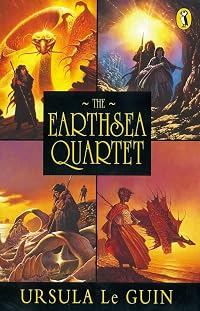
The Earthsea Quartet
by Ursula K. Le Guin
The Earthsea Cycle (Collections and Selections — Omnibus 01-04)
On This Page
Description
The Earthsea books follow the fortunes of the wizard Ged from his childhood to an age where magic is giving way to evil. As a young dragonlord, Ged, whose use-name is Sparrowhawk, is sent to the island of Roke to learn the true way of magic. A natural magician, Ged becomes an Archmage and helps the High Priestess Tenar escape from the labyrinth of darkness. But as the years pass, true magic and ancient ways are forced to submit to the powers of evil and death.Tags
Recommendations
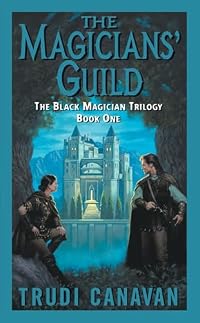
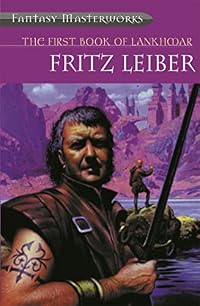
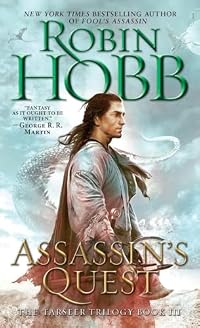
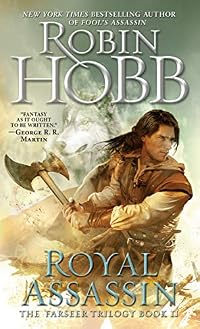
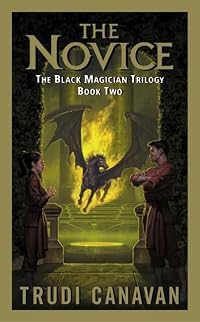
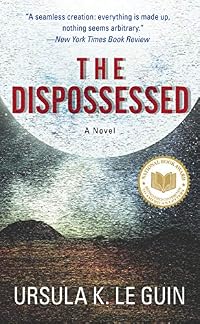
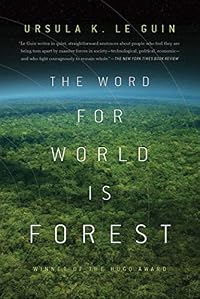
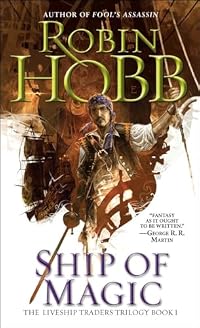
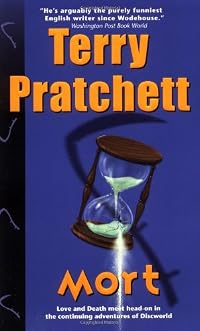
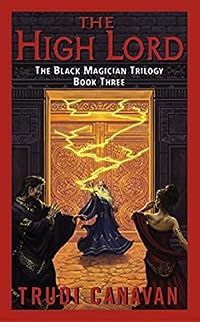
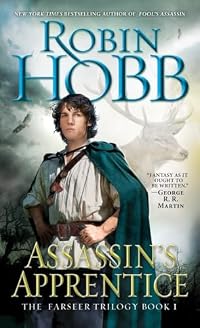
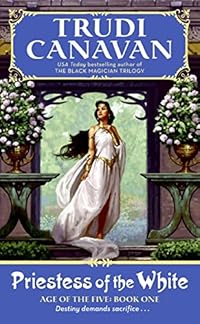
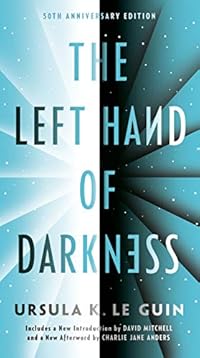
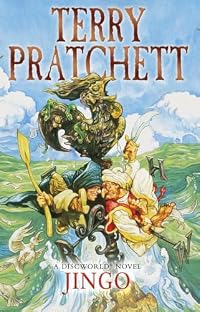
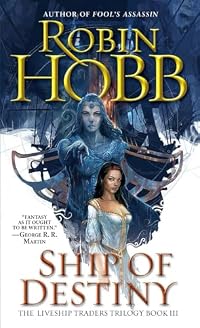
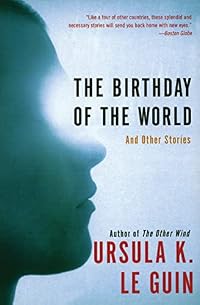
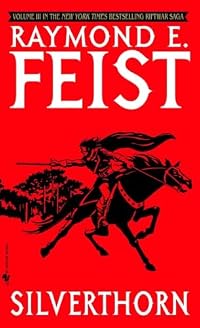
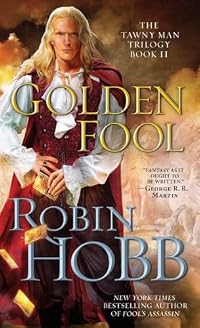
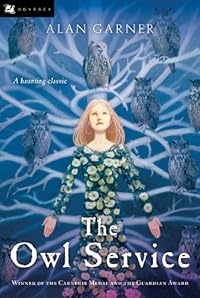
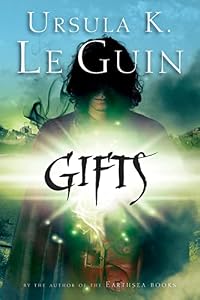
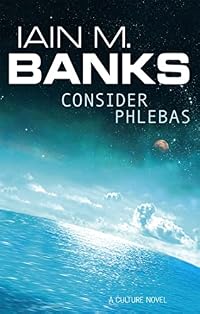
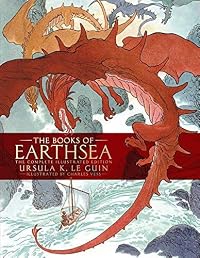
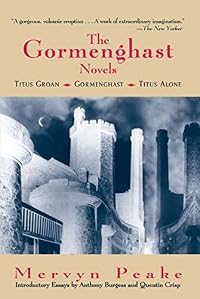
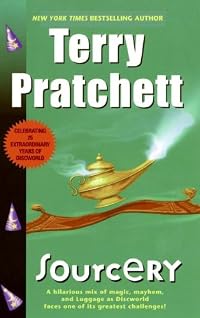
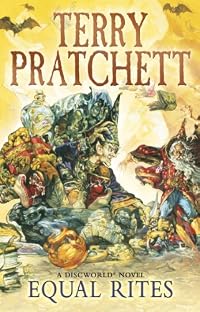
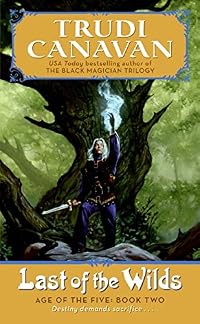
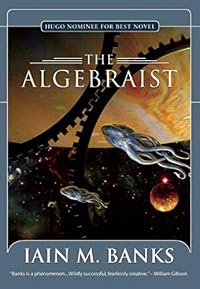

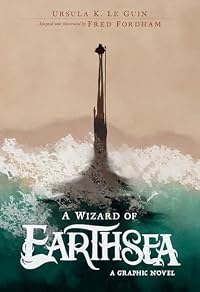
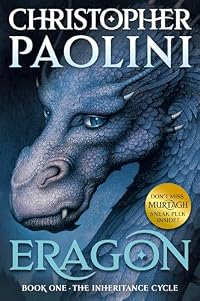

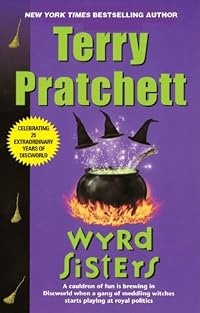
Member Recommendations
ed.pendragon Young adult magical fantasy set in another world.
20

humouress When you read these two series, you understand there is real magic in this world.
The protagonists (of the two series) are young men who have been to the most prestigious academies on their worlds and consequently go on world-spanning quests.
20

Member Reviews
The passing of Ursula Le Guin recently reminded me that it was a long time since I'd revisited her early works.
Some critics call her Earthsea series children's books, and I have never really understood why. When I first read the series, I was about thirteen - which was far too young to be able to appreciate her mastery of the written word properly. What captivated me then was the flowing writing, and the beautiful world of Earthsea - but I didn't understand the plot, not really. Nonetheless, they have stayed with me all my life.
As I've grown older, and re-read the books, I discovered depths that the thirteen year old me could never have imagined - let alone understood. Loss, death, powers that lurk, unknown and unknowable, in the show more darkness, pride, fear - all these things make up the Earthsea series. But other things as well: love, and friendship, self-sacrifice, trust, and above all a kind of joy for the future, despite all the bad things that have occurred along the journey.
LeGuin has written not simply a story but a myth, in the same way that Tolkien did. And like Tolkien, and Susan Cooper, and Patricia McKillip, and Marion Zimmer Bradley, what makes her tales truly great is not what she says, but how she says it.
I heard someone interviewed in one of the tribute programs after her death that said “JK Rowling can type; but Ursula Le Guin can write”. And her writing lasts through the ages. show less
Some critics call her Earthsea series children's books, and I have never really understood why. When I first read the series, I was about thirteen - which was far too young to be able to appreciate her mastery of the written word properly. What captivated me then was the flowing writing, and the beautiful world of Earthsea - but I didn't understand the plot, not really. Nonetheless, they have stayed with me all my life.
As I've grown older, and re-read the books, I discovered depths that the thirteen year old me could never have imagined - let alone understood. Loss, death, powers that lurk, unknown and unknowable, in the show more darkness, pride, fear - all these things make up the Earthsea series. But other things as well: love, and friendship, self-sacrifice, trust, and above all a kind of joy for the future, despite all the bad things that have occurred along the journey.
LeGuin has written not simply a story but a myth, in the same way that Tolkien did. And like Tolkien, and Susan Cooper, and Patricia McKillip, and Marion Zimmer Bradley, what makes her tales truly great is not what she says, but how she says it.
I heard someone interviewed in one of the tribute programs after her death that said “JK Rowling can type; but Ursula Le Guin can write”. And her writing lasts through the ages. show less
"To light a candle, is to cast a shadow": Ursula K. Le Guin, 1929 – 2018
Who now has the stature and respect to call out poseurs like Atwood and Ishiguru? Who is there who can be relied on to correct the lazy and meretricious? She led lead by example, not just in speeches or reviews. The world is poorer for this but it's going to be decades before we really see how much.
Ursula k. Le Guin is one of my lifelong favourite authors who I return to often. I first read “A Wizard of Earthsea” when I was 8, in between the Hobbit at 7 and The Lord of the Rings at 9 (precocious child…), followed by the rest of the trilogy, and then later books like “The Left Hand of Darkness”, “The Lathe of Heaven”, “The Dispossessed” and on and show more on.
What a writer - in the six Earthsea books alone, she said more, and with more purpose and clarity, than any other fantasy author, except Tolkien, at least in my opinion. And she wrote extraordinary SF too. Speaking of the devil, as someone who has a pretty encyclopedic knowledge of Tolkien, the greatest tribute I can pay Le Guin is this: every fantasy epic I have ever read has been at best a pale copy of Middle-Earth, because he did such a thorough job of creation over many years. Every epic except one that is - Earthsea. The Archipelago is not Middle-Earth, her dragons are not like Tolkien's dragons, and Ged is not Gandalf, although he is every bit as wise and kind. That is a very great writing achievement in itself. And I was aware of the significance of Ged, Ogion, Vetch, etc., not being white from my very first reading of the books. And that was in 80s. Remember, early on in Earthsea when Ged sneaks a look in Ogion's book, and the shadow begins to appear by the door? A metaphor (all the more powerful for being a genuinely scary piece of writing) for what can happen when we crave power and use knowledge without awareness of the potential consequences, and with no thought for upsetting the balance of the world. Of course it's a thread that runs right the way through the series. The story of how Ged continuously grapples with this issue makes him, for me, one of the great figures in literature. I think, partly because I am a Computer Science graduate, I have always particularly appreciated the fact that magic in Earthsea has rules and structure, whereas in Tolkien it doesn't seem to - although, to be fair, he did address that point in some detail in one of his letters: 'I am afraid I have not been at all consistent in my use of the word "magic"...'
I have also always rather hoped that, should there turn out after all, against all the odds, to be a paradisiac afterlife of some sort, that it might contain elements of Rivendell, Valinor and the Immanent Grove of Roke. Of course, I'm well aware that this is not a notion that someone who is thoroughly familiar with the laws of Thermodynamics (especially the Second Law) should rationally entertain!
I feel like "magic" is not so important in Tolkien, in a way. His books are more a combination of great adventure, exploration of moral principles such as loyalty and sacrifice, and incredibly complete world-building. Le Guin's books probably explore more complex ideas, which doesn't necessarily make them better, just different. I am still absorbing the extension and in some cases revision to Earthsea in the three books she wrote long after the trilogy. But what I like about the "magic" in Earthsea is the deep exploration of the power of language and also the reminders that every action has a consequence.
To consider the Earthsea trilogy as “juvenile” in any pejorative sense would be grotesquely off the mark. They are technically superb examples of the Bildungsroman genre (of which Hamlet and Jungen Werther also deserve honourable mention). They contain passages of Dickensian evocation of sight, sound and smell; are compassionate, urgent and questioning; and they tell a damn good story of quests, chases, shadows, and authentically hot-smelling dragons, which by and large avoid descending into tropes of nobility and Tolkeinesque conservatism/ monarchism, and in the latter 2 installments, actively reposition that discourse. To put my neck out, I’d say there is currently no equivalent writing (i.e., writing of equal intrinsic value) - in any genre. I find it so endlessly re-readable partially because I see different things in it as I move through my own life and as Ged moves through his; “Wizard” being about the potential for arrogance and pride to (literally) cast strange shadows and the need to confront rather than externalise fear, “the farthest shore” being an acute meditation on the fear of death. There’s a lot of wisdom in it - the passage about “what is the use of you, or I, or Gont Mountain” always struck me as something very profound to be in what was ostensibly a children’s book.
Now that I've heard she's gone, I wish that I had written to tell her how much her Earthsea trilogy affected me as a child, the first trilogy (as it was then) of fantasy novels with emotional intelligence, and language that is the closest prose will get to poetry. I rated those works of fiction as the greatest in the fantasy genre ever written, surpassing even Tolkien because her perfectly realised world told a story with a profundity which is rare, and which he perhaps could never aspire to match. The thoughts in them occupy me even today, as I contemplate the inevitability of my own death, the wall of stones "no higher than a man's knee" which we must all cross, and where she has now gone before.
And now, since she abolished the wall of stones in the last book of Earthsea, I hope she is dancing with her dragons on the other wind. RIP.
NB: I didn't care much for Tehanu. Still worth reading for completists. show less
Who now has the stature and respect to call out poseurs like Atwood and Ishiguru? Who is there who can be relied on to correct the lazy and meretricious? She led lead by example, not just in speeches or reviews. The world is poorer for this but it's going to be decades before we really see how much.
Ursula k. Le Guin is one of my lifelong favourite authors who I return to often. I first read “A Wizard of Earthsea” when I was 8, in between the Hobbit at 7 and The Lord of the Rings at 9 (precocious child…), followed by the rest of the trilogy, and then later books like “The Left Hand of Darkness”, “The Lathe of Heaven”, “The Dispossessed” and on and show more on.
What a writer - in the six Earthsea books alone, she said more, and with more purpose and clarity, than any other fantasy author, except Tolkien, at least in my opinion. And she wrote extraordinary SF too. Speaking of the devil, as someone who has a pretty encyclopedic knowledge of Tolkien, the greatest tribute I can pay Le Guin is this: every fantasy epic I have ever read has been at best a pale copy of Middle-Earth, because he did such a thorough job of creation over many years. Every epic except one that is - Earthsea. The Archipelago is not Middle-Earth, her dragons are not like Tolkien's dragons, and Ged is not Gandalf, although he is every bit as wise and kind. That is a very great writing achievement in itself. And I was aware of the significance of Ged, Ogion, Vetch, etc., not being white from my very first reading of the books. And that was in 80s. Remember, early on in Earthsea when Ged sneaks a look in Ogion's book, and the shadow begins to appear by the door? A metaphor (all the more powerful for being a genuinely scary piece of writing) for what can happen when we crave power and use knowledge without awareness of the potential consequences, and with no thought for upsetting the balance of the world. Of course it's a thread that runs right the way through the series. The story of how Ged continuously grapples with this issue makes him, for me, one of the great figures in literature. I think, partly because I am a Computer Science graduate, I have always particularly appreciated the fact that magic in Earthsea has rules and structure, whereas in Tolkien it doesn't seem to - although, to be fair, he did address that point in some detail in one of his letters: 'I am afraid I have not been at all consistent in my use of the word "magic"...'
I have also always rather hoped that, should there turn out after all, against all the odds, to be a paradisiac afterlife of some sort, that it might contain elements of Rivendell, Valinor and the Immanent Grove of Roke. Of course, I'm well aware that this is not a notion that someone who is thoroughly familiar with the laws of Thermodynamics (especially the Second Law) should rationally entertain!
I feel like "magic" is not so important in Tolkien, in a way. His books are more a combination of great adventure, exploration of moral principles such as loyalty and sacrifice, and incredibly complete world-building. Le Guin's books probably explore more complex ideas, which doesn't necessarily make them better, just different. I am still absorbing the extension and in some cases revision to Earthsea in the three books she wrote long after the trilogy. But what I like about the "magic" in Earthsea is the deep exploration of the power of language and also the reminders that every action has a consequence.
To consider the Earthsea trilogy as “juvenile” in any pejorative sense would be grotesquely off the mark. They are technically superb examples of the Bildungsroman genre (of which Hamlet and Jungen Werther also deserve honourable mention). They contain passages of Dickensian evocation of sight, sound and smell; are compassionate, urgent and questioning; and they tell a damn good story of quests, chases, shadows, and authentically hot-smelling dragons, which by and large avoid descending into tropes of nobility and Tolkeinesque conservatism/ monarchism, and in the latter 2 installments, actively reposition that discourse. To put my neck out, I’d say there is currently no equivalent writing (i.e., writing of equal intrinsic value) - in any genre. I find it so endlessly re-readable partially because I see different things in it as I move through my own life and as Ged moves through his; “Wizard” being about the potential for arrogance and pride to (literally) cast strange shadows and the need to confront rather than externalise fear, “the farthest shore” being an acute meditation on the fear of death. There’s a lot of wisdom in it - the passage about “what is the use of you, or I, or Gont Mountain” always struck me as something very profound to be in what was ostensibly a children’s book.
Now that I've heard she's gone, I wish that I had written to tell her how much her Earthsea trilogy affected me as a child, the first trilogy (as it was then) of fantasy novels with emotional intelligence, and language that is the closest prose will get to poetry. I rated those works of fiction as the greatest in the fantasy genre ever written, surpassing even Tolkien because her perfectly realised world told a story with a profundity which is rare, and which he perhaps could never aspire to match. The thoughts in them occupy me even today, as I contemplate the inevitability of my own death, the wall of stones "no higher than a man's knee" which we must all cross, and where she has now gone before.
And now, since she abolished the wall of stones in the last book of Earthsea, I hope she is dancing with her dragons on the other wind. RIP.
NB: I didn't care much for Tehanu. Still worth reading for completists. show less
Although the books contained within this collection (A Wizard Of Earthsea, The Tombs of Atuan, The Farthest Shore and Tehanu) are classed as children's literature, the themes and quality of writing make them accessible to all. I return to these stories regularly and am always amazed at Ursula K. Le Guin's ability to create a wholly believable alternate world. The author wrote these books over several decades and it is fascinating to see the change in mood - the themes become darker with each volume in the series, but nonetheless leave a sense of hope.
When I first read The Wizard of Earthsea I could almost believe in magic, so credible was the description of Ged's emerging talents. Years later, magic of a different kind was uppermost in my second reading of the trilogy (along with Tehanu and the two other sequels). This magic was to do with sympathetic characterisation and with the creation of credible imaginary cultures and worlds as much as with hope and tragedy, with human triumphs and failings, with empathy and emnity.
A recent reading of The Chronicles of Narnia impressed me so much with the degree that Le Guin has surpassed Lewis in her depiction of a humanistic as well as humane alternative universe; superficially there are similarities but the tone and the richness and the show more "rightness" of her creation is what sets it apart from Lewis' world: if Narnia is a tapestry then Earthsea is a working model of a reality. This sequence is I'm sure one of those works that reveals further treasures with each successive reading. show less
A recent reading of The Chronicles of Narnia impressed me so much with the degree that Le Guin has surpassed Lewis in her depiction of a humanistic as well as humane alternative universe; superficially there are similarities but the tone and the richness and the show more "rightness" of her creation is what sets it apart from Lewis' world: if Narnia is a tapestry then Earthsea is a working model of a reality. This sequence is I'm sure one of those works that reveals further treasures with each successive reading. show less
My overall score is an average of my opinion on each individual book, which I will summarise:
Sadly, I found A Wizard of Earthsea a largely disappointing (2.5 stars), very stiff, dry and unexciting tale for the most part, and I must admit to feeling rather excluded given the scarcity of female characters (those that do appear do so briefly and are with just one or perhaps two exceptions nasty/evil.) The great Ged struck me as an arrogant twerp much of the time. Perhaps I'm of an age where immense wizardly power alone does not impress! I need more: I need personality, I need insight, I need (or at least appreciate) entertainment in a work of fantasy, even one aimed at a young adult readership.
I was greatly surprised at the dullness of the show more writing as I've read a lot of le Guin in the past and know how brilliant she can be, but this was terribly laboured apart from a period near the end where things started to flow. My reaction was so negative overall that I felt as though I couldn't be bothered to continue with the rest of the omnibus, but luckily I had a glance at other reviews and noted that people who had started with the same poor reaction felt that things improved afterwards.
As indeed they did. The Tombs of Atuan is psychologically interesting, has strong female characterisation (and a much more fascinating and likeable Ged!) and an adventure plot that is well-paced and constantly interesting. It also introduces intriguing new possibilities, making me want to keep on reading. (3.5 stars)
The Farthest Shore is probably more like the story I wish the first novel had been, although it also wanders into becalmed, uninspired waters at times. Overall, however, it advances the history and is quite enjoyable (3 stars).
The best, in my opinion, was the last: Tehanu (which I have just reread after finishing Tales From Earthsea, so I can remember how things ended before I start on The Other Wind.) Perhaps I prefer this because I'm reading it for the first time in my early 40s. It's much more adult than any of the preceding tales, and much more satisfying. The plot and the secrets contained therein are complex and well-managed: there are none of the periods of "dead air" that I experienced in some of the other books. When no great exciting, magic-y stuff is happening intricate, beautiful, moving and thoughtful observation of relationships and personal journeys kept me enthralled. Along with some of the characters (no spoilers!), I fell in love. (4.5 stars)
As a result of that wonderful finish, I sat me down and ordered Tales From Earthsea immediately, and was not disappointed. show less
Sadly, I found A Wizard of Earthsea a largely disappointing (2.5 stars), very stiff, dry and unexciting tale for the most part, and I must admit to feeling rather excluded given the scarcity of female characters (those that do appear do so briefly and are with just one or perhaps two exceptions nasty/evil.) The great Ged struck me as an arrogant twerp much of the time. Perhaps I'm of an age where immense wizardly power alone does not impress! I need more: I need personality, I need insight, I need (or at least appreciate) entertainment in a work of fantasy, even one aimed at a young adult readership.
I was greatly surprised at the dullness of the show more writing as I've read a lot of le Guin in the past and know how brilliant she can be, but this was terribly laboured apart from a period near the end where things started to flow. My reaction was so negative overall that I felt as though I couldn't be bothered to continue with the rest of the omnibus, but luckily I had a glance at other reviews and noted that people who had started with the same poor reaction felt that things improved afterwards.
As indeed they did. The Tombs of Atuan is psychologically interesting, has strong female characterisation (and a much more fascinating and likeable Ged!) and an adventure plot that is well-paced and constantly interesting. It also introduces intriguing new possibilities, making me want to keep on reading. (3.5 stars)
The Farthest Shore is probably more like the story I wish the first novel had been, although it also wanders into becalmed, uninspired waters at times. Overall, however, it advances the history and is quite enjoyable (3 stars).
The best, in my opinion, was the last: Tehanu (which I have just reread after finishing Tales From Earthsea, so I can remember how things ended before I start on The Other Wind.) Perhaps I prefer this because I'm reading it for the first time in my early 40s. It's much more adult than any of the preceding tales, and much more satisfying. The plot and the secrets contained therein are complex and well-managed: there are none of the periods of "dead air" that I experienced in some of the other books. When no great exciting, magic-y stuff is happening intricate, beautiful, moving and thoughtful observation of relationships and personal journeys kept me enthralled. Along with some of the characters (no spoilers!), I fell in love. (4.5 stars)
As a result of that wonderful finish, I sat me down and ordered Tales From Earthsea immediately, and was not disappointed. show less
1. A Wizard of Earthsea
Initially, my re-read of A Wizard of Earthsea went quite slowly. However as I’d hoped, once I passed the defining event, which I remembered, reading went faster as I’d forgotten most of the other details, so the suspense came back and I needed to read on to find out what happened, or rather, how it happened.
The Earthsea Quartet is the first four books of the Cycle of which A Wizard of Earthsea is the first. It begins with Sparrowhawk's childhood, before he undertook great deeds - thus implying more tales to come - when he was known as Duney. It tells of how the great talent for magic that was in him was recognised and nurtured, how he met Ogion the Silent and was given his true name of Ged and how he went to show more Roke to learn to be a mage.
And it tells of how, half-trained and in his pride, he loosed a great evil on the world and how he had to deal with it afterwards, crossing the known world and being helped or hindered by the different peoples inhabiting it.
I've read this at least once, a long time ago, and it was enjoyable revisiting it for the group read to honour Le Guin's passing.
I had forgotten about the hoeg and even the old dragon of Pendor and I think Yarrow will make a good mage in her turn. There is a good mix of ethnicities in this continent of islands (which, as far as the characters know, comprises their entire world); there are Asian-like, African-like and Scandinavian-like people. It is not something that jumped out at me, being folded naturally into the narrative, until I read other reviews and articles that remarked on it.
A short story, by today’s standards, but so richly and densely written that, even though it spans almost twenty years of Sparrowhawk's life in under 200 pages, it holds up well against current, more lengthy novels. Deservedly a classic.
5 stars *****
Averaging out 5 stars show less
Initially, my re-read of A Wizard of Earthsea went quite slowly. However as I’d hoped, once I passed the defining event, which I remembered, reading went faster as I’d forgotten most of the other details, so the suspense came back and I needed to read on to find out what happened, or rather, how it happened.
The Earthsea Quartet is the first four books of the Cycle of which A Wizard of Earthsea is the first. It begins with Sparrowhawk's childhood, before he undertook great deeds - thus implying more tales to come - when he was known as Duney. It tells of how the great talent for magic that was in him was recognised and nurtured, how he met Ogion the Silent and was given his true name of Ged and how he went to show more Roke to learn to be a mage.
And it tells of how, half-trained and in his pride, he loosed a great evil on the world and how he had to deal with it afterwards, crossing the known world and being helped or hindered by the different peoples inhabiting it.
I've read this at least once, a long time ago, and it was enjoyable revisiting it for the group read to honour Le Guin's passing.
I had forgotten about the hoeg and even the old dragon of Pendor and I think Yarrow will make a good mage in her turn. There is a good mix of ethnicities in this continent of islands (which, as far as the characters know, comprises their entire world); there are Asian-like, African-like and Scandinavian-like people. It is not something that jumped out at me, being folded naturally into the narrative, until I read other reviews and articles that remarked on it.
A short story, by today’s standards, but so richly and densely written that, even though it spans almost twenty years of Sparrowhawk's life in under 200 pages, it holds up well against current, more lengthy novels. Deservedly a classic.
5 stars *****
Averaging out 5 stars show less
The collection of tales from the time of Ged, the Arch-Mage that grew well-known in all the songs and tales of the world called Earthsea, gives much to thought.
Earthsea, a world where sorcerers and wizards are simply professions, where dragons are living parts of old songs and where your old aunty may well be a witch is a world of islands where peace and nobility is only remembered by the few. Stories of great heroes belong in the past, and many there are reluctant to take part in great quests. But still the value of bravery and valour still runs true through certain people and their stories we enjoy in this Quartet.
The sheer depth in the characters, their lives and their acts allow the young reader and the older reader to see great show more lessons of life and to be enchanted by the simple heroism of simply people in a great story. show less
Earthsea, a world where sorcerers and wizards are simply professions, where dragons are living parts of old songs and where your old aunty may well be a witch is a world of islands where peace and nobility is only remembered by the few. Stories of great heroes belong in the past, and many there are reluctant to take part in great quests. But still the value of bravery and valour still runs true through certain people and their stories we enjoy in this Quartet.
The sheer depth in the characters, their lives and their acts allow the young reader and the older reader to see great show more lessons of life and to be enchanted by the simple heroism of simply people in a great story. show less
Members
- Recently Added By
Lists

Classics of Fantasy
14 works; 2 members

ghibli
12 works; 1 member

books that have been adapted for film or stage
27 works; 1 member

Books Read in 2025
4,090 works; 97 members

Favorite Kids Books (chapter, middle grade)
168 works; 4 members

Best Fantasy Novels
821 works; 361 members
Author Information

487+ Works 166,535 Members
Ursula K. Le Guin was born Ursula Kroeber in Berkeley, California on October 21, 1929. She received a bachelor's degree from Radcliffe College in 1951 and a master's degree in romance literature of the Middle Ages and Renaissance from Columbia University in 1952. She won a Fulbright fellowship in 1953 to study in Paris, where she met and married show more Charles Le Guin. Her first science-fiction novel, Rocannon's World, was published in 1966. Her other books included the Earthsea series, The Left Hand of Darkness, The Dispossessed: An Ambiguous Utopia, The Lathe of Heaven, Four Ways to Forgiveness, and The Telling. A Wizard of Earthsea received an American Library Association Notable Book citation, a Horn Book Honor List citation, and the Lewis Carroll Shelf Award in 1979. She received the Medal for Distinguished Contribution to American Letters in 2014. She also received the Nebula Award and the Hugo Award. She also wrote books of poetry, short stories collections, collections of essays, children's books, a guide for writers, and volumes of translation including the Tao Te Ching of Lao Tzu and selected poems by Gabriela Mistral. She died on January 22, 2018 at the age of 88. (Bowker Author Biography) show less
Some Editions
Awards and Honors
Distinctions
Series

Belongs to Publisher Series
Piper Fantasy (8523)
Work Relationships
Is contained in
Common Knowledge
- Canonical title
- The Earthsea Quartet
- Original title
- The Earthsea Quartet
- Original publication date
- 1990
- Related movies
- Earthsea (2004 | IMDb); Gedo senki (2006 | IMDb)
- Original language
- English
- Canonical DDC/MDS
- 813.087661
- Canonical LCC
- PS3562.E42
Classifications
- Genres
- Fantasy, Fiction and Literature, Teen
- DDC/MDS
- 813.087661 — Literature & rhetoric American literature in English American fiction in English By type Genre fiction Adventure fiction Speculative fiction Fantasy High fantasy
- LCC
- PS3562 .E42 — Language and Literature American literature American literature Individual authors 1961-
- BISAC
Statistics
- Members
- 2,976
- Popularity
- 5,966
- Reviews
- 35
- Rating
- (4.15)
- Languages
- Bulgarian, English, Finnish, German
- Media
- Paper, Ebook
- ISBNs
- 15
- ASINs
- 19