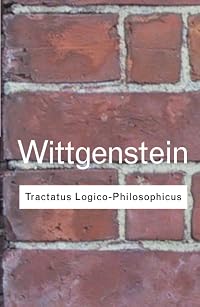
Tractatus Logico-Philosophicus
by Ludwig Wittgenstein
On This Page
Description
This renewed edition of the Tractatus Logico-Philosophicus, exactly a century after Wittgenstein's release, presents the text in a hierarchical manner. That tree-like reading is recommended by Wittgenstein himself in the sole footnote of his book, in which he suggests that the inner logical structure of the text is set by the decimal numbers of its propositions. Indeed, the compact and intricate sequence of the traditional presentation is only a rigorous logical bet, but only a logical show more machine or a robot can unravel the tangle.In the present disposition, instead, all horizontal and vertical references become directly manifest and any reader can enjoy the fine architecture and the elegant reasoning of Wittgenstein's work. Every page is an actual reading unit, perfectly coherent and complete. The Tractatus becomes comprehensible also to unskilled readers, of course at more or less deep levels, while a scholar or a more practised reader can detect suggestions and meanings that had remained, until now, completely hidden. A historical note shows in which manner the new structural perspective sheds new light also in the compositional manuscript we have, which 'writing units' are very similar, actually, to the pages of the present edition.
Printing the Tractatus following Wittgenstein's decimal prescriptions required meticulous philological care and some discretional conventions: for instance, at the top of each page the commented-upon proposition is printed again, to make the sight complete and self-sufficient. Also, the famous and intriguing picture of the eye and its visual field (5.6331) has been restored as Wittgenstein drafted it, making the entire page perfectly understandable and coherent. This documented and editorial work on one of the most referenced books of the last century was conceived to obtain, and in fact gained, a perspicuous and crystal clear text, philologically faithful and relaxingly readable at the same time. show less
Tags
Recommendations









Member Reviews
There are not many books like this. Its tone is brash, irreverent, and cocksure. Its points are painstakingly enumerated; the words are carefully chosen, and many points are stubbornly but alluringly confusing. And despite being uncertain that I fully understand Wittgenstein at each step in his argument, I am convinced that his critique is right but not one that undermines the possibility of analysis.
Trying to sum up, Wittgenstein is wary of the truth function of analytic language (logic in particular) that is true only in the logic of its form and in the symbolism of its expression. At some point, the aims of analysis go beyond the description of elementary propositions about the world and attempt to posit relationships between show more objects. It then assigns object status to those conclusions about states of affairs and at each step retreats a little further from making statements that propose anything verifiable by reference to the world and the states of affairs among things in it. Eventually, analytic statements make claims about the world and assert relationships that are true only by definition. The language of analysis starts to refer only to itself and its own products. It becomes “senseless” in Wittgenstein’s terms, meaning that it follows a logic of form but that it is ultimately not verifiable.
Sensible propositions assert falsifiable truths whereby language can be tested against a state of affairs in the world of things. To drive at more certainty requires unpacking more elementary propositions about the world, chasing atomic facts and inventing additional objects and assigning unique signs and symbols to them. It is, however, futile because the world of things is endlessly divisible into more and more atomic facts and objects that need names. It is another form of Zeno’s paradox. To drive to more complex assertions, analysis needs to build on itself and even if that analysis builds on a firm foundation of elementary propositions, forms of logic used to pull those elementary propositions together then slips into place as the object of analysis and then we are studying things that are not in the world.
These are the limits of analytic language, but I’m not bothered by Wittgenstein’s claims about the senselessness of logic and other kinds of interpretive and analytical language. It does seem true that there is a point at which the level of claims that we want to make and support with analytic language escape the bounds of verifiability against a world of atomic facts. However, if we believe Wittgenstein’s claim that philosophy is an “activity’ for the clarification of thought then it retains its value despite working in the medium of language.
It is also true that philosophy and logic are not the only modes of analysis we have. Consider other modes of analytic expression, ways of saying something about the world, such as through art, music, literature. Then, just like with senseless philosophy that follows the form of its logic, art, music, and literature follows form as well and form expands the limits of the possible, a point that Wittgenstein develops later into proposition 6.
The famous ending: proposition 7: “Whereof one cannot speak, thereof one must be silent” seems a little less final. The problem may not be that there are things about which nothing can be spoken. Part of the problem may be the limited repertoire of ways we have for speaking. Forms of “speaking” like art and literature retain more of the experiential in a way that, to me, seems to allow for the kind of progress toward truth telling that Wittgenstein assigns to living. show less
Trying to sum up, Wittgenstein is wary of the truth function of analytic language (logic in particular) that is true only in the logic of its form and in the symbolism of its expression. At some point, the aims of analysis go beyond the description of elementary propositions about the world and attempt to posit relationships between show more objects. It then assigns object status to those conclusions about states of affairs and at each step retreats a little further from making statements that propose anything verifiable by reference to the world and the states of affairs among things in it. Eventually, analytic statements make claims about the world and assert relationships that are true only by definition. The language of analysis starts to refer only to itself and its own products. It becomes “senseless” in Wittgenstein’s terms, meaning that it follows a logic of form but that it is ultimately not verifiable.
Sensible propositions assert falsifiable truths whereby language can be tested against a state of affairs in the world of things. To drive at more certainty requires unpacking more elementary propositions about the world, chasing atomic facts and inventing additional objects and assigning unique signs and symbols to them. It is, however, futile because the world of things is endlessly divisible into more and more atomic facts and objects that need names. It is another form of Zeno’s paradox. To drive to more complex assertions, analysis needs to build on itself and even if that analysis builds on a firm foundation of elementary propositions, forms of logic used to pull those elementary propositions together then slips into place as the object of analysis and then we are studying things that are not in the world.
These are the limits of analytic language, but I’m not bothered by Wittgenstein’s claims about the senselessness of logic and other kinds of interpretive and analytical language. It does seem true that there is a point at which the level of claims that we want to make and support with analytic language escape the bounds of verifiability against a world of atomic facts. However, if we believe Wittgenstein’s claim that philosophy is an “activity’ for the clarification of thought then it retains its value despite working in the medium of language.
It is also true that philosophy and logic are not the only modes of analysis we have. Consider other modes of analytic expression, ways of saying something about the world, such as through art, music, literature. Then, just like with senseless philosophy that follows the form of its logic, art, music, and literature follows form as well and form expands the limits of the possible, a point that Wittgenstein develops later into proposition 6.
The famous ending: proposition 7: “Whereof one cannot speak, thereof one must be silent” seems a little less final. The problem may not be that there are things about which nothing can be spoken. Part of the problem may be the limited repertoire of ways we have for speaking. Forms of “speaking” like art and literature retain more of the experiential in a way that, to me, seems to allow for the kind of progress toward truth telling that Wittgenstein assigns to living. show less
Philosophy is not a body of doctrine but an activity.
—Ludwig Wittgenstein
I took medialunas and a corto doble at Las Juventus off the Plaza del Congreso every morning on my way to work. A pretty girl had the table set and the coffee poured before I could unfold the Clarín early edition. One morning I read an article about Wittgenstein, how he carried a copy of the Tractatus in his knapsack along the frontlines during WWI, about his rejection and subsequent return to academia, and his checkered career as a village headmaster. Ever since, when I think of Wittgenstein, I think of breakfast in Buenos Aires, and the face of that girl.
It is difficult, at this far remove from its initial publication, to read the Tractatus pure, straight, show more and so some passages read like a prose poem—“the way a picture touches reality”—and some bits sound like fortune cookie wisdom:
The world of the happy man is a different one from that of an unhappy man;
It is clear that there are no grounds for believing that the simplest eventuality will in fact be realized.
'Wittgenstein was preoccupied with the scope and limits of language, and in the Tractatus he was concerned primarily with language as a representing medium, a means of conveying how things are in the world' (Antony Flew). He also wanted to correct some mistakes in the logics of Frege and Russell. Wittgenstein thought that fundamental confusions could be avoided by constructing a sign-language that was governed by logical grammar and syntax, so he wrote what he thought would, nay, must be true if language was to accurately represent the world. Of course, since he himself deployed a language of signs and symbols in the presentation of his thoughts, all kinds of ‘meta’ possibilities and interpretations pop up in the Tractatus. Some parts are aphoristic, like Zen koans:
Language disguises thought;
The world and life are one;
Eternal life belongs to those who live in the present;
When no questions are left, that itself is the answer.
Other bits are seemingly nonsensical—
A picture contains the possibility of the situation it represents;
The propositions of logic demonstrate the logical properties of propositions by combining them so as to form propositions that say nothing—
others vaguely profound—
The limits of my language are the limits of my world;
Whatever we see could be other than it is;
The totality of true thoughts is a picture of the world—
and some are all of the above:
The riddle does not exist;
Outside logic everything is accidental.
There are sketches illustrating the rules of logical syntax that resemble the pincers of Triassic crustaceans.
In Wittgenstein’s version of a world precisely represented by language, propositions were their own proofs, and “inevitable” signs spoke for themselves. His model of a perfectly logical system, as it was for Frege and Russell, was mathematics. This set him off in search of invariant functions and operations and applications, the pursuit of which (ironically) revealed the limits of formal logic. Wittgenstein’s perfectly logical reality was paradoxically unreal, impossible, and disconnected from actual lived experience—which is more ambiguous, complex and uncertain than formal logic can abide.
For the Wittgenstein of the Tractatus, a proposition of perfect logic restricted reality to two alternatives: yes or no. Logic precluded surprise or doubt. Whatever was ineffable was unreal. There was no place for wonder. Too much, finally, was left unaccounted for by cold, austere logic. To his credit, Wittgenstein in his later work undertook an analysis of how language actually functioned, signs and symbols still failing us. Thus was the Tractatus part of the activity that was Wittgenstein’s philosophy, less a conclusive, fully realized credo than a springboard to further reflection. As it would be for its readers. show less
—Ludwig Wittgenstein
I took medialunas and a corto doble at Las Juventus off the Plaza del Congreso every morning on my way to work. A pretty girl had the table set and the coffee poured before I could unfold the Clarín early edition. One morning I read an article about Wittgenstein, how he carried a copy of the Tractatus in his knapsack along the frontlines during WWI, about his rejection and subsequent return to academia, and his checkered career as a village headmaster. Ever since, when I think of Wittgenstein, I think of breakfast in Buenos Aires, and the face of that girl.
It is difficult, at this far remove from its initial publication, to read the Tractatus pure, straight, show more and so some passages read like a prose poem—“the way a picture touches reality”—and some bits sound like fortune cookie wisdom:
The world of the happy man is a different one from that of an unhappy man;
It is clear that there are no grounds for believing that the simplest eventuality will in fact be realized.
'Wittgenstein was preoccupied with the scope and limits of language, and in the Tractatus he was concerned primarily with language as a representing medium, a means of conveying how things are in the world' (Antony Flew). He also wanted to correct some mistakes in the logics of Frege and Russell. Wittgenstein thought that fundamental confusions could be avoided by constructing a sign-language that was governed by logical grammar and syntax, so he wrote what he thought would, nay, must be true if language was to accurately represent the world. Of course, since he himself deployed a language of signs and symbols in the presentation of his thoughts, all kinds of ‘meta’ possibilities and interpretations pop up in the Tractatus. Some parts are aphoristic, like Zen koans:
Language disguises thought;
The world and life are one;
Eternal life belongs to those who live in the present;
When no questions are left, that itself is the answer.
Other bits are seemingly nonsensical—
A picture contains the possibility of the situation it represents;
The propositions of logic demonstrate the logical properties of propositions by combining them so as to form propositions that say nothing—
others vaguely profound—
The limits of my language are the limits of my world;
Whatever we see could be other than it is;
The totality of true thoughts is a picture of the world—
and some are all of the above:
The riddle does not exist;
Outside logic everything is accidental.
There are sketches illustrating the rules of logical syntax that resemble the pincers of Triassic crustaceans.
In Wittgenstein’s version of a world precisely represented by language, propositions were their own proofs, and “inevitable” signs spoke for themselves. His model of a perfectly logical system, as it was for Frege and Russell, was mathematics. This set him off in search of invariant functions and operations and applications, the pursuit of which (ironically) revealed the limits of formal logic. Wittgenstein’s perfectly logical reality was paradoxically unreal, impossible, and disconnected from actual lived experience—which is more ambiguous, complex and uncertain than formal logic can abide.
For the Wittgenstein of the Tractatus, a proposition of perfect logic restricted reality to two alternatives: yes or no. Logic precluded surprise or doubt. Whatever was ineffable was unreal. There was no place for wonder. Too much, finally, was left unaccounted for by cold, austere logic. To his credit, Wittgenstein in his later work undertook an analysis of how language actually functioned, signs and symbols still failing us. Thus was the Tractatus part of the activity that was Wittgenstein’s philosophy, less a conclusive, fully realized credo than a springboard to further reflection. As it would be for its readers. show less
Get your P's and Q's ready, folks, because we're in for the ride of our lives.
Or not.
Wittgenstein was living proof that androids were around and functioning during WWI. That at least this single android had a sense of humor dry enough to turn the Mariana Trench into the Mojave Desert, too.
Or was this a joke at all? Let's see.
Most of the numbered propositions were imminently clear and devoted to a single purpose: describing reality.
Language is the big limiter, which should never be a big surprise, but he insists that all reality that is, can be explained clearly.
Unfortunately, Wittgenstein, the big brilliant man that he is, was fundamentally incapable of describing or CLEARLY STATING his philosophy. Or using any object in his show more philosophy for the purposes of further elucidation.
The resulting numbered tracts and use of Formal Logic were used to numb the biological minds reading it... but there is good news! It did help out with the translation problems for future AIs reviewing this work!
Difficult to read? You have no idea. Really. Or perhaps you do if you use chalkboards. But THIS work of philosophy is the target for that old joke:
"What's the difference between a mathematician and a philosopher?
Mathematicians know how to use an eraser."
The logical problem of describing only physics in any positive way while never coming down hard on absolute statements -- like the way we only hypothesize that the sun will come up tomorrow -- eventually curled around itself in very strange ways, like the problem of including your own description in with the description itself.
It keeps adding to the problem of description, mathematically, until the recursion explodes your head or makes you divide by zero. (Same difference, really.)
It presages, at least in part, Goedel's Incompleteness Theorem. Also, P=NP. As in, is it possible to include the index to your library in with the library itself, or do you need to make a brand new card catalog system every time to include the original index? The time it takes to prove a thing is disproportionately large (or impossible) compared to the FACT OF THE SOLUTION.
This goes beyond logical fallacy. It's a real thing we still deal with. And yet, Wittgenstein throws out the baby with the bathwater at the very end. He makes a beautiful house of cards and claps his hands, making us wake up after the long novel with a classic, "and it was only a dream."
Am I kinda pissed? First by having been bored to tears and misunderstanding a handful of DENSE and OBLIQUE propositions that refer to undefined and objectless other works, unlike the careful analysis he made at the start? Yeah. I am.
And like his reference to covering your right hand with your left while also covering your left with your right, this text attempts to disprove everything -- firmly.
It makes me believe, once again, that formal logic, while glorious in one way, is an absolute horseradish in another.
I recommend this for anyone in love with highly complicated logical mazes and other computer science majors. YOU MUST HAVE A SENSE OF HUMOR OR YOU WILL DIE. Or kill someone. One, or the other. show less
Or not.
Wittgenstein was living proof that androids were around and functioning during WWI. That at least this single android had a sense of humor dry enough to turn the Mariana Trench into the Mojave Desert, too.
Or was this a joke at all? Let's see.
Most of the numbered propositions were imminently clear and devoted to a single purpose: describing reality.
Language is the big limiter, which should never be a big surprise, but he insists that all reality that is, can be explained clearly.
Unfortunately, Wittgenstein, the big brilliant man that he is, was fundamentally incapable of describing or CLEARLY STATING his philosophy. Or using any object in his show more philosophy for the purposes of further elucidation.
The resulting numbered tracts and use of Formal Logic were used to numb the biological minds reading it... but there is good news! It did help out with the translation problems for future AIs reviewing this work!
Difficult to read? You have no idea. Really. Or perhaps you do if you use chalkboards. But THIS work of philosophy is the target for that old joke:
"What's the difference between a mathematician and a philosopher?
Mathematicians know how to use an eraser."
The logical problem of describing only physics in any positive way while never coming down hard on absolute statements -- like the way we only hypothesize that the sun will come up tomorrow -- eventually curled around itself in very strange ways, like the problem of including your own description in with the description itself.
It keeps adding to the problem of description, mathematically, until the recursion explodes your head or makes you divide by zero. (Same difference, really.)
It presages, at least in part, Goedel's Incompleteness Theorem. Also, P=NP. As in, is it possible to include the index to your library in with the library itself, or do you need to make a brand new card catalog system every time to include the original index? The time it takes to prove a thing is disproportionately large (or impossible) compared to the FACT OF THE SOLUTION.
This goes beyond logical fallacy. It's a real thing we still deal with. And yet, Wittgenstein throws out the baby with the bathwater at the very end. He makes a beautiful house of cards and claps his hands, making us wake up after the long novel with a classic, "and it was only a dream."
Am I kinda pissed? First by having been bored to tears and misunderstanding a handful of DENSE and OBLIQUE propositions that refer to undefined and objectless other works, unlike the careful analysis he made at the start? Yeah. I am.
And like his reference to covering your right hand with your left while also covering your left with your right, this text attempts to disprove everything -- firmly.
It makes me believe, once again, that formal logic, while glorious in one way, is an absolute horseradish in another.
I recommend this for anyone in love with highly complicated logical mazes and other computer science majors. YOU MUST HAVE A SENSE OF HUMOR OR YOU WILL DIE. Or kill someone. One, or the other. show less
I have read through this one three times: once hastily to get a feel for it; and twice carefully with Bertrand Russell's 1922 introductory text in between. During this last reading I kept some notes and constructed a diagram. It was this diagram that began to homogenize my scattered thoughts. At first, I didn't even realize that I applied Wittgenstein's point 2.1: "We make to ourselves pictures of facts" (9).
Looking at my elementary little diagram, I began to see something familiar. This dualistic metaphysics has its root in Kant's transcendental idealism from [b:Critique of Pure Reason|18288|Critique of Pure Reason|Immanuel Kant|https://d2arxad8u2l0g7.cloudfront.net/books/1348663530s/18288.jpg|1072226]. For Kant, there are two worlds: show more the noumenal and the phenomenal. As regards my diagram, Kant's noumenal world is the analog of the box labeled WORLD and the phenomental world has its analog in my box labeled CONCEPTUAL MODEL. These names aren't exactly synonymous, but I don't feel like changing them. The main point is that the noumenal world is reality as it is in itself, and we cannot access it. We cannot access, for example, the substance of objects. The phenomenal world, on the other hand, is the reality we experience through our senses.
For Wittgenstein, the main composite object we construct in order to interact with facts in the noumenal world are pictures. We picture facts, as he says early on. But this picture is the amalgamation of thoughts which make up propositions which make up a language. Yet herein lies one of the main thrusts of the tractatus: how do we assert a logically complete and infallible language with which to deal with phenomena? This was a major sticking point for me during my first two readings, because it seemed to me (especially at the very end of the text) that the whole argument ended with the destruction of metaphysics. This I based chiefly on point 6.54: "...he who understands me finally recognizes [my propositions] as senseless...." (82; and, indeed, many critics feel cheated at this point--the end--of the text).
Perhaps, though, this interpretation was due to my heightened skepticism for the usefulness of philosophy these days. I took a note at some point that says "the purpose of philosophy is to clarify thoughts and nothing more." And, indeed, one of Wittgenstein's goals is to use Occam's razor to excise any bit of symbolism/grammar/syntax/etc. deemed unnecessary. Which then causes my question to resurface: what would be left? Towards the end of the work, it seemed to me that Wittgenstein proposed the area of the mystical being the destination for of Occam's shavings.
But for the sake of argument, let's say endeavor to list the totality of things that are the case. We would happen upon Russell's paradox, which proves a self-referential error that occurs when trying to assert a set of all possible sets, because said set would have to include itself. This same type of issue arises when Wittgenstein proposes a language that includes everything that is the case--the facts; the pictures; the symbols. And even disregarding the paradox of Wittgenstein's friend, could we achieve this infinite language of symbols?
One thinks of Borges's story of the Aleph, a symbol and object in the story used to represent a point of infinite knowledge. Of its description, the narrator says:
"And here begins my despair as a writer. All language is a set of symbols whose use among its speakers assumes a shared past. How, then, can I translate into words the limitless Aleph, which my floundering mind can scarcely encompass? Mystics, faced with the same problem, fall back on symbols...."
Couple this with Wittgenstein's point 6.45: "The contemplation of the world sub specie aeterni is its contemplation as a limited whole. The feeling that the world is a limited whole is the mystical feeling." Indeed a "limited whole" is a paradox, an oxymoron. Yet, in another light, it isn't, for the adjective "limited" really describes our finite cognitive ability, while the "whole" refers to the totality we wish to propose as the complete system.
In conclusion, I propose that the Tractatus Logico-Philosophicus is the endgame for an attempt at a full system of metaphysics. As Kant put forth his [b:Prolegomena to Any Future Metaphysics|80324|Prolegomena to Any Future Metaphysics|Immanuel Kant|https://d2arxad8u2l0g7.cloudfront.net/books/1405624515s/80324.jpg|2648679] as an indispensable beginning for any system of metaphysics, Wittgenstein's 82-page tractatus stakes its claim as perhaps the new launching pad. When we consider the very real limitations of our thinking and our ability to establish a system that encompasses such a transendental whole, the very last point is properly fitting: "Whereof one cannot speak, thereof one must be silent" (82).
Checkmate. show less
Looking at my elementary little diagram, I began to see something familiar. This dualistic metaphysics has its root in Kant's transcendental idealism from [b:Critique of Pure Reason|18288|Critique of Pure Reason|Immanuel Kant|https://d2arxad8u2l0g7.cloudfront.net/books/1348663530s/18288.jpg|1072226]. For Kant, there are two worlds: show more the noumenal and the phenomenal. As regards my diagram, Kant's noumenal world is the analog of the box labeled WORLD and the phenomental world has its analog in my box labeled CONCEPTUAL MODEL. These names aren't exactly synonymous, but I don't feel like changing them. The main point is that the noumenal world is reality as it is in itself, and we cannot access it. We cannot access, for example, the substance of objects. The phenomenal world, on the other hand, is the reality we experience through our senses.
For Wittgenstein, the main composite object we construct in order to interact with facts in the noumenal world are pictures. We picture facts, as he says early on. But this picture is the amalgamation of thoughts which make up propositions which make up a language. Yet herein lies one of the main thrusts of the tractatus: how do we assert a logically complete and infallible language with which to deal with phenomena? This was a major sticking point for me during my first two readings, because it seemed to me (especially at the very end of the text) that the whole argument ended with the destruction of metaphysics. This I based chiefly on point 6.54: "...he who understands me finally recognizes [my propositions] as senseless...." (82; and, indeed, many critics feel cheated at this point--the end--of the text).
Perhaps, though, this interpretation was due to my heightened skepticism for the usefulness of philosophy these days. I took a note at some point that says "the purpose of philosophy is to clarify thoughts and nothing more." And, indeed, one of Wittgenstein's goals is to use Occam's razor to excise any bit of symbolism/grammar/syntax/etc. deemed unnecessary. Which then causes my question to resurface: what would be left? Towards the end of the work, it seemed to me that Wittgenstein proposed the area of the mystical being the destination for of Occam's shavings.
But for the sake of argument, let's say endeavor to list the totality of things that are the case. We would happen upon Russell's paradox, which proves a self-referential error that occurs when trying to assert a set of all possible sets, because said set would have to include itself. This same type of issue arises when Wittgenstein proposes a language that includes everything that is the case--the facts; the pictures; the symbols. And even disregarding the paradox of Wittgenstein's friend, could we achieve this infinite language of symbols?
One thinks of Borges's story of the Aleph, a symbol and object in the story used to represent a point of infinite knowledge. Of its description, the narrator says:
"And here begins my despair as a writer. All language is a set of symbols whose use among its speakers assumes a shared past. How, then, can I translate into words the limitless Aleph, which my floundering mind can scarcely encompass? Mystics, faced with the same problem, fall back on symbols...."
Couple this with Wittgenstein's point 6.45: "The contemplation of the world sub specie aeterni is its contemplation as a limited whole. The feeling that the world is a limited whole is the mystical feeling." Indeed a "limited whole" is a paradox, an oxymoron. Yet, in another light, it isn't, for the adjective "limited" really describes our finite cognitive ability, while the "whole" refers to the totality we wish to propose as the complete system.
In conclusion, I propose that the Tractatus Logico-Philosophicus is the endgame for an attempt at a full system of metaphysics. As Kant put forth his [b:Prolegomena to Any Future Metaphysics|80324|Prolegomena to Any Future Metaphysics|Immanuel Kant|https://d2arxad8u2l0g7.cloudfront.net/books/1405624515s/80324.jpg|2648679] as an indispensable beginning for any system of metaphysics, Wittgenstein's 82-page tractatus stakes its claim as perhaps the new launching pad. When we consider the very real limitations of our thinking and our ability to establish a system that encompasses such a transendental whole, the very last point is properly fitting: "Whereof one cannot speak, thereof one must be silent" (82).
Checkmate. show less
Perhaps one of the only philosophical masterpieces that you can read in a couple of days, or perhaps even in one afternoon if you're a quick reader. I cannot pretend that I understand everything about this book, neither can I pretend that I even get the essence of it right. However, I feel amazed by the brave attempt of Ludwig to literary 'cut the crap' out of the philosophy. His insight that the laws of logic are tautologies is brilliant. We cannot talk about the things that matter most to us (and we can realize this). I think this is the idea that Wittengenstein explains and proves in the last dramatic statements of the Logico-Philosophicus. And of course, those last two statements are nearly poetry. 'Wovon man nicht sprechen kann, show more darüber muss man schweigen.' This is an anti-climax and a climax at the same time: the disappointing note with which Wittgenstein throws us back to our own worlds and our inability to understand reality. show less
Trans. D. F. Pears and B. F. McGuinness. More understandable than I thought it would be. Very interesting, although I wonder if it solves a problem no one needed solving in any real sense. But W would agree as he determines philosophy is an action, not a problem solving mechanism and even the action is suspect, at least so far as logic is concerned because nothing can be said linguistically about the world with any logic. But did we need to prove that logic is not complete? Goedel obviously proved it can not be, but even on a practical level, philosophy can analyze ideas without needing to conform to mathematical logic. One doesn’t need the other necessarily. Still his dismantling of the idea of the logic of language was fascinating. show more
From intro by Russel: a philosophical work consists essentially of elucidations. The result of philosophy is not a number of “philosophical propositions” , but to make propositions clear “. (Xiii)
3.328 if a sign is useless, it is meaningless. That is the point of Occam’s maxim. (If everything behaves as if a sign had meaning, then it does have meaning.)
5.6 the limits of my language mean the limits of my world.
7 what we cannot speak about we must pass over in silence show less
From intro by Russel: a philosophical work consists essentially of elucidations. The result of philosophy is not a number of “philosophical propositions” , but to make propositions clear “. (Xiii)
3.328 if a sign is useless, it is meaningless. That is the point of Occam’s maxim. (If everything behaves as if a sign had meaning, then it does have meaning.)
5.6 the limits of my language mean the limits of my world.
7 what we cannot speak about we must pass over in silence show less
If we accept (what seems to be?) Wittgenstein's conclusion that the ultimate truths of philosophy are inexpressible, ineffable truths which cannot be put into words, then the most any philosophical work can be is a flawed account which nonetheless can, when we reflect upon it (by recognizing the points where it is mistaken, for example), point us in the right direction. While I suppose the writings of every philosopher from Plato to Putnam is capable of doing this, some make the process easier than others, adequately discouraging us from falling into the trap of fundamentalism, of taking what they say (or seem to say) too seriously. Alongside Nietzsche (whom Wittgenstein admired) and Derrida as masters of this technique, the early show more Wittgenstein has clearly more than earned his place.
The Tractatus is at least as much a poem as it is philosophy, although Wittgenstein clearly would have denied any hard-and-fast distinction between the two types of writing. Wittgenstein moves from theories of language in the first few sections of the book into examinations of mysticism and religion, leading the reader to the understanding that everything Wittgenstein has said or could say about metaphysics must be nonsense, but at the same to a type of spiritual enlightenment, even if the subsequent understanding of the relationship between humans, God, language, and the world cannot be put into words. show less
The Tractatus is at least as much a poem as it is philosophy, although Wittgenstein clearly would have denied any hard-and-fast distinction between the two types of writing. Wittgenstein moves from theories of language in the first few sections of the book into examinations of mysticism and religion, leading the reader to the understanding that everything Wittgenstein has said or could say about metaphysics must be nonsense, but at the same to a type of spiritual enlightenment, even if the subsequent understanding of the relationship between humans, God, language, and the world cannot be put into words. show less
Members
- Recently Added By
Lists

Will Durant's 100 Books: An Update
46 works; 4 members

Philip Ward's Lifetime Reading Plan
592 works; 22 members

Filosofía - Clásicos
217 works; 1 member

Books referenced in Jim Holt's Why Does the World Exist?
119 works; 1 member

Library Books/Loans
37 works; 1 member

Tom's Bookstore
346 works; 2 members

1920s
141 works; 6 members

Books With Our Favorite First Lines
168 works; 104 members

My List
302 works; 1 member

sotiris' favourites circa january 2023
43 works; 2 members

el
1,139 works; 1 member
.
396 works; 1 member
Author Information

164+ Works 17,539 Members
Born in Vienna, Ludwig Josef Johann Wittgenstein was educated at Linz and Berlin University. In 1908 he went to England, registering as a research student in engineering at the University of Manchester. There he studied Bertrand Russell's (see also Vol. 5) Principles of Mathematics by chance and decided to study with Russell at Cambridge show more University. From 1912 to 1913, he studied under Russell's supervision and began to develop the ideas that crystallized in his Tractatus. With the outbreak of World War I, he returned home and volunteered for the Austrian Army. During his military service, he prepared the book published in 1921 as the Tractatus, first translated into English in 1922 by C. K. Ogden. Wittgenstein emerged as a philosopher whose influence spread from Austria to the English-speaking world. Perhaps the most eminent philosopher during the second half of the twentieth century, Wittgenstein had an early impact on the members of the Vienna Circle, with which he was associated. The logical atomism of the Tractatus, with its claims that propositions of logic and mathematics are tautologous and that the cognitive meaning of other sorts of scientific statements is empirical, became the fundamental source of logical positivism, or logical empiricism. Bertrand Russell adopted it as his position, and A. J. Ayer was to accept and profess it 15 years later. From the end of World War I until 1926, Wittgenstein was a schoolteacher in Austria. In 1929 his interest in philosophy renewed, and he returned to Cambridge, where even G. E. Moore came under his spell. At Cambridge Wittgenstein began a new wave in philosophical analysis distinct from the Tractatus, which had inspired the rise of logical positivism. Whereas the earlier Wittgenstein had concentrated on the formal structures of logic and mathematics, the later Wittgenstein attended to the fluidities of ordinary language. His lectures, remarks, conversations, and letters made lasting imprints on the minds of his most brilliant students, who have long since initiated the unending process of publishing them. During his lifetime Wittgenstein himself never published another book after the Tractatus. However, he was explicit that the work disclosing the methods and topics of his later years be published. This work, Philosophical Investigations (1953), is esteemed to be his most mature expression of his philosophical method and thought. (Bowker Author Biography) show less
Some Editions
Awards and Honors
Awards
Notable Lists
Series
Belongs to Publisher Series
ウィトゲンシュタイン全集 (1)
Work Relationships
Is contained in
Has as a reference guide/companion
Has as a study
Has as a commentary on the text
Common Knowledge
- Canonical title
- Tractatus Logico-Philosophicus
- Original title
- Logisch-Philosophische Abhandlung
- Alternate titles*
- Tractatus logico-philosophicus eli Loogis-filosofinen tutkielma
- Original publication date
- 1921
- People/Characters
- Bertrand Russell; Gottlob Frege; Kant, Immanuel, 1724-1804
- First words
- 1. The world is all that is the case.
- Quotations
- 6.54 My propositions are elucidatory in this way: he who understands me finally recognizes them as senseless, when he has climbed out through them, on them, over them. (He must so to speak throw away the ladder, after he has ... (show all)climbed up on it.) He must transcend these propositions, and then he will see the world aright.
6.53 The correct method in philosophy would really be the following: to say nothing except what can be said, i.e. propositions of natural science--i.e. something that has nothing to do with philosophy--and then, whenever some... (show all)one else wanted to say something metaphysical, to demonstrate to him that he had failed to give a meaning to certain signs in his propositions. Although it would not be satisfying to the other person--he would not have the feeling that we were teaching him philosophy--this method would be the only strictly correct one. - Last words
- (Click to show. Warning: May contain spoilers.)7. What we cannot speak about we must pass over in silence.
- Original language
- German
- Disambiguation notice
- The original German title is “Logisch-Philosophische Abhandlung”.
*Some information comes from Common Knowledge in other languages. Click "Edit" for more information.
Classifications
Statistics
- Members
- 4,753
- Popularity
- 3,023
- Reviews
- 53
- Rating
- (4.04)
- Languages
- 25 — Basque, Catalan, Czech, Danish, Dutch, English, Estonian, Finnish, French, German, Greek, Hebrew, Hungarian, Italian, Japanese, Latin, Multiple languages, Norwegian (Bokmål), Polish, Portuguese, Romanian, Russian, Spanish, Swedish, Turkish
- Media
- Paper, Audiobook, Ebook
- ISBNs
- 171
- UPCs
- 1
- ASINs
- 63