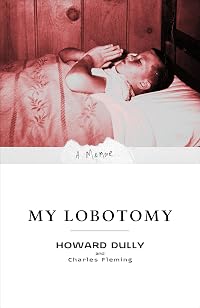
My Lobotomy
by Howard Dully, Charles Fleming
On This Page
Description
A gut-wrenching memoir by a man who was lobotomized at the age of twelve. Assisted by journalist/novelist Charles Fleming, Howard Dully recounts a family tragedy whose Sophoclean proportions he could only sketch in his powerful 2005 broadcast on NPR's All Things Considered. "In 1960," he writes, "I was given a transorbital, or 'ice pick' lobotomy. My stepmother arranged it. My father agreed to it. Dr. Walter Freeman, the father of the American lobotomy, told me he was going to do some show more 'tests.' It took ten minutes and cost two hundred dollars." Fellow doctors called Freeman's technique barbaric: an ice pick-like instrument was inserted about three inches into each eye socket and twirled to sever connections from the frontal lobe to the rest of the brain. The procedure was intended to help curb a variety of psychoses by muting emotional responses, but sometimes it irreversibly reduced patients to a childlike state or (in 15 percent of the operations Freeman performed) killed them outright. Dully's ten-minute "test" did neither, but in some ways it had a far crueler result, since it didn't end the unruly behavior that had set his stepmother against him to begin with. "I spent the next forty years in and out of insane asylums, jails, and halfway houses," he tells us. "I was homeless, alcoholic, and drug-addicted. I was lost." From all accounts, there was no excuse for the lobotomy. Dully had never been "crazy," and his (not very) bad behavior sounds like the typical acting-up of a child in desperate need of affection. His stepmother responded with unrelenting abuse and neglect, and his father allowed her to demonize his son and never admitted his complicity in the lobotomy; Freeman capitalized on their monumental dysfunction. It's a tale of epic horror, and while Dully's courage in telling it inspires awe, listeners are left to speculate about what drove supposedly responsible adults to such unconscionable acts. show lessTags
Recommendations














Member Recommendations
MyriadBooks For adults searching to understand what was done to them as a child.
20
Member Reviews
This book kicked my ass. Seriously. I've got that Schindler's List feeling in my stomach right now.
Author Howard Dully was a "rambunctious" kid growing up in San Jose in the mid-1950's. His neatfreak stepmother could never seem to get him to remember to wash his hands when he came in from outside, and he sometimes fought with his three brothers!!! What would you do if your life was being completely destroyed like that, by such an out-of-control monster?
Would you go doctor shopping until you found a psychiatrist willing to certify the child as a dangerous lunatic?
If so, you just might have hit the doctor-shopping jackpot, by meeting Walter Freeman, M.D. In 1947, he declared himself the "Father of Modern Lobotomy" (I guess there was show more ancient lobotomy?), and started touring mental facilities around the country in his "Lobotomymobile" (I shit you not). After extremely brief consultations with patients he had never met before, he would usually conclude that the cure for what's ailing them was to remove some of their brain tissue. Some of his patients had severe psychiatric problems. Others, no so much. The following tendencies could land you under Dr Freeman's knife:
That was informative; let's make some more lists. The following are some fun facts about Dr Freeman, which are no cause for alarm, and should not reflect negatively on him in any way:
That's some crazy shit. Here's some more:
To his befuddlement, Dr Freeman observed a very wide range of results from his surgeries. Some patients seemed to improve. Some developed serious complications, like loss of cognative function, dramatic personality changes, and seizures. About 15% died. This lack of uniformity is no surprise, if you consider that Freeman never actually saw what tissue he was cutting. ...That's right, you heard me. You see, instead of opening the patient's head to visualize the anatomy of the brain, he drove metal "lobototomes" (like long hollow knitting needles) through the back of patients' eye sockets, breaking through the thin bone back there to get into their brains. Then he just kind of wiggled the lobototomes around through the soft gray matter (living brain has the consistency of butter), until enough broke off that it could be sucked up through the lobototome like a straw. Naturally, there was quite a bit of variability from patient to patient as to what part of the brain was being removed, and how much.
GOOD GOD!! How could something like this be allowed to transpire?
To be fair, a lot of the medical establishment was up in arms about it. Unfortunately, a powerful minority among them was allied with hospital administrators, who were fretting about the rising cost of long-term psychiatric care. This was the 40's and 50's (and into the 60's) we're talking about. Most serious medical conditions either got cured, or resulted in a timely death. Mental patients were somewhat unique in requiring decades of continual care, with no cure in sight. Administrators found Freeman's procedure attractive, because even if it rendered a patient comatose, at least that person could then be discharged from the hospital and sent back to his family for long-term care.
Well... most patients. Howard Dully got lobotomized at age 12, but after the procedure, his insane stepmother and mostly-absentee Dad decided they didn't want him back. He bounced around between state hospitals and juvenile detention until he became a legal adult. Then, with no education to speak of, they turned him loose.
You can probably write the rest from here. Meeting bad influences. Petty crimes. Jail. Drug use. Unplanned pregnancies. More jail. More drugs. Begging money off his relatives. Begging money off friends. Begging money off strangers.
I was amazed how much mental function and personality Dully retained after the lobotomy. My only prior image of the lobotomized had been Jack Nicholson staring inertly at the ceiling, at the end of One Flew Over the Cuckoo's Nest. Freeman must have been having a good day when he did Dully. Thirty turbulent years followed, until Howard sort of settled down. He eventually went on to get an Associate's degree, and learned some trade skills- first in a printing shop, and then as a bus driver. He's an intellegent guy. His bizarre and mostly-criminal adventures make for fascinating, if not slightly guilty, reading. I'm fairly astounded how much tail this man got in his younger years! Normally that would be inappropriate for me to say, but Howard basically says it himself, in his good-natured way. He attributes the number of women willing to look past his substance abuse, occassional violent outbursts, infidelity, poor socioeconomic prospects, and criminal record/behavior as a testiment to the power of the "bad boy" image, and I guess he must be right.
Toward the end of the book, he's mellowed out a bit, and is remarkably nice, considering what he's been through. He's not nearly as angry about what happened to him as I am for him (if that makes sense) ...or as I would be if it happened to me. He even went as far as reaching out to his father, and asking him about the decision to lobotomize his son. The father comes across very unsympathetically: essentially shrugging and saying "what's done is done". Even after everything Howard has endured, he loves his father, and forgives him. In the afterword, he even forgives his stepmother. That's going further than I ever could, but I think it has brought Howard some peace, and I'm all for that.
Dr. Freeman died miserable, an estranged alcoholic after two failed marriages, living with the guilt of indirectly causing his son's accidental death on a camping trip. Karma wins again, I guess. There's your happy ending for you. show less
Author Howard Dully was a "rambunctious" kid growing up in San Jose in the mid-1950's. His neatfreak stepmother could never seem to get him to remember to wash his hands when he came in from outside, and he sometimes fought with his three brothers!!! What would you do if your life was being completely destroyed like that, by such an out-of-control monster?
Would you go doctor shopping until you found a psychiatrist willing to certify the child as a dangerous lunatic?
If so, you just might have hit the doctor-shopping jackpot, by meeting Walter Freeman, M.D. In 1947, he declared himself the "Father of Modern Lobotomy" (I guess there was show more ancient lobotomy?), and started touring mental facilities around the country in his "Lobotomymobile" (I shit you not). After extremely brief consultations with patients he had never met before, he would usually conclude that the cure for what's ailing them was to remove some of their brain tissue. Some of his patients had severe psychiatric problems. Others, no so much. The following tendencies could land you under Dr Freeman's knife:
-boys fighting
-girls acting slutty
-not listening to parents or teachers
-not having as many friends as the other kids
-not engaging Dr Freeman in "thoughtful conversation"
-headaches
That was informative; let's make some more lists. The following are some fun facts about Dr Freeman, which are no cause for alarm, and should not reflect negatively on him in any way:
- he practiced surgery, without having done a surgery residency
- he practiced neurosurgery, without having done a neurosurgery fellowship
- by his own account, he was "not overly concerned" with keeping a sterile field during operations (this may be due to the first two items)
- when challenged that there was no scientific basis for performing lobotomy on schizophrenics, he defended: "I just think some people are better off with less brain tissue".
- he had his priviliges revoked by the executive committee of the medical staff, Stanford Palo Alto Hospital, for performing unneccessary procedures
- he killed a patient in the middle of surgery once, when he stopped the procedure while an instrument was in the patient's brain, so he could run around to the other side of the operating table and activate a timer on his camera, to take a picture of himself. Since he didn't instruct any assistants to hold the instrument during the photo session (you think maybe he could have asked one of them to take the picture?) it sagged under its own weight and sliced through the patient's brain, killing her instantly
That's some crazy shit. Here's some more:
To his befuddlement, Dr Freeman observed a very wide range of results from his surgeries. Some patients seemed to improve. Some developed serious complications, like loss of cognative function, dramatic personality changes, and seizures. About 15% died. This lack of uniformity is no surprise, if you consider that Freeman never actually saw what tissue he was cutting. ...That's right, you heard me. You see, instead of opening the patient's head to visualize the anatomy of the brain, he drove metal "lobototomes" (like long hollow knitting needles) through the back of patients' eye sockets, breaking through the thin bone back there to get into their brains. Then he just kind of wiggled the lobototomes around through the soft gray matter (living brain has the consistency of butter), until enough broke off that it could be sucked up through the lobototome like a straw. Naturally, there was quite a bit of variability from patient to patient as to what part of the brain was being removed, and how much.
GOOD GOD!! How could something like this be allowed to transpire?
To be fair, a lot of the medical establishment was up in arms about it. Unfortunately, a powerful minority among them was allied with hospital administrators, who were fretting about the rising cost of long-term psychiatric care. This was the 40's and 50's (and into the 60's) we're talking about. Most serious medical conditions either got cured, or resulted in a timely death. Mental patients were somewhat unique in requiring decades of continual care, with no cure in sight. Administrators found Freeman's procedure attractive, because even if it rendered a patient comatose, at least that person could then be discharged from the hospital and sent back to his family for long-term care.
Well... most patients. Howard Dully got lobotomized at age 12, but after the procedure, his insane stepmother and mostly-absentee Dad decided they didn't want him back. He bounced around between state hospitals and juvenile detention until he became a legal adult. Then, with no education to speak of, they turned him loose.
You can probably write the rest from here. Meeting bad influences. Petty crimes. Jail. Drug use. Unplanned pregnancies. More jail. More drugs. Begging money off his relatives. Begging money off friends. Begging money off strangers.
I was amazed how much mental function and personality Dully retained after the lobotomy. My only prior image of the lobotomized had been Jack Nicholson staring inertly at the ceiling, at the end of One Flew Over the Cuckoo's Nest. Freeman must have been having a good day when he did Dully. Thirty turbulent years followed, until Howard sort of settled down. He eventually went on to get an Associate's degree, and learned some trade skills- first in a printing shop, and then as a bus driver. He's an intellegent guy. His bizarre and mostly-criminal adventures make for fascinating, if not slightly guilty, reading. I'm fairly astounded how much tail this man got in his younger years! Normally that would be inappropriate for me to say, but Howard basically says it himself, in his good-natured way. He attributes the number of women willing to look past his substance abuse, occassional violent outbursts, infidelity, poor socioeconomic prospects, and criminal record/behavior as a testiment to the power of the "bad boy" image, and I guess he must be right.
Toward the end of the book, he's mellowed out a bit, and is remarkably nice, considering what he's been through. He's not nearly as angry about what happened to him as I am for him (if that makes sense) ...or as I would be if it happened to me. He even went as far as reaching out to his father, and asking him about the decision to lobotomize his son. The father comes across very unsympathetically: essentially shrugging and saying "what's done is done". Even after everything Howard has endured, he loves his father, and forgives him. In the afterword, he even forgives his stepmother. That's going further than I ever could, but I think it has brought Howard some peace, and I'm all for that.
Dr. Freeman died miserable, an estranged alcoholic after two failed marriages, living with the guilt of indirectly causing his son's accidental death on a camping trip. Karma wins again, I guess. There's your happy ending for you. show less
Wow. This book was so engrossing I could not put it down.
Howard Dully was one of the youngest people to receive a transorbital lobotomy. After reading this book, it seems impossible to conclude that the reason for this was anything other than the fact that his stepmother did not like him and did not want to deal with him. His father was physically abusive and appears not to have stood up against the stepmother. And although the stepmother visited a number of psychiatrists who told her nothing was wrong with Howard - some even suggested that she seek professional help! - eventually she was able to find a doctor who was willing to buy what she was selling. Two months later, a 10-minute procedure was performed and Howard was show more lobotomized.
He spends the next 20+ years in and out of halfway houses, jail, residential treatment facilities, and mental institutions - where all the doctors tell him there is nothing wrong with him and he shouldn't be there - because his stepmother refuses to let him come home. Howard has been abandoned by his family and the systems that should be protecting him. He becomes a criminal, spends time homeless, and generally develops into a not-so-nice person. Admirably, the author does not whitewash this part of his life and even admits that being the person with the lobotomy got him out of trouble a lot of the time. People simply didn't expect him to do anything productive b/c of what had been done to him.
I loved how this book combined perspectives through the incorporation of the medical notes that Dr. Freeman - the lobotomist - took during interviews with friends and family members in the period leading up to and following Howard's lobotomy. There is some hint of narrative unreliability, as Howard confesses that he lived much of his life wondering if he had forgotten something truly horrible that he had done that had led to his lobotomy. He also admits to having a hazy memory of many portions of his life. One also wonders how the accounts of Howard's behavior given by the various adults who knew him prior to the 'surgery' could be so strikingly different. It really seems that his stepmother was out to get him, by any means necessary.
This book was very sad, but the author told his story in a straightforward and simple (but not simplistic) fashion. No histrionics, nothing over-the-top, which I appreciated. The reader can see that Howard was a depressed, anxious little boy who probably did have real psychological issues from living in a house with two horrid parents and from the unexpected death of his mother when he was only four. Today, one would like to think that his case would have been handled differently and that he would have received real help, rather than a brain scramble. It is amazing to think that this procedure was done to people.
Howard's confrontation with his past through reading his medical file and talking with his father about what was done to him and why was particularly painful. His father blames the stepmother completely and refuses to accept any responsibility for what was done to his son. As always, he is sort of an absentee parent. He does not want to talk about Howard's experience or his feelings because he believes in thinking only of the positive things and not dwelling on the negative.
What is amazing is Howard's presentation of his parents and of Dr. Freeman. He continually says things like "I know things must have been hard for them." I also found it heartbreaking how young Howard thought of Dr. Freeman as a friend and enjoyed their visits prior to the lobotomy because Dr. Freeman asked him questions and listened to Howard's responses like he actually cared about the boy's feelings. Howard came to trust and like Dr. Freeman and ultimately the doctor completely betrayed that trust. Still, the doctor gets surprisingly good treatment in the book, despite lots of criticism of the lobotomy procedure itself. Dully is really a class act in this, and other, respects. While he is hurt, he is not bitter. I do not know that I could be so forgiving.
I highly recommend this book. show less
Howard Dully was one of the youngest people to receive a transorbital lobotomy. After reading this book, it seems impossible to conclude that the reason for this was anything other than the fact that his stepmother did not like him and did not want to deal with him. His father was physically abusive and appears not to have stood up against the stepmother. And although the stepmother visited a number of psychiatrists who told her nothing was wrong with Howard - some even suggested that she seek professional help! - eventually she was able to find a doctor who was willing to buy what she was selling. Two months later, a 10-minute procedure was performed and Howard was show more lobotomized.
He spends the next 20+ years in and out of halfway houses, jail, residential treatment facilities, and mental institutions - where all the doctors tell him there is nothing wrong with him and he shouldn't be there - because his stepmother refuses to let him come home. Howard has been abandoned by his family and the systems that should be protecting him. He becomes a criminal, spends time homeless, and generally develops into a not-so-nice person. Admirably, the author does not whitewash this part of his life and even admits that being the person with the lobotomy got him out of trouble a lot of the time. People simply didn't expect him to do anything productive b/c of what had been done to him.
I loved how this book combined perspectives through the incorporation of the medical notes that Dr. Freeman - the lobotomist - took during interviews with friends and family members in the period leading up to and following Howard's lobotomy. There is some hint of narrative unreliability, as Howard confesses that he lived much of his life wondering if he had forgotten something truly horrible that he had done that had led to his lobotomy. He also admits to having a hazy memory of many portions of his life. One also wonders how the accounts of Howard's behavior given by the various adults who knew him prior to the 'surgery' could be so strikingly different. It really seems that his stepmother was out to get him, by any means necessary.
This book was very sad, but the author told his story in a straightforward and simple (but not simplistic) fashion. No histrionics, nothing over-the-top, which I appreciated. The reader can see that Howard was a depressed, anxious little boy who probably did have real psychological issues from living in a house with two horrid parents and from the unexpected death of his mother when he was only four. Today, one would like to think that his case would have been handled differently and that he would have received real help, rather than a brain scramble. It is amazing to think that this procedure was done to people.
Howard's confrontation with his past through reading his medical file and talking with his father about what was done to him and why was particularly painful. His father blames the stepmother completely and refuses to accept any responsibility for what was done to his son. As always, he is sort of an absentee parent. He does not want to talk about Howard's experience or his feelings because he believes in thinking only of the positive things and not dwelling on the negative.
What is amazing is Howard's presentation of his parents and of Dr. Freeman. He continually says things like "I know things must have been hard for them." I also found it heartbreaking how young Howard thought of Dr. Freeman as a friend and enjoyed their visits prior to the lobotomy because Dr. Freeman asked him questions and listened to Howard's responses like he actually cared about the boy's feelings. Howard came to trust and like Dr. Freeman and ultimately the doctor completely betrayed that trust. Still, the doctor gets surprisingly good treatment in the book, despite lots of criticism of the lobotomy procedure itself. Dully is really a class act in this, and other, respects. While he is hurt, he is not bitter. I do not know that I could be so forgiving.
I highly recommend this book. show less
A somber memoir that tackles a unique and terrifying topic. Unfortunately, most of the book falls into the "too much information" category -- and not in a titillating fashion. Dully's decision to chronicle what seems like every twist and turn of his adolescence becomes downright boring in many spots. The problem is compounded by dry writing. Still, the last third of the book is fascinating. Dully finally moves out of the "and the next thing that happened to me" mode and begins his struggle to come to grips with his harrowing experience. Dully compares the decision that was made to give him a lobotomy to modern medicine's tendency to over-prescribe drugs to people -- especially kids -- who are merely reacting to normal problems. His life show more also shows how one can suffer a horrible ordeal and turn it into something positive -- an enlightening lesson for society. show less
Like countless others, I heard Howard Dully's My Lobotomy on NPR in November, 2005. This was the second time I've ever stayed in the car when I got home or pulled to the side of the road to finish listening to a program. (Notably, the other piece, Remorse: The 14 Stories of Eric Morse was also produced by David Isay and aired on NPR.) In only 22 minutes, Dully described his complex and difficult childhood relationship with his stepmother and father, his stepmother's decision to have him lobotomized by Walter Freeman, the pioneer and zealous advocate the "icepick lobotomy," and his attempt to understand what had happened to him from the vantage of about 40 years later. While the producers did a masterful job, much of the emotional impact show more of the piece derives from Howard's narration.
I am a psychologist, and teach in a department that trains interventionists and therapists from the bachelor's to doctoral level. I have my students listen to Dully's NPR piece every year. In the lesson I ask, "What current practices in your profession will cause you shame and anguish 20 years from now? What will you be referring to when you have to say, 'I don't know what we were thinking'?" My students are always moved and horrified by Howard's experiences and determined to ask questions and raise concerns about professional acts that may be more dubious or dangerous than they appear.
Dully has now published a fuller account of his experiences. I will be sharing an excerpt with students this term and will add it to the books I assign in future classes. Dully's narration is simple and calm. At times there is repetition, and at times it is a straignhtforward accounting of events--I did this, this happened, this happened. Since the tone is conversational, I did not think this detracted from the overall experience of the book. I suggest listening to the NPR piece first so you can hear the book in Dully's voice.
Dully's account of his childhood and post-lobotomy adolescence and early adulthood is fascinating and raises the complexity of his story considerably. What was he really like as a child? Were there good reasons to think he was schizophrenic, or was he badly misdiagnosed? What would he have been like in a different family constellation? How would a similar child be treated today? Are any radical psychiatric interventions justifiable with children? It's impossible to answer these questions, of course, but it is interesting to compare Dully's origins and outcomes to Noah Levine's as recounted in Dharma Punx, or Jeanette Walls's in The Glass Castle.
I'm very grateful to Howard Dully for telling his story of a chapter of U.S. psychiatric history that is often downplayed, not fully explored, or simply missing in contemporary psychology education. I hope this book brings him even greater recognition and regard for his willingness to describe such a difficult life. show less
I am a psychologist, and teach in a department that trains interventionists and therapists from the bachelor's to doctoral level. I have my students listen to Dully's NPR piece every year. In the lesson I ask, "What current practices in your profession will cause you shame and anguish 20 years from now? What will you be referring to when you have to say, 'I don't know what we were thinking'?" My students are always moved and horrified by Howard's experiences and determined to ask questions and raise concerns about professional acts that may be more dubious or dangerous than they appear.
Dully has now published a fuller account of his experiences. I will be sharing an excerpt with students this term and will add it to the books I assign in future classes. Dully's narration is simple and calm. At times there is repetition, and at times it is a straignhtforward accounting of events--I did this, this happened, this happened. Since the tone is conversational, I did not think this detracted from the overall experience of the book. I suggest listening to the NPR piece first so you can hear the book in Dully's voice.
Dully's account of his childhood and post-lobotomy adolescence and early adulthood is fascinating and raises the complexity of his story considerably. What was he really like as a child? Were there good reasons to think he was schizophrenic, or was he badly misdiagnosed? What would he have been like in a different family constellation? How would a similar child be treated today? Are any radical psychiatric interventions justifiable with children? It's impossible to answer these questions, of course, but it is interesting to compare Dully's origins and outcomes to Noah Levine's as recounted in Dharma Punx, or Jeanette Walls's in The Glass Castle.
I'm very grateful to Howard Dully for telling his story of a chapter of U.S. psychiatric history that is often downplayed, not fully explored, or simply missing in contemporary psychology education. I hope this book brings him even greater recognition and regard for his willingness to describe such a difficult life. show less
Browsing through a collection of used books for sale in a church basement, I ran across this one, I'd learned something about Dr. Walter Freeman's infamous ice pick lobotomies earlier in the year, so the idea of a book written by someone who'd had a lobotomy at age 12 grabbed me.
This is a great read but a terrible story. A somewhat rebellious adolescent from an exceptionally dysfunctional family can't get along with his neurotic stepmother. She takes him to a series of psychiatrists (in the days before the advent of psychactive meds), but they all tell her that she's the one with the mental problems. Finally, she learns of the famous Dr. Freeman, the flamboyant self-promoting physician who performed hundreds of lobotomies and reported show more tremendous outcomes, albeit with the occasional patient being rendered paralyzed or even vegetative.
After several interviews with young Howard and the stepmother, Freeman agrees to perform the procedure if Howard's father signs off. He does, and the the 12 year old goes into the hospital expecting only to have some vague tests performed.
The resulting story is both horrific and inspiring. When the procedure doesn't change his behavior, the family places him in settings ranging from group homes to psychiatric hospitals until he's legally an adult. But an adult with no skills and no guidance. He descends into alcohol, illegal drugs, and criminal behavior before finally getting himself together in his 40's, finding a stable wife, and building his career.
As much as anything, though, the book is the story of his search to find out not only what happened to him but why it happened and how it was permitted to happen. show less
This is a great read but a terrible story. A somewhat rebellious adolescent from an exceptionally dysfunctional family can't get along with his neurotic stepmother. She takes him to a series of psychiatrists (in the days before the advent of psychactive meds), but they all tell her that she's the one with the mental problems. Finally, she learns of the famous Dr. Freeman, the flamboyant self-promoting physician who performed hundreds of lobotomies and reported show more tremendous outcomes, albeit with the occasional patient being rendered paralyzed or even vegetative.
After several interviews with young Howard and the stepmother, Freeman agrees to perform the procedure if Howard's father signs off. He does, and the the 12 year old goes into the hospital expecting only to have some vague tests performed.
The resulting story is both horrific and inspiring. When the procedure doesn't change his behavior, the family places him in settings ranging from group homes to psychiatric hospitals until he's legally an adult. But an adult with no skills and no guidance. He descends into alcohol, illegal drugs, and criminal behavior before finally getting himself together in his 40's, finding a stable wife, and building his career.
As much as anything, though, the book is the story of his search to find out not only what happened to him but why it happened and how it was permitted to happen. show less
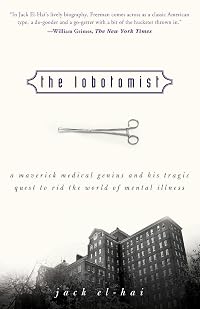
A few months ago, I read The Lobotomist, Jack El-Hai's excellent biography of Walter Freeman, the doctor who popularized lobotomies in the United States and performed the procedure thousands of times on people suffering from pretty much every mental or emotional problem imaginable. It was a fascinating and disturbing book, and it left me very interested to see what things might look like from the other side -- that is, from the point of view of one of Freeman's patients. Although maybe "victims" might be a better word. The patient/victim in this case is Howard Dully, who was only twelve when he was taken to Freeman and given a transorbital (aka ice pick) lobotomy for "symptoms" that seem to be a combination of normal boyhood show more rambunctiousness and an understandable inability to cope with an abusive home environment.
Dully's book isn't quite what I was expecting. It isn't entirely or even mostly about the lobotomy, which was very far from his only problem. Instead, it's a depressing memoir about a boy with (initially pretty mild) delinquent tendencies whose family -- primarily his stepmother -- were willing to try just about anything to render him less annoying except for actual loving attention. After the lobotomy failed to "fix," him, he spent much of the rest of his childhood locked up in a series of mental wards and juvenile detention centers, despite the fact that most of the people involved were well aware that he didn't belong there. Unsurprisingly, between the horrible childhood and the deliberately inflicted brain damage, Dully had serious problems as an adult -- arrests, drug use, periods of homelessness, dysfunctional relationships -- before finally managing to pull his life together, at which point he began to look for answers to his questions about exactly what was done to him and why. Eventually he met some NPR reporters interested in doing a story on Freeman, which metamorphosed into a story about Dully, which led to this book.
It's written in a very simple, rather flat style, which while not exactly compelling prose is somehow a lot more effective than you might expect it to be. It's impossible not to feel sympathy for the poor kid, and the final chapters, in which Dully describes what it's like to finally confront his past and share his experiences with others, are really very moving. His story also touches (albeit very lightly) on some troubling and thought-provoking questions about how we treat "difficult" children, not just in the era of the lobotomy but today. show less
Dully's book isn't quite what I was expecting. It isn't entirely or even mostly about the lobotomy, which was very far from his only problem. Instead, it's a depressing memoir about a boy with (initially pretty mild) delinquent tendencies whose family -- primarily his stepmother -- were willing to try just about anything to render him less annoying except for actual loving attention. After the lobotomy failed to "fix," him, he spent much of the rest of his childhood locked up in a series of mental wards and juvenile detention centers, despite the fact that most of the people involved were well aware that he didn't belong there. Unsurprisingly, between the horrible childhood and the deliberately inflicted brain damage, Dully had serious problems as an adult -- arrests, drug use, periods of homelessness, dysfunctional relationships -- before finally managing to pull his life together, at which point he began to look for answers to his questions about exactly what was done to him and why. Eventually he met some NPR reporters interested in doing a story on Freeman, which metamorphosed into a story about Dully, which led to this book.
It's written in a very simple, rather flat style, which while not exactly compelling prose is somehow a lot more effective than you might expect it to be. It's impossible not to feel sympathy for the poor kid, and the final chapters, in which Dully describes what it's like to finally confront his past and share his experiences with others, are really very moving. His story also touches (albeit very lightly) on some troubling and thought-provoking questions about how we treat "difficult" children, not just in the era of the lobotomy but today. show less
Some how, I missed the popular 'Sound Portraits' episode that introduced Dully to the world. This book is an expression of all the material and coming to grips with being lobotomised through the mechanizations of a wicked step mother when he was twelve. You cannot fit all that into a 22-minute radio documentary. This goes more into detail on the written reports Mr. Freeman (I can't call him "Dr.") made on this case and how Howard took decades to rebound. Besides meeting the famous brain damager, Howard has Zelig-like brushes with others, like Napoleon Murphy Brock of The Mothers of Invention, Olympians, singer Connie Stevens, etc. Dully shows remarkable forbearance and lack of vindictiveness in what is a quest for understanding, not show more blame. This paperback edition has added material that includes MRI results showing his young brain compensated mightily for the damage of the ice pick assault. show less
Members
- Recently Added By
Lists

Dysfunctional Families
133 works; 7 members

Books Read in 2010
631 works; 11 members

Penguin Random House
458 works; 4 members

Books Tagged Abuse
152 works; 4 members

Most Disturbing Books
124 works; 27 members

Books I have Recommended
208 works; 1 member
Author Information

1 Work 1,176 Members
8 Works 1,449 Members
Charles Fleming is a former Newsweek writer living in Los Angeles.
Some Editions
Awards and Honors
Awards
Distinctions
Common Knowledge
- Canonical title
- My Lobotomy
- Original publication date
- 2007
- People/Characters
- Howard Dully; Dr. Walter Freeman; Lou Dully; Brian Dully; George Cox; Orville Black (show all 18); Evelyn Black; Mrs. McGraw; Eugene Dully; Christine Dully; Annette; Martha Dully; Christine Dully; Barbara Dully; Rodney Dully; Justin Dully; Kenneth Dully; Lobotomies
- Important places
- California, USA
- Dedication
- To all of us, victims and survivors, who keep going no matter what
- First words
- My name is Howard Dully.
- Last words
- (Click to show. Warning: May contain spoilers.)We can either use that as an excuse for failure, knowing that if we fail it isn't our fault, or we can say, "I want something better than that, I deserve something better than that, and I'm going to try to make myself a life worth living."
Classifications
Statistics
- Members
- 1,176
- Popularity
- 21,360
- Reviews
- 51
- Rating
- (3.66)
- Languages
- English
- Media
- Paper, Audiobook, Ebook
- ISBNs
- 14
- ASINs
- 6
