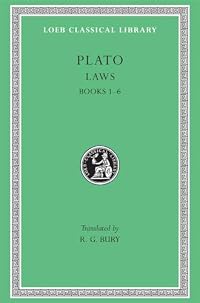
Laws I–VI [Greek text and translation]
by Plato
98 Members (2.00)
On This Page
Description
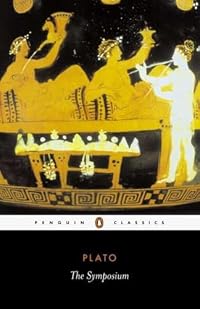
The great Athenian philosopher Plato was born in 427 BCE and lived to be eighty. Acknowledged masterpieces among his works are the Symposium, which explores love in its many aspects, from physical desire to pursuit of the beautiful and the good, and the Republic, which concerns righteousness and also treats education, gender, society, and slavery. Plato, the great philosopher of Athens, was born in 427 BCE. In early manhood an admirer of Socrates, he later founded the famous school of show more philosophy in the grove Academus. Much else recorded of his life is uncertain; that he left Athens for a time after Socrates' execution is probable; that later he went to Cyrene, Egypt, and Sicily is possible; that he was wealthy is likely; that he was critical of "advanced" democracy is obvious. He lived to be 80 years old. Linguistic tests including those of computer science still try to establish the order of his extant philosophical dialogues, written in splendid prose and revealing Socrates' mind fused with Plato's thought. In Laches, Charmides, and Lysis, Socrates and others discuss separate ethical conceptions. Protagoras, Ion, and Meno discuss whether righteousness can be taught. In Gorgias, Socrates is estranged from his city's thought, and his fate is impending. The Apology (not a dialogue), Crito, Euthyphro, and the unforgettable Phaedo relate the trial and death of Socrates and propound the immortality of the soul. In the famous Symposium and Phaedrus, written when Socrates was still alive, we find the origin and meaning of love. Cratylus discusses the nature of language. The great masterpiece in ten books, the Republic, concerns righteousness (and involves education, equality of the sexes, the structure of society, and abolition of slavery). Of the six so-called dialectical dialogues Euthydemus deals with philosophy; metaphysical Parmenides is about general concepts and absolute being; Theaetetus reasons about the theory of knowledge. Of its sequels, Sophist deals with not-being; Politicus with good and bad statesmanship and governments; Philebus with what is good. The Timaeus seeks the origin of the visible universe out of abstract geometrical elements. The unfinished Critias treats of lost Atlantis. Unfinished also is Plato's last work of the twelve books of Laws (Socrates is absent from it), a critical discussion of principles of law which Plato thought the Greeks might accept. The Loeb Classical Library edition of Plato is in twelve volumes. show lessTags
Recommendations


Member Reviews
Members
- Recently Added By
Author Information

2,715+ Works 100,342 Members
Plato was born c. 427 B.C. in Athens, Greece, to an aristocratic family very much involved in political government. Pericles, famous ruler of Athens during its golden age, was Plato's stepfather. Plato was well educated and studied under Socrates, with whom he developed a close friendship. When Socrates was publically executed in 399 B.C., Plato show more finally distanced himself from a career in Athenian politics, instead becoming one of the greatest philosophers of Western civilization. Plato extended Socrates's inquiries to his students, one of the most famous being Aristotle. Plato's The Republic is an enduring work, discussing justice, the importance of education, and the qualities needed for rulers to succeed. Plato felt governors must be philosophers so they may govern wisely and effectively. Plato founded the Academy, an educational institution dedicated to pursuing philosophic truth. The Academy lasted well into the 6th century A.D., and is the model for all western universities. Its formation is along the lines Plato laid out in The Republic. Many of Plato's essays and writings survive to this day. Plato died in 347 B.C. at the age of 80. (Bowker Author Biography) show less
Some Editions
Series
Belongs to Publisher Series
Loeb Classical Library (187)
Common Knowledge
- Canonical title
- Laws I–VI [Greek text and translation]
Classifications
- Genres
- Philosophy, Nonfiction, Politics and Government
- DDC/MDS
- 321.07 — Society, Government, and Culture Political science Systems of governments and states Political Systems Ideal state; Utopias
- LCC
- JC71 .P2633 — Political Science Political theory Political theory. The state. Theories of the state Ancient state
- BISAC
Statistics
- Members
- 98
- Popularity
- 327,995
- Rating
- (2.00)
- Languages
- English, Finnish, German, Greek (Ancient)
- Media
- Paper, Ebook
- ISBNs
- 4
- ASINs
- 1