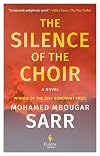
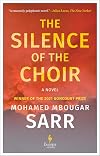
The Silence of the Choir
by Mohamed Mbougar Sarr
On This Page
Description
"Seventy-two men arrive in the middle of the Sicilian countryside. They are "immigrants," "refugees" or "migrants." But in Altino, they're called the ragazzi, the "guys" that the Santa Marta Association have taken responsibility for. In this small Sicilian town, their arrival changes life for everybody. While they wait to know their fate, the ragazzi encounter all kinds of people: a strange vicar who rewrites their pasts, a woman committed to ensuring them asylum, a man determined to fight show more against it, an older ragazzo who has become an interpreter, and a reclusive poet who no longer writes. Each character in this moving and important saga is forced to reflect on what it means to encounter people they know nothing about. They watch as a situation unfolds over which they have little control or insight. A story told through a growing symphony of voices that ends only when one final voice brings silence to the choir."-- show lessTags
Recommendations






Member Reviews
The Silence of the Choir tells the story of 72 African immigrants and a village in Sicily.
Born in Senegal and now based in Paris, Mohamed Sarr has given us an epic. An epic in the story itself and an epic in the examination of the problem of mass migration.
A Sicilian village has set up a transit center which houses and aids 72 refuges from various African countries. At first the reception of the refugees who have arrived in Sicily by boat is kindly. But as the weeks go by divisions between the villagers and the between the refugees themselves emerge.
The local attorney helps the refuges prepare for their interviews and some of the refugees form part of the local soccer team. It seems for a while that things will work out. But although show more the refugees are housed and given coupons for shopping, they get tired of waiting for their immigration papers to arrive. They cannot work. They become bored. Meanwhile a hostile anti-refugee group that exists in the village resents whatever the refuges are given.
Eventually opposition to the very existence of the refugees becomes physical. The relationship between the opponents, and the ragazzi, as they are called by the villagers, becomes openly hostile.
In their ignorance, the well-meaning locals who run the help center take the ragazzi to a modern art exhibition where they are forced to gaze upon post-modern art forms including a frame surrounding nothing. It’s a gilded frame with no canvas no paper, just the wall upon which it’s hung. The ragazzi snigger.
The only thing the two groups appear to have in common is soccer, and eventually even the soccer playing ragazzi refuse to play. Eventually the relationship with the aid center and the ragazzi breaks down. The ragazzi stop going to Italian class, soccer practice, and immigration interview role-play.
Several people try to hold the communities together, including the priest. He philosophisizes on the problem of mass migration. Meanwhile the refugees discuss how their countries were taken by Europeans and so what do these Italians expect?
The priest takes a wide view of mass migration, and what is to become of it in the future. He looks at the problem of who is to blame for the failure of the people to accept each other.
Don’t ask yourselves who is guilty. Everyone one is guilty in this matter- their countries of origin for a start, our countries, the migrants themselves, and us. The history, the system, the smugglers, geo-politics, global capitalism, colonialism. All of that has its share of truth and its share of culpability. But the fact remains that whoever the culprit may be, this is how it ends. They are here before us. It’s what we must do that matters so that we don’t just think that some day they’ll have to fear death simply to have a better life. There is no sea wide or deep enough to contain the determination and impulse for survival of these men.
The story is told in the voices of selected characters, the attorney, the mayor, the doctor, the interpreter, a poet, the priest, a lovelorn refugee, a militant one, a mute one. Various media are used to relate their stories. - newspaper article, diaries, written note and letters.
There’s a lot to think about while reading the book and long after putting it down. It’s dense in words, thoughts and emotion. It raises issue we may not always think about. The ennui of those in transit camps. The fact that they might not like us, might look down on us, ridicule us, not appreciate our help. It seems too often that it’s a one way street, that we in the West are being magnanimous in helping people who have been forced from their homes and risked their lives for a perceived dream of a better life.
The padre ponders the question of guilt.
A better word Even if they are still migrating for the moment, they are here among us. I refer to them as migrants, but I could also call them immigrants immigrants displayed or exiled persons refugees like all of us. I find it hard to name them and I think more over this is one of the reasons why there has been such controversy about them when you have difficulty giving a precise name to a human being. That is when misfortune begins
There was only one problem I had with the book and that was in the ending when all semblance of reconciliation fails and the violence erupts into warfare. There being no spoiler tags available, I cannot elaborate. show less
Born in Senegal and now based in Paris, Mohamed Sarr has given us an epic. An epic in the story itself and an epic in the examination of the problem of mass migration.
A Sicilian village has set up a transit center which houses and aids 72 refuges from various African countries. At first the reception of the refugees who have arrived in Sicily by boat is kindly. But as the weeks go by divisions between the villagers and the between the refugees themselves emerge.
The local attorney helps the refuges prepare for their interviews and some of the refugees form part of the local soccer team. It seems for a while that things will work out. But although show more the refugees are housed and given coupons for shopping, they get tired of waiting for their immigration papers to arrive. They cannot work. They become bored. Meanwhile a hostile anti-refugee group that exists in the village resents whatever the refuges are given.
Eventually opposition to the very existence of the refugees becomes physical. The relationship between the opponents, and the ragazzi, as they are called by the villagers, becomes openly hostile.
In their ignorance, the well-meaning locals who run the help center take the ragazzi to a modern art exhibition where they are forced to gaze upon post-modern art forms including a frame surrounding nothing. It’s a gilded frame with no canvas no paper, just the wall upon which it’s hung. The ragazzi snigger.
The only thing the two groups appear to have in common is soccer, and eventually even the soccer playing ragazzi refuse to play. Eventually the relationship with the aid center and the ragazzi breaks down. The ragazzi stop going to Italian class, soccer practice, and immigration interview role-play.
Several people try to hold the communities together, including the priest. He philosophisizes on the problem of mass migration. Meanwhile the refugees discuss how their countries were taken by Europeans and so what do these Italians expect?
The priest takes a wide view of mass migration, and what is to become of it in the future. He looks at the problem of who is to blame for the failure of the people to accept each other.
Don’t ask yourselves who is guilty. Everyone one is guilty in this matter- their countries of origin for a start, our countries, the migrants themselves, and us. The history, the system, the smugglers, geo-politics, global capitalism, colonialism. All of that has its share of truth and its share of culpability. But the fact remains that whoever the culprit may be, this is how it ends. They are here before us. It’s what we must do that matters so that we don’t just think that some day they’ll have to fear death simply to have a better life. There is no sea wide or deep enough to contain the determination and impulse for survival of these men.
The story is told in the voices of selected characters, the attorney, the mayor, the doctor, the interpreter, a poet, the priest, a lovelorn refugee, a militant one, a mute one. Various media are used to relate their stories. - newspaper article, diaries, written note and letters.
There’s a lot to think about while reading the book and long after putting it down. It’s dense in words, thoughts and emotion. It raises issue we may not always think about. The ennui of those in transit camps. The fact that they might not like us, might look down on us, ridicule us, not appreciate our help. It seems too often that it’s a one way street, that we in the West are being magnanimous in helping people who have been forced from their homes and risked their lives for a perceived dream of a better life.
The padre ponders the question of guilt.
A better word Even if they are still migrating for the moment, they are here among us. I refer to them as migrants, but I could also call them immigrants immigrants displayed or exiled persons refugees like all of us. I find it hard to name them and I think more over this is one of the reasons why there has been such controversy about them when you have difficulty giving a precise name to a human being. That is when misfortune begins
There was only one problem I had with the book and that was in the ending when all semblance of reconciliation fails and the violence erupts into warfare. There being no spoiler tags available, I cannot elaborate. show less
I listened to this in audiobook format.
This novel is about African refugees arriving to a small town in Sicily. The author provides several different characters' reactions including the refugees themselves, the local politicians, the local townspeople, and those assisting the refugees with asylum and assimilation. Many of the characters' backstories enrich the story further. I liked that the author is not taking a position or preaching but simply laying out the many issues and perspectives on today's refugee crisis. I had a hard time keeping the characters' names all straight but by the end I knew them all. It's a good book that is a little slow getting started but worth the effort in the end when the plot really thickens. Probably show more easier to follow on paper than audiobook. show less
This novel is about African refugees arriving to a small town in Sicily. The author provides several different characters' reactions including the refugees themselves, the local politicians, the local townspeople, and those assisting the refugees with asylum and assimilation. Many of the characters' backstories enrich the story further. I liked that the author is not taking a position or preaching but simply laying out the many issues and perspectives on today's refugee crisis. I had a hard time keeping the characters' names all straight but by the end I knew them all. It's a good book that is a little slow getting started but worth the effort in the end when the plot really thickens. Probably show more easier to follow on paper than audiobook. show less
This is a story of African migrants arriving in Sicily where they are taken to a small town which has an organization to help them with seek asylum. The story is told through the eyes of several characters: a migrant who has learned Italian and works as a translator, a doctor in the community, a woman leading the settlement organization, the mayor of the town, a renowned poet, and a man violently opposed to the Africans.
The story presents the many complications; no one is perfect, each has doubts, makes bad decisions, and sometimes honorable ones. Joegoy, the African who works as a translator is caught between two worlds. The contrast, the expectations of the migrants, and the fear of the locals is so well portrayed.
I would have given show more the book 5 stars, but I felt the ending with the volcano erupting just as there is a terrible fight between the opposing sides was a bit overdramatic. Overall, very good writing. Short chapters often telling the same event from a different view point.
Very interesting. show less
The story presents the many complications; no one is perfect, each has doubts, makes bad decisions, and sometimes honorable ones. Joegoy, the African who works as a translator is caught between two worlds. The contrast, the expectations of the migrants, and the fear of the locals is so well portrayed.
I would have given show more the book 5 stars, but I felt the ending with the volcano erupting just as there is a terrible fight between the opposing sides was a bit overdramatic. Overall, very good writing. Short chapters often telling the same event from a different view point.
Very interesting. show less
Ratings
Members
- Recently Added By
Author Information

7+ Works 725 Members
Some Editions
Awards and Honors
Awards
Distinctions
Common Knowledge
- Canonical title
- The Silence of the Choir
- Original title
- Silence du chœur
- Original publication date
- 2017
- Original language
- French
Classifications
Statistics
- Members
- 62
- Popularity
- 498,389
- Reviews
- 3
- Rating
- (3.93)
- Languages
- English, French
- Media
- Paper, Audiobook, Ebook
- ISBNs
- 6
- ASINs
- 4