On This Page
Description
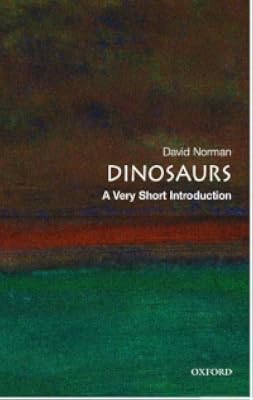
Dinosaurs are fascinating creatures and their popularity seems never ending, fueled by films such as Jurassic Park and documentaries such as Walking with Dinosaurs. Yet dinosaurs (or more precisely non-avian dinosaurs) last trod the Earth 65 million years ago. All we know of them today are their fossilized bones, the tracks and traces that they left behind and, in very rare instances, some of the soft tissues or even traces of their chemistry. In many respects dinosaurs present us with one show more of the ultimate forensic challenges: they comprise the fragmentary remains of creatures that died many tens of millions of years ago, rather than just recently, or a few tens of years ago, which is the problem usually faced by forensic pathologists. How much do we really know about them, and to what extent can their remains inform us about ancient worlds, and indeed about the history of our planet? In this Very Short Introduction David Norman discusses how dinosaurs were first discovered and interpreted, and how our understanding of them has changed over the past 200 years. He looks at some of the amazing discoveries that have enabled us to gain new and unexpected insights into dinosaurs as animals with natural histories and behaviors, and considers some of the biggest questions in dinosaur biology, such as the implications of them having warm blood. Norman also shows how research upon dinosaurs has been enriched, particularly in recent decades, by technological break-throughs, which complement the informed speculation and luck which have played a part in many of the major discoveries. --Publisher. show lessTags
Recommendations






















Member Reviews
Not a bad book, but a completely misleading title. It is not so much about what we know about dinosaurs, but about how we know what we know about dinosaurs. So if you are interested in paleontology, the history of out ideas about dinosaurs and the modern methods of studying them, this is the book for you. If you just want to know about dinosaurs, you should get something else.
Having just completed the Dino101 MOOC offered by the University of Alberta on Coursera, I wanted to read a bit more about everyone's favorite extinct creatures. It is not surprising that most dinosaur books are directed either at children or at specialists. There is very little at an intermediate level available (besides the excellent The Complete Dinosaur). If you want to learn about dinosaurs you only have the choice between biographies of their discoverers old and new, or picture books.
While this title naturally is but another introduction, it at least manages to introduce some of the unresolved issues about dinosaurs: their social life, their eco-systems and also the discussion about endo- or ectothermic nature. Computers as well show more as new medical equipment allow paleontologists to examine and answer many new questions.
One key message of the book is that the velociraptor shown in Jurassic Park is now actually called Deinonychus. At the time of the filming that animal had been misplaced among the velociraptors, equipping it with a much catchier name. Apart from a memorable physique, a good name is most important for a dinosaur's fate beyond the grave. show less
While this title naturally is but another introduction, it at least manages to introduce some of the unresolved issues about dinosaurs: their social life, their eco-systems and also the discussion about endo- or ectothermic nature. Computers as well show more as new medical equipment allow paleontologists to examine and answer many new questions.
One key message of the book is that the velociraptor shown in Jurassic Park is now actually called Deinonychus. At the time of the filming that animal had been misplaced among the velociraptors, equipping it with a much catchier name. Apart from a memorable physique, a good name is most important for a dinosaur's fate beyond the grave. show less
Ratings
Members
- Recently Added By
Author Information
33+ Works 2,564 Members
Series

Common Knowledge
- Canonical title
- Dinosaurs: A Very Short Introduction
- First words
- Dinosaurs were 'borne' officially in 1842 as a result of some truly brilliant and intuitive detective work by the British anatomist Richard Owen (Figure 1), whose work had concentrated upon the unique nature of some extinct B... (show all)ritish fossil reptiles.
- Last words
- (Click to show. Warning: May contain spoilers.)From our origins as Homo sapiens approximately 500,000 years ago, our species might last a further 1 million years, or perhaps even 5 million years if we are extraordinarily successful (or lucky), but we will eventually go the way of the dinosaurs: that much at least is written in the rocks.
Classifications
Statistics
- Members
- 192
- Popularity
- 170,428
- Reviews
- 2
- Rating
- (3.61)
- Languages
- English
- Media
- Paper, Audiobook, Ebook
- ISBNs
- 9
- ASINs
- 3